

HSC Asset Management In Hong Kong: Exploring Capital Allocation Under Uncertainty With Experts From Spartan, C² Ventures, And Mercuryo
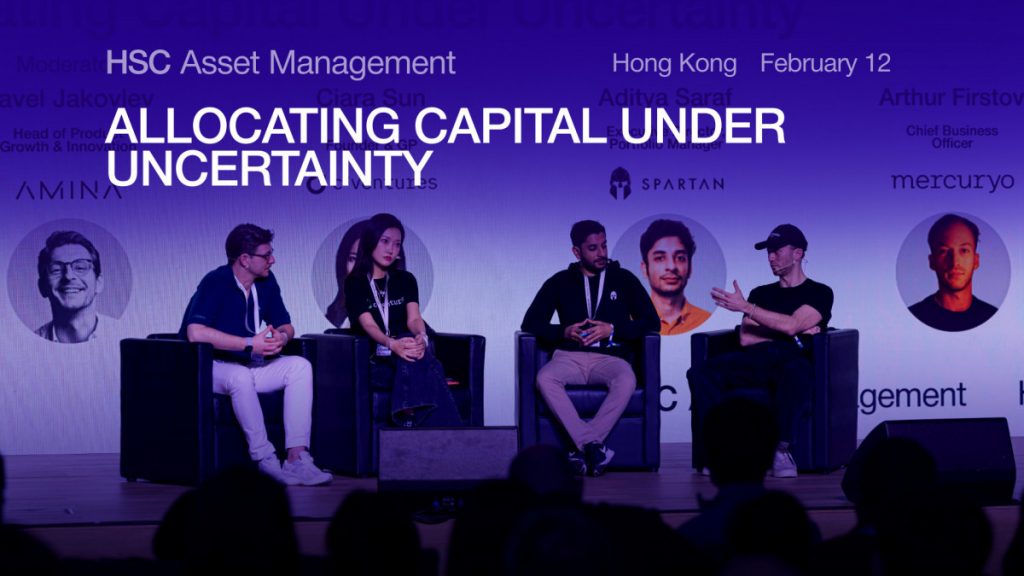
On February 12th, a professional gathering hosted by HSC Asset Management was held in Hong Kong, bringing together senior market participants to review current developments and emerging opportunities within the institutional digital-asset sector.
One of the key discussions in the agenda was the panel titled “Allocating Capital Under Uncertainty”, moderated by Pavel Jakovlev, Head of Product Growth and Innovation at AMINA Bank, featuring renown experts, including Aditya Saraf, Executive Director and Portfolio Manager at The Spartan Group, Ciara Sun, Founder and General Partner of C² Ventures, and Arthur Firstov, Chief Business Officer at Mercuryo.
The speakers examined practical approaches to capital allocation in an environment shaped by macroeconomic uncertainty and evolving regulatory conditions, with attention given to the importance of portfolio diversification, liquidity planning and disciplined investment frameworks that balance long-term conviction with structured risk management.
Investment Strategy And Market Sentiment In Crypto
The panel opened with introductions, with each participant highlighting their backgrounds and unique “superpowers,” ranging from simplifying complex problems to operational fluency in Excel. The discussion quickly shifted to market sentiment, where panelists noted a cautious yet optimistic environment. While some sectors of crypto are struggling, venture capital remains active, particularly in areas with strong fundamentals. Speakers emphasized that current conditions favor selective investments, with a focus on projects that demonstrate clear product-market fit, cash flow potential, and long-term viability. Equity-based models are gaining importance alongside token-based strategies, reflecting the maturing nature of the industry.
Teams, Talent, And Regulatory Compliance
Panelists highlighted the evolving composition of crypto teams, noting a shift toward hybrid models that combine crypto-native expertise with traditional financial or institutional experience. Successful teams are increasingly those that can navigate both the DeFi ecosystem and regulatory frameworks, particularly in markets such as the US, Korea, and Singapore. Compliance and regulatory clarity were cited as critical factors for token viability, with projects needing to meet local standards to access institutional partnerships and global markets. The discussion underscored that while regulatory adherence is important, it is not necessarily a deal-breaker if teams demonstrate adaptability and strong risk management.
M&A Activity, Infrastructure, And Strategic Focus
Mergers and acquisitions emerged as a key theme, with panelists observing a wave of consolidation between crypto-native companies and traditional financial infrastructure providers. These deals are often motivated by acquiring expertise, establishing credibility, and expanding access to institutional partners. Panelists also discussed the ongoing debate around Layer 2 and Layer 3 scaling solutions, highlighting underutilized infrastructure and the importance of aligning blockchain platforms with institutional needs. The conversation concluded with a forward-looking perspective on team qualities that attract investment: grit, product-market fit, and sustainable cash flow. These attributes, more than speculative token gains, are now viewed as the core drivers of long-term success.
The post HSC Asset Management In Hong Kong: Exploring Capital Allocation Under Uncertainty With Experts From Spartan, C² Ventures, And Mercuryo appeared first on Metaverse Post.


You May Also Like

XRP Channel Pattern Points To $5, Says Korean Analyst

Coinhouse Secures MiCA Authorization for Pan-European Crypto Operations

Supercut shows 'dumbest man on the internet' making one failed Iran prediction after another



