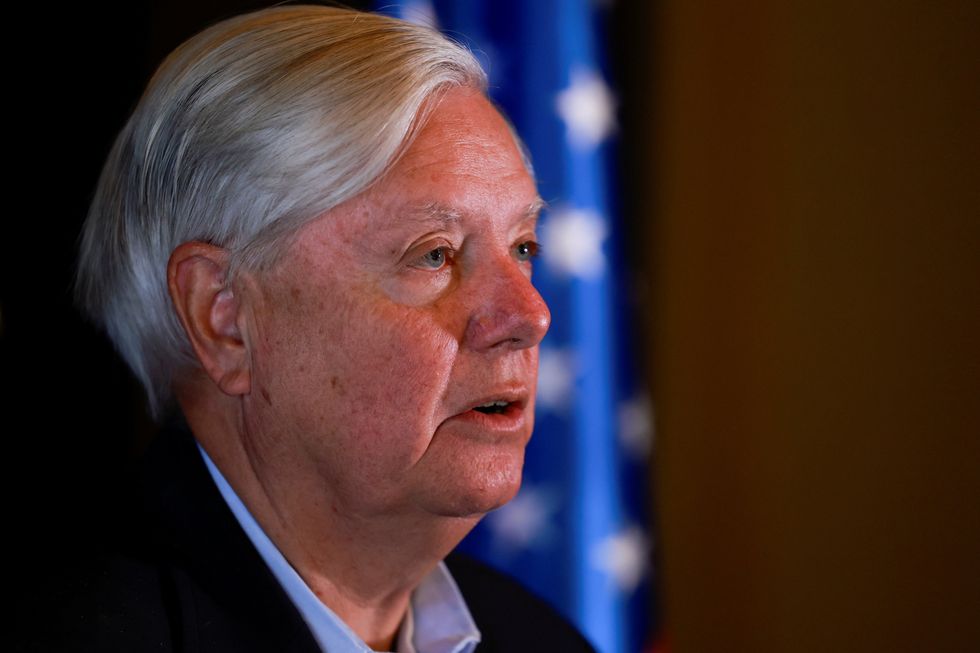
Global stocks slumped as Asia and Europe saw scattered losses, the dollar dropped to a five-week low, the euro retreated, and gold climbed to levels not seen since April.Global stocks slumped as Asia and Europe saw scattered losses, the dollar dropped to a five-week low, the euro retreated, and gold climbed to levels not seen since April.

Global stocks slump as dollar hits five-week low and gold climbs

Global stocks slumped Monday as Asia and Europe saw scattered losses, the dollar dropped to a five-week low, the euro retreated, and gold climbed to levels not seen since April.

In Asia, traders reacted to the mixed batch of factory data from China. A private gauge of manufacturing activity (the RatingDog index) came in at 50.5 for August, barely signaling growth.

That was a slight improvement from July’s 49.5. But the government’s own official PMI, released a day earlier, stayed stuck under 50 at 49.4, up marginally from the previous 49.3. Both readings showed China’s factory sector is far from recovering in full.

At the Shanghai Cooperation Organization’s two-day security summit, Chinese President Xi Jinping urged member nations to “strengthen cooperation in artificial intelligence.” Speaking at the opening session, Xi said the group should reject what he described as a “Cold War mentality.”

Hang Seng rallies, but Japan and Korea slide

The Hang Seng index in Hong Kong closed 2.17% higher at 25,617.42, led by a strong showing from Alibaba Group, which jumped 18.58%. CSPC Pharmaceutical Group surged 9.53% and WuXi Biologics rose 8.37%. On the mainland, the CSI 300 gained 0.6% and ended the session at 4,523.71, despite volatile trade.

Japan’s Nikkei 225 slid 1.24% to 42,188.79, weighed down by semiconductor losses. Advantest lost 7.92%, Disco Corporation dropped 7.71%, and Socionext fell 6.32%. The broader Topix also declined 0.39%, finishing at 3,063.19.

Over in South Korea, the Kospi lost 1.35%, ending at 3,142.93, while the Kosdaq slipped 1.49% to 785. Australia wasn’t spared either. The S&P/ASX 200 dropped 0.51%, closing at 8,927.70. Only India bucked the trend. The Nifty 50 gained 0.66% and the BSE Sensex climbed 0.6% as of early afternoon.

Trump tariffs overturned as European indexes hold steady

In the U.S., Trump took a legal hit on Friday after a Federal Appeals Court ruled that his 2023 “reciprocal tariffs” breached presidential authority. The court declared the sweeping levies on imports from dozens of nations unlawful.

Wall Street had ended last week in the red. The S&P 500 fell 0.64% to 6,460.26 but still locked in its fourth straight monthly gain. The Nasdaq Composite dropped 1.15% to 21,455.55, and the Dow Jones gave up 92.02 points to close at 45,544.88.

All three indexes responded to new inflation readings that showed price pressures remain stubborn. U.S. markets stayed closed Monday for Labor Day.

In Europe, stocks stayed mostly flat. Spain’s IBEX 35 slipped 0.25% to 14,898.5. The UK’s FTSE 100 added 0.27%, finishing at 9,212.53. Germany’s DAX rose 0.53% to 24,028.09, France’s CAC 40 added 0.44% to 7,737.67, and the STOXX600 ended up 0.39% at 552.31.

Currency markets saw the dollar continue its slide. The ICE U.S. Dollar Index dropped to 97.618, losing 0.16% on the day and notching a 2.2% monthly fall. The euro traded at 1.172, up 0.334%, while the pound sterling gained 0.18% to hit 1.353.

The euro/yen moved to 172.4, and the euro/sterling pair reached 0.866. The dollar/yen cross stayed flat at 147.00 after August’s 2.5% drop.

Meanwhile, the yuan held steady near a 10-month high at 7.1326 per dollar. Central bank support and a strong stock market inside China helped stabilize the currency, even though the wider economy is still wobbling. The People’s Bank of China continued setting firm daily fixings, giving investors a signal that it won’t let the yuan slide further for now.

In metals, gold rallied hard. Spot prices hit $3,486.86 per ounce, rising 1.2% as of 0641 GMT. Futures for December delivery moved up 1.1% to $3,554.60. The gains came as traders placed bigger bets on a Fed rate cut this month. Silver broke $40 for the first time since 2011, hitting $40.56. Platinum jumped 1.5% to $1,384.68. Palladium gained 0.8%, reaching $1,118.06.

If you're reading this, you’re already ahead. Stay there with our newsletter.

Market Opportunity
Notcoin Logo
Notcoin Price(NOT)
$0.0006609
$0.0006609$0.0006609
+4.53%
USD
Notcoin (NOT) Live Price Chart
Disclaimer: The articles reposted on this site are sourced from public platforms and are provided for informational purposes only. They do not necessarily reflect the views of MEXC. All rights remain with the original authors. If you believe any content infringes on third-party rights, please contact [email protected] for removal. MEXC makes no guarantees regarding the accuracy, completeness, or timeliness of the content and is not responsible for any actions taken based on the information provided. The content does not constitute financial, legal, or other professional advice, nor should it be considered a recommendation or endorsement by MEXC.

You May Also Like

Over $145M Evaporates In Brutal Long Squeeze

Over $145M Evaporates In Brutal Long Squeeze

The post Over $145M Evaporates In Brutal Long Squeeze appeared on BitcoinEthereumNews.com. Crypto Futures Liquidations: Over $145M Evaporates In Brutal Long Squeeze
Share
BitcoinEthereumNews2026/01/16 11:35
Vitalik Buterin Reveals Ethereum’s Bold Plan to Stay Quantum-Secure and Simple!

Vitalik Buterin Reveals Ethereum’s Bold Plan to Stay Quantum-Secure and Simple!

Buterin unveils Ethereum’s strategy to tackle quantum security challenges ahead. Ethereum focuses on simplifying architecture while boosting security for users. Ethereum’s market stability grows as Buterin’s roadmap gains investor confidence. Ethereum founder Vitalik Buterin has unveiled his long-term vision for the blockchain, focusing on making Ethereum quantum-secure while maintaining its simplicity for users. Buterin presented his roadmap at the Japanese Developer Conference, and splits the future of Ethereum into three phases: short-term, mid-term, and long-term. Buterin’s most ambitious goal for Ethereum is to safeguard the blockchain against the threats posed by quantum computing.  The danger of such future developments is that the future may call into question the cryptographic security of most blockchain systems, and Ethereum will be able to remain ahead thanks to more sophisticated mathematical techniques to ensure the safety and integrity of its protocols. Buterin is committed to ensuring that Ethereum evolves in a way that not only meets today’s security challenges but also prepares for the unknowns of tomorrow. Also Read: Ethereum Giant The Ether Machine Takes Major Step Toward Going Public! However, in spite of such high ambitions, Buterin insisted that Ethereum also needed to simplify its architecture. An important aspect of this vision is to remove unnecessary complexity and make Ethereum more accessible and maintainable without losing its strong security capabilities. Security and simplicity form the core of Buterin’s strategy, as they guarantee that the users of Ethereum experience both security and smooth processes. Focus on Speed and Efficiency in the Short-Term In the short term, Buterin aims to enhance Ethereum’s transaction efficiency, a crucial step toward improving scalability and reducing transaction costs. These advantages are attributed to the fact that, within the mid-term, Ethereum is planning to enhance the speed of transactions in layer-2 networks. According to Butterin, this is part of Ethereum’s expansion, particularly because there is still more need to use blockchain technology to date. The other important aspect of Ethereum’s development is the layer-2 solutions. Buterin supports an approach in which the layer-2 networks are dependent on layer-1 to perform some essential tasks like data security, proof, and censorship resistance. This will enable the layer-2 systems of Ethereum to be concerned with verifying and sequencing transactions, which will improve the overall speed and efficiency of the network. Ethereum’s Market Stability Reflects Confidence in Long-Term Strategy Ethereum’s market performance has remained solid, with the cryptocurrency holding steady above $4,000. Currently priced at $4,492.15, Ethereum has experienced a slight 0.93% increase over the last 24 hours, while its trading volume surged by 8.72%, reaching $34.14 billion. These figures point to growing investor confidence in Ethereum’s long-term vision. The crypto community remains optimistic about Ethereum’s future, with many predicting the price could rise to $5,500 by mid-October. Buterin’s clear, forward-thinking strategy continues to build trust in Ethereum as one of the most secure and scalable blockchain platforms in the market. Also Read: Whales Dump 200 Million XRP in Just 2 Weeks – Is XRP’s Price on the Verge of Collapse? The post Vitalik Buterin Reveals Ethereum’s Bold Plan to Stay Quantum-Secure and Simple! appeared first on 36Crypto.
Share
Coinstats2025/09/18 01:22
Non-Opioid Painkillers Have Struggled–Cannabis Drugs Might Be The Solution

Non-Opioid Painkillers Have Struggled–Cannabis Drugs Might Be The Solution

The post Non-Opioid Painkillers Have Struggled–Cannabis Drugs Might Be The Solution appeared on BitcoinEthereumNews.com. In this week’s edition of InnovationRx, we look at possible pain treatments from cannabis, risks of new vaccine restrictions, virtual clinical trials at the Mayo Clinic, GSK’s $30 billion U.S. manufacturing commitment, and more. To get it in your inbox, subscribe here. Despite their addictive nature, opioids continue to be a major treatment for pain due to a lack of effective alternatives. In an effort to boost new drugs, the FDA released new guidelines for non-opioid painkillers last week. But making these drugs hasn’t been easy. Vertex Pharmaceuticals received FDA approval for its non-opioid Journavx in January, then abandoned a next generation drug after a failed clinical trial earlier this summer. Acadia similarly abandoned a promising candidate after a failed trial in 2022. One possible basis for non-opioids might be cannabis. Earlier this year, researchers at Washington University at St. Louis and Stanford published a study showing that a cannabis-derived compound successfully eased pain in mice with minimal side effects. Munich-based pharmaceutical company Vertanical is perhaps the furthest along in this quest. It is developing a cannabinoid-based extract to treat chronic pain it hopes will soon become an approved medicine, first in the European Union and eventually in the United States. The drug, currently called Ver-01, packs enough low levels of cannabinoids (including THC) to relieve pain, but not so much that patients get high. Founder Clemens Fischer, a 50-year-old medical doctor and serial pharmaceutical and supplement entrepreneur, hopes it will become the first cannabis-based painkiller prescribed by physicians and covered by insurance. Fischer founded Vertanical, with his business partner Madlena Hohlefelder, in 2017, and has invested more than $250 million of his own money in it. With a cannabis cultivation site and drug manufacturing plant in Denmark, Vertanical has successfully passed phase III clinical trials in Germany and expects…
Share
BitcoinEthereumNews2025/09/18 05:26