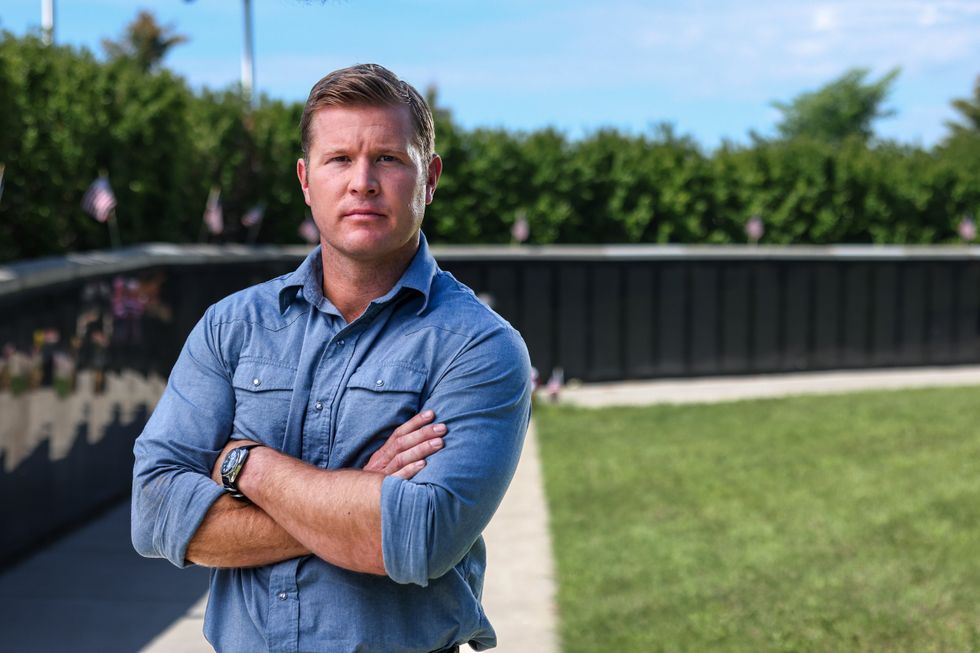
In the intricate world of international trade, few individuals possess the depth of experience and a truly global perspective quite like Daniel Holztreger. As the visionary founder and Managing Partner of DH Consult in Brazil, Holztreger has spent over two decades meticulously building a robust bridge for food products from global suppliers to the burgeoning economies of West Africa, transforming market access and forging enduring relationships. Now, with a $50 million operation under his belt, this Brazilian-born economist is poised to replicate his success, focusing on channeling American food exports into his established African network, aiming to create sustainable growth and generate jobs across continents.
Holztreger’s journey into the dynamic realm of international trade began with a solid academic foundation. Born and raised in Brazil, he earned a bachelor’s degree in economics from the Federal University of Rio de Janeiro (UFRJ), followed by a Master of Science in International Trade and Transport from a prestigious university in the United Kingdom. This academic rigor equipped him with the theoretical and practical knowledge that would prove indispensable in navigating the complexities of global commerce.

His early career saw him honing his skills at Compagnie de Saint-Gobain S.A. from 1999 to 2003, where he held various leadership roles in export sales and business development. “My initial experiences were working developing sales for major multinational groups, more on the Latin America region and on the specific products that the industries were producing,” Holztreger explains. His tenure was marked by significant achievements, including leading sales initiatives for the Brazilian cast iron pipeline division and overseeing a substantial expansion in exports across the Americas. While valuable, these roles were often confined to specific product ranges.
The pivotal shift in Holztreger’s career, and the genesis of his deep expertise in the African market, occurred in 2001. “I started my journey back in Africa in 2001, for my first trip to Angola,” he recalls. Working for a major multinational French group in the industrial sector, he participated with a booth at FILDA, a major local trade fair in Luanda. Angola, recently emerged from a devastating civil war and experiencing a boom fueled by oil production and massive foreign investments, presented a population desperate for Western goods.
“I realized I was in the wrong business and wanted to explore the innumerous opportunities that the country was providing,” Holztreger said. This epiphany led him to join Kuando Trading the following year, a move that would fundamentally shape him as an international trader. “We worked on two divisions – food trade and building material, and as manager for the food division, we started exporting various types of FMCG [Fast-Moving Consumer Goods] from South America to Angola, from frozen to dry products.” This experience marked his transition from industrial goods to the vast and diverse world of food commodities.
At Kuando Trading LLP, a UK-based trading company, Holztreger served as a Trader Consultant and Food Division Manager until 2011. During this period, he progressively took on greater leadership responsibilities, managing a team in Rio de Janeiro and overseeing trading operations, commercial planning, and logistics. Under his strategic guidance, the company established a high-performing trading desk that generated revenues reaching a peak of $100 million, solidifying his reputation as a leader in international markets. “Once I started to work with Africa, with Kuando Trading, a trade house, I had the feeling of freedom, being able to work in multiple countries and as many as possible types of products,” he reflects, underlining the expansive opportunities this role provided.
The natural evolution of his career led to the founding of DH Consult in late 2011, based in Brazil. This entrepreneurial venture was born out of a unique opportunity and a wealth of accumulated connections. “Back in 2011, I was invited to be a global head purchaser for one of the main food importers and distributors at that time in Angola, working on an exclusive basis for the group in the country,” Holztreger explains. This role involved representing the group at international fairs like SIAL, ANUGA, and GULFOOD, and engaging in key supplier visits and trade missions. “We were importing hundreds of millions of dollars worth of food products on a yearly basis from various parts of the world, allowing me to rapidly expand business connections.”
DH Consult was founded in parallel with this role, leveraging his newly expanded network. “We also started growing in other West African countries, since we already had been exploring them based on my previous work experience, but now we were boosted with the multiple connections established,” he adds. Today, DH Consult specializes in sourcing and exporting food products to emerging economies, particularly across West Africa, seeking to bridge connections directly between West African importers and global food producers.
Developing a robust commercial network in a region often perceived as challenging requires a unique approach, and Holztreger emphasizes the foundational role of trust. “West African business is mainly derived from trust and relationships,” he states. In the early 2000s, Africa was an “unknown continent” for many suppliers, who harbored skepticism regarding financial stability, compliance, and geopolitical influences. “We helped to mitigate these feelings, and we focused on big local importers where we could penetrate the market, aiming to develop high volumes and working with lower margins than European brokers (main sellers for the West African market historically), strengthening personal relations and enduring confidence.”
This relationship-first strategy has yielded remarkable longevity and success. “For example, today we have lollipops brands that are produced in Brazilian factories to Dem Rep of Congo, and being sold to same importers for more than 20 years, enabling a smooth and regular monthly supply with more than 2 million USD per year on sales,” he cites, illustrating the power of sustained trust.
Scaling DH Consult into a $50 million operation, successfully navigating regulatory and logistical challenges in international trade, has been a demanding endeavor. “This was a hard job, and we had to work on multiple categories of products, for having the ones as pillars on regular volumes,” Holztreger explains. Key product categories include frozen meat (chicken and pork as cheaper proteins), grains (rice, sugar, soybean meal, beans), and dairy products – commodities that are often challenging for importing countries to produce competitively locally.
The path to growth is rarely linear, and adaptability is paramount. “We had multiple projects of products that started great and worked well for various years, but at certain times they have died, due to various reasons,” he notes. He provides examples: a five-year supply of laundry bars to Angola was terminated when the country prohibited imports of certain basic items to foster local production. Sales to the Central African Republic ceased due to civil wars. “We are always having to watch out for geopolitical factors and unforeseen circumstances, diversifying products and countries of presence,” he stresses.
Logistical hurdles also demand creative solutions. “In 2010-2011 we had a scenario of complete congestion in Angola due to strong economic growth at that time, a country that was our main market at that period,” Holztreger recalls. “Being flexible and thinking out of the box is very important.” His strategic sales and operations planning has been instrumental in overcoming these obstacles, allowing DH Consult to maintain stability and growth.
Holztreger has truly set himself aside throughout his illustrious career as an extraordinary international trade specialist and an expert in imports and exports, particularly working with West African markets. His record of sustained high-level performance, market-shaping impact, and cross-continental leadership clearly distinguishes him among his peers. Over more than two decades, he has not only generated substantial revenues—including building and managing trading operations reaching $100 million annually and scaling DH Consult into a $50 million enterprise—but has also pioneered direct commercial corridors between South America, Europe, and multiple West African nations in markets historically considered high-risk and opaque. His ability to enter post-conflict and frontier economies, mitigate supplier concerns, establish trusted long-term partnerships lasting over 20 years, and consistently deliver multimillion-dollar annual supply programs demonstrates a rare combination of strategic vision, operational execution, and geopolitical fluency. By successfully integrating global suppliers with emerging African demand at scale, while navigating regulatory shifts, civil instability, port congestion, and trade policy changes, Holztreger has operated at a level of influence and responsibility well beyond that of a typical trader or consultant. His accomplishments reflect not only commercial success, but recognized expertise, original market development, and sustained impact across multiple countries—hallmarks of an individual who has risen to the very top tier of his profession.
Now, with a formidable track record of success in Africa, Holztreger is setting his sights on a new mission: bridging the United States and West Africa. Daniel’s commitment extends beyond profit; he is dedicated to making a positive impact on U.S. society by leveraging his knowledge in international trade to create sustainable growth and generate jobs. As he expands into the U.S. market, he aims to replicate his proven model of success, establishing a stable and efficient channel for American food exports to West Africa. His goal is to enhance trade relationships that reflect the strength and quality of American goods while supporting national priorities in trade expansion and economic growth.