

US Stocks Open Lower: A Sobering Start as Major Indices Slide Over 1%
BitcoinWorld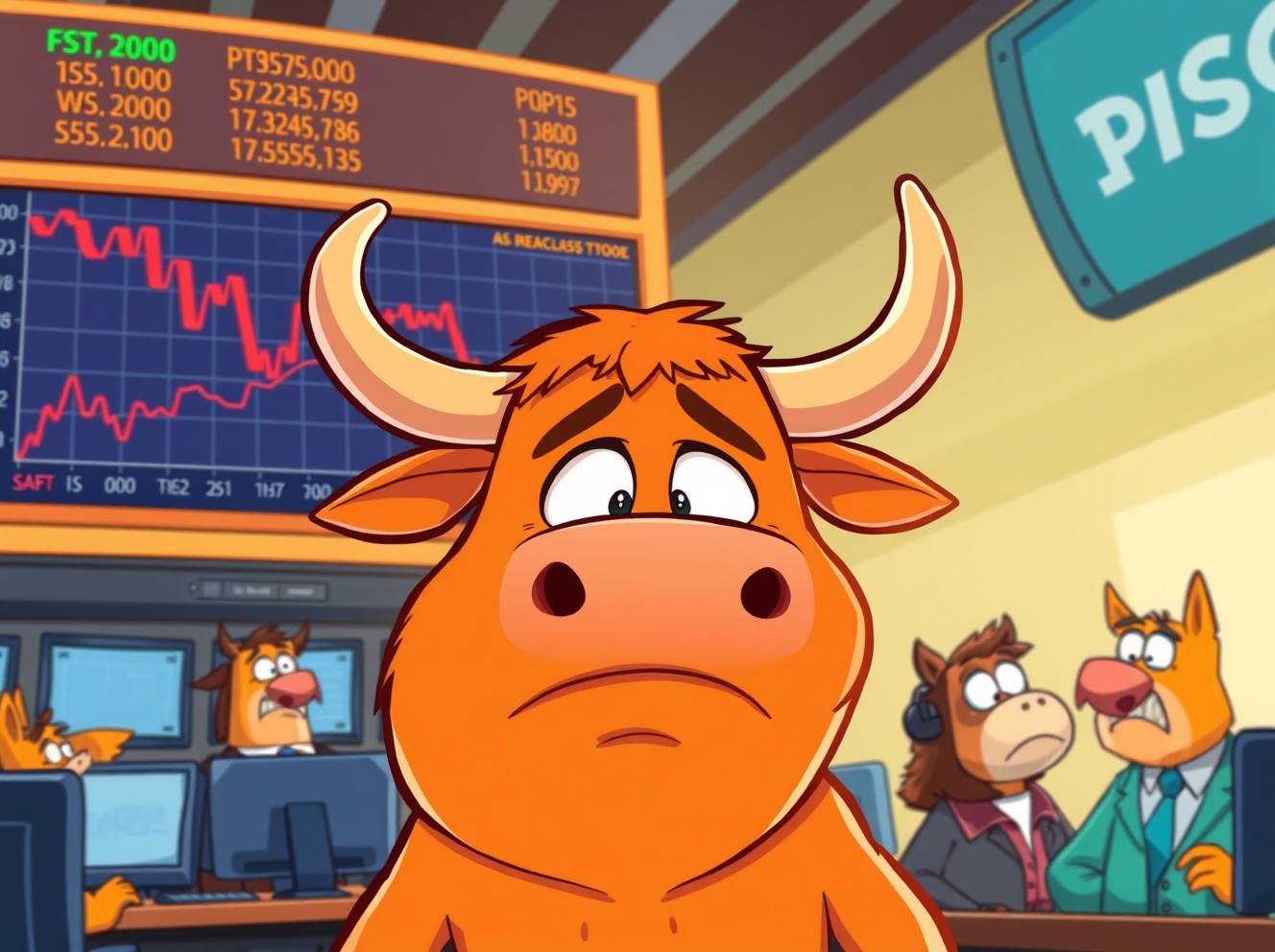
US Stocks Open Lower: A Sobering Start as Major Indices Slide Over 1%
NEW YORK, NY – A wave of selling pressure washed over Wall Street at the opening bell today, sending the three major US stock indices decisively into negative territory. This immediate downturn marks a significant shift from recent trading patterns and has captured the attention of investors globally. The S&P 500 index fell 1.07%, the technology-heavy Nasdaq Composite dropped 1.5%, and the blue-chip Dow Jones Industrial Average declined 1.15%. Consequently, this synchronized move lower suggests broad-based concerns rather than sector-specific issues. Market analysts are now scrutinizing the confluence of factors driving this early session weakness.
US Stocks Open Lower: Dissecting the Day’s Market Data
The opening decline was both swift and widespread. Notably, all eleven primary sectors within the S&P 500 traded lower, with technology, consumer discretionary, and communication services leading the losses. This pattern often indicates a risk-off sentiment among institutional traders. Furthermore, market breadth was decidedly negative, with declining stocks outnumbering advancers by a ratio of nearly 5-to-1 on the New York Stock Exchange. Trading volume surged above the 30-day average in the first hour, confirming the conviction behind the sell-off. The VIX volatility index, often called the market’s “fear gauge,” spiked over 15%, reflecting heightened investor anxiety.
US Market Open Performance – Key Metrics| Index | Percentage Change | Point Change | Notable Sector Moves |
|---|---|---|---|
| S&P 500 | -1.07% | -55.2 pts | Tech, Discretionary weak |
| Nasdaq Composite | -1.50% | -225.8 pts | Megacap tech under pressure |
| Dow Jones Industrial Average | -1.15% | -435.6 pts | All 30 components lower |
Market technicians immediately noted that the S&P 500 breached its 50-day moving average, a key short-term trend indicator watched by algorithmic trading systems. This breach likely triggered automated selling programs, exacerbating the downward move. Meanwhile, bond markets saw a concurrent flight to safety, pushing yields on the benchmark 10-year Treasury note lower by several basis points. This inverse relationship between stock prices and bond prices is a classic dynamic during risk-aversion events.
Contextualizing the Market Decline
To understand today’s move, one must examine the preceding market environment. The US equity market had experienced a sustained rally over the prior quarter, lifting valuations to elevated levels. According to data from FactSet, the forward price-to-earnings ratio for the S&P 500 stood above its 10-year average before today’s session. Therefore, the market was arguably vulnerable to a pullback. Additionally, several macroeconomic data points released in the pre-market hours contributed to the negative sentiment. A hotter-than-expected Producer Price Index (PPI) report reignited concerns about persistent inflationary pressures. Simultaneously, retail sales figures came in softer than forecasts, hinting at potential consumer fatigue.
Global markets also set a weak tone. Major European indices, including the FTSE 100 and DAX, traded lower overnight amid geopolitical tensions and disappointing economic data from China. Asian markets closed down earlier, with the Hang Seng Index posting significant losses. In today’s interconnected financial system, negative sentiment often transmits across regions. Consequently, US futures markets pointed to a lower open throughout the pre-dawn trading session, telegraphing the weakness that materialized at 9:30 AM ET.
Expert Analysis on Contributing Factors
Financial strategists point to a “triple threat” of concerns weighing on investor psychology. First, the recalibration of interest rate expectations by the Federal Reserve remains a primary driver. Recent commentary from Fed officials has emphasized a data-dependent approach, leaving the timing of potential rate cuts uncertain. Second, corporate earnings season is entering a quieter phase, removing a positive catalyst that had previously supported prices. Finally, geopolitical risks have resurfaced, creating an overlay of uncertainty. Portfolio managers, referencing historical analogs, note that corrections of 5-10% are normal within a bull market and serve to consolidate gains. However, the velocity of today’s decline warrants close monitoring for follow-through selling.
Sector Performance and Investor Implications
The sectoral breakdown of the sell-off offers clues about its nature. Technology stocks, which had been market leaders, bore the brunt of the selling. This suggests investors are taking profits from the best-performing areas. Conversely, more defensive sectors like utilities and consumer staples showed relative resilience, declining less than the broader market. This rotation is typical during risk-off periods. For individual investors, such moves highlight the importance of diversification across sectors and asset classes. A well-balanced portfolio can help mitigate the impact of a sudden broad market decline. Financial advisors consistently recommend against making panic-driven decisions based on a single day’s action.
- Technology & Growth: Most vulnerable to higher rate fears; saw amplified selling.
- Cyclical Sectors: Industrials and materials fell on growth concerns.
- Defensive Havens: Utilities and healthcare showed relative strength.
- Market Breadth: Extremely negative, indicating widespread participation in the decline.
Market historians often compare intraday moves to longer-term trends. For instance, a 1% down day, while notable, is not historically exceptional. The S&P 500 has experienced over 1,100 such declines since 1950. The critical factor will be whether supportive buyers emerge at lower price levels to stabilize the market. Trading desks reported elevated but orderly activity, with no signs of the dysfunctional liquidity sometimes seen in flash crashes. This suggests the move reflects a fundamental reassessment of conditions rather than a technical breakdown.
Conclusion
The decision by US stocks to open lower today reflects a meaningful reassessment of risk amid shifting macroeconomic data and global cues. The declines across the S&P 500, Nasdaq, and Dow Jones underscore the interconnected nature of modern equity markets. While a single session does not define a trend, it serves as a potent reminder of market volatility. Investors should focus on long-term fundamentals, corporate earnings trajectories, and broader economic indicators rather than daily fluctuations. The coming sessions will be crucial in determining whether this represents a healthy correction or the beginning of a more sustained downturn. Prudent risk management and disciplined investment strategies remain paramount in navigating such environments.
FAQs
Q1: Why did US stocks open lower today?
The primary drivers appear to be a combination of hotter-than-expected inflation data (PPI), soft retail sales figures, and spillover weakness from global markets. These factors sparked a broad-based, risk-off sentiment among investors.
Q2: How significant is a 1% drop in the stock market?
While noticeable, a 1% decline is not uncommon historically. The S&P 500 experiences an average of several such down days per year. The significance depends on the context—whether it reverses a recent trend or occurs amid deteriorating fundamentals.
Q3: Which sectors were hit the hardest when US stocks opened lower?
Technology, consumer discretionary, and communication services sectors led the declines. These sectors are often more sensitive to interest rate expectations and economic growth forecasts.
Q4: Should investors sell their holdings after a down day like this?
Financial advisors generally caution against making impulsive decisions based on one day’s movement. A long-term, disciplined strategy focused on asset allocation and diversification is typically more effective than trying to time the market.
Q5: What should I watch to see if the decline continues?
Key indicators include follow-through selling in the next sessions, the level of trading volume, movements in the bond market (especially the 10-year Treasury yield), and any new macroeconomic data or comments from Federal Reserve officials.
This post US Stocks Open Lower: A Sobering Start as Major Indices Slide Over 1% first appeared on BitcoinWorld.


You May Also Like

Vodacom Tanzania Modernises M-Pesa With $28m Infrastructure Upgrade

Tom Lee’s BitMine Reports $3.8 Billion Quarterly Loss Following Ethereum Price Drop




