Can PMI above 50 trigger Altcoin Season in 2026?
As macro conditions regain influence over digital assets, investors are increasingly asking whether a rebound in economic activity, particularly a Purchasing Managers Index (PMI) reading above 50, could ignite the next altcoin season.
- PMI above 50 would signal improving economic conditions and a potential return of risk appetite
- Nearly 40% of altcoins trading near all-time lows reflects extreme weakness but possible late-stage capitulation
- Bitcoin dominance remains elevated, suggesting rotation into altcoins has not yet begun
What PMI means for Altcoin Season
The Purchasing Managers’ Index (PMI) is a forward-looking economic indicator that measures manufacturing and services activity. A reading above 50 signals expansion, while below 50 indicates contraction.
Crypto markets, especially altcoins, are highly sensitive to liquidity and risk appetite. When PMI rises above 50 after a contraction phase, it typically signals improving growth expectations, stronger corporate activity, and loosening financial conditions.
Historically, periods of macro expansion have coincided with greater investor willingness to rotate into higher-beta assets, including mid- and small-cap cryptocurrencies.
Bitcoin often reacts first to improving macro conditions, benefiting from institutional flows. Altcoin season tends to follow when investors move further out the risk curve in search of higher returns. In prior cycles, altcoin rallies have emerged during early-to-mid expansion phases when liquidity conditions improved but speculative excess had not yet peaked.
Current conditions: Pressure before rotation?
However, the present backdrop remains fragile.
According to a CryptoQuant analyst, 38% of altcoins are trading near their all-time lows, a worse reading than both April 2025 (35%) and even the immediate aftermath of the FTX collapse (37.8%). This marks the deepest regression for altcoins in the current cycle, underscoring persistent risk aversion.
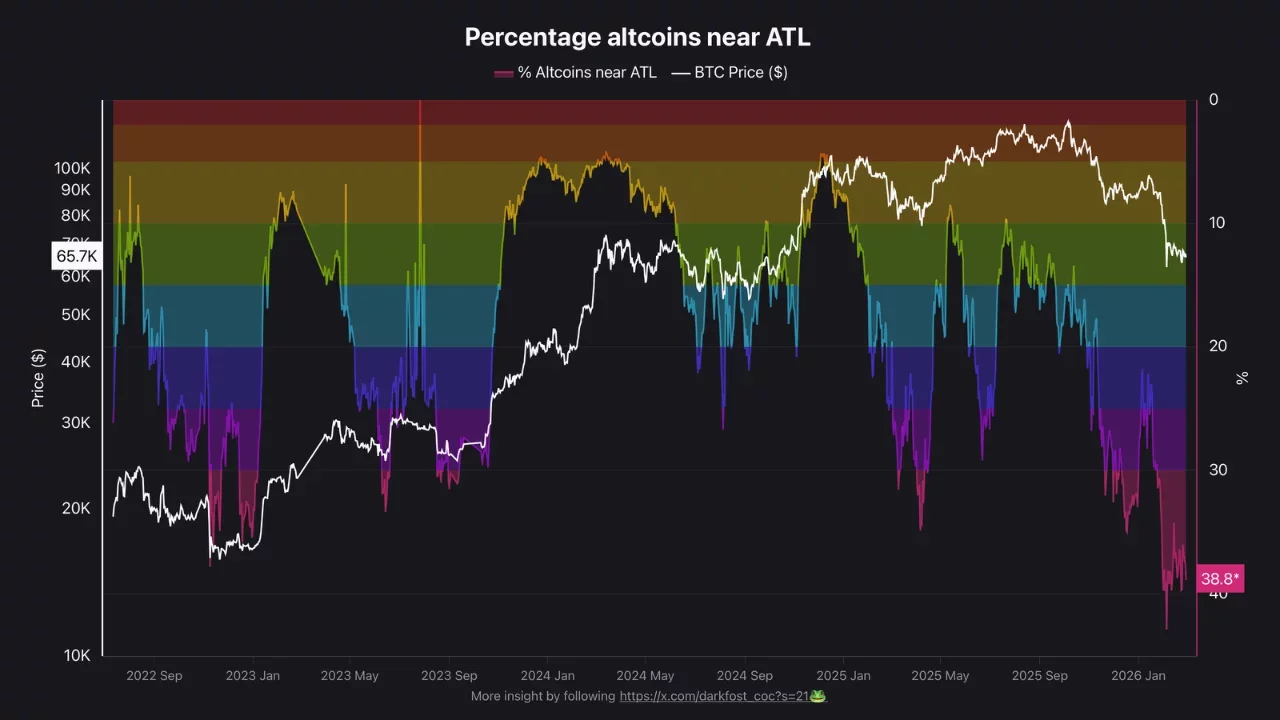
Moreover, the Bitcoin Dominance (BTC.D) chart reinforces this narrative. Dominance remains elevated near 58–59%, after peaking around 60% in February.
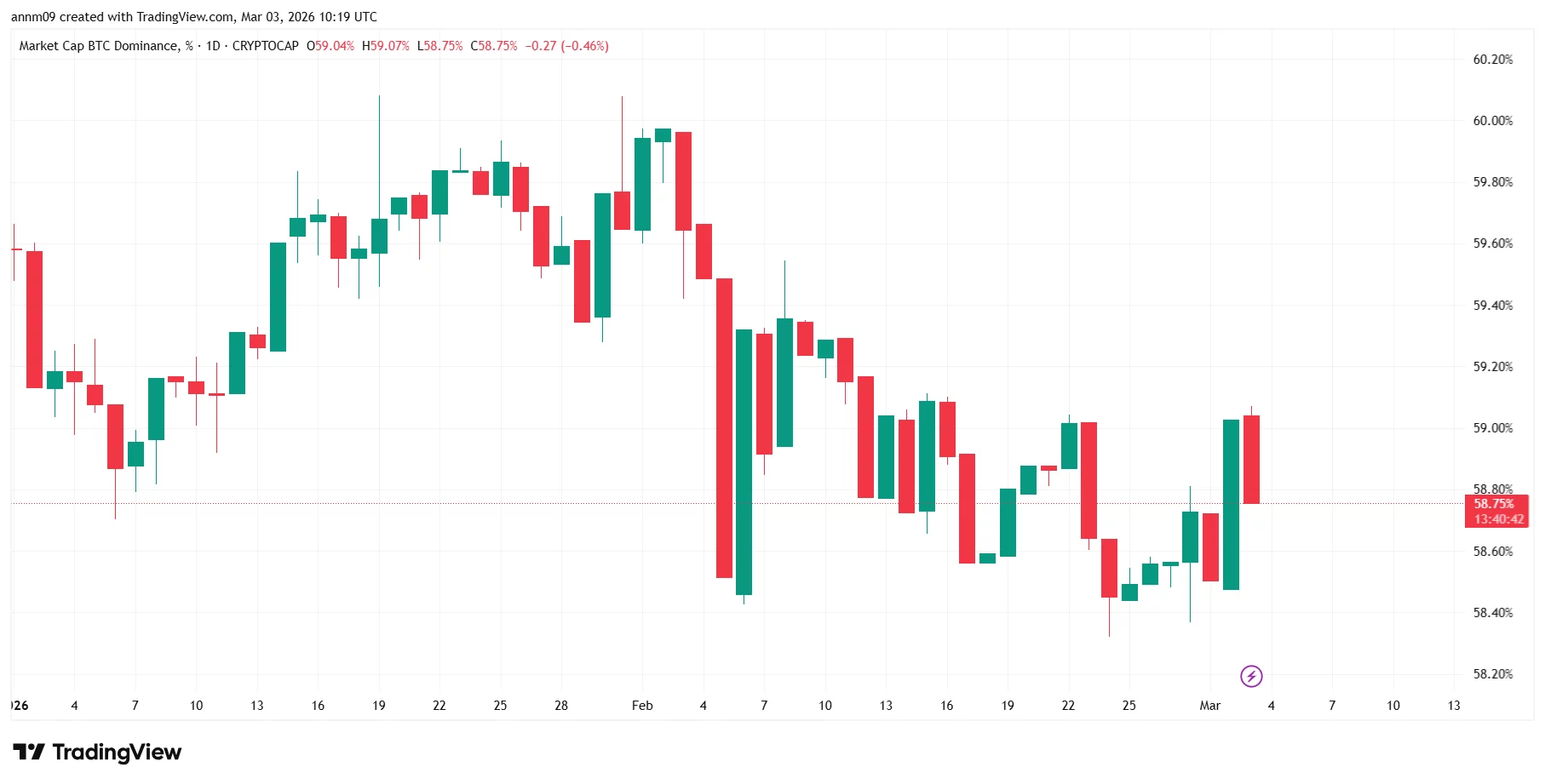
While BTC.D has pulled back slightly from local highs, it has not broken into a decisive downtrend, a necessary condition for sustained altcoin outperformance.
For a PMI-driven altcoin season to materialize, three things likely need to occur simultaneously: PMI moving sustainably above 50, Bitcoin consolidating rather than trending sharply higher, and BTC dominance breaking below key support to confirm capital rotation.
Until then, macro stabilization may first benefit Bitcoin before liquidity meaningfully spreads into the broader altcoin market.
In short, a PMI recovery could be the spark, but dominance trends suggest altcoin season has not yet begun.


You May Also Like

Le prix de l’Ethereum risque de s’effondrer alors que Wall Street abandonne l’ETH

Fed Governor Calls For Strong Stablecoin Oversight As CLARITY Act’s Final Text Gets Delayed

Payment Gateway With Instant Settlement in 2026