CBN silent as bill to create rival fintech regulator advances in House of Reps
Nigeria’s Central Bank has not commented on a bill that would reshape regulatory authority over the country’s fintech sector, even as industry stakeholders remain sharply divided over whether a new commission is necessary.
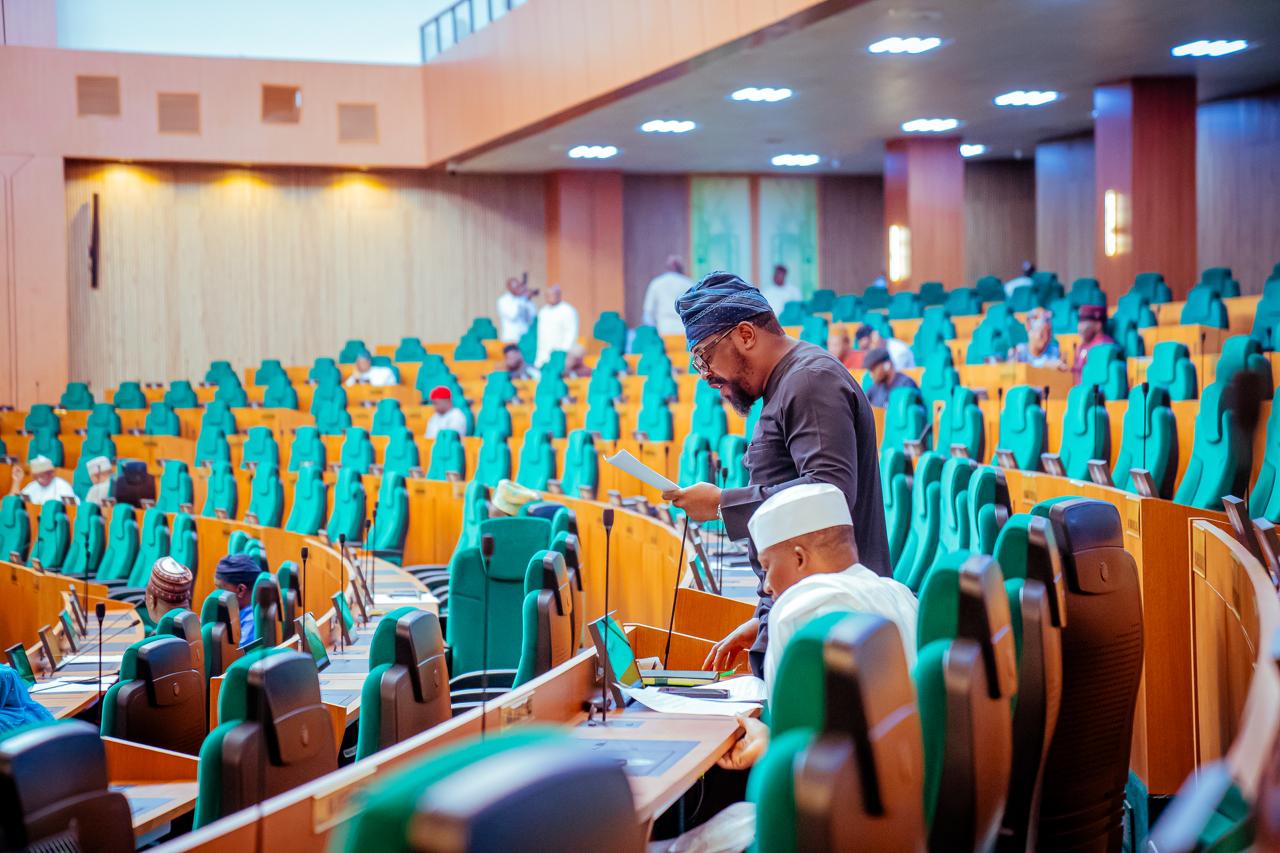
The silence from Abuja’s apex bank comes as the House of Representatives’ joint committees on digital and electronic banking, banking regulations, science and technology, communications, and capital market and institutions held a public hearing on Monday, March 2, on the bill seeking to establish a fintech regulatory commission.
The Central Bank of Nigeria (CBN) and the National Information Technology Development Agency (NITDA) did not respond to requests for comment.
The bill, sponsored by Fuad Laguda, is premised on the argument that Nigeria currently has no single regulatory authority overseeing fintech operators despite the sector’s growing impact on national economic development.
 Fuad Laguda
“The creation of this regulatory commission will enhance the profitability of fintech businesses and the security of fintech users,” Laguda said.
Fintech operators are divided on fintech commission
But major fintech operators pushed back, arguing that the proposed commission would duplicate functions the CBN already performs.
Maxwell Loko, vice-president of public and government affairs at OPay Digital Services, said, as reported by The Cable, while the company supports stronger regulatory oversight, creating a parallel authority risks overlapping with existing agencies.
“Without very precise delineation of roles, the establishment of a parallel regulator risks duplication of licensing processes, overlapping supervisory examinations, increased compliance costs, and regulatory uncertainty that may discourage investment,” Loko said.
He recommended a single lead regulator model anchored by the CBN, describing it as consistent with global best practice, where central banks typically anchor payments and digital banking supervision.
Henry Obiekea, managing director of FairMoney Microfinance Bank, put the tension in concrete terms. Under the proposed framework, he said, the CBN would continue determining what a microfinance bank can charge customers, while the new commission would govern how those charges are communicated and justified.
“This introduces regulatory duplication and complex compliance coordination,” Obiekea said, adding that tech-enabled services such as loan applications, digital KYC and mobile channels may require additional licensing or registration under the new body.
Obiekea nonetheless described the bill as both a challenge and an opportunity, noting that formal recognition of digital finance as a distinct sector could boost investor confidence and strengthen consumer trust.
Not everyone shared those reservations.
Adede Williams, president of the Association of Telecommunications, Information, Technology, Cable Satellite Network Operators and Allied Services Employers of Nigeria (ATICEN), argued that the absence of an independent fintech regulator has created fragmented and inconsistent oversight across Nigeria’s nearly 400 fintech firms.
“The absence of an independent regulatory body is a threat to consumers, investors, industry service providers, stakeholders, shareholders and the digital economic stability at large,” Williams said.
Obioha Otti, acting president of the Association of Mobile Money and Bank Agents in Nigeria (AMBAN), also backed the bill, saying regulation must evolve to match global standards as the fintech ecosystem expands. Otti said he represents over two million point of sale and mobile money agents operating across all 36 states and the FCT.
“As the commission is being established, AMBAN and registered POS agents should be formally integrated into the regulatory framework,” he said.
 Olayemi Cardoso, CBN governor
The CBN’s silence is notable given that the bill, if passed, would effectively place a new statutory body alongside, and in some areas, above, an institution that currently exercises primary regulatory authority over mobile money operators, payment service providers and digital banking platforms.
Whether the apex bank supports, opposes or is indifferent to that prospect remains unclear. What is clear is that the bill is moving, and Nigeria’s most powerful financial regulator has so far chosen not to say anything.
The post CBN silent as bill to create rival fintech regulator advances in House of Reps first appeared on Technext.
You May Also Like

Strike’s Revolutionary 13% Rate Unlocks Crypto Liquidity In The US

Wormhole’s W token enters ‘value accrual’ phase with strategic reserve