Ripple payments platform evolves into unified global infrastructure for digital and traditional currencies

Across digital assets and traditional money, the ripple payments platform is being repositioned as an integrated backbone for institutions seeking efficient, compliant transaction services.
Ripple consolidates traditional and digital payment services
Ripple has overhauled its enterprise offering into a comprehensive infrastructure that supports both fiat currencies and digital assets on a single licensed stack. The unified system now delivers integrated custody, automated collections, liquidity management, and global payout capabilities, enabling corporate clients to manage complex multi-currency operations from one platform.
Moreover, this architecture allows organizations to receive, store, convert, and send traditional currencies alongside stablecoins through a single technology and compliance framework. Companies can therefore retire fragmented workflows involving multiple providers across different regions and asset types, reducing operational risk and reconciliation overhead.
This evolution reflects a deliberate shift by Ripple to position itself as an all-in-one infrastructure partner for corporates and fintech firms. That said, the company continues to emphasize regulatory compliance and institutional-grade standards as core differentiators in an increasingly crowded digital payments market.
Impact of Palisade and Rail on Ripple’s infrastructure
The transformation of Ripple’s stack builds directly on its acquisitions of Palisade and Rail. The purchase of Palisade has strengthened the platform’s custody offering and enhanced treasury automation, giving enterprises greater control over how they hold and deploy both fiat and digital assets across accounts.
Meanwhile, the Rail deal has introduced named virtual account capabilities and automated collection systems that are optimized for international payment processing. These functions support more granular tracking of inbound flows and improve straight-through reconciliation for cross-border customers and partners.
Ripple has now interconnected these acquired capabilities with its existing liquidity infrastructure and long-standing global payment network. As a result, financial technology platforms can oversee end-to-end payment workflows via a single integration point, which in turn simplifies onboarding, technical maintenance, and ongoing compliance checks.
XRP’s role as a bridge asset in the payment stack
Within this expanded ecosystem, XRP continues to serve as a bridge currency that supports liquidity and settlement across multiple payment corridors. The asset is used to source liquidity and facilitate international transfers, while the underlying infrastructure is designed to keep operational performance insulated from short-term token price volatility.
According to figures disclosed by Ripple, its payment infrastructure has already processed transactions exceeding $100 billion in cumulative volume. Furthermore, the system now connects to more than 60 international payout markets and interfaces with various instant payment schemes, enabling many cross-border transfers to complete within minutes instead of several days.
Stablecoin usage has also expanded rapidly in global finance over recent months. Market research cited by the company suggests annual stablecoin transaction throughput has reached $33 trillion, with these tokens now representing around 30 percent of all blockchain transaction activity worldwide. However, institutions continue to demand regulated rails that align with existing compliance expectations.
RLUSD stablecoin deepens Ripple’s digital asset suite
To address that demand, Ripple has launched RLUSD as a regulated stablecoin embedded within its enterprise payment stack. The asset surpassed $1 billion in total market value during its first year, underscoring significant institutional and market interest in regulated digital dollar instruments integrated into existing payment flows.
Crucially, RLUSD is wired directly into Ripple’s liquidity provision and settlement infrastructure. This design allows institutions to move seamlessly between fiat currencies, stablecoins, and XRP when structuring payment and treasury operations, without relying on external conversion venues or fragmented technology providers.
Moreover, the company highlights RLUSD stablecoin integration as a way to unify on-chain settlement with off-chain finance. By treating the token as a native component of its infrastructure rather than an add-on product, Ripple can provide more predictable liquidity, streamlined reconciliation, and higher automation for enterprise stablecoin payments.
Regulation, licensing, and institutional trust
Regulation remains central to Ripple’s institutional strategy. The firm says it holds more than 75 regulatory licenses worldwide, including authorization as a New York-chartered trust company. This licensing footprint allows Ripple to move funds on behalf of institutional clients across major global jurisdictions while adhering to local requirements.
That said, banks and fintechs expect digital asset infrastructure to meet the same standards as traditional banking systems. Ripple has therefore structured its platform to combine regulated custody, virtual account management, liquidity tooling, and global disbursement networks into a single workflow that resembles established financial infrastructure.
The ripple payments platform is presented as meeting these expectations by consolidating payment operations, regulatory compliance, and liquidity functions under one roof. This approach is designed to minimize integration work for customers while giving them a consistent rule set and monitoring framework across all supported currencies and assets.
Outlook for Ripple’s role in global payments
Looking ahead, Ripple aims to serve as foundational infrastructure for both traditional money flows and blockchain-based settlement. By blending custody services, virtual accounts, stablecoins, and XRP-powered liquidity with broad licensing coverage, it seeks to become a default option for enterprises modernizing their payment stacks.
Moreover, the combination of extensive payout connectivity to more than 60 markets and proven processing of over $100 billion in volume reinforces Ripple’s push into mainstream financial services. As digital currencies and stablecoins become more embedded in global finance, the company is positioning its platform at the intersection of regulated banking and on-chain value transfer.
In summary, Ripple’s expanded infrastructure now unites traditional currencies, stablecoins like RLUSD, and XRP into one regulated enterprise-grade platform, offering institutions a single, streamlined framework for global payment operations.


You May Also Like

Turning Influence Into Impact: The CANDY KOL Program Where Creators Become Ecosystem Builders

Michael Saylor’s Strategy Transfers $30M in Bitcoin to Coinbase Prime
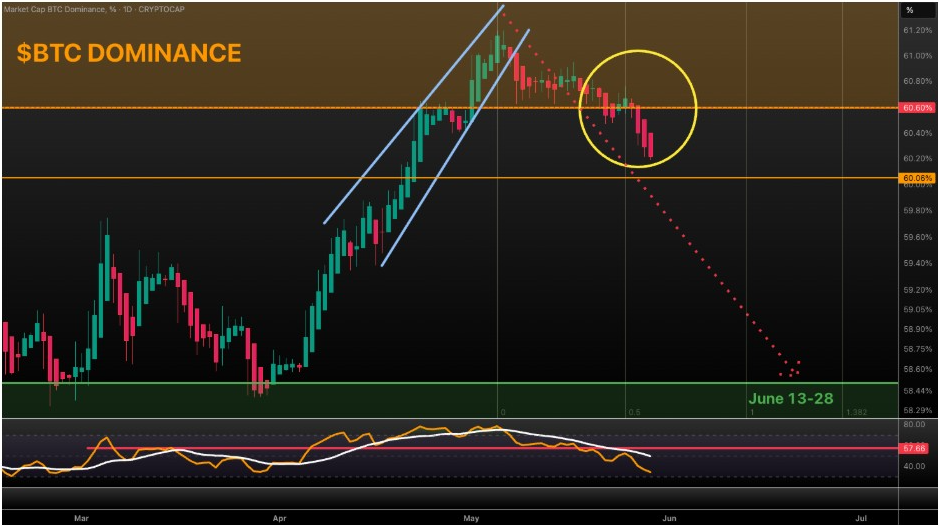
Bitcoin Dominance Approaches Key Resistance as Traders Watch Altcoin Rotation