News that U.S. President Donald Trump has ordered military strikes against Iran broke early Saturday morning, February 28, and a few days later, more than 10 countriesNews that U.S. President Donald Trump has ordered military strikes against Iran broke early Saturday morning, February 28, and a few days later, more than 10 countries

Nobel economist: Trump getting a major reality check

2026/03/05 02:37
3 min read
For feedback or concerns regarding this content, please contact us at [email protected]

News that U.S. President Donald Trump has ordered military strikes against Iran broke early Saturday morning, February 28, and a few days later, more than 10 countries had been pulled into the conflict in some way. Axios' Herb Scribner described the scope of the war in an article published on March 3, noting that Iran had fired strikes against U.S. installations in Saudi Arabia, Qatar, Kuwait, Jordan, Bahrain, Oman and other Middle Eastern countries. And while Israel was firing missiles at Iran, the Hezbollah militia in Lebanon, Scribner reported, "entered the war on Iran's side, launching missiles and drones at Israel on Monday."

The European Union (EU), according to Scribner, was "pulled into the conflict" when "drones struck the British Royal Air Force base at Akrotiri in Cyprus" and Cyprus Mail reported that the strikes probably came from Hezbollah.

In an article published on March 4, liberal economist Paul Krugman stresses that the conflict is giving Trump a major reality check — as it will certainly have a significant impact on both energy and the economy.

"The bad news comes in two parts," Krugman warns. "First, any hopes that this war might be extremely brief are fading. The Trump Administration may have imagined that decapitating the Iranian government would bring swift regime change, but the Islamic state isn't a government of mere thugs — yes, they're evil thugs, but they're also serious religious fanatics facing what, for them, is an existential threat. And their grip on power isn't that easy to break…. Second, war in the middle of the world's most important oil-producing region — which is also a key source of liquefied natural gas — inevitably has major consequences for energy prices."

Krugman continues, "Once upon a time, U.S. and Israeli air superiority might have contained Iran's ability to harm its neighbors. But in an age in which even third-rate powers have the ability to launch missiles and drones, Iran has a huge stockpile of drones and also has ballistic missiles that are destructive, hard to intercept, and have a 1200-mile range…. The potential targets at risk include key parts of the region's energy infrastructure. Above all, the war threatens tanker traffic through the Strait of Hormuz, which is how the bulk of Middle Eastern oil and gas normally reaches world markets. And the risk of Iranian attacks has effectively closed the Strait."

Krugman notes, however, that there is also some "good news" from both an economic standpoint and an energy standpoint.

"Even if oil prices go much higher, to $100 a barrel and beyond," the former New York Times columnist observes, "it won't necessarily trigger an economic crisis. I explained why on Monday: The United States and other advanced nations are far less oil-dependent than they were in the 1970s, when oil shocks did cause major economic disruption."

  • george conway
  • noam chomsky
  • civil war
  • Kayleigh mcenany
  • Melania trump
  • drudge report
  • paul krugman
  • Lindsey graham
  • Lincoln project
  • al franken bill maher
  • People of praise
  • Ivanka trump
  • eric trump
Market Opportunity
Major Logo
Major Price(MAJOR)
$0.06018
$0.06018$0.06018
-0.64%
USD
Major (MAJOR) Live Price Chart
Disclaimer: The articles reposted on this site are sourced from public platforms and are provided for informational purposes only. They do not necessarily reflect the views of MEXC. All rights remain with the original authors. If you believe any content infringes on third-party rights, please contact [email protected] for removal. MEXC makes no guarantees regarding the accuracy, completeness, or timeliness of the content and is not responsible for any actions taken based on the information provided. The content does not constitute financial, legal, or other professional advice, nor should it be considered a recommendation or endorsement by MEXC.

You May Also Like

FCA komt in 2026 met aangepaste cryptoregels voor Britse markt

FCA komt in 2026 met aangepaste cryptoregels voor Britse markt

De Britse financiële waakhond, de FCA, komt in 2026 met nieuwe regels speciaal voor crypto bedrijven. Wat direct opvalt: de toezichthouder laat enkele klassieke financiële verplichtingen los om beter aan te sluiten op de snelle en grillige wereld van digitale activa. Tegelijkertijd wordt er extra nadruk gelegd op digitale beveiliging,... Het bericht FCA komt in 2026 met aangepaste cryptoregels voor Britse markt verscheen het eerst op Blockchain Stories.
Share
Coinstats2025/09/18 00:33
PBOC Sets Strongest Fix In 34 Months, Signaling Strategic Shift
PBOC Sets Strongest Fix In 34 Months, Signaling Strategic Shift

The post PBOC Sets Strongest Fix In 34 Months, Signaling Strategic Shift appeared on BitcoinEthereumNews.com. Yuan Mid-Point Soars: PBOC Sets Strongest Fix In 34
Share
BitcoinEthereumNews2026/03/05 11:45
Fintech Is Leveling the Playing Field in Trading, Says Zak Westphal

Fintech Is Leveling the Playing Field in Trading, Says Zak Westphal

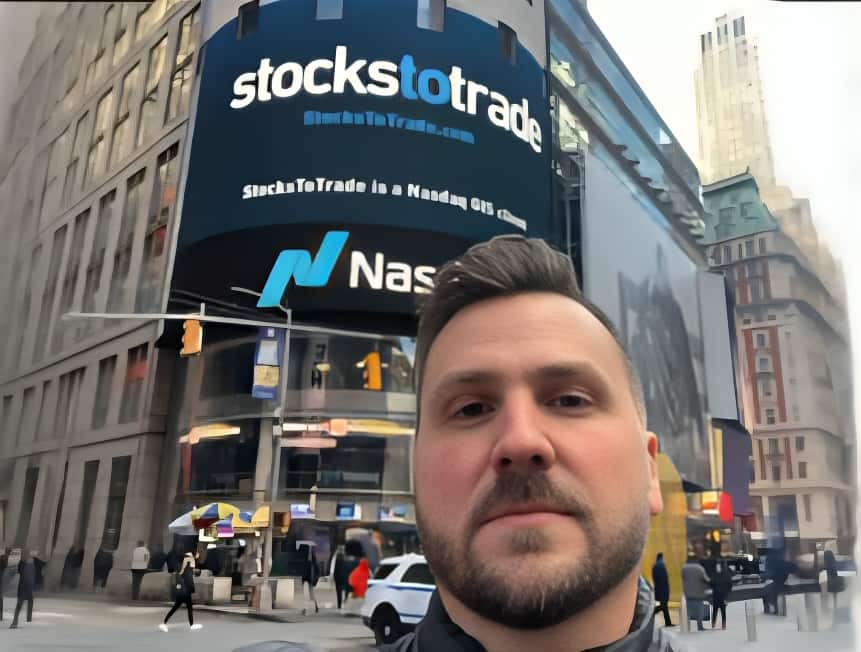
The post Fintech Is Leveling the Playing Field in Trading, Says Zak Westphal appeared on BitcoinEthereumNews.com. The trading world was once divided into two groups: those with access to high-powered data and those without.  As you might have guessed, it was the major institutions (like Wall Street) that had a monopoly on the tools, data access, and speed. This left retail traders fighting to keep up. This gap is closing rapidly, and the main reason is the introduction of new technology and platforms entering the fold. Zak Westphal has been at the forefront of this transformation. While Co-Founding StocksToTrade, he has been a big part of empowering everyday traders to gain access to the real-time information and algorithmic systems that have long provided Wall Street with its edge. We spoke with him about how fintech is reshaping the landscape and what it really means for retail traders today. Fintech has changed everything from banking to payments. In your opinion, what has been its greatest impact on the world of trading? For me, it’s all about access. When I began my trading career, institutions had a significant advantage, even more pronounced than it is now. They had direct feeds of data, algorithmic systems, and research teams monitoring information right around the clock. Retail traders, on the other hand, had slower information and pretty basic tools in comparison.  Fintech has substantially changed the game. Today, a retail trader from home can access real-time market data, scan thousands of stocks in mere seconds, and utilize algorithmic tools that were once only available to hedge funds. I can’t think of a time when the access for everyday traders has been as accessible as it is today. That doesn’t mean the advantages are gone, because Wall Street still has resources that individuals simply can’t have. However, there is now an opportunity for everyday traders actually to compete. And that is a…
Share
BitcoinEthereumNews2025/09/18 17:14