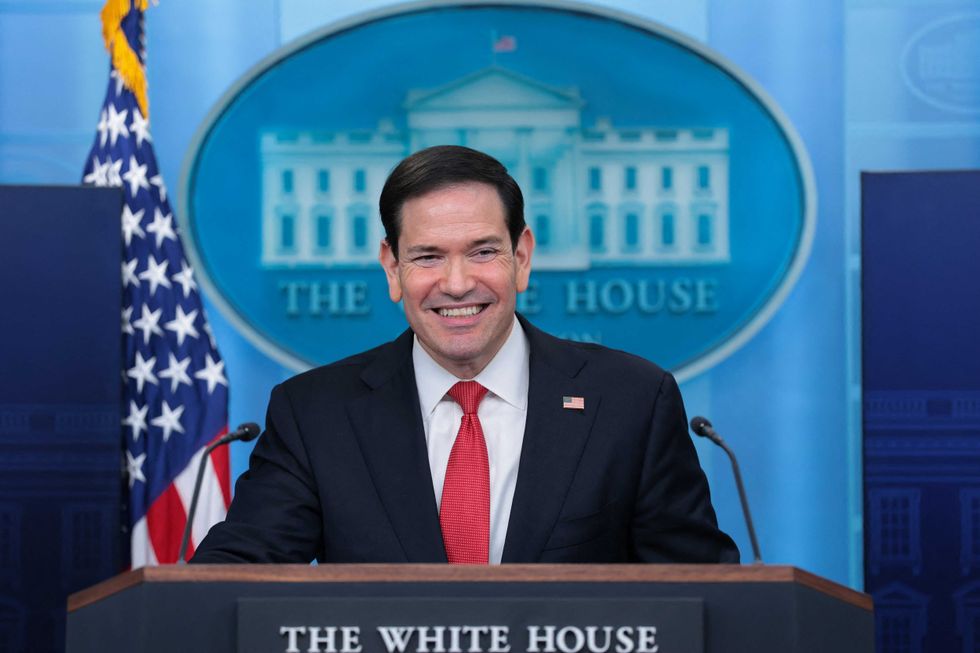
Data shows Israel’s Finance Ministry puts costs at $3B; 41,300 BTC per week, Israel Iran war cost, Bitcoin equivalent varies by BTC/USD basis and periodData shows Israel’s Finance Ministry puts costs at $3B; 41,300 BTC per week, Israel Iran war cost, Bitcoin equivalent varies by BTC/USD basis and period

Bitcoin draws scrutiny on ‘41,300 BTC/week’ war-cost claim

2026/03/06 01:26
3 min read
For feedback or concerns regarding this content, please contact us at [email protected]

No, 41,300 BTC per week lacks credible sourcing

The claim that Israel’s Iran war will soon cost the equivalent of 41,300 BTC per week lacks a verifiable, accountable source. No defense ministry, government budget office, or named expert report is cited for that exact Bitcoin equivalent, and the figure is not traceable to a published methodology.

Without a disclosed U.S. dollar baseline and a time-stamped BTC/USD rate, 41,300 BTC per week is not reproducible. As a simple sense check, at roughly $71,055 per BTC, 41,300 BTC/week implies about $2.94 billion per week, or roughly $419 million per day, which sits below several published daily-cost baselines for major escalations.

What weekly costs equal in BTC, and why estimates vary

Translating wartime spending into a Bitcoin equivalent is a straightforward division: BTC needed = USD cost ÷ BTC/USD price. For illustration only, assuming about $71,055 per BTC at the time of this writing, a reported daily outlay of $725 million would imply roughly $5.08 billion per week, or about 71,400 BTC/week at that working price, as reported by TRT World for the early phase of strikes.

Related articles

Ethereum firms as Bitcoin stalls below $72K on macro cues

Only Hours Left: SUI Declines, ETH Stabilizes, but BlockDAG Captivates Investors with 100x ROI Potential!

One published calculation translates total spend into BTC terms. As reported by CryptoSlate: “the Israel–Iran conflict cost about $25.5 billion over 12 days, corresponding to over 240,837 BTC” at then-prevailing prices.

Applying a consistent approach to weekly math shows why results swing with assumptions. If a $25.5 billion, 12-day total were spread proportionally over a week and then converted using a working price near $71,055/BTC, the output would be roughly 209,000–210,000 BTC/week, far from 41,300 BTC/week, solely due to different baselines and price timestamps.

Scope also drives dispersion. Former Israeli Defense Ministry officials, cited by Calcalistech, note that costs depend on scenario variables such as duration, reserve mobilization, and the scale of armaments, meaning direct military expenditures and broader economic impacts cannot be conflated into a single, static BTC figure.

Israel–Iran war cost: credible baselines and BTC sensitivity

Credible USD baselines remain the anchor. As reported by TRT World, early-phase daily spending estimates near $725 million imply about $5.08 billion per week; CryptoSlate separately framed a 12-day total near $25.5 billion, which it translated to more than 240,837 BTC at the time of its analysis. These are different scopes, one daily/weekly, one multi-week total, so their BTC equivalents are not directly comparable without aligning time windows and price inputs.

Bitcoin’s price adds a second layer of variability to any “Bitcoin equivalent.” Using a working price of around $71,055 per BTC simply for conversion examples, $5.08 billion per week equates to roughly 71,400 BTC/week; if the price were $60,000 instead, the same USD cost would translate to about 84,600 BTC, while at $80,000 it would be closer to 63,400 BTC. This sensitivity explains why a fixed sound bite like “41,300 BTC per week” is unreliable absent transparent assumptions about the USD cost basis, timeframe, and the BTC/USD rate used.

Disclaimer: The information provided in this article is for informational purposes only and does not constitute financial, investment, legal, or trading advice. Cryptocurrency markets are highly volatile and involve risk. Readers should conduct their own research and consult with a qualified professional before making any investment decisions. The publisher is not responsible for any losses incurred as a result of reliance on the information contained herein.
Market Opportunity
Bitcoin Logo
Bitcoin Price(BTC)
$70,931.26
$70,931.26$70,931.26
-0.99%
USD
Bitcoin (BTC) Live Price Chart
Disclaimer: The articles reposted on this site are sourced from public platforms and are provided for informational purposes only. They do not necessarily reflect the views of MEXC. All rights remain with the original authors. If you believe any content infringes on third-party rights, please contact [email protected] for removal. MEXC makes no guarantees regarding the accuracy, completeness, or timeliness of the content and is not responsible for any actions taken based on the information provided. The content does not constitute financial, legal, or other professional advice, nor should it be considered a recommendation or endorsement by MEXC.
Tags:

You May Also Like

Pi Network Set to Become First Cryptocurrency Granted Access to Federal Reserve Core Payment System

Pi Network Set to Become First Cryptocurrency Granted Access to Federal Reserve Core Payment System

Pi Network Set to Become First Cryptocurrency Granted Access to Federal Reserve Core Payment System Pi Network, the rapidly growing Web3 ecosystem known for
Share
Hokanews2026/03/06 14:13
Kalshi debuts ecosystem hub with Solana and Base

Kalshi debuts ecosystem hub with Solana and Base

The post Kalshi debuts ecosystem hub with Solana and Base appeared on BitcoinEthereumNews.com. Kalshi, the US-regulated prediction market exchange, rolled out a new program on Wednesday called KalshiEco Hub. The initiative, developed in partnership with Solana and Coinbase-backed Base, is designed to attract builders, traders, and content creators to a growing ecosystem around prediction markets. By combining its regulatory footing with crypto-native infrastructure, Kalshi said it is aiming to become a bridge between traditional finance and onchain innovation. The hub offers grants, technical assistance, and marketing support to selected projects. Kalshi also announced that it will support native deposits of Solana’s SOL token and USDC stablecoin, making it easier for users already active in crypto to participate directly. Early collaborators include Kalshinomics, a dashboard for market analytics, and Verso, which is building professional-grade tools for market discovery and execution. Other partners, such as Caddy, are exploring ways to expand retail-facing trading experiences. Kalshi’s move to embrace blockchain partnerships comes at a time when prediction markets are drawing fresh attention for their ability to capture sentiment around elections, economic policy, and cultural events. Competitor Polymarket recently acquired QCEX — a derivatives exchange with a CFTC license — to pave its way back into US operations under regulatory compliance. At the same time, platforms like PredictIt continue to push for a clearer regulatory footing. The legal terrain remains complex, with some states issuing cease-and-desist orders over whether these event contracts count as gambling, not finance. This is a developing story. This article was generated with the assistance of AI and reviewed by editor Jeffrey Albus before publication. Get the news in your inbox. Explore Blockworks newsletters: Source: https://blockworks.co/news/kalshi-ecosystem-hub-solana-base
Share
BitcoinEthereumNews2025/09/18 04:40
With an annualized return of 6%, Musk declares war on traditional banks.

With an annualized return of 6%, Musk declares war on traditional banks.

Author: Plain Language Blockchain In early March 2026, American actor William Shatner—who plays Captain Kirk in Star Trek—posted a screenshot on X. Nothing serious
Share
PANews2026/03/06 14:00