

Kraken's Fed Access Ends Crypto's Reliance on Fragile Bank Partnerships

Kraken announced Wednesday that its banking subsidiary Kraken Financial has been granted a Federal Reserve master account – the first time a digital asset-focused bank has secured direct access to the US central bank's payment infrastructure.
The approval allows Kraken Financial, a Wyoming-chartered Special Purpose Depository Institution (SPDI), to connect directly to Fedwire and other core US payment rails. In practice, this means the exchange can now settle dollar transactions through the Federal Reserve system without routing them through a correspondent bank.
"This milestone marks the convergence of crypto infrastructure and sovereign financial rails," said Arjun Sethi, co-CEO of Payward, Kraken's parent company. "With a Federal Reserve master account, we can operate not as a peripheral participant in the U.S. banking system, but as a directly connected financial institution."
Why It Matters
A Fed master account is the foundational credential of American banking infrastructure. Institutions that hold one can maintain reserves directly at the Federal Reserve and interact with the payment system on equal footing with traditional banks.
For the crypto industry, the absence of such access has been a persistent vulnerability. Exchanges and custodians have historically relied on banking partners that can sever relationships with little notice – a dynamic that has repeatedly disrupted operations across the sector. Direct Fed connectivity eliminates that intermediary risk while reducing settlement times and operational costs.
The approval comes after what Kraken described as "more than five years of sustained regulatory engagement, extensive examination, and operational scrutiny."
The Wyoming Playbook
Kraken's path to Fed access runs through Wyoming, which has spent years cultivating crypto-friendly banking regulation. The state created the SPDI charter specifically to give digital asset companies a route into the regulated banking system while addressing supervisory concerns about risk.
SPDIs operate on a full-reserve model, meaning they must hold liquid assets equal to or greater than 100% of customer deposits – a structure designed to eliminate the fractional-reserve risks that have troubled regulators elsewhere in crypto.
What Comes Next
Kraken Financial will begin with a phased rollout focused on institutional clients, with broader integration into Payward's infrastructure to follow.
Sethi pointed to longer-term possibilities enabled by the architecture: "Over time, this could enable atomic settlement between fiat and crypto, institutional-grade cash management integrated with digital asset custody, and programmable financial products built within a fully regulated framework."
The approval is likely to intensify pressure on the Federal Reserve from other crypto-adjacent firms seeking similar access. Custodia Bank, another Wyoming SPDI founded by Caitlin Long, has been locked in litigation with the Fed after being denied a master account in 2023 – a case that highlighted the central bank's gatekeeping power over which institutions can access its payment systems.
For Kraken, the approval represents validation of a multi-year strategy to build within the regulatory perimeter rather than around it. Whether other crypto firms can replicate that path – or whether Kraken's access remains an exception – will depend on how the Fed responds to what is likely to be a flood of new applications.
Blockcast – Licensed to Shill: Designing Decentralization: Governance, Power, and the Validator Problem
This episode examines what happens when decentralization moves from whitepaper language to operational reality. Tanisha Katara joins the discussion to unpack three structural tensions inside modern crypto governance: validator power concentration, voter apathy, and the emerging role of AI agents in decision-making systems.
If you enjoyed this episode, please like and subscribe to Blockcast on your favorite podcast platforms like Spotify and Apple.
Blockcast is hosted by Head of APAC at Ledger, Takatoshi Shibayama. Previous episodes of Blockcast can be found here, with guests like Fredrick Gregaard (Cardano Foundation), Daren Guo (Reap), Yat Siu (Animoca Brands), Kean Gilbert (Lido), Joey Isaacson (Nook), Kapil Dhiman (Quranium) Eric van Miltenburg (Ripple), Davide Menegaldo (Neon EVM), Anastasia Plotnikova (Fideum), Jeremy Tan (Singapore parliament candidate), Hassan Ahmed (Coinbase) and more on our recent shows.
Be at the heart of TradFi–DeFi collaboration at Money20/20 Asia 2026.
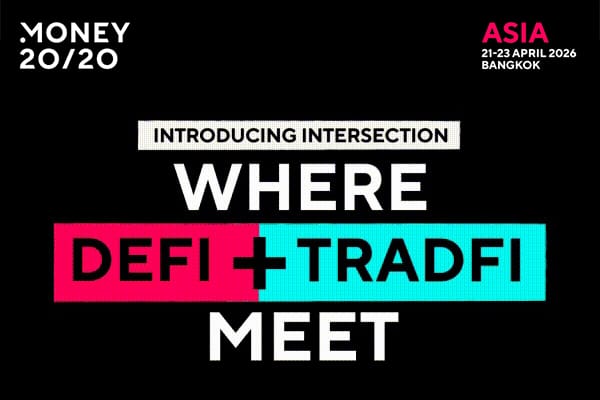
Are you looking to forge partnerships with banks and fintechs? To expand into new markets across Asia, or to secure funding from top-tier investors? This April, the world of digital assets, blockchain, and Web3 converges with the biggest players in APAC’s financial ecosystem at Money20/20 Asia 2026 and its brand new ‘Intersection’ zone, complete with a dedicated content stage, TradFi-Defi innovator showcase, and curated networking spaces. From traditional banking giants to decentralised innovators, private equity leaders, and cutting-edge fintech disruptors, this is where they meet to forge partnerships, spark dialogue, and shape the future of finance.


You May Also Like

Taiko ERC20 Vault Exploit Leads to Estimated $1 Million Loss, Blockaid Reports

Bitcoin Prediction From February Comes Back Into Focus As BTC Trades Near $65K Zone

Yamal opens World Cup account in style as Spain thrash Saudi Arabia 4-0 to top group



