Russia weighs a separate stablecoin law as part of broader crypto regulatory reforms, with a focus on cross-border payments and tighter rules for unlicensed tradingRussia weighs a separate stablecoin law as part of broader crypto regulatory reforms, with a focus on cross-border payments and tighter rules for unlicensed trading

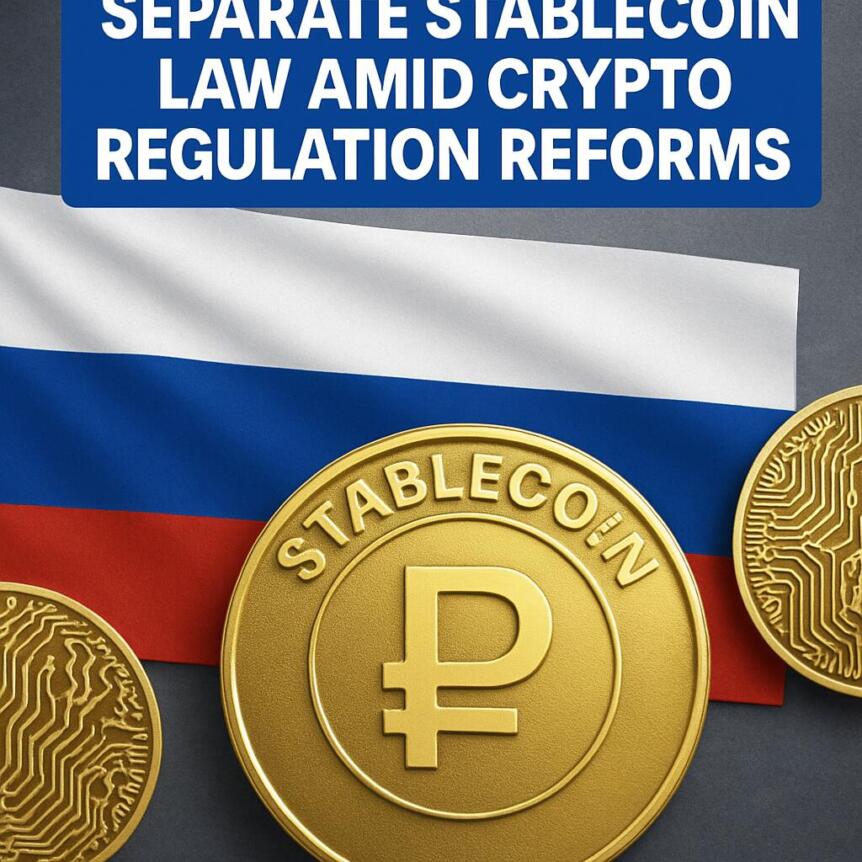
Russia Considers Separate Stablecoin Law Amid Crypto Regulation Reforms
For feedback or concerns regarding this content, please contact us at [email protected]
Russia Considers Separate Stablecoin Law Amid Crypto Regulation Reforms

Key Insights

  • Russia separate stablecoin law may create clear legal status for fiat-pegged tokens within the national financial system.
  • Lawmakers may restrict trading on unlicensed crypto platforms under a broader exchange regulation bill.
  • A ruble-pegged stablecoin approved for trade highlights Russia’s focus on cross-border blockchain payments.

Russia Plans Dedicated Stablecoin Regulation

The Russia separate stablecoin law proposal forms part of the country’s broader cryptocurrency regulatory reforms. The Ministry of Finance is considering legislation that will address fiat-pegged digital assets separately from exchange regulations.

Officials believe stablecoins serve a different function than decentralized cryptocurrencies. As a result, regulators prefer a legal framework designed specifically for these assets. The proposed Russia separate stablecoin law would define how stablecoins operate within the national financial system.

Alexey Yakovlev, director of the ministry’s Department of Financial Policy, highlighted the potential of these assets. He noted that stablecoins could play a significant role in financial infrastructure and global transactions.

At present, Russian law does not clearly define stablecoins. The planned legislation aims to clarify their legal status and regulatory classification.

Crypto Exchange Regulation Moves Forward

The Russia separate stablecoin law debate comes after advancements on wider cryptocurrency regulation. Legislators are still working on a bill that will govern crypto trading platforms nationwide.

The proposed exchange law may prohibit Russian citizens from trading digital assets on platforms that lack official permits. Regulators desire to enhance regulation and minimize risk in the crypto market.

With the proposed structure, the transactions might be conducted in the regulated institutions like banks, brokers, and stock exchanges. With the help of this structure, compliance and transparency will be enhanced.

Reports indicate lawmakers may present the exchange legislation to the State Duma during the spring session. If approved, the rules could take effect as early as July.

Stablecoins and Cross-Border Payments

Interest in the Russia separate stablecoin law reflects the country’s focus on international settlements. Policymakers view stablecoins as potential tools for cross-border financial transactions.

The Bank of Russia introduced a regulatory category called foreign digital rights. This type can involve cryptocurrencies and stablecoins that can be used in particular international applications.

An overseas trade stablecoin named A7A5 was authorized as a ruble-pegged stablecoin. Authorities approved the asset for cross-border settlements that meet regulatory requirements.

Negotiations among the central bank, the finance ministry and industry players are underway. The regulators want to come up with balanced rules to ensure financial stability and innovation.

The proposal of the Russia separate stablecoin law is indicative of the much bigger plan to modernize financial infrastructure. Well-defined policies may boost the trust in payment systems based on blockchains.

This article was originally published as Russia Considers Separate Stablecoin Law Amid Crypto Regulation Reforms on Crypto Breaking News – your trusted source for crypto news, Bitcoin news, and blockchain updates.


Market Opportunity
CROSS Logo
CROSS Price(CROSS)
$0.06856
$0.06856$0.06856
-11.86%
USD
CROSS (CROSS) Live Price Chart
Disclaimer: The articles reposted on this site are sourced from public platforms and are provided for informational purposes only. They do not necessarily reflect the views of MEXC. All rights remain with the original authors. If you believe any content infringes on third-party rights, please contact [email protected] for removal. MEXC makes no guarantees regarding the accuracy, completeness, or timeliness of the content and is not responsible for any actions taken based on the information provided. The content does not constitute financial, legal, or other professional advice, nor should it be considered a recommendation or endorsement by MEXC.

You May Also Like

Let insiders trade – Blockworks

Let insiders trade – Blockworks

The post Let insiders trade – Blockworks appeared on BitcoinEthereumNews.com. This is a segment from The Breakdown newsletter. To read more editions, subscribe ​​“The most valuable commodity I know of is information.” — Gordon Gekko, Wall Street Ten months ago, FBI agents raided Shayne Coplan’s Manhattan apartment, ostensibly in search of evidence that the prediction market he founded, Polymarket, had illegally allowed US residents to place bets on the US election. Two weeks ago, the CFTC gave Polymarket the green light to allow those very same US residents to place bets on whatever they like. This is quite the turn of events — and it’s not just about elections or politics. With its US government seal of approval in hand, Polymarket is reportedly raising capital at a valuation of $9 billion — a reflection of the growing belief that prediction markets will be used for much more than betting on elections once every four years. Instead, proponents say prediction markets can provide a real service to the world by providing it with better information about nearly everything. I think they might, too — but only if insiders are free to participate. Yesterday, for example, Polymarket announced new betting markets on company earnings reports, with a promise that it would improve the information that investors have to work with.  Instead of waiting three months to find out how a company is faring, investors could simply watch the odds on Polymarket.  If the probability of an earnings beat is rising, for example, investors would know at a glance that things are going well. But that will only happen if enough of the people betting actually know how things are going. Relying on the wisdom of crowds to magically discern how a business is doing won’t add much incremental knowledge to the world; everyone’s guesses are unlikely to average out to the truth. If…
Share
BitcoinEthereumNews2025/09/18 05:16
Republican knives come out for Kristi Noem: ‘I don’t think she walks away from this’

Republican knives come out for Kristi Noem: ‘I don’t think she walks away from this’

MAGA lawmakers have started to unleash their real thoughts on ousted Homeland Security Secretary Kristi Noem, The Daily Beast reported on Friday. Rep. Nancy Mace
Share
Rawstory2026/03/07 05:57
Kazakhstan to launch $350M national crypto reserve

Kazakhstan to launch $350M national crypto reserve

The government of Kazakhstan is ready to begin acquiring cryptocurrencies and related stocks in a few weeks’ time, the country’s monetary authority unveiled. Some
Share
Cryptopolitan2026/03/07 05:40