USDC tops Tether as stablecoin transfers hit all-time high $1.8T
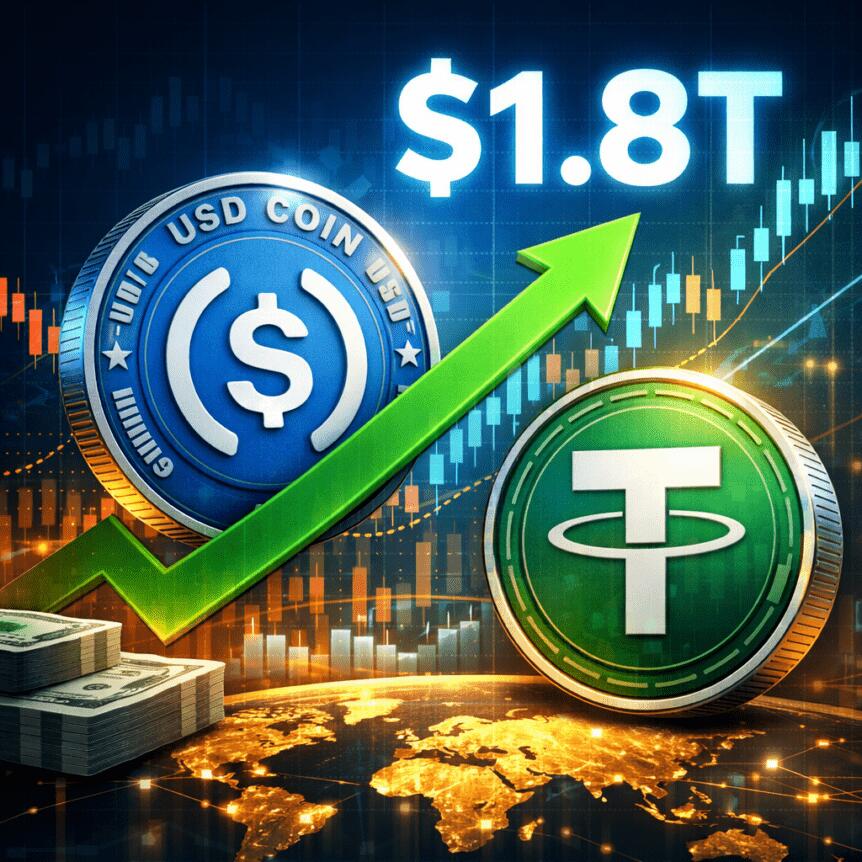
Stablecoins are delivering a liquidity surge unseen in recent cycles, with February marking a record on-chain transfer activity and signaling a shift in how capital moves through crypto markets. Allium’s data shows total stablecoin transfers climbed to $1.8 trillion in February, underscoring a robust appetite for dollar-pegged liquidity across chains. Within that, USDC accounted for roughly 70% of stablecoin activity, while USDt handled about $514 billion in transfers. The divergence—USDC’s dominance in flow despite a smaller market cap—illustrates how on-chain dynamics can outpace headline market-size metrics. The backdrop includes Circle reporting strong Q4 2025 earnings tied to rapid USDC business growth and expanded payments operations, alongside broader regulatory chatter shaping stablecoin frameworks.
Key takeaways
- February set a monthly record for stablecoin transfer volume at $1.8 trillion, according to Allium data.
- USDC comprised roughly 70% of all stablecoin transfer volume, with $1.26 trillion moved in February.
- USDt accounted for about $514 billion in stablecoin transfers in the same month, highlighting a substantial, yet smaller, slice of activity.
- USDC’s transfer volume has consistently surpassed USDt in recent months, even as USDt retains a larger market cap; Moonrock Capital’s Simon Dedic highlighted the trend on social media.
- New supply dynamics saw USDC minting accelerate in March, with Arkham data showing more than $3 billion minted in the first week of the month, while USDt’s supply remained comparatively flat.
- Broader liquidity signals—such as rising stablecoin supply on exchanges and the Stablecoin Supply Ratio’s recovery—converge with Bitcoin’s renewed price momentum, suggesting improving buying power in the market.
Tickers mentioned: $BTC, $USDC, $USDT
Sentiment: Bullish
Price impact: Positive. A higher on-chain stablecoin presence translates into greater liquidity for buyers, which can support price recoveries during risk-on periods.
Market context: The current liquidity uptick comes as crypto markets digest improved risk sentiment and a more active stablecoin ecosystem. Regulatory developments, including state-level discussions around stablecoins in places like Florida, add a layer of policy uncertainty that market participants are watching closely. These dynamics shape how liquidity profiles evolve across exchanges and DeFi protocols, influencing funding costs, slippage, and the pace of any potential rebound in broader crypto markets.
Why it matters
The February data illuminate a shift in how liquidity is sourced and deployed within the crypto ecosystem. Stablecoins are not only serving as a unit of account and settlement layer; they are becoming a primary engine for on-chain liquidity, enabling faster settlement and cross-chain movement. This has practical implications for traders, liquidity providers, and developers building on-ramp/off-ramp solutions, as larger flows can reduce slippage and improve the efficiency of executing large trades without destabilizing prices.
From an investor perspective, the observed dynamic—where USDC shows outsized transfer activity despite a smaller market cap relative to USDT—suggests that on-chain demand and real-use cases (such as payments, settlements, and cross-chain liquidity provisioning) can outpace traditional metrics. For builders and wallets, the data point to a thriving settlement layer, underscoring why stablecoins remain central to DeFi liquidity provisioning and cross-chain ecosystems. The broader regulatory context, including bills or policy proposals under consideration in jurisdictions like Florida, could influence user adoption and the pace at which institutions participate in stablecoin ecosystems, even as on-chain demand remains robust.
The market’s attention remains anchored on indicators that go beyond wallet counts or market caps and instead focus on real, on-chain activity. The Stablecoin Supply Ratio (SSR), which tracks Bitcoin’s market cap relative to stablecoin supply, has been recovering after a February dip, a signal CryptoQuant analyst Sunny Mom described as indicating “buying power returning to the market.” This sentiment aligns with a rebound in stablecoin supply on exchanges, where data indicate inflows contributing to a three-week high of roughly $66.5 billion, and with March inflows of about $5.14 billion on a single day tightening the liquidity pipeline. When sidelined capital returns to centralized and decentralized venues, it often precedes price moves in the flagship crypto assets, including Bitcoin and ether, as traders position for shifts in risk appetite.
What to watch next
- How March USDC minting evolves relative to USDT, and whether the pace sustains the early-month momentum observed by Arkham data.
- The trajectory of the SSR metric and whether rising stablecoin inflows on exchanges persist into the next quarter.
- Regulatory developments around stablecoins, including any state-level bills or federal policy steps that could affect settlement rails and cross-border payments.
- Circle’s ongoing earnings and operational updates, especially around USDC’s settlement capabilities and any further expansion of payments networks (as noted in prior earnings coverage).
- Monitoring the price action of Bitcoin and other major assets as liquidity flows and risk sentiment evolve, including shifts in funding rates and on-chain transaction activity.
Sources & verification
- Allium data on stablecoin transfer volumes, February metrics for USDC and USDt transfers.
- Arkham data on USDC minting pace in March, including the first-week minting total.
- Moonrock Capital — Simon Dedic’s observation on USDC vs USDT transfer volumes (social post).
- Cointelegraph coverage on Circle’s Q4/2025 earnings and USDC-related growth and settlement expansion.
- CryptoQuant analysis of SSR recovery and related exchange stablecoin inflows (including the March 5 figure of $5.14 billion).
- Florida Senate coverage of state-level stablecoin legislation and related regulatory considerations.
Stablecoins drive liquidity and the road ahead
The on-chain era is increasingly defined by how dollars move between wallets, scripts, and cross-chain bridges rather than by standalone token flips alone. February’s record stablecoin transfer volume, led by USDC (CRYPTO: USDC) and supported by a broad base of on-chain activity, suggests a fresh wave of liquidity is re-entering markets. While USDt (CRYPTO: USDT) remains the larger market-cap holder, its role in daily transaction flow appears to be waning relative to USDC’s immediate-use utility and cross-chain flexibility. This divergence — a rising proportion of actual transfers in USDC alongside ongoing growth of USDT’s nominal cap — highlights the complexity of today’s liquidity stack: more dollars are moving in ways that can support trades, settlements, and potentially price resilience as macro and regulatory signals evolve.
Watching the next few weeks will be instructive: will USDC sustain its elevated transfer-volume share and continue minting beyond the early March pace observed by Arkham? Will the SSR continue its ascent as more stablecoins circulate on exchanges? And how will policymakers respond to a stablecoin ecosystem that both powers practical payments and invites heightened scrutiny? The answers will shape not only the immediate liquidity environment but also the longer-term viability of stablecoins as liquidity rails for the crypto market.
//platform.twitter.com/widgets.js
This article was originally published as USDC tops Tether as stablecoin transfers hit all-time high $1.8T on Crypto Breaking News – your trusted source for crypto news, Bitcoin news, and blockchain updates.


You May Also Like

Top 5 best free AI crypto trading bots in the US in 2026: Beginner’s guide to hands-free profits

This Frankenstein AI Merges Claude Opus, GLM and Qwen—And Outperforms Top Models