

IMF’s Georgalina Georgieva: Global Economic Resilience Faces Critical Test from New Middle East Conflict
BitcoinWorld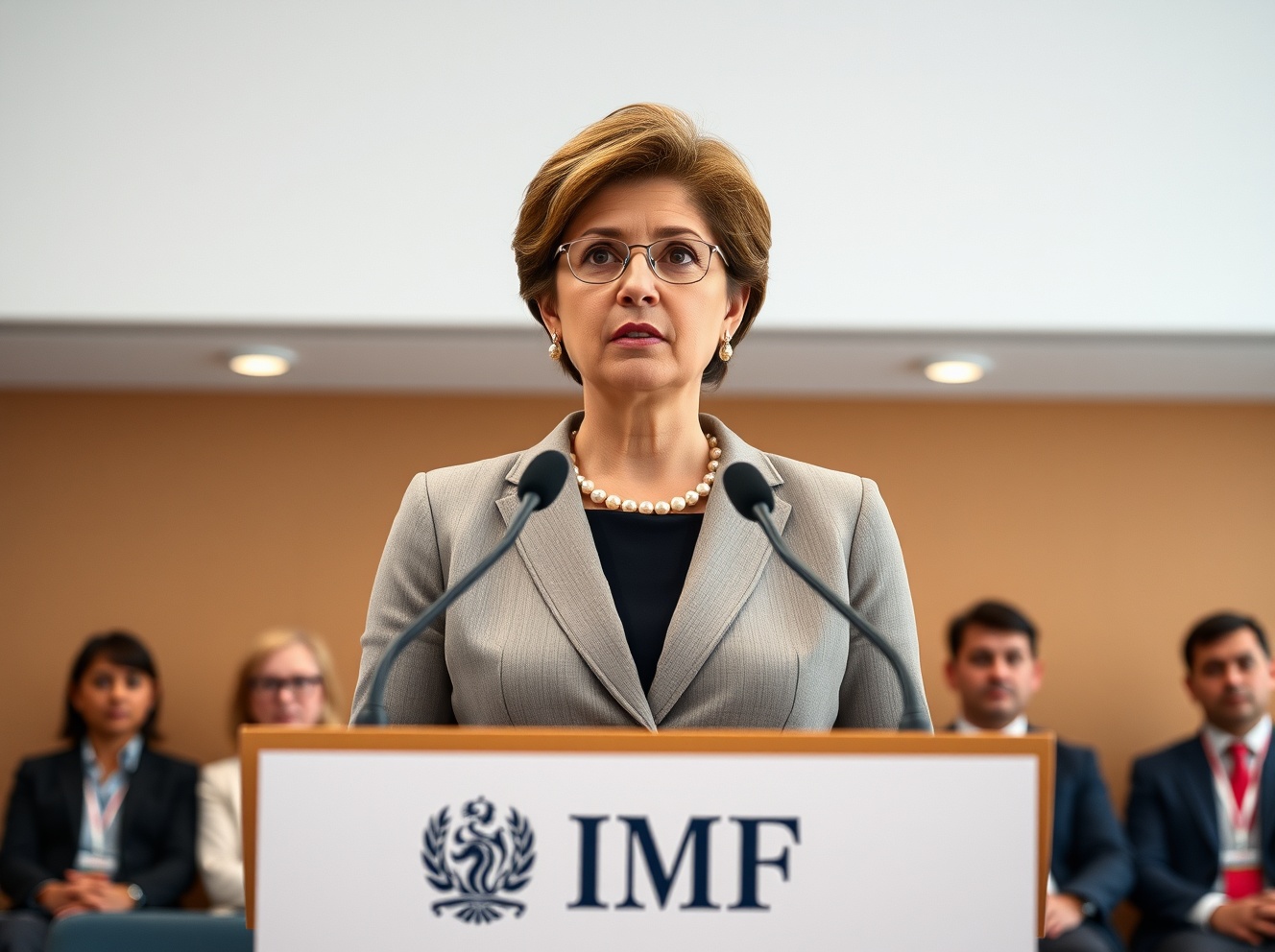
IMF’s Georgalina Georgieva: Global Economic Resilience Faces Critical Test from New Middle East Conflict
WASHINGTON, D.C., April 15, 2025 — International Monetary Fund Managing Director Kristalina Georgieva delivered a sobering assessment today, warning that global economic resilience faces its most severe test in years due to escalating conflict in the Middle East. Her statement comes as financial markets show increasing volatility and policymakers worldwide grapple with the potential economic fallout.
IMF’s Georgieva Warns of Economic Resilience Test
The International Monetary Fund’s latest analysis reveals troubling indicators across multiple economic sectors. Consequently, the organization now monitors several critical areas for potential disruption. Energy markets show particular vulnerability to supply chain interruptions. Additionally, global trade flows face significant rerouting challenges. Financial stability indicators have begun flashing warning signals in recent weeks.
Georgieva emphasized the cumulative nature of recent economic shocks during her briefing. “We have witnessed remarkable resilience through multiple crises,” she stated. “However, each new challenge consumes economic buffers and policy space.” The IMF chief specifically referenced three previous resilience tests:
- 2020-2022 Pandemic Recovery: Global GDP contraction followed by uneven rebound
- 2022-2023 Inflation Surge: Central bank responses and monetary tightening
- 2023-2024 Geopolitical Fragmentation: Trade realignment and supply chain restructuring
Current conflict dynamics present distinct challenges according to IMF analysis. Regional escalation risks creating simultaneous supply and demand shocks. Furthermore, investor confidence shows measurable deterioration in emerging markets. The table below illustrates key vulnerability indicators:
| Indicator | Pre-Conflict Level | Current Status | Risk Assessment |
|---|---|---|---|
| Oil Price Volatility | Moderate | High | Severe |
| Shipping Insurance Rates | Stable | Spiking | High |
| Regional Currency Stability | Generally Stable | Under Pressure | Moderate-High |
Middle East Conflict’s Economic Impact Analysis
The new Middle East conflict threatens multiple economic channels simultaneously. Energy markets represent the most immediate transmission mechanism. Regional oil production accounts for approximately 30% of global supply. Shipping routes through critical waterways face increasing security concerns. Moreover, regional economic activity experiences direct contraction from conflict zones.
Financial market reactions have been pronounced but measured so far. Risk premiums on Middle Eastern sovereign debt widened significantly. Equity markets in neighboring countries showed substantial declines. However, global systemic indicators remain within historical ranges. This relative stability reflects improved global risk management frameworks.
Trade disruption patterns follow concerning historical precedents. Insurance costs for regional shipping increased by 400% in some cases. Alternative routing adds substantial time and expense to global trade. Regional manufacturing hubs report supply chain interruptions. Agricultural exports from affected areas face complete suspension.
Expert Perspectives on Economic Resilience
Economic resilience represents more than mere recovery capacity according to experts. It encompasses adaptive capability during ongoing stress. The IMF defines resilience through four measurable components:
- Shock Absorption: Immediate impact mitigation through buffers
- Adaptive Response: Policy and behavioral adjustments to new conditions
- Transformative Capacity: Structural changes to reduce future vulnerability
- Learning Integration: Incorporating crisis lessons into systems
Recent IMF research indicates global resilience improvements since 2020. Countries developed stronger social safety nets during the pandemic. Central banks enhanced communication strategies during inflation battles. However, fiscal space diminished significantly across most economies. Policy makers now operate with reduced capacity for stimulus measures.
The current test differs fundamentally from previous challenges. Conflict creates simultaneous supply and demand destruction. Security considerations override purely economic calculations. Historical conflict economic analysis reveals several consistent patterns:
First, regional economic integration suffers immediate deterioration. Second, global spillovers concentrate in specific sectors. Third, recovery timelines extend well beyond conflict resolution. Fourth, structural changes often become permanent features.
Global Response and Policy Implications
International coordination mechanisms activated rapidly following conflict escalation. The IMF established a regional monitoring task force immediately. G20 finance ministers scheduled emergency consultations. Multilateral development banks prepared contingency financing arrangements. These responses reflect institutional learning from previous crises.
Policy makers face complex trade-offs in current circumstances. Inflation control remains a priority for many central banks. Simultaneously, growth support becomes increasingly necessary. Financial stability concerns introduce additional complications. The IMF recommends targeted, temporary measures rather than broad stimulus.
Energy security discussions gained renewed urgency among importing nations. Strategic petroleum reserve releases represent one immediate option. Accelerated energy transition investments offer longer-term solutions. Regional diplomatic efforts focus on maintaining critical transit routes. International law enforcement coordinates against sanctions evasion.
Historical Context and Comparative Analysis
The Middle East experienced multiple conflict-related economic disruptions historically. The 1973 oil embargo triggered global stagflation. The 1990-1991 Gulf War caused temporary oil price spikes. The 2003 Iraq invasion created prolonged regional instability. Each episode produced distinct economic consequences and policy responses.
Current circumstances differ in several important respects. Global energy markets diversified significantly since earlier crises. Renewable energy sources provide meaningful alternatives. Financial systems developed sophisticated risk management tools. International institutions established clearer coordination protocols.
However, new vulnerabilities emerged in recent decades. Global supply chains became more complex and interconnected. Digital infrastructure created novel attack vectors. Climate change introduced additional stress factors. Social media amplified information disruption risks.
Conclusion
IMF Managing Director Kristalina Georgieva’s warning highlights critical challenges for global economic stability. The Middle East conflict tests resilience mechanisms developed through recent crises. While systems show improved capacity compared to historical precedents, multiple stress factors converge simultaneously. Policy makers must balance immediate response with long-term stability considerations. The coming months will reveal whether global economic resilience withstands this severe test or requires fundamental reassessment.
FAQs
Q1: What specific economic indicators is the IMF monitoring most closely?
The IMF focuses on energy market volatility, shipping route security, regional currency stability, and financial market risk premiums as primary indicators of conflict impact.
Q2: How does this resilience test differ from the COVID-19 pandemic challenge?
Unlike the pandemic’s demand shock, conflict creates simultaneous supply destruction and security-driven disruptions, with more concentrated regional impact but potentially wider geopolitical consequences.
Q3: What policy tools are most effective in this situation according to IMF analysis?
Targeted fiscal support for vulnerable populations, coordinated strategic reserve releases, enhanced financial sector monitoring, and diplomatic protection of critical trade routes represent recommended approaches.
Q4: How long do economic impacts typically persist after regional conflicts?
Historical analysis shows economic disruptions often continue for 12-24 months after conflict resolution, with some structural changes becoming permanent features of regional economies.
Q5: What role can international institutions play in mitigating economic damage?
Multilateral organizations provide emergency financing, coordinate policy responses, monitor financial stability, facilitate diplomatic solutions, and support reconstruction planning.
This post IMF’s Georgalina Georgieva: Global Economic Resilience Faces Critical Test from New Middle East Conflict first appeared on BitcoinWorld.


You May Also Like

Veterans losing their homes in droves after Trump ignored major warning: report

Sterling Today: Pound slips sharply as eurozone PMI contraction hits market sentiment hard




