Bitcoin Passes 20M Supply Milestone With 1M Left to Mine
Bitcoin has officially crossed 20 million mined coins, marking a major milestone that highlights how close the network is to reaching its fixed 21 million supply limit.
Key Takeaways
- Bitcoin’s mined supply has surpassed 20 million BTC, leaving fewer than 1 million coins left to be issued.
- The milestone was reached at block height 939,999, with the current block reward set at 3.125 BTC.
- More than 95 percent of Bitcoin’s total supply is now in circulation, reinforcing the asset’s scarcity model.
- The final million coins are expected to be mined gradually until around the year 2140.
What Happened?
The Bitcoin network has crossed a historic milestone after the total mined supply moved beyond 20 million BTC. The event took place at block 939,999, placing the digital asset deep into the final phase of its fixed issuance schedule.
With Bitcoin’s supply permanently capped at 21 million coins, the new milestone means that over 95 percent of the total supply has already entered circulation, leaving less than one million coins still to be mined.
Bitcoin’s Fixed Supply Model Becomes More Visible
Bitcoin’s design includes a hard coded supply cap of 21 million coins, first introduced by its pseudonymous creator Satoshi Nakamoto when the network launched in January 2009. Unlike fiat currencies or commodities whose supply can expand over time, Bitcoin follows a predictable issuance schedule governed by code and enforced by a decentralized network of nodes.
This design ensures that the total supply cannot be changed without widespread agreement from network participants. Over the past more than 17 years, the protocol has followed this schedule precisely, producing new coins according to predefined rules embedded in the blockchain.
The milestone highlights the effectiveness of this system. Despite changes in market cycles, technological shifts, and global economic conditions, the network has continued to follow the same supply rules that were established at launch.
Halving Events Continue to Reduce New Supply
Bitcoin releases new coins through block rewards given to miners who validate transactions. In the early years of the network, miners received 50 BTC per block. That reward has gradually declined through a mechanism known as the halving, which occurs every 210,000 blocks.
The sequence of reductions has shaped Bitcoin’s supply curve:
- Initial block reward: 50 BTC
- First halving: 25 BTC
- Second halving: 12.5 BTC
- Third halving: 6.25 BTC
- Current reward after the 2024 halving: 3.125 BTC
Each halving reduces the rate at which new coins enter circulation. As a result, the issuance of the remaining supply becomes increasingly slow over time. Analysts estimate the final Bitcoin will be mined around the year 2140, meaning the last one million coins will take more than a century to fully enter circulation.
The next halving is projected to occur near block 1,050,000, when the block subsidy would fall again to 1.5625 BTC.
Why the 20 Million Milestone Matters?
The crossing of the 20 million mark does not change how Bitcoin operates, but it highlights the network’s long term scarcity model. Because the majority of the supply has already been issued, future supply growth will slow dramatically.
Bitcoin’s annual supply inflation has already fallen to below one percent, lower than that of many traditional assets. The milestone therefore reinforces one of the core arguments made by supporters of the asset: that Bitcoin functions as a scarce digital form of money with predictable issuance.
Industry leaders say this predictability is one of the network’s most distinctive features. Energy Co-executive David Eng noted that the market is entering a phase where almost no new supply remains to be created. Elektron Energy CEO Raphael Zagury described Bitcoin’s transparent monetary structure as unprecedented, while Swyftx portfolio manager Tommy Rogulj highlighted how predictable rules in money can be valuable in uncertain global conditions.
Analysts See Little Immediate Market Impact
Despite the symbolic significance, analysts generally believe the milestone will have limited short term impact on Bitcoin’s price. According to Capriole Investments founder Charles Edwards, the supply schedule has been known for years and is already reflected in market expectations.
Zagury echoed that view, saying that liquidity conditions and broader macroeconomic trends continue to play a larger role in determining short term price movements.
At the time of publication, Bitcoin was trading around $68,999, though market analysts stress that the milestone primarily reinforces Bitcoin’s long term narrative rather than triggering immediate market reactions.
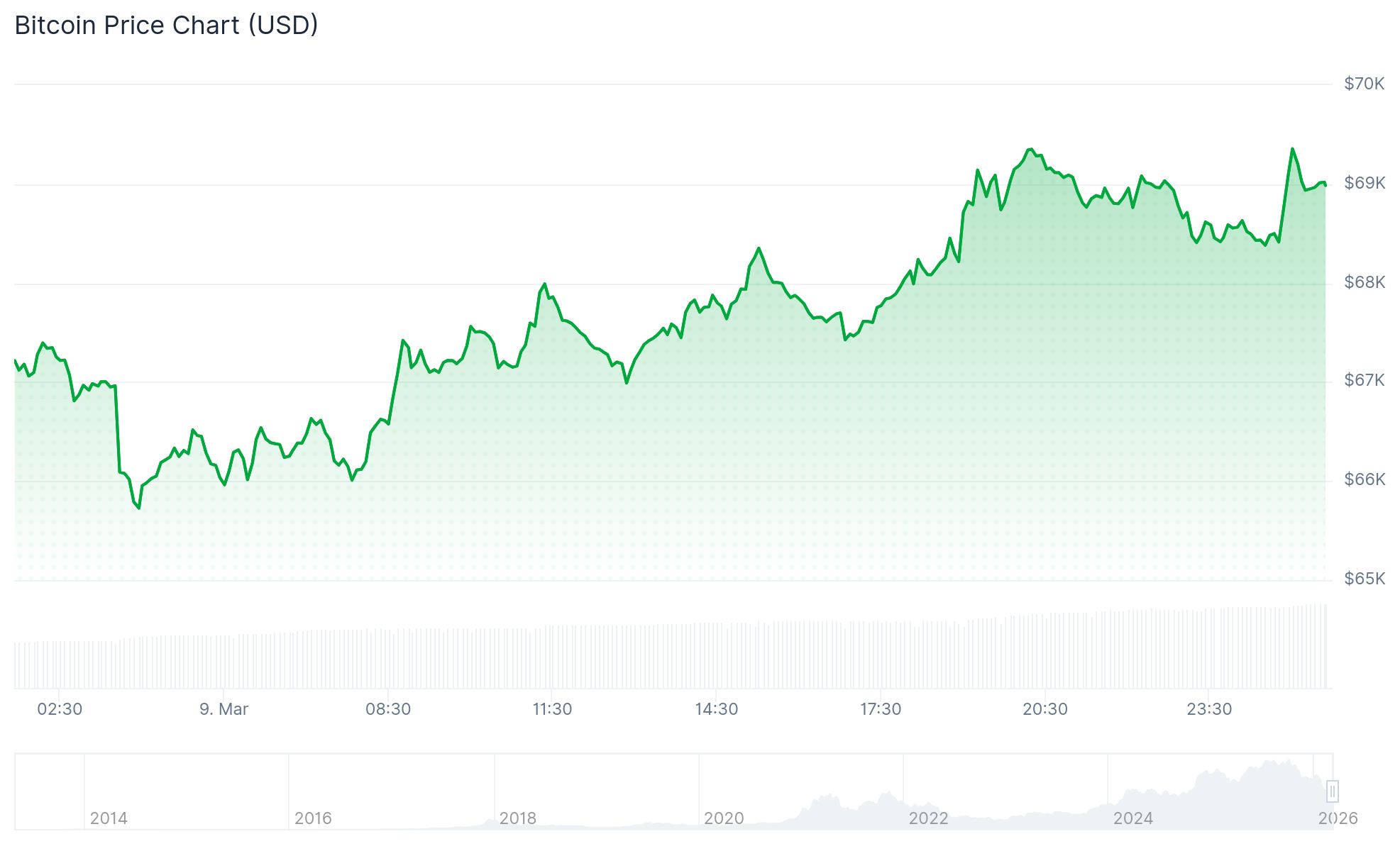 Image Credit – CoinGecko.com
CoinLaw’s Takeaway
I see the 20 million milestone as more than just a round number. In my experience covering crypto markets, very few financial systems can maintain strict monetary discipline for over a decade. Bitcoin has done exactly that.
What stands out to me is how the network has kept its original promise. The supply rules written in 2009 are still operating today without interference from governments, institutions, or changing market sentiment. I found that this consistency is one of the biggest reasons Bitcoin continues to attract long term believers.
With more than 95 percent of supply already mined, Bitcoin’s scarcity is no longer theoretical. It is visible on the blockchain itself, and that will likely remain one of the strongest pillars supporting its value narrative in the years ahead.
The post Bitcoin Passes 20M Supply Milestone With 1M Left to Mine appeared first on CoinLaw.
You May Also Like

HOT MOMENTS: FOMC Statement Released Following the Fed Interest Rate Decision – Here Are All the Details of the Full Text

Midnight is Predicted to Drop to $0.042605 By Mar 15, 2026