

Iran War Guarantee: A Critical Proposal to End Regional Conflict
BitcoinWorld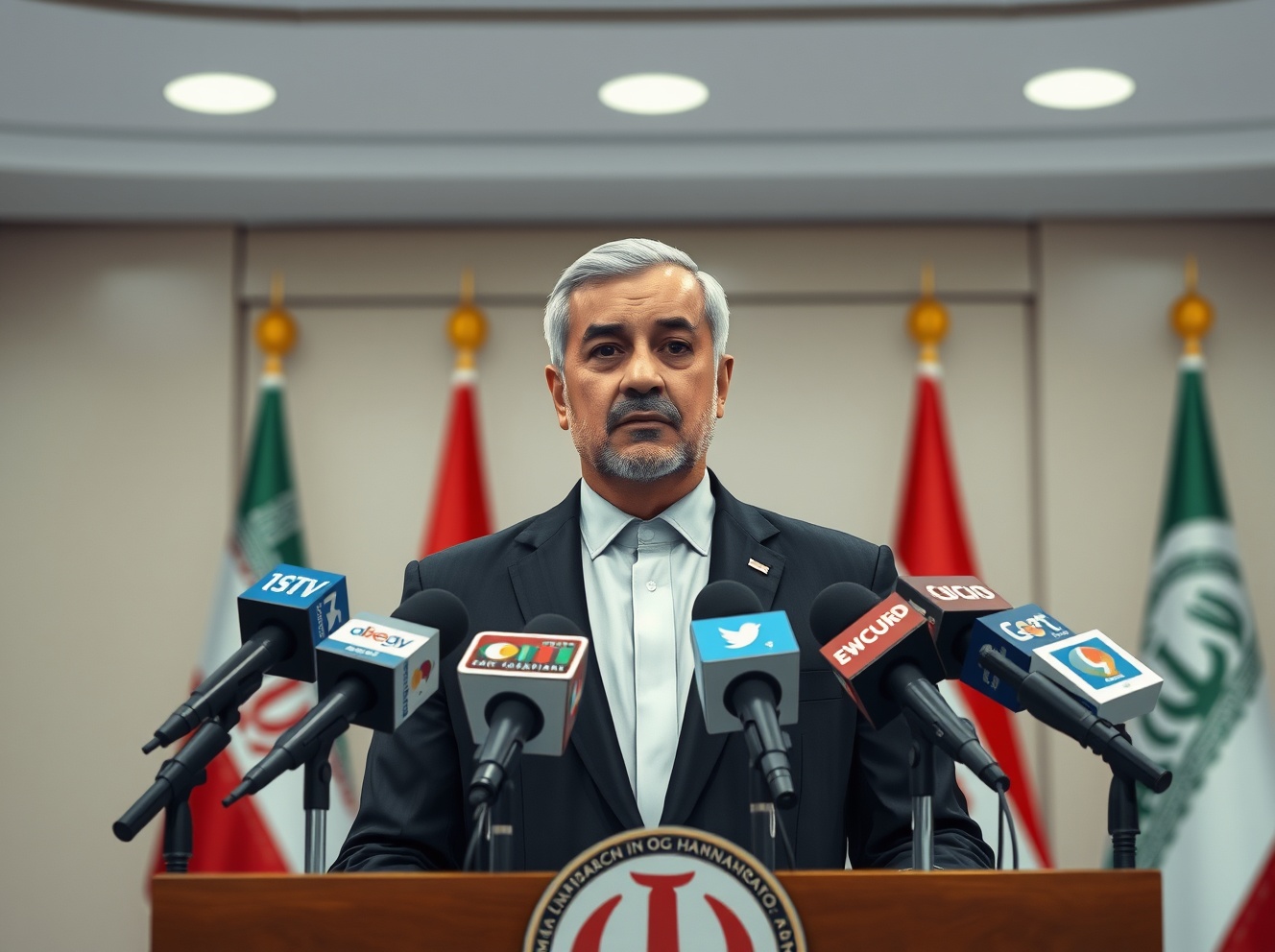
Iran War Guarantee: A Critical Proposal to End Regional Conflict
TEHRAN, Iran – March 21, 2025: Iranian state television has broadcast a significant diplomatic proposal, stating the ongoing regional war could conclude if Tehran receives a formal guarantee against future attacks. This development, reported by Walter Bloomberg, introduces a potential pathway to de-escalation amidst prolonged tensions. The statement marks a notable public articulation of Iran’s core security demand, framing it as a precondition for peace. Consequently, analysts are scrutinizing the proposal’s viability and its implications for international diplomacy.
Analyzing Iran’s War Guarantee Proposal
Iran’s public declaration centers on a fundamental demand for security assurances. The country seeks a binding commitment from involved parties that it will not face military aggression again. This condition directly addresses Tehran’s stated perception of existential threats. Historically, security guarantees have played pivotal roles in resolving international standoffs. For instance, they were instrumental in nuclear non-proliferation agreements. Therefore, Iran’s current position aligns with established diplomatic practice, albeit in a highly volatile context.
Regional experts note the proposal’s timing follows a period of sustained military engagements. The Iranian economy faces significant pressure from international sanctions and conflict expenditures. Simultaneously, domestic political dynamics may influence the public framing of this offer. The government likely aims to demonstrate a commitment to peaceful resolution. However, the specific mechanisms for such a guarantee remain undefined in the initial report. Key questions involve verification, enforcement, and the participating guarantors.
Historical Context of Security Guarantees
Security guarantees are not novel instruments in international relations. They often serve as cornerstones for ceasefire agreements and peace treaties. The 1994 Budapest Memorandum provided assurances to Ukraine regarding its territorial integrity. Similarly, various armistice agreements have included mutual non-aggression pledges. Iran’s request fits within this historical framework but presents unique challenges due to the multiparty nature of the current conflict and deep-seated mutual distrust.
The table below outlines key historical examples of security guarantees in diplomacy:
| Agreement | Year | Parties | Core Guarantee |
|---|---|---|---|
| Budapest Memorandum | 1994 | US, UK, Russia, Ukraine | Respect Ukrainian sovereignty and borders |
| Iran Nuclear Deal (JCPOA) | 2015 | P5+1 and Iran | Suspension of sanctions in exchange for nuclear limits |
| Egypt-Israel Peace Treaty | 1979 | Egypt, Israel, US | US guarantee of mutual treaty compliance |
These precedents show that guarantees require clear terms and credible guarantors. Furthermore, they often involve third-party nations acting as mediators or underwriters. The success of Iran’s proposal would therefore depend heavily on which nations or international bodies might endorse and enforce such a pledge.
Expert Analysis on Feasibility and Regional Impact
Security analysts emphasize several critical factors for evaluating Iran’s statement. First, the definition of “attack” must be explicit. Does it include cyber operations, proxy actions, or economic warfare? Second, the identity of the guarantor is paramount. Would it be a single nation, a coalition, or the United Nations Security Council? Third, enforcement mechanisms must deter violations. Without credible consequences, a guarantee holds little practical value.
Dr. Leila Hassan, a professor of Middle Eastern Studies at Georgetown University, notes, “Public statements like this often serve multiple audiences. They signal openness to dialogue to the international community while reassuring domestic constituents about the government’s pursuit of security. The real test will be in the private diplomatic channels and the specifics of any draft agreement.”
The regional impact of a potential guarantee could be profound. It might:
- Reduce immediate conflict risks by establishing a formal red line.
- Alter regional alliance structures depending on who acts as guarantor.
- Influence global energy markets by lowering the perceived risk premium.
- Shift military postures from offensive to defensive deployments.
The Path Forward for Diplomacy
Diplomatic efforts will likely intensify following Iran’s public proposal. Neutral parties may offer to facilitate discussions. The United Nations Secretary-General could appoint a special envoy. Additionally, regional organizations like the Arab League might seek a mediating role. The process will require meticulous negotiation on several interconnected issues beyond the core guarantee. These include the status of foreign forces, sanctions relief, and humanitarian access.
The international community’s response will be fragmented. Some nations may view the offer as a genuine starting point. Others might dismiss it as a tactical ploy. The credibility of Iran’s commitment to peace will be judged against its subsequent actions. Verifiable de-escalation steps would build confidence. Conversely, further aggressive moves would undermine the proposal’s sincerity.
Ultimately, the proposal underscores a universal principle in conflict resolution: lasting peace requires addressing the legitimate security concerns of all parties. Whether this specific offer leads to negotiations or remains a rhetorical point depends on the next moves by Iran and its adversaries. The coming weeks will reveal if backchannel communications can translate a public statement into a tangible diplomatic process.
Conclusion
Iran’s call for a war guarantee against further attacks presents a clear, if complex, condition for ending the conflict. This proposal injects a specific demand into the diplomatic arena, moving beyond general calls for ceasefire. Its viability hinges on precise definitions, credible guarantors, and reciprocal concessions. The international community now faces the challenge of testing the seriousness of this offer through engaged diplomacy. A successful outcome could establish a new model for security assurance in the region, while failure would likely prolong instability. The critical proposal for an Iran war guarantee now sits on the table, awaiting a response.
FAQs
Q1: What exactly is Iran proposing?
Iran, via its state television, has stated the ongoing war could end if it receives a formal and guaranteed promise that it will not be subjected to military attacks in the future. This is a precondition for peace talks.
Q2: Who would provide such a security guarantee?
The report did not specify. In diplomacy, guarantees can come from single powerful nations (like the US), a coalition of countries, or international bodies like the UN Security Council. This would be a key point of negotiation.
Q3: Have security guarantees worked in past conflicts?
Yes, but with mixed results. They were key to the 1979 Egypt-Israel peace treaty (guaranteed by the US) and the 2015 Iran nuclear deal. However, the 1994 guarantee to Ukraine in the Budapest Memorandum failed to prevent the 2014 annexation of Crimea, showing enforcement is critical.
Q4: Why is Iran making this proposal now?
Analysts suggest multiple reasons: to show a willingness for peace amid economic pressure, to shape international public opinion, to test adversaries’ openness to dialogue, and to address domestic demands for security and stability.
Q5: What are the biggest obstacles to this proposal?
The main hurdles include deep mutual distrust between Iran and its adversaries, defining what constitutes an “attack” (e.g., does it include cyber or proxy warfare?), establishing a credible enforcement mechanism, and getting all conflict parties to agree to the terms.
This post Iran War Guarantee: A Critical Proposal to End Regional Conflict first appeared on BitcoinWorld.


You May Also Like

Pi Network Emphasizes Digital Identity Role as Web3 Adoption Grows

Why Businesses Need Professional Machine Design and Development Services




