

ECB Policy Meeting: Šimkus Urges Crucial Calm Amid Market Turbulence
BitcoinWorld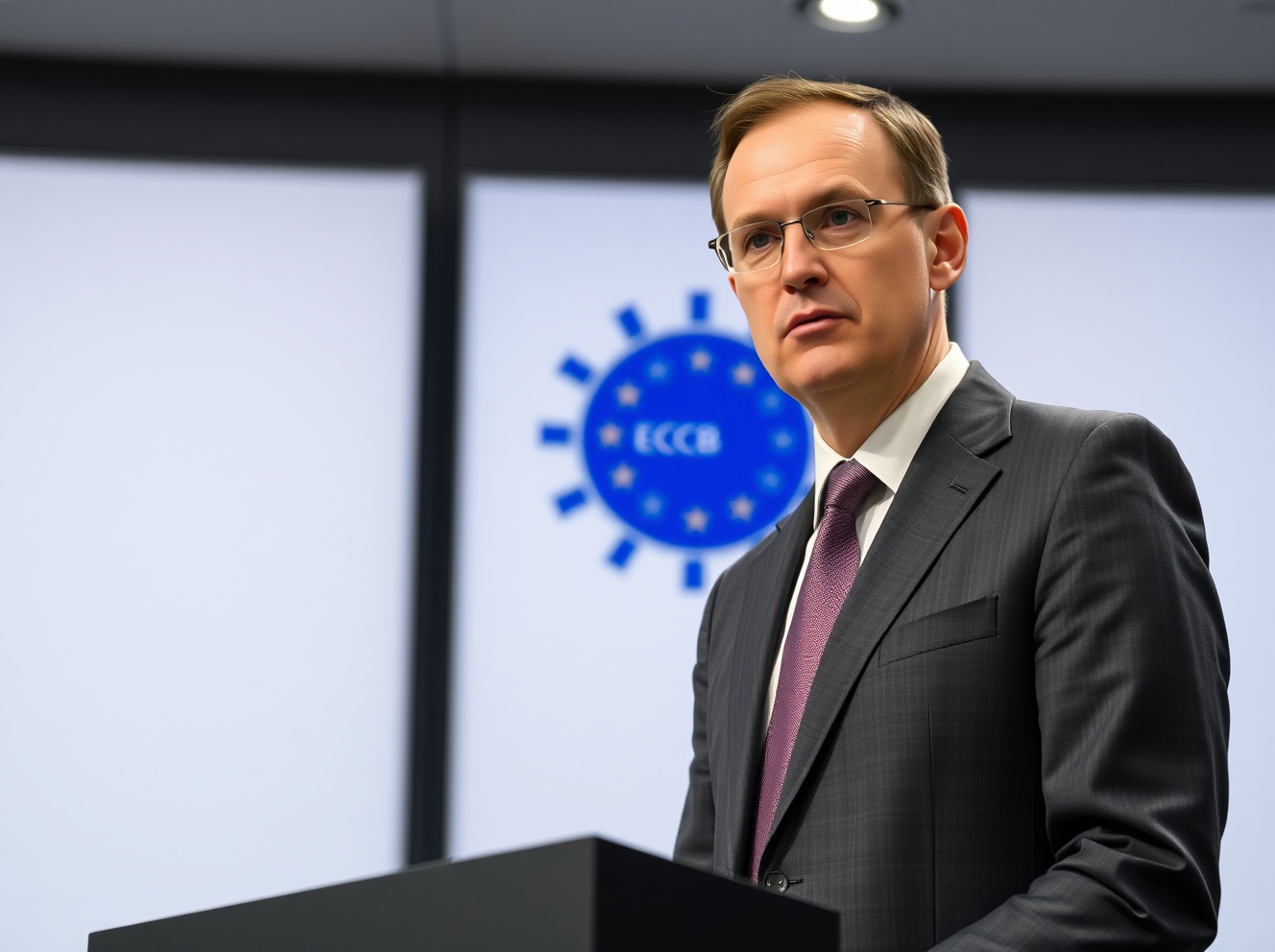
ECB Policy Meeting: Šimkus Urges Crucial Calm Amid Market Turbulence
FRANKFURT, Germany – European Central Bank Governing Council member Gediminas Šimkus has emphasized the critical need for composure ahead of the institution’s next pivotal ECB policy meeting. Speaking to financial journalists, the Lithuanian central banker cautioned against knee-jerk reactions to volatile economic data, setting a tone of deliberate assessment for the upcoming decision on interest rates.
ECB Policy Meeting Approaches Amid Economic Crosscurrents
The European Central Bank faces a complex economic landscape as its next policy meeting approaches. Recent inflation prints have shown stubborn persistence in services, while manufacturing activity continues to weaken across the eurozone. Consequently, policymakers must balance competing risks. On one hand, premature easing could re-ignite price pressures. On the other hand, maintaining restrictive rates for too long risks deepening an economic slowdown. Šimkus’s call for calm directly addresses this high-stakes environment. His comments reflect a broader consensus within the Governing Council for a data-dependent, meeting-by-meeting approach.
Market participants had previously priced in aggressive rate cut trajectories for 2025. However, recent commentary from several ECB officials, including Šimkus, has tempered those expectations. This shift highlights the challenging communication task facing the central bank. It must guide markets without creating undue volatility. The table below outlines key data points influencing the upcoming ECB policy meeting.
| Indicator | Latest Figure | Trend | Policy Implication |
|---|---|---|---|
| Harmonised Index of Consumer Prices (HICP) | 2.8% | Sticky, above target | Supports holding rates |
| Core Inflation (ex-food & energy) | 3.1% | Gradual decline | Warrants caution on cuts |
| Q4 GDP Growth | 0.0% | Stagnation | Arguments for eventual easing |
| Unemployment Rate | 6.4% | Historically low | Limits disinflationary pressure |
Analyzing Šimkus’s Call for Measured Action
Gediminas Šimkus, who also serves as the Governor of the Bank of Lithuania, brings a distinct perspective to the ECB’s deliberations. His experience managing a smaller, open economy within the eurozone informs his cautious stance. In his remarks, he highlighted several factors requiring careful analysis before any policy shift. First, wage growth agreements across Europe continue to run hot, posing a persistent risk to the inflation outlook. Second, geopolitical tensions could disrupt energy markets again. Finally, the full impact of past rate hikes may not have fully transmitted through the economy.
This analytical framework suggests the Governing Council will prioritize evidence of durable disinflation. Šimkus’s message aligns with recent statements from other hawks on the council. They advocate for patience to ensure inflation is convincingly returning to the 2% medium-term target. The central bank’s credibility, painstakingly rebuilt after initial underestimation of the inflation surge, remains a paramount concern. A premature reversal could damage that credibility significantly.
The Historical Context of Central Bank Overreaction
Financial history provides clear examples of the perils Šimkus warns against. For instance, the U.S. Federal Reserve’s pause in 2024 was initially misinterpreted by markets as a prelude to immediate cuts, leading to significant financial condition loosening. The ECB aims to avoid such a scenario. Furthermore, the Bank of Japan’s prolonged ultra-loose policy serves as a cautionary tale about exiting stimulus too late. The ECB’s current challenge is to navigate between these two poles. Its decision-making process now incorporates more robust scenario analysis and stress testing.
Market pricing for the June meeting has become more nuanced. Investors now see a higher probability of a hold, with cuts pushed later into the year. This repricing reduces the risk of a disruptive market reaction to a “hawkish hold.” By managing expectations through speeches like Šimkus’s, the ECB engages in open mouth operations. This strategy aims to smooth the path for its actual policy decisions. The goal is to ensure financial stability throughout the normalization process.
Implications for Markets and the Eurozone Economy
The call for calm has direct consequences for various asset classes and the broader economy. Firstly, it suggests continued stability in short-term euro interest rates, affecting currency markets and hedging strategies. Secondly, it implies that financing conditions for businesses and governments will remain relatively tight for the near term. This environment demands careful corporate planning and fiscal discipline from member states.
Key areas impacted by the ECB’s patient stance include:
- Banking Sector Profitability: Higher interest rates for longer boost net interest margins for eurozone banks.
- Government Bond Markets: Sovereign debt servicing costs remain elevated, pressuring national budgets.
- Real Estate: Commercial and residential property markets face continued headwinds from expensive financing.
- Euro Exchange Rate: A policy differential with other major central banks can influence the EUR/USD and EUR/GBP crosses.
Ultimately, the ECB’s primary mandate is price stability. Šimkus’s comments reinforce that this goal takes precedence over stimulating growth in the short term. The Governing Council appears willing to tolerate a period of economic weakness to firmly anchor inflation expectations. This resolve is critical for long-term macroeconomic stability in the currency union.
Conclusion
Gediminas Šimkus’s emphasis on calm ahead of the next ECB policy meeting underscores the institution’s commitment to a deliberate, evidence-based approach. In a climate of economic uncertainty and market sensitivity, the central bank prioritizes avoiding policy errors over swift action. The path to normalizing monetary policy remains narrow and data-dependent. Therefore, investors and policymakers alike should prepare for a extended period of restrictive rates as the ECB seeks conclusive proof that inflation is defeated. The upcoming meeting will be a key test of this patient strategy.
FAQs
Q1: What did ECB’s Gediminas Šimkus say about the next policy meeting?
Gediminas Šimkus stressed the importance of staying calm and not overreacting to individual data points ahead of the European Central Bank’s next monetary policy meeting. He advocated for a measured, data-dependent approach to interest rate decisions.
Q2: Why is the ECB cautious about cutting interest rates?
The ECB remains cautious because core inflation, particularly in services, remains above its 2% target. Strong wage growth and potential geopolitical energy shocks also pose upside risks to the inflation outlook, requiring policymakers to ensure disinflation is durable before easing.
Q3: How do Šimkus’s comments affect market expectations for rate cuts?
His comments, alongside similar rhetoric from other ECB officials, have tempered market expectations for aggressive near-term rate cuts. Traders have pushed back the timing of expected easing, reducing the risk of a volatile market reaction if the ECB decides to hold rates steady.
Q4: What is the current state of the eurozone economy influencing ECB policy?
The eurozone economy is experiencing stagnation with near-zero GDP growth, but a tight labor market and sticky services inflation. This creates a policy dilemma where the ECB must balance the risk of undermining growth against the risk of allowing inflation to become entrenched.
Q5: What are the main data points the ECB is watching?
The ECB’s Governing Council is closely monitoring wage growth trends, core inflation dynamics (especially services inflation), quarterly GDP figures, and business surveys like the PMI. They are assessing the cumulative impact of past rate hikes and the evolution of inflation expectations.
This post ECB Policy Meeting: Šimkus Urges Crucial Calm Amid Market Turbulence first appeared on BitcoinWorld.


You May Also Like

Curious About What The CLARITY Act Says About XRP? Here Are The Parts To Focus ON
Turning Point USA leaders deliver a stinging warning to Trump as young MAGA voters turn




