

French Oil Price Measures: Macron’s Government Prepares Crucial Intervention to Cushion Economic Impact
BitcoinWorld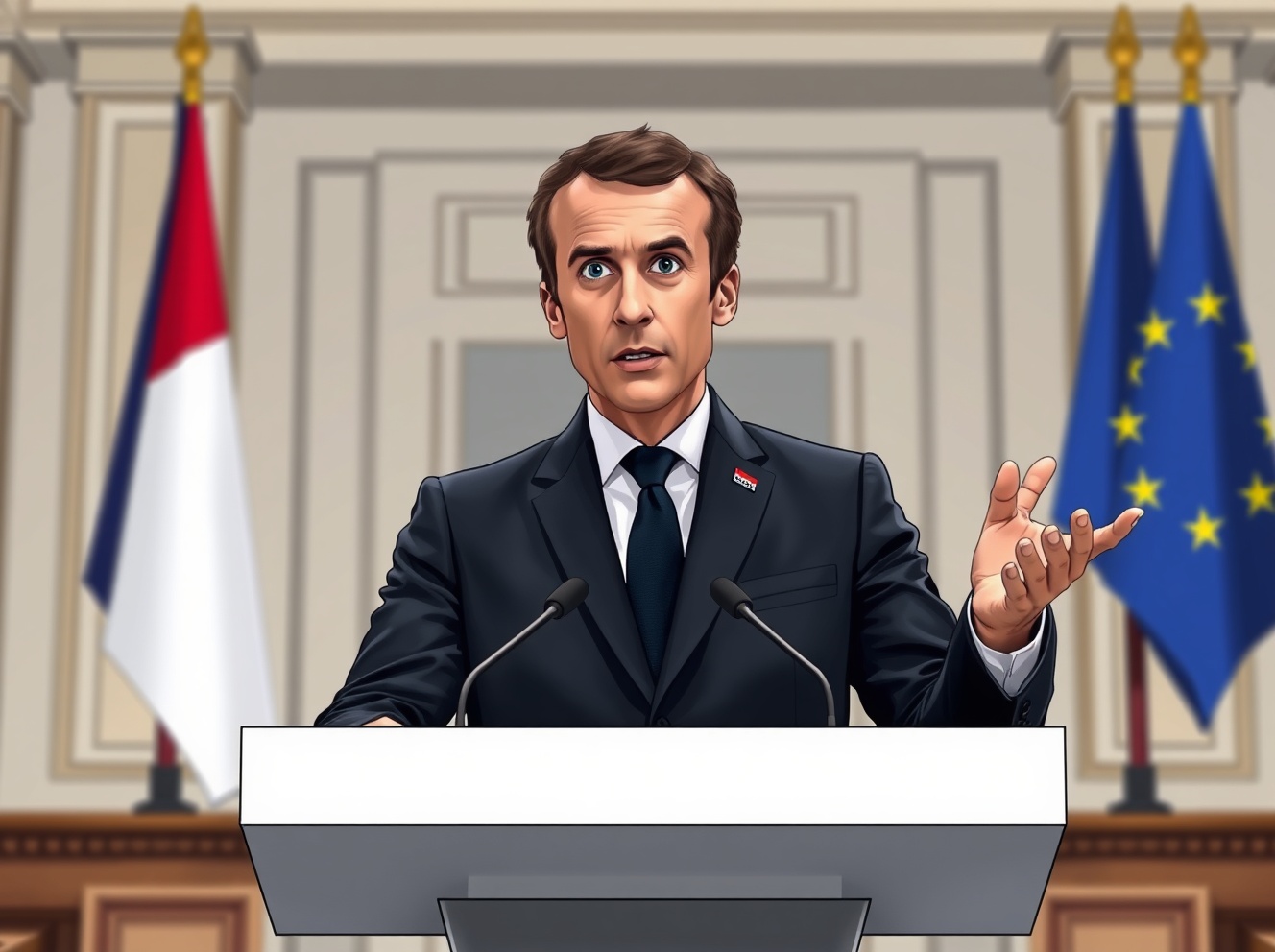
French Oil Price Measures: Macron’s Government Prepares Crucial Intervention to Cushion Economic Impact
PARIS, France – President Emmanuel Macron announced on Tuesday that his government may implement additional measures to cushion French consumers from volatile global oil prices. This statement comes amid renewed market turbulence and follows previous interventions that have shaped France’s energy policy landscape since 2022. The potential measures represent a significant development in European energy security strategy.
French Oil Price Measures: Historical Context and Current Pressures
President Macron’s announcement continues France’s proactive approach to energy price stabilization. The government previously implemented fuel price caps in 2022 that cost approximately €8 billion. Furthermore, these measures protected households during the initial energy crisis. Currently, global Brent crude prices have fluctuated between $78 and $85 per barrel in recent weeks. Consequently, this volatility creates uncertainty for both consumers and policymakers across Europe.
Several factors contribute to the current price pressures. Geopolitical tensions in key production regions continue to influence market sentiment. Additionally, OPEC+ production decisions create supply uncertainties. Meanwhile, European Union energy transition policies simultaneously affect long-term price expectations. The French government monitors these developments through its strategic petroleum reserves agency.
Macron’s Energy Policy Evolution Since 2022
The French approach to energy pricing has evolved significantly. Initially, the government implemented temporary fuel discounts at pumps. Subsequently, they introduced targeted assistance for low-income households. More recently, authorities focused on structural solutions through energy transition investments. President Macron emphasized this balanced strategy during his announcement.
France maintains one of Europe’s most comprehensive energy support systems. The country operates strategic petroleum reserves covering approximately 90 days of consumption. Furthermore, France leads European initiatives for renewable energy development. These efforts complement traditional price stabilization mechanisms. The government’s multi-pronged strategy addresses both immediate and long-term energy challenges.
Expert Analysis of Potential Intervention Methods
Energy economists suggest several possible measures the government might consider. Direct consumer subsidies represent one immediate option. Tax adjustments on petroleum products offer another mechanism. Additionally, targeted support for transportation sectors could mitigate economic impacts. Each approach carries distinct fiscal implications and implementation challenges.
Previous interventions provide valuable lessons for policymakers. The 2022 fuel price cap demonstrated both effectiveness and limitations. That program successfully stabilized prices but created significant budget pressures. Future measures likely will incorporate more targeted approaches. The government also considers longer-term energy independence strategies alongside immediate relief.
Economic Impacts and European Context
Oil price fluctuations significantly affect the French economy. Transportation costs immediately respond to fuel price changes. Subsequently, these increases ripple through supply chains. Consumer spending patterns often adjust in response. The government’s potential intervention aims to cushion these broader economic effects.
France operates within a complex European energy landscape. Neighboring countries employ various price stabilization approaches. Germany implemented temporary fuel tax reductions in 2022. Italy introduced targeted subsidies for specific sectors. The United Kingdom maintained its fuel duty freeze policy. France’s measures will inevitably influence regional energy policy coordination.
| Country | Primary Measure | Estimated Cost | Duration |
|---|---|---|---|
| France | Fuel price cap | €8 billion | 4 months |
| Germany | Temporary tax reduction | €3.2 billion | 3 months |
| Italy | Sector-specific subsidies | €4.5 billion | 6 months |
| Spain | Direct consumer discount | €2.8 billion | 4 months |
The European Commission monitors national interventions for compliance with state aid rules. France coordinates its measures with EU competition authorities. This coordination ensures policy effectiveness while maintaining single market integrity. The Commission recently approved several national support schemes during energy crises.
Strategic Petroleum Reserves and Energy Security
France maintains substantial strategic petroleum reserves as a buffer against supply disruptions. The country stores approximately 15 million cubic meters of petroleum products. These reserves cover critical consumption for approximately three months. The government can release reserves to stabilize markets during emergencies.
Strategic reserves represent one component of broader energy security. France also invests in renewable energy infrastructure. Nuclear power provides approximately 70% of electricity generation. This diversified energy mix reduces oil dependence compared to some European neighbors. However, transportation sectors remain heavily reliant on petroleum products.
Consumer Protection and Social Considerations
Energy price increases disproportionately affect lower-income households. Transportation represents a higher percentage of expenses for these groups. The government considers this equity dimension when designing interventions. Previous measures included targeted assistance for vulnerable populations.
Rural communities face particular challenges from fuel price volatility. Public transportation alternatives often remain limited in these areas. Consequently, residents depend more heavily on personal vehicles. The government’s potential measures may address these geographic disparities. Regional development policies increasingly incorporate energy affordability considerations.
Market Reactions and Future Projections
Financial markets closely monitor government energy interventions. Oil futures prices often respond to announced policy changes. The French announcement may influence trading patterns in European energy markets. Analysts will assess the measures’ potential supply and demand effects.
Long-term energy transition remains a key government priority. France committed to reducing fossil fuel consumption by 40% by 2030. This target aligns with European Union climate objectives. Temporary price measures must complement rather than contradict these long-term goals. The government emphasizes this balanced approach in its communications.
Several key factors will influence future price developments:
- Geopolitical stability in major oil-producing regions
- OPEC+ production decisions and compliance levels
- Global economic growth patterns and demand projections
- Energy transition progress and alternative adoption rates
- European Union policy coordination on energy security
Conclusion
President Macron’s announcement regarding potential French oil price measures reflects ongoing government commitment to economic stability. The intervention would continue France’s proactive approach to energy market challenges. These measures balance immediate consumer protection with long-term energy transition goals. The government’s decision will significantly influence both domestic economic conditions and European energy policy coordination. Market participants and policymakers will closely monitor developments in coming weeks.
FAQs
Q1: What specific measures might the French government implement?
The government could consider several options including direct consumer subsidies, tax adjustments on fuel products, targeted support for transportation sectors, or strategic reserve releases. Previous interventions included fuel price caps and direct discounts at pumps.
Q2: How have previous French interventions performed?
The 2022 fuel price cap successfully stabilized consumer prices but cost approximately €8 billion. The program demonstrated effectiveness in immediate crisis management while highlighting budget constraints for sustained interventions.
Q3: How does France’s approach compare to other European countries?
France has generally taken more comprehensive measures than some neighbors. Germany used temporary tax reductions, Italy implemented sector-specific subsidies, while France employed broader price caps and direct consumer support mechanisms.
Q4: What are the main factors driving current oil price volatility?
Geopolitical tensions, OPEC+ production decisions, global economic uncertainty, and energy transition policies all contribute to price fluctuations. European demand patterns and inventory levels also influence market dynamics.
Q5: How do oil prices affect the broader French economy?
Transportation costs immediately respond to fuel price changes, creating ripple effects through supply chains. Consumer spending patterns often adjust, potentially affecting economic growth. Certain sectors and regions experience disproportionate impacts.
This post French Oil Price Measures: Macron’s Government Prepares Crucial Intervention to Cushion Economic Impact first appeared on BitcoinWorld.


You May Also Like

IP Hits $11.75, HYPE Climbs to $55, BlockDAG Surpasses Both with $407M Presale Surge!

StakeStone STO Surges 128% in 24 Hours: What $955M Volume Tells Us




