Cryptsy - Latest Cryptocurrency News and Predictions Cryptsy - Latest Cryptocurrency News and Predictions - Experts in Crypto Casinos Donald Trump is the presidentCryptsy - Latest Cryptocurrency News and Predictions Cryptsy - Latest Cryptocurrency News and Predictions - Experts in Crypto Casinos Donald Trump is the president
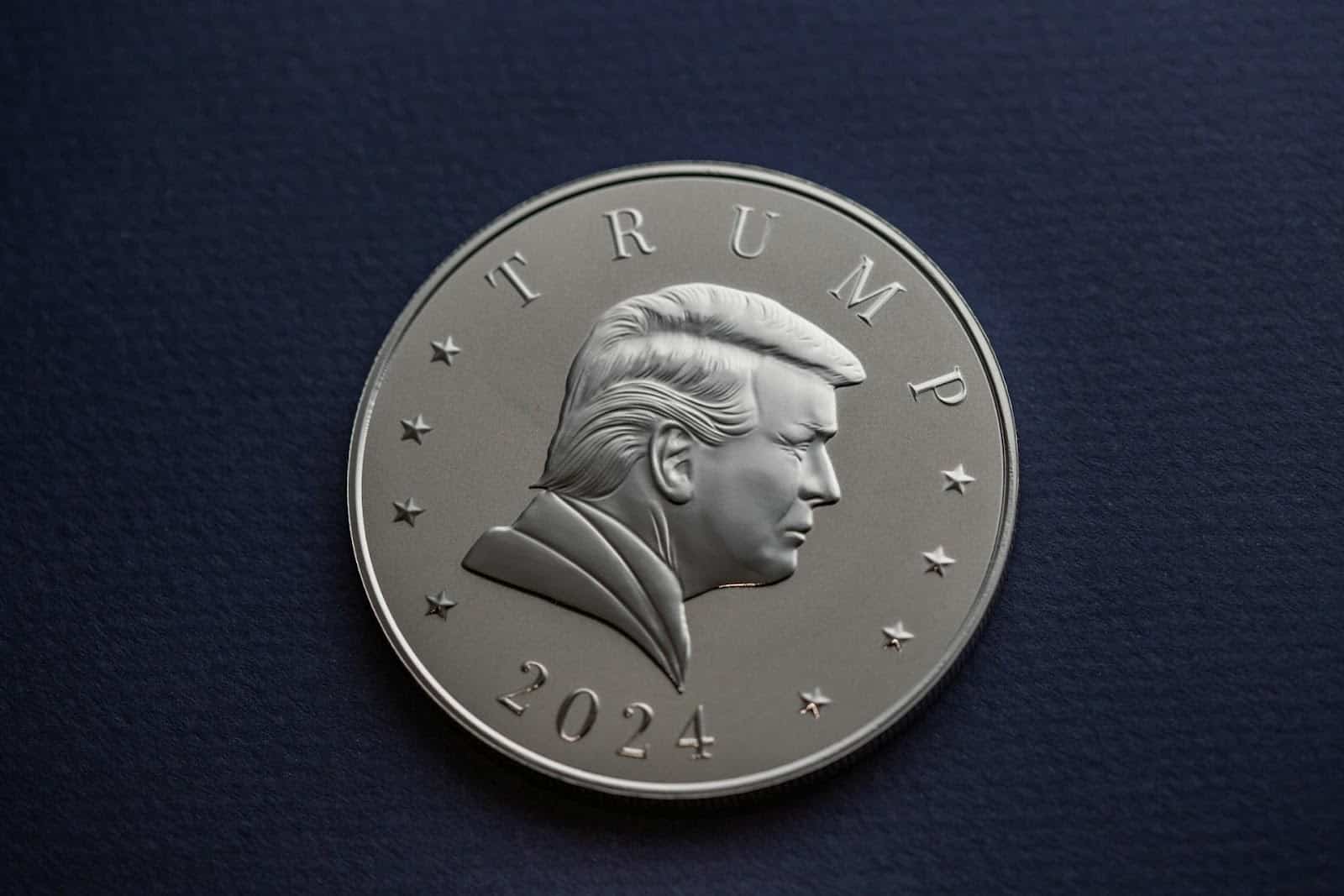
Trump Coin – Rug Pull of a Century or Something Bigger?…

2026/03/12 15:21
11 min read
For feedback or concerns regarding this content, please contact us at [email protected]

Cryptsy - Latest Cryptocurrency News and Predictions

Cryptsy - Latest Cryptocurrency News and Predictions - Experts in Crypto Casinos

Donald Trump is the president of the United States of America – once again. POTUS is a peculiar person, there’s no arguing that. Is he the right person to lead the States? We’ll see when another of his terms is over. Yet, we’re not here to talk about DT as a politician. Trump has made a fortune as a businessman, and one of his latest ventures are digital currencies. This is the first time in history (of the world and not only the US) that the head of the state is associated with a digital coin. 

It was evident during Trump’s campaign that the stance of the world on crypto would have to change under his and Elon Musk’s influence. Both men have pointed out more than a few times that crypto will receive their backing once they’re in the office. This wasn’t strange to hear from Musk, as the Tesla owner is already associated with Dogecoin. As far as Trump is concerned, this is his first venture into the world of blockchain. We’re not sure how much POTUS will be dedicated to this venture, or even how much he should. 

As you probably know, many of the digital currencies we have, such as Bitcoin or Ethereum are well established and used in financial markets. These crypto can be trusted as they’ve been around long enough to hold a high value on the financial market. Yet, many new digital currencies come and go without anyone even notices them. When you take into account parts of Trump’s shady past, it is not hard to doubt the legitimacy of his newly formed coin called $TRUMP. 

The coin is new and it falls into the category of meme coins. The Trump Organization owns 80% of this coin, and considering that Donald is the POTUS, this can be seen as a red flag. Due to the president’s popularity, the popularity of this coin skyrocketed overnight, and made Trump a Crypto billionaire. While these are good news for Trump, they’re also not amazing for investors. If his trust fund would pull from the business he would still be rich, but there would be quite a few dissatisfied investors. 

The coin was introduced to the market at a price far below $10, but the moment it was on the open market, it skyrocketed to $74.59. It quickly rose down to $39, but even at that price it reached an amazing $15 billion in market capitalization. While this sounds amazing, and it continues to attract investors, in the case that the Trump Organization and its affiliates decide to sell the shares of this coin their riches would increase quite a lot at the expense of the investors. But, is the president ready to do a rug pull of this magnitude? 

Of course, Trump is playing this game as if it was a round of blackjack at an online casino. His organization released an ethics agreement that prevents both Trump and his family from having business activities tied to this coin. Yet, many people are concerned because a president has a meme coin, especially after a big part of his campaign focused on cryptocurrencies and their legislation. At the end of the day meme coins are only worth what people are prepared to pay for them which makes them exist only in a bubble. 

A clear sign that this coin is not all that stable, and that Trump may have a hidden agenda is the fact that only a few short days after $TRUMP was launched we’ve also witnessed a launch of another meme coin from the Trump family called $MELANIA. The moment the First Lady’s coin was released, the value of $TRUMP halved. That’s right, we have red flag after red flag. 

Is There a Risk of a Rug Pull? 

A quick launch of one meme coin, shortly followed by  another similar coin is a signal that a rug pull could be on the horizon. While in some other instances a launch of one or few additional coins wouldn’t be so strange, these two are coming from the same source. When you see that one affects the price of another, we could see the Trump family sell their shares on short notice. For them, this would be a massive influx of money, but not without it taking a toll on the investors. After all, someone  needs to pay the price. 

Trump and his family were always people of profit. It doesn’t come as a surprise that they’re already thinking about taking what they can from this trend and the moment in time when $TRUMP is still interesting to the casual investor. The only folks who could profit from a move like this. To have the assets sold before they plummet are those that are insiders or major stakeholders. 

If you need an additional proof that one needs to be careful when it comes to meme coins is the example of Hailey Welch. The TikTok star went viral overnight, managed to amass millions of followers on social media platforms, and started a podcast. We’re talking about the Hawk Tuah Girl if you haven’t heard of her yet (check out the latest meme that came and gone). Among many ventures she started in a short time she became famous was a meme coin that went astronomical in a matter of hours and peaked at almost half a billion dollars. It wasn’t a steady coin by any means and it went down 95% in only one week. Many investors were left penniless by this move while a few insiders went home with $3 million. A similar scenario to this one is possible with Trump’s meme coin, and we would be worried about it. 

At the end of the day, investing in a meme coin is a form of gamble, and all of us decide whether we want to gamble or not. For us, when there’s a need for gambling, Stake is the answer and not some meme coin. But, we can’t make financial decisions for all of you. So, if there’s folks reading this article, and want to invest some of their assets into $TRUMP, we’re going to tell you where you can buy it. 

Where to Buy $TRUMP? 

All doubts aside, $TRUMP was launched and it is going strong at the moment. For many investors it might be seen as an asset worth having in a portfolio. At the end of the day, it is not hard to put your trust in POTUS. For all of you with a desire to invest in $TRUMP, it is good to know that you can buy it at any exchange. 

The same with any other crypto, you are better off by using one of the already established exchanges. Those that are usually topping the trusted lists are Binance, MEXC, Bybit, and Kraken. Whichever of these you choose you will not be making a mistake. If you’re new to the world of digital currencies and only want to invest into this meme coin because of Donald Trump you’ll need to make an account on one of these platforms. 

While buying a meme coin might be your goal, have in mind that these exchanges are serious online financial institutions. To open an account you will have to provide proof of identity, use your real name and data, and accept terms & conditions of use. The moment you verify your account you will be able to buy crypto. All that it takes is to deposit some of your fiat currency and exchange it for the digital currency of your choosing. 

The good part is when you buy a new crypto, and especially a new meme coin, the purchase requirements are set quite low, so you will be able to buy $TRUMP in quantities worth dozens of $. Depending on the value of $TRUMP on the day of your purchase you will be able to see how much you will receive in that given digital currency. If you approve the worth and what you get in exchange, complete the transactions and receive the right to call yourself a $TRUMP owner. 

What the future holds for this meme coin is hard to predict. But if no rug pull; occurs, a coin backed by the Trump Organization and Elon Musk could have some potentially high value in the future or at least during Trump’s next four years in the Oval Office. 

Why Crypto? 

If you’re not aligned with what digital currencies in general bring to the table, there’s plenty of appliances throughout many industries. While Trump’s meme coin provides a few reasons to fear digital currencies, their appliance in online gambling, and many other industries paints a different picture. 

It’s been a while since we accepted digital currencies for what they are – a safe, fast, and transparent way of making financial transactions. One of the first industries that has fully embraced cryptocurrencies is the online gambling industry. It wasn’t long until crypto started taking over. With every passing day we have more and more crypto casinos and different other establishments using digital currencies as the first way of conducting payments. It’s no longer a trend; it’s here to stay. There’s plenty of benefits from using digital currencies in online payments for both the retailers and the customers.  

With acceptance of digital currencies from both sides crypto was quick to start changing the landscape that functioned the same way for a long time. In no time traditional banking systems were no longer the leaders in the domain of online payments. Many platforms have adopted crypto, while others function solely on it.  No one should wonder why things are like this, as after all, digital currencies were quick to offer a faster, safer, more exciting, and a decentralised alternative to traditional banking.   

There are many ways crypto wagers have changed the landscape of finances and economy in general, even influencing the biggest sports events such as the Super Bowl and major financial outlets such as Wall Street. Let’s check out some of the main ones together. 

A Global Market

Only a few years ago, every person was tied to making financial transactions almost exclusively locally. International payments came with plenty of regional laws, rules, and legislations, while the banking services were not at the highest level. All of that changed with the introduction of digital currencies. Today, when you want to make a payment via crypto you immediately gain access to a global financial market. With cryptocurrencies there are no borders, and the possibilities in terms of payments are almost limitless. 

Blockchain vs. Tradition 

Unlike most traditional banks, and we’re talking all forms of banks and payment processors, and some less advanced online transactional establishments, digital currency exchanges rely fully on modern technology. They come with user-friendly surroundings and seamless user experience. Transparency, security, and even data integrity are guaranteed by the blockchain which is not something most regular banks can fully vouch for. With a safe and secure system put in place (which wasn’t the case in the past) and fairness guaranteed, buyers and sellers at crypto exchanges can make payments confident in their outcomes. 

The Speed of Transactions 

While crypto has plenty of advantages over traditional banking, the speed of transactions just must be the main one.  The speed of both deposits and withdrawals is out of this world, and all the users that have experienced it never want to go back to traditional banking. Most of us remember that back in the day you had to wait for a few days for banks to do the money processing before you could make a payment or receive funds. These days are long gone. Even banks nowadays offer faster transactions than they used to, but they still can’t compare to digital currencies. 

As you can see, crypto can be trusted. It comes with plenty of benefits. But, for now, be patient with $TRUMP as we can’t tell how it will play out. Trump will be wary that he doesn’t corrupt his reputation, but if the money hunger takes over, many investors could be left out in the open. 

Crypto advisors 2025

The post Trump Coin – Rug Pull of a Century or Something Bigger?… first appeared on Cryptsy - Latest Cryptocurrency News and Predictions and is written by Ethan Blackburn


Disclaimer: The articles reposted on this site are sourced from public platforms and are provided for informational purposes only. They do not necessarily reflect the views of MEXC. All rights remain with the original authors. If you believe any content infringes on third-party rights, please contact [email protected] for removal. MEXC makes no guarantees regarding the accuracy, completeness, or timeliness of the content and is not responsible for any actions taken based on the information provided. The content does not constitute financial, legal, or other professional advice, nor should it be considered a recommendation or endorsement by MEXC.
Tags:

You May Also Like

Tether Backs Ark Labs’ $5.2 Million Bet on Bitcoin’s Stablecoin Revival

Tether Backs Ark Labs’ $5.2 Million Bet on Bitcoin’s Stablecoin Revival

The post Tether Backs Ark Labs’ $5.2 Million Bet on Bitcoin’s Stablecoin Revival appeared on BitcoinEthereumNews.com. In brief Ark Labs secured backing from Tether
Share
BitcoinEthereumNews2026/03/12 21:44
Summarize Any Stock’s Earnings Call in Seconds Using FMP API

Summarize Any Stock’s Earnings Call in Seconds Using FMP API

Turn lengthy earnings call transcripts into one-page insights using the Financial Modeling Prep APIPhoto by Bich Tran Earnings calls are packed with insights. They tell you how a company performed, what management expects in the future, and what analysts are worried about. The challenge is that these transcripts often stretch across dozens of pages, making it tough to separate the key takeaways from the noise. With the right tools, you don’t need to spend hours reading every line. By combining the Financial Modeling Prep (FMP) API with Groq’s lightning-fast LLMs, you can transform any earnings call into a concise summary in seconds. The FMP API provides reliable access to complete transcripts, while Groq handles the heavy lifting of distilling them into clear, actionable highlights. In this article, we’ll build a Python workflow that brings these two together. You’ll see how to fetch transcripts for any stock, prepare the text, and instantly generate a one-page summary. Whether you’re tracking Apple, NVIDIA, or your favorite growth stock, the process works the same — fast, accurate, and ready whenever you are. Fetching Earnings Transcripts with FMP API The first step is to pull the raw transcript data. FMP makes this simple with dedicated endpoints for earnings calls. If you want the latest transcripts across the market, you can use the stable endpoint /stable/earning-call-transcript-latest. For a specific stock, the v3 endpoint lets you request transcripts by symbol, quarter, and year using the pattern: https://financialmodelingprep.com/api/v3/earning_call_transcript/{symbol}?quarter={q}&year={y}&apikey=YOUR_API_KEY here’s how you can fetch NVIDIA’s transcript for a given quarter: import requestsAPI_KEY = "your_api_key"symbol = "NVDA"quarter = 2year = 2024url = f"https://financialmodelingprep.com/api/v3/earning_call_transcript/{symbol}?quarter={quarter}&year={year}&apikey={API_KEY}"response = requests.get(url)data = response.json()# Inspect the keysprint(data.keys())# Access transcript contentif "content" in data[0]: transcript_text = data[0]["content"] print(transcript_text[:500]) # preview first 500 characters The response typically includes details like the company symbol, quarter, year, and the full transcript text. If you aren’t sure which quarter to query, the “latest transcripts” endpoint is the quickest way to always stay up to date. Cleaning and Preparing Transcript Data Raw transcripts from the API often include long paragraphs, speaker tags, and formatting artifacts. Before sending them to an LLM, it helps to organize the text into a cleaner structure. Most transcripts follow a pattern: prepared remarks from executives first, followed by a Q&A session with analysts. Separating these sections gives better control when prompting the model. In Python, you can parse the transcript and strip out unnecessary characters. A simple way is to split by markers such as “Operator” or “Question-and-Answer.” Once separated, you can create two blocks — Prepared Remarks and Q&A — that will later be summarized independently. This ensures the model handles each section within context and avoids missing important details. Here’s a small example of how you might start preparing the data: import re# Example: using the transcript_text we fetched earliertext = transcript_text# Remove extra spaces and line breaksclean_text = re.sub(r'\s+', ' ', text).strip()# Split sections (this is a heuristic; real-world transcripts vary slightly)if "Question-and-Answer" in clean_text: prepared, qna = clean_text.split("Question-and-Answer", 1)else: prepared, qna = clean_text, ""print("Prepared Remarks Preview:\n", prepared[:500])print("\nQ&A Preview:\n", qna[:500]) With the transcript cleaned and divided, you’re ready to feed it into Groq’s LLM. Chunking may be necessary if the text is very long. A good approach is to break it into segments of a few thousand tokens, summarize each part, and then merge the summaries in a final pass. Summarizing with Groq LLM Now that the transcript is clean and split into Prepared Remarks and Q&A, we’ll use Groq to generate a crisp one-pager. The idea is simple: summarize each section separately (for focus and accuracy), then synthesize a final brief. Prompt design (concise and factual) Use a short, repeatable template that pushes for neutral, investor-ready language: You are an equity research analyst. Summarize the following earnings call sectionfor {symbol} ({quarter} {year}). Be factual and concise.Return:1) TL;DR (3–5 bullets)2) Results vs. guidance (what improved/worsened)3) Forward outlook (specific statements)4) Risks / watch-outs5) Q&A takeaways (if present)Text:<<<{section_text}>>> Python: calling Groq and getting a clean summary Groq provides an OpenAI-compatible API. Set your GROQ_API_KEY and pick a fast, high-quality model (e.g., a Llama-3.1 70B variant). We’ll write a helper to summarize any text block, then run it for both sections and merge. import osimport textwrapimport requestsGROQ_API_KEY = os.environ.get("GROQ_API_KEY") or "your_groq_api_key"GROQ_BASE_URL = "https://api.groq.com/openai/v1" # OpenAI-compatibleMODEL = "llama-3.1-70b" # choose your preferred Groq modeldef call_groq(prompt, temperature=0.2, max_tokens=1200): url = f"{GROQ_BASE_URL}/chat/completions" headers = { "Authorization": f"Bearer {GROQ_API_KEY}", "Content-Type": "application/json", } payload = { "model": MODEL, "messages": [ {"role": "system", "content": "You are a precise, neutral equity research analyst."}, {"role": "user", "content": prompt}, ], "temperature": temperature, "max_tokens": max_tokens, } r = requests.post(url, headers=headers, json=payload, timeout=60) r.raise_for_status() return r.json()["choices"][0]["message"]["content"].strip()def build_prompt(section_text, symbol, quarter, year): template = """ You are an equity research analyst. Summarize the following earnings call section for {symbol} ({quarter} {year}). Be factual and concise. Return: 1) TL;DR (3–5 bullets) 2) Results vs. guidance (what improved/worsened) 3) Forward outlook (specific statements) 4) Risks / watch-outs 5) Q&A takeaways (if present) Text: <<< {section_text} >>> """ return textwrap.dedent(template).format( symbol=symbol, quarter=quarter, year=year, section_text=section_text )def summarize_section(section_text, symbol="NVDA", quarter="Q2", year="2024"): if not section_text or section_text.strip() == "": return "(No content found for this section.)" prompt = build_prompt(section_text, symbol, quarter, year) return call_groq(prompt)# Example usage with the cleaned splits from Section 3prepared_summary = summarize_section(prepared, symbol="NVDA", quarter="Q2", year="2024")qna_summary = summarize_section(qna, symbol="NVDA", quarter="Q2", year="2024")final_one_pager = f"""# {symbol} Earnings One-Pager — {quarter} {year}## Prepared Remarks — Key Points{prepared_summary}## Q&A Highlights{qna_summary}""".strip()print(final_one_pager[:1200]) # preview Tips that keep quality high: Keep temperature low (≈0.2) for factual tone. If a section is extremely long, chunk at ~5–8k tokens, summarize each chunk with the same prompt, then ask the model to merge chunk summaries into one section summary before producing the final one-pager. If you also fetched headline numbers (EPS/revenue, guidance) earlier, prepend them to the prompt as brief context to help the model anchor on the right outcomes. Building the End-to-End Pipeline At this point, we have all the building blocks: the FMP API to fetch transcripts, a cleaning step to structure the data, and Groq LLM to generate concise summaries. The final step is to connect everything into a single workflow that can take any ticker and return a one-page earnings call summary. The flow looks like this: Input a stock ticker (for example, NVDA). Use FMP to fetch the latest transcript. Clean and split the text into Prepared Remarks and Q&A. Send each section to Groq for summarization. Merge the outputs into a neatly formatted earnings one-pager. Here’s how it comes together in Python: def summarize_earnings_call(symbol, quarter, year, api_key, groq_key): # Step 1: Fetch transcript from FMP url = f"https://financialmodelingprep.com/api/v3/earning_call_transcript/{symbol}?quarter={quarter}&year={year}&apikey={api_key}" resp = requests.get(url) resp.raise_for_status() data = resp.json() if not data or "content" not in data[0]: return f"No transcript found for {symbol} {quarter} {year}" text = data[0]["content"] # Step 2: Clean and split clean_text = re.sub(r'\s+', ' ', text).strip() if "Question-and-Answer" in clean_text: prepared, qna = clean_text.split("Question-and-Answer", 1) else: prepared, qna = clean_text, "" # Step 3: Summarize with Groq prepared_summary = summarize_section(prepared, symbol, quarter, year) qna_summary = summarize_section(qna, symbol, quarter, year) # Step 4: Merge into final one-pager return f"""# {symbol} Earnings One-Pager — {quarter} {year}## Prepared Remarks{prepared_summary}## Q&A Highlights{qna_summary}""".strip()# Example runprint(summarize_earnings_call("NVDA", 2, 2024, API_KEY, GROQ_API_KEY)) With this setup, generating a summary becomes as simple as calling one function with a ticker and date. You can run it inside a notebook, integrate it into a research workflow, or even schedule it to trigger after each new earnings release. Free Stock Market API and Financial Statements API... Conclusion Earnings calls no longer need to feel overwhelming. With the Financial Modeling Prep API, you can instantly access any company’s transcript, and with Groq LLM, you can turn that raw text into a sharp, actionable summary in seconds. This pipeline saves hours of reading and ensures you never miss the key results, guidance, or risks hidden in lengthy remarks. Whether you track tech giants like NVIDIA or smaller growth stocks, the process is the same — fast, reliable, and powered by the flexibility of FMP’s data. Summarize Any Stock’s Earnings Call in Seconds Using FMP API was originally published in Coinmonks on Medium, where people are continuing the conversation by highlighting and responding to this story
Share
Medium2025/09/18 14:40
PayPal USD Expands to TRON Network via LayerZero

PayPal USD Expands to TRON Network via LayerZero

The post PayPal USD Expands to TRON Network via LayerZero appeared on BitcoinEthereumNews.com. This content is provided by a sponsor. PRESS RELEASE. September 18, 2025 – Geneva, Switzerland – TRON DAO, the community-governed DAO dedicated to accelerating the decentralization of the internet through blockchain technology and decentralized applications (dApps), announced today that PayPal USD will be available on the TRON network through Stargate Hydra as a permissionless token, […] Source: https://news.bitcoin.com/paypal-usd-expands-to-tron-network-via-layerzero/
Share
BitcoinEthereumNews2025/09/18 23:12