

Must Read
CONGRESS. The House of Representatives building at the Batasang Pambansa Complex in Quezon City on September 17, 2025.CONGRESS. The House of Representatives building at the Batasang Pambansa Complex in Quezon City on September 17, 2025.
Blood, rebellion, and uneasy peace: The Bangsamoro’s unfinished journey
For feedback or concerns regarding this content, please contact us at [email protected]
Conclusion
Part 1 | From ‘Moro wars’ to autonomy: Centuries of resistance and struggle for self-rule
LANAO DEL SUR, Philippines – History rarely moves in straight lines. In Mindanao, it lurched forward through cycles of grievance, reprisal, and uneasy compromise. What began centuries earlier as resistance to foreign rule would, by the late 20th century, erupt into a far more intimate and brutal conflict — one fought not between empire and frontier but among people from the same archipelago themselves.
State policies, demographic upheavals, and the heavy hand of a dictator transformed long-simmering tensions into open warfare. Militias emerged, massacres hardened identities, and the language of resistance evolved from defiance into jihad.
Yet from this bloodied landscape also emerged serious attempts at political settlement, agreements that promised autonomy, though they would prove to be complicated. The path from insurgency to self-rule would be long, fractured, and unfinished.
 DEMONSTRATION. A Mindanao State University student, Wissam Datumolok, speaks during a demonstration in Marawi City to denounce the recent US-Israeli attacks against Iran. Photo by Abdul Hafiz Malawani/Rappler
But long before such negotiations could take shape, violence on the ground had already taken a darker turn. One of the most notorious groups to emerge during this period was the so-called Ilonggo Land Grabbers’ Association, better known by its sinister nickname, the “Ilaga” (Bisaya for “rat”).
Founded in 1970, this extremist group functioned as little more than a private militia, operating in concert with the now-defunct Philippine Constabulary to terrorize Muslim communities under the pretext of countering the rising insurgency.
The Ilaga’s brutality inevitably provoked armed Moro counterparts — the so-called “Blackshirts” and “Barracudas” — and thus Mindanao descended into a vicious cycle of sectarian slaughter, each atrocity begetting another.

As a result, the call for independence reignited once more and was backed by jihad, a sacrificial act in Islam when needed to defend one’s belief unto death. This was upheld by the formation of the Moro National Liberation Front (MNLF) led by Nur Misuari just after the declaration of Martial Law.
It was “jihad,” said Misbah Laguindab, who fought under the MNLF Division Rapid Deployment Force III. “What we were fighting for was our land, community, and people against unfounded claims and attacks.”
For many Muslims, they were never Moro until the arrival of the Spaniards, according to Ayesha Merdeka Alonto, head of the Mindanao State University’s Meranaw Cultural Heritage Center. To them, the word “Moro” carries 400 years of Muslim history in Mindanao. They were Muslims — Iranuns who never surrendered to colonization.
The sleeping Moro consciousness awakened and fueled resistance.
“The inhumane acts [and] massacre of our fellow men, women, and children is what forced us to perform jihad,” said Hasim Adalig, who served as MNLF division commander.
Promise of autonomy
During the first Marcos administration, a ceasefire was brokered through government peace talks, culminating in the Tripoli Agreement of 1976, which promised autonomy for 13 provinces and nine cities in Mindanao.
Two autonomous regions — precursors to the now-defunct post-EDSA Autonomous Region in Muslim Mindanao (ARMM) — were established in the 1970s. The Martial Law-era Region IX comprised Basilan, Sulu, Tawi-Tawi, Zamboanga del Norte, and Zamboanga del Sur. Region XII, meanwhile, included Lanao del Norte, Lanao del Sur, Maguindanao (now Maguindanao del Sur and Maguindanao del Norte), North Cotabato (now Cotabato province), and Sultan Kudarat.
The Marcos administration insisted these regions fulfilled the Tripoli Agreement, but the MNLF rejected the claim, arguing that the dictator never intended to honor the accord and had sought only to divide the Muslim population.
A dispute between Misuari and his deputy, Salamat Hashim, subsequently fractured the movement. Hashim went on to form a separate faction — the Moro Islamic Liberation Front (MILF), which emerged as more rigorously Islamic and focused on autonomy rather than outright independence.
Two administrations after Marcos was ousted in 1986, the government and the MNLF signed a peace agreement under then-president Fidel Ramos. The 1996 deal, which did not include the MILF as a party, led to the creation of the ARMM, with Misuari becoming its first regional governor.
The ARMM would later be replaced by today’s Bangsamoro Autonomous Region in Muslim Mindanao (BARMM), established in 2019 under the framework of a 2014 peace settlement between the government of the late president Benigno Aquino III and the MILF.
Self-governance
What began as an armed struggle has long since moved beyond the battlefield. It evolved into a legal fight for recognition, then into the painstaking work of building an autonomous government and delivering public services.
The ARMM was replaced by the MILF-led BARMM, a powerful autonomous and predominantly Muslim region but still under Manila’s constant oversight.
Abdullah said Manila’s intervention in the seven-year-old region’s political, social, and economic affairs remains a challenge the Bangsamoro people continue to confront.
“These are historical hangovers and injustices that need to be recognized,” Abdullah said.
 APPROVED. Bangsamoro Transition Authority members debate proposals to redraw the parliamentary district map of the predominantly Muslim region during a marathon special session on January 12, 2026, finalizing the measure shortly after midnight on January 13. Photo by Ferdinandh Cabrera/Rappler
Delayed parliamentary elections, alleged corruption, weak governance, persistent poverty, underdevelopment, and ongoing security threats all demonstrate that autonomy is far from complete.
The BARMM has yet to hold its first regional parliamentary elections since its creation. Originally slated for 2022, the vote was postponed to May 2025, then October, then March 2026. Now, if proposals in Congress survive the legislative gauntlet, it may finally take place in September 2026.
The 2022 postponement was due to the COVID-19 threat and lockdowns; the succeeding postponements were due to legal issues stemming from the Supreme Court decision in 2024 that excluded Sulu — the cradle of Islam in the Philippines and the very province where the Moro struggle began — from the BARMM.
“Frustrated is an understatement to describe my concern about what is happening in Bangsamoro today, which started when Sulu was excluded, and the rest followed,” said Bangsamoro youth leader Amaliah Sultanbatao-Abantas.
The future of Bangsamoro rests in the hands of the region’s parliament, whose members have yet to be elected. Without genuine representation and accountability, a fair and just Bangsamoro remains an elusive dream for the people in the region. – Rappler.com
Market Opportunity
Manchester City Fan Price(CITY)
$0.4016
$0.4016$0.4016
USD
Manchester City Fan (CITY) Live Price Chart


Disclaimer: The articles reposted on this site are sourced from public platforms and are provided for informational purposes only. They do not necessarily reflect the views of MEXC. All rights remain with the original authors. If you believe any content infringes on third-party rights, please contact [email protected] for removal. MEXC makes no guarantees regarding the accuracy, completeness, or timeliness of the content and is not responsible for any actions taken based on the information provided. The content does not constitute financial, legal, or other professional advice, nor should it be considered a recommendation or endorsement by MEXC.
You May Also Like
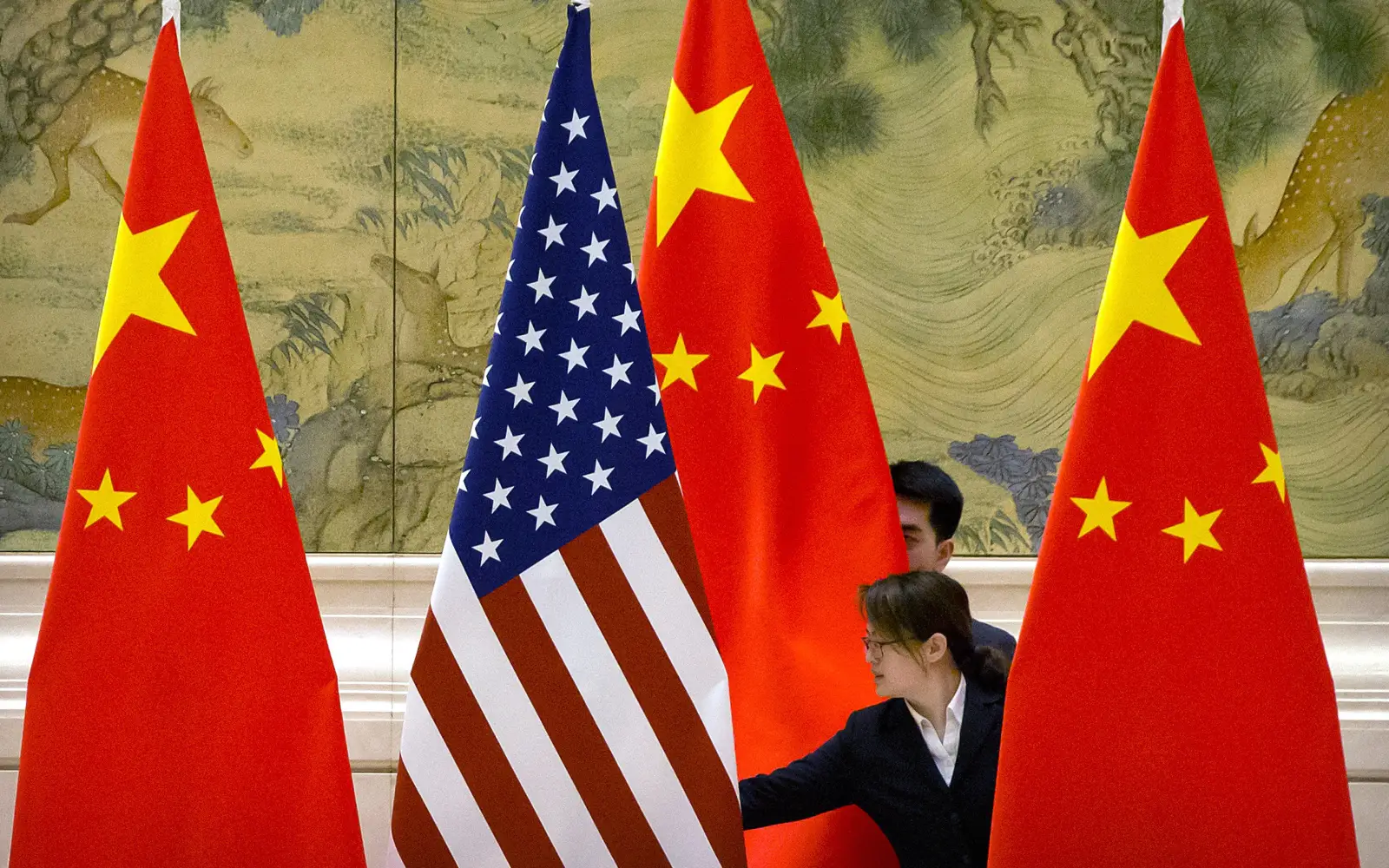
China imposes export controls on 10 US companies
The 10 entities include Aveox, which holds aerospace defence contracts with the US military, and Oshkosh Defense, which produces military vehicle fleets.
Share
Free Malaysia Today2026/06/22 10:47

Could Pi Network Be “Bitcoin for Smartphones”? A Theory Sparks Debate
A Theory Linking Pi Network to Bitcoin’s Original Vision Gains Attention A new wave of discussion has emerged within the cryptocurrency community exploring
Share
Hokanews2026/06/22 11:40

Coinbase Bitcoin Premium Signals Weakening U.S. Institutional Demand
The Coinbase Bitcoin Premium Index, a metric widely used by traders to measure buying activity on Coinbase compared to other major exchanges, has now remain
Share
Hokanews2026/06/22 11:14



