Nigeria is hosting Africa’s biggest trade fair. Getting in will cost you.
On Monday, a video posted by Larry Madowo, CNN’s international correspondent based in Nairobi, sparked a debate about Nigeria’s visa policy after he was charged $80 for a single-entry visa at Lagos’s Murtala Muhammed International Airport. In the viral clip, shared on X, Madowo questioned why Nigeria charges visitors fees that many of its African neighbours do not.
The timing was pointed. Hours later, Nigerian officials signed a formal agreement to host the Intra-African Trade Fair 2027 in Lagos, a continental commerce event designed to boost trade across Africa.
The signing ceremony was led by Jumoke Oduwole, Nigeria’s Minister of Industry, Trade, and Investment, and attended by former Nigerian President Olusegun Obasanjo, who chairs the fair’s advisory council, alongside George Elombi and Francisca Tatchouop Belobe of the African Export-Import Bank, which organises the event.
Nigeria expects the event to attract more than 100,000 visitors from across Africa, including delegates from Kenya, South Africa, Egypt, Angola, Gabon, and Algeria. Yet visitors from several of those countries will pay entry fees before they arrive.
Under Nigeria’s Reciprocal Visa Fee Policy, the country charges foreign nationals based on whatever their home governments charge Nigerian travellers—meaning the cost of attending varies depending on where you hold a passport.
Opening up visa access is increasingly important as Nigeria prepares to host such a large influx of visitors. While reciprocal visa fees are intended to promote fairness, strict entry requirements could discourage participation from key African countries and limit the event’s impact.
Easier entry rules could boost attendance, increase economic gains, and signal Nigeria’s commitment to free movement under the African Continental Free Trade Area, reinforcing its position as a key hub for continental trade and integration.
The trade fair itself is expected to focus heavily on how technological innovation and digitalisation can accelerate the simplification of investment, import, and export procedures across African economies.
Participants will also examine how countries can better align domestic legislation with continental policies and regulations. The goal is to harmonise standards, simplify visa regimes for business travellers, and expand the use of the Pan-African Payment and Settlement System as the default platform for cross-border trade transactions.
“Nigeria is truly proud to host the Intra-African Trade Fair 2027 in Lagos, the birthplace and launchpad of African economic integration,” Oduwole said at the signing ceremony.
She pointed to Lagos’ historic role in regional cooperation. The Economic Community of West African States, the continent’s first regional economic bloc and a model for later initiatives, including the AfCFTA, was founded in 1975 through the Treaty of Lagos.
Nigeria reinforced ECOWAS’ free-movement framework in the early 1980s by implementing visa-free entry of up to 90 days for ECOWAS nationals as part of Phase I of the ECOWAS Protocol on Free Movement of Persons.
Decades later, in December 2019, Muhammadu Buhari announced that Nigeria would extend visas on arrival to all African passport holders from January 2020, signalling support for greater continental mobility, although visa requirements were not fully removed.
Despite these efforts, Nigeria’s position on the Africa Visa Openness Index 2025, published by the African Development Bank and the African Union, has slipped. The country fell into the lower half of the rankings, outside the top 20 African countries for visa openness, after placing sixth on the index in 2024.
Part of the decline followed policy changes in 2025, when Nigeria, along with Guinea-Bissau, Mauritania, and Somalia, shifted from a broad visa-on-arrival policy for African travellers to a system requiring visas before departure. Although an e-Visa platform was introduced to simplify applications, the Africa Visa Openness Index still classifies e-Visas as visas obtained before travel, contributing to Nigeria’s drop in ranking.
Nigerian authorities say the policy shift was driven by security and reciprocity concerns. Pre-travel e-Visa screening allows security agencies to vet visitors before they arrive, while reciprocal rules ensure that countries that impose strict entry conditions on Nigerians face similar requirements.
Even so, Nigeria may argue that stricter visa policies do not necessarily undermine the success of major continental events such as the Intra-African Trade Fair. In just four editions, the fair has generated more than $167 billion in trade and investment deals across Africa, according to Afreximbank.
Algeria, which hosted the 2025 edition, recorded $48.3 billion in trade and investments during the event, despite its ranking among the 10 least visa-open nations on the continent. For more than 90% of African nationals, travellers to Algeria must apply for a visa in advance through an embassy or consulate before entering the country.
Restrictive visa regimes have economic consequences. Belobe, Commissioner for Economic Development, Trade, Tourism, Industry, and Minerals at the African Union Commission, warned that such policies can hinder mobility and trade within Africa, particularly as Nigeria prepares to host continent-wide events.
As the home of Africa’s most successful fintech unicorns, Nigeria’s primary benefit from an open visa policy would be the restoration of investor confidence and the facilitation of regional expansion.
“The first direction is with respect to non-tariff barriers and security concerns that continue to hinder intra-African trade,” Belobe said during the agreement-signing ceremony. “At the African Union, we are very much aware of these preoccupations and recommend that they should be high on the agenda of the Trade and Investment Forum during IATF 2027.”
Data from the African Export-Import Bank’s 2025 Intra-African Trade Report shows that while intra-African trade rose to $220.3 billion in 2024, its share of total African trade declined to 14.5% in 2024. The trend suggests that barriers such as visa restrictions and other non-tariff obstacles continue to limit the full potential of the continent’s economic integration.
According to Francisca Tatchouop Belobe, the weak performance of intra-African trade reflects the slow adoption of the core principles underpinning the African Continental Free Trade Area.
“It shows that despite the signing of the AfCFTA by 54 AU member states and ratification by 50 of them, as well as the adoption of several supporting protocols and regional trade arrangements, African countries are still slow in prioritising intra-African trade and harnessing the opportunities created by the AfCFTA,” she said.
However, Oduwole noted that Nigeria has continued to review its policies to align with the AfCFTA since the agreement was signed in 2021.
“Nigeria is proud to be the first AfCFTA state party to complete its five-year implementation review in 2025, an obligation under the agreement, and we now have a comprehensive understanding of the reforms, investments, and institutional practices required to fully realise the promise of the AfCFTA,” she said.


You May Also Like
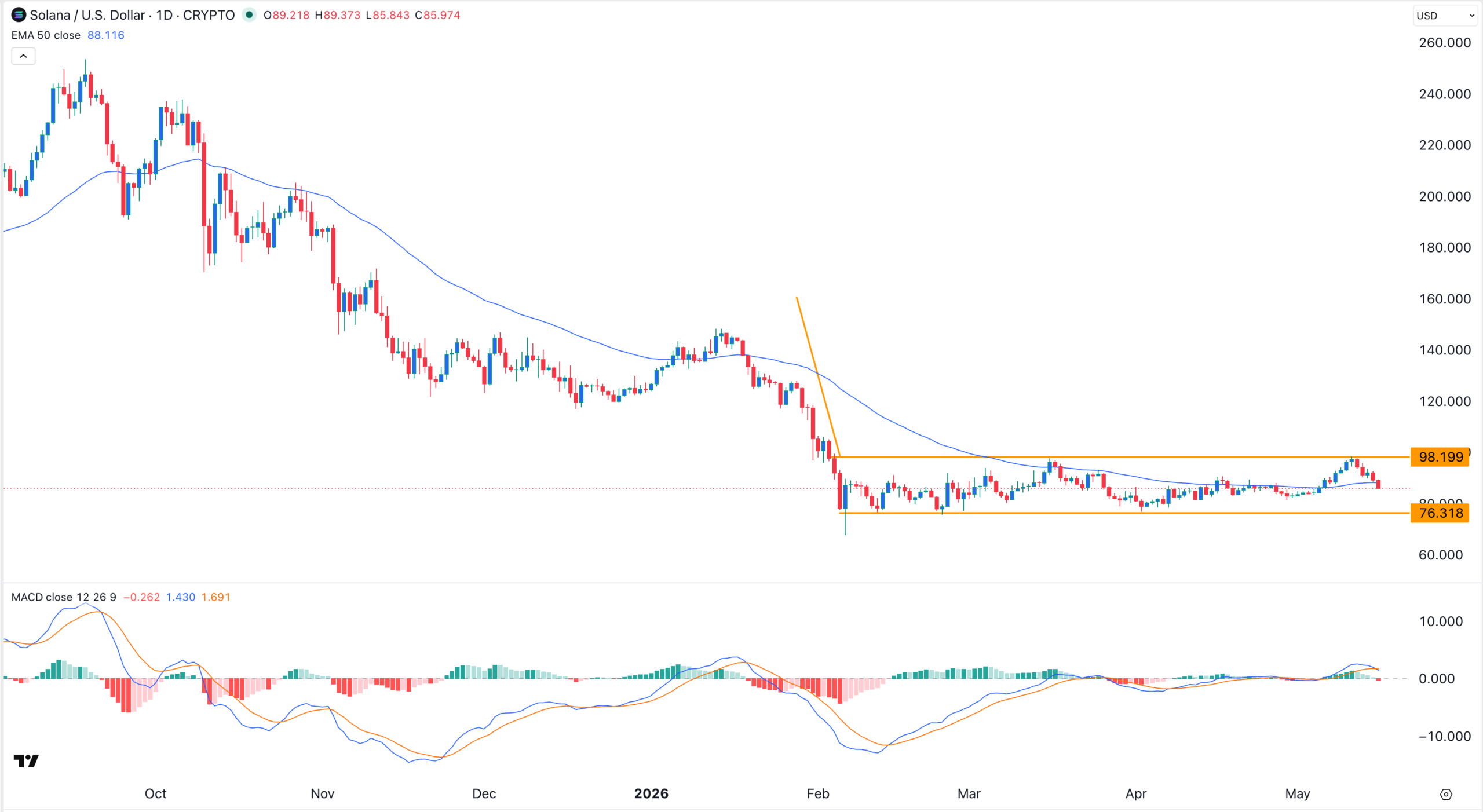
Solana Price is Hanging on a Thread as Crypto Fear and Greed Index Falls

House Agriculture Leaders Urge Trump to Nominate Full CFTC Commission as CLARITY Act Moves Forward