

Bitcoin Volatility Surge: Geopolitical Risk Overtakes Macro Factors as Primary Price Driver
BitcoinWorld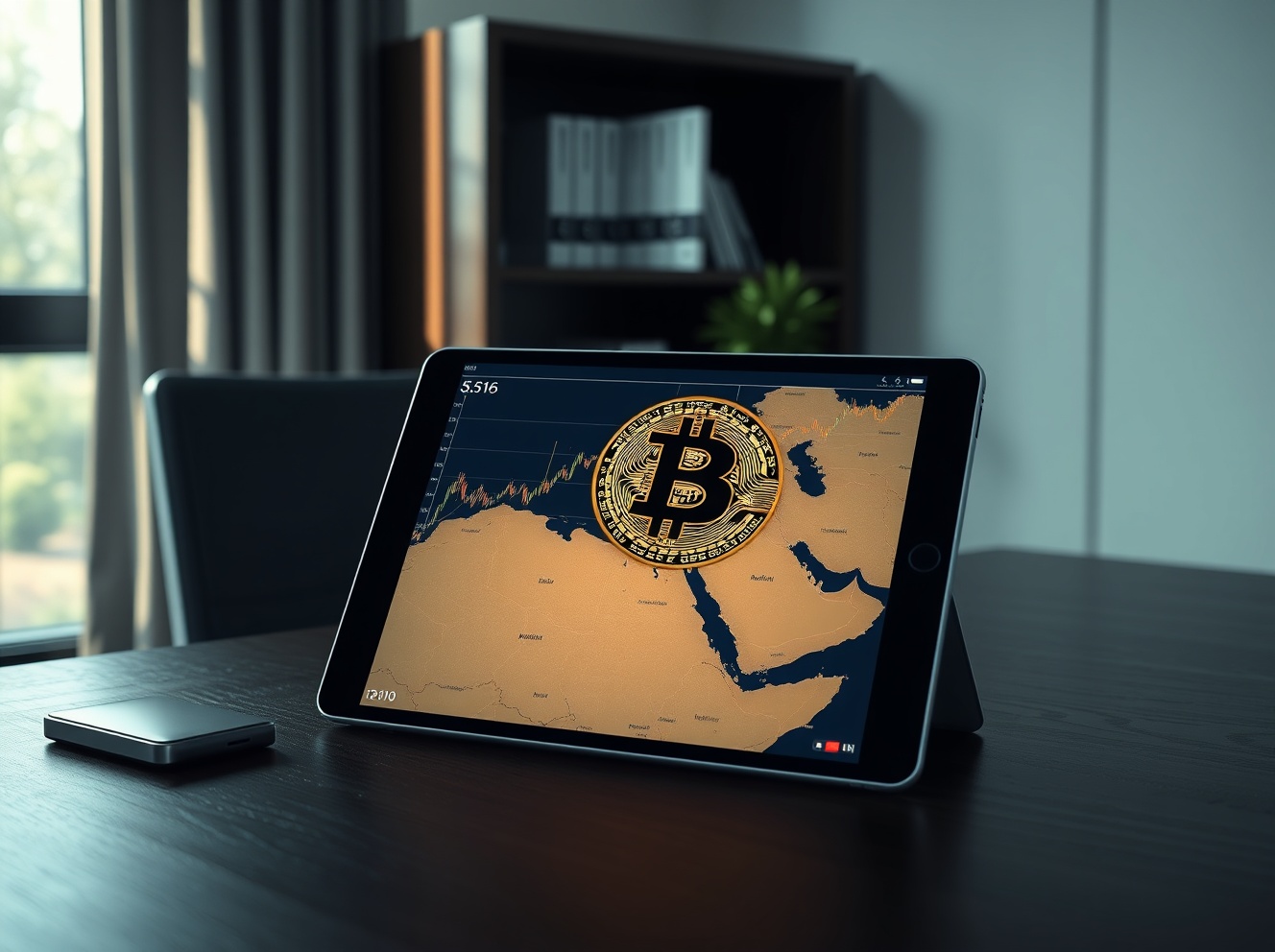
Bitcoin Volatility Surge: Geopolitical Risk Overtakes Macro Factors as Primary Price Driver
Bitcoin’s price volatility is undergoing a fundamental transformation in 2025, with geopolitical risk rapidly replacing traditional macroeconomic indicators as the primary market driver according to new analysis from leading financial researchers. This significant shift emerges amid escalating tensions in the Middle East, fundamentally altering how investors perceive and utilize the world’s largest cryptocurrency. James Butterfill, Head of Research at digital asset firm CoinShares, provides crucial insights into this evolving market dynamic, noting that Bitcoin’s recent 6% appreciation during U.S.-Iran conflicts demonstrates its growing role as a geopolitical hedge.
Bitcoin Volatility Enters New Phase
The cryptocurrency market is witnessing a paradigm shift in what drives Bitcoin price movements. For years, analysts tracked macroeconomic variables like Federal Reserve interest rate decisions, inflation data, and employment figures to predict BTC volatility. However, recent market behavior suggests these traditional indicators are losing their predictive power. Instead, geopolitical developments—particularly in the Middle East—are emerging as the dominant volatility catalysts. This transition represents more than a temporary market anomaly; it signals a structural change in how global investors perceive Bitcoin’s fundamental value proposition.
Market data from the past quarter provides compelling evidence for this shift. During periods of heightened Middle East tensions, Bitcoin has demonstrated price movements that diverge significantly from traditional risk assets. For instance, while global stock markets trended downward during recent U.S.-Iran conflicts, Bitcoin appreciated approximately 6%. This performance notably outpaced gold, which gained only about 1% during the same period. Such divergence challenges conventional asset classification models and suggests investors are increasingly viewing Bitcoin through a different analytical framework.
Geopolitical Risk Reshapes Crypto Markets
The deepening conflict between the United States, Israel, and Iran has created a new market environment where traditional safe-haven assets behave unexpectedly. Butterfill’s analysis reveals that geopolitical uncertainty now exerts greater influence on Bitcoin volatility than interest rate outlooks or employment reports. This development is particularly significant because it contradicts established financial theory, which typically groups Bitcoin with other risk assets that should decline during geopolitical crises. Instead, Bitcoin is demonstrating characteristics more commonly associated with traditional safe havens, albeit with its unique volatility profile.
Expert Analysis and Market Implications
James Butterfill brings substantial expertise to this analysis, having monitored cryptocurrency markets through multiple cycles at CoinShares. His research indicates that the correlation between Bitcoin and traditional macroeconomic indicators has weakened measurably since the beginning of 2025. Meanwhile, the correlation with geopolitical risk indices has strengthened correspondingly. This shift has practical implications for portfolio managers, institutional investors, and retail traders who must now incorporate geopolitical analysis into their cryptocurrency investment strategies.
The changing volatility drivers also affect how market participants hedge against uncertainty. Historically, investors turned to gold, government bonds, or the U.S. dollar during geopolitical crises. Bitcoin’s recent performance suggests it may be joining—and in some cases outperforming—these traditional hedges. This development could accelerate institutional adoption as portfolio managers seek diversified protection against geopolitical shocks. However, analysts caution that Bitcoin’s higher volatility means it functions differently than traditional safe havens, requiring adjusted risk management approaches.
Comparative Performance Analysis
A detailed examination of recent market movements reveals striking patterns. The following table illustrates how different asset classes performed during the most recent period of heightened Middle East tensions:
| Asset Class | Performance | Traditional Classification |
|---|---|---|
| Bitcoin (BTC) | +6% | Risk Asset |
| Gold | +1% | Safe Haven |
| S&P 500 | -2% | Risk Asset |
| U.S. Treasury Bonds | +0.5% | Safe Haven |
| U.S. Dollar Index | +1.2% | Safe Haven |
This performance data highlights several important trends. First, Bitcoin significantly outperformed all traditional safe-haven assets during the measured period. Second, its positive performance contrasted sharply with other risk assets like equities. Third, the magnitude of Bitcoin’s movement suggests it’s responding to different drivers than traditional assets. These observations support Butterfill’s conclusion that geopolitical risk has become a primary volatility driver for Bitcoin, potentially redefining its role in global portfolios.
Historical Context and Future Outlook
To understand this shift fully, we must examine Bitcoin’s evolving relationship with different market drivers. In its early years, Bitcoin volatility primarily reflected internal factors like exchange issues, regulatory announcements, and technological developments. During the 2020-2023 period, macroeconomic factors gained prominence as institutional adoption increased. The current transition to geopolitical drivers represents the third major phase in Bitcoin’s market maturity. This evolution mirrors how traditional assets developed their sensitivity to different risk factors over longer timeframes.
Looking forward, analysts anticipate several potential developments. If geopolitical risk maintains its dominant position, we may see:
- Increased correlation between Bitcoin and traditional geopolitical hedges
- Reduced sensitivity to routine macroeconomic data releases
- New trading patterns around geopolitical events and announcements
- Enhanced institutional interest from geopolitical risk managers
- Potential regulatory attention on Bitcoin’s geopolitical role
Market participants should monitor several key indicators to track this transition’s progress. These include the changing correlation coefficients between Bitcoin and various risk factors, trading volume patterns around geopolitical events, and institutional positioning data. Additionally, continued Middle East developments will provide natural experiments to test whether this shift represents a temporary phenomenon or a permanent market structure change.
Conclusion
The transformation of Bitcoin volatility drivers from macroeconomic to geopolitical factors represents a significant development for cryptocurrency markets and global finance. This shift challenges traditional asset classification models while potentially expanding Bitcoin’s utility as a hedge against specific types of uncertainty. As geopolitical tensions continue to influence global markets, Bitcoin’s evolving role warrants close observation by investors, analysts, and policymakers. The coming months will determine whether this represents a temporary market anomaly or a fundamental redefinition of Bitcoin’s relationship with global risk factors, potentially reshaping portfolio construction strategies for years to come.
FAQs
Q1: What evidence supports the claim that geopolitical risk is driving Bitcoin volatility?
Market data shows Bitcoin gained approximately 6% during recent U.S.-Iran conflicts while traditional risk assets declined and other safe havens showed minimal gains. Research from CoinShares indicates weakening correlation with macroeconomic indicators and strengthening correlation with geopolitical risk indices.
Q2: How does Bitcoin’s performance as a geopolitical hedge compare to gold?
During the measured conflict period, Bitcoin appreciated about 6% while gold gained only 1%. This suggests Bitcoin may be developing stronger hedging characteristics against certain geopolitical risks, though with higher volatility than traditional safe havens.
Q3: What are the implications for investors considering Bitcoin as part of their portfolio?
Investors may need to adjust their analytical frameworks to incorporate geopolitical risk assessment alongside traditional macroeconomic analysis. Portfolio managers should consider Bitcoin’s evolving correlation patterns when constructing hedges against geopolitical uncertainty.
Q4: Could this shift in volatility drivers be temporary?
While current data suggests a structural change, only continued observation will determine permanence. Multiple geopolitical events over coming months will provide additional data points to assess whether this represents a lasting market dynamic.
Q5: How might this affect Bitcoin’s relationship with traditional financial markets?
If geopolitical risk maintains its dominant influence, Bitcoin may develop stronger correlations with other geopolitical hedges while showing reduced sensitivity to routine economic data. This could accelerate institutional adoption from investors seeking diversified geopolitical risk protection.
This post Bitcoin Volatility Surge: Geopolitical Risk Overtakes Macro Factors as Primary Price Driver first appeared on BitcoinWorld.


You May Also Like

Covéa Chooses Shift Technology as Strategic Partner for Fraud and Risk Management

Dunamu Posts 78% Profit Drop as Crypto Trading Slump Hits Upbit’s Fee-Driven Revenue




