

Strategic Shift: Japan’s Akazawa to Discuss Critical IEA Oil Reserve Release Timing and Allocation
BitcoinWorld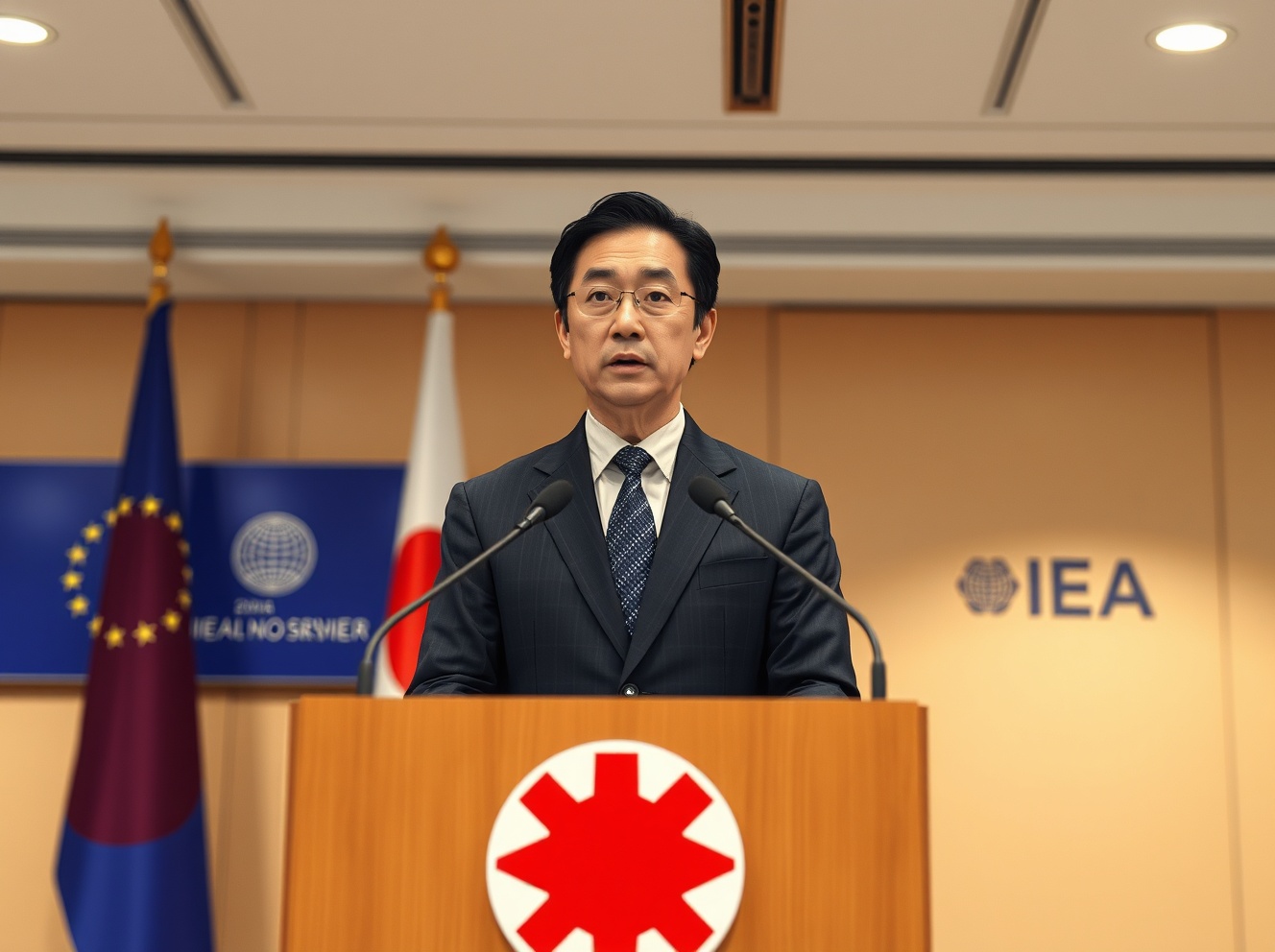
Strategic Shift: Japan’s Akazawa to Discuss Critical IEA Oil Reserve Release Timing and Allocation
In a significant move for global energy markets, Japan’s Economy Minister, Yoshitaka Akazawa, announced plans to discuss the allocation and timing of a coordinated International Energy Agency (IEA) oil reserve release. This statement, made in Tokyo on March 15, 2025, signals a proactive governmental response to ongoing volatility in worldwide crude oil supplies. Consequently, market analysts are closely monitoring these developments for their potential impact on prices and energy security.
Japan’s Strategic Role in the IEA Oil Reserve Framework
The International Energy Agency mandates that member countries hold emergency oil stocks equivalent to at least 90 days of net imports. Japan, as a key member, maintains one of the world’s most substantial strategic petroleum reserves. Minister Akazawa’s forthcoming discussions specifically concern the logistics of a potential coordinated release. These talks will determine how much crude oil Japan contributes and the optimal market window for the action. Therefore, the outcome will directly influence global supply chains.
Historically, the IEA has coordinated collective releases during major supply disruptions. For instance, the agency acted after Hurricane Katrina in 2005 and the Libyan civil war in 2011. More recently, a massive 60-million-barrel release occurred in early 2022 following Russia’s invasion of Ukraine. Japan’s participation in these efforts underscores its commitment to international energy stability. Moreover, its decisions are based on a careful analysis of domestic stockpile levels and projected demand.
Analyzing the Global Energy Market Context
Minister Akazawa’s announcement arrives amid a complex backdrop for oil markets. Several factors are currently applying pressure, including geopolitical tensions in key producing regions and persistent refinery capacity constraints. Additionally, the global economic recovery trajectory continues to influence demand forecasts. A coordinated reserve release aims to provide a temporary supply buffer, thereby calming prices and ensuring steady fuel supplies for consumers and industries.
The effectiveness of such releases depends heavily on their scale and timing. Experts note that the market impact is often psychological as much as physical. “The signal of solidarity and ready supply can deter speculative trading and hoarding,” explains Dr. Kenji Tanaka, a senior energy analyst at the Institute of Energy Economics, Japan. He further states that precise coordination among IEA members is crucial for maximizing the calming effect on prices.
The Mechanics of Japan’s Strategic Petroleum Reserve
Japan stores its emergency crude in two primary forms: government-owned national reserves and mandated industry stocks. The reserves are held in massive underground caverns and above-ground tanks across the country. The following table outlines Japan’s current strategic petroleum reserve structure, based on the latest METI
| Reserve Type | Holding Entity | Volume (Days of Net Imports) |
|---|---|---|
| National Oil Reserve | Japan Oil, Gas and Metals National Corporation (JOGMEC) | ~90 days |
| Private Sector Stockpiling | Refiners & Importers (Legal Requirement) | ~70 days |
| Total Strategic Stockpile | Government & Industry | ~160+ days |
This robust system provides Japan with significant leverage in IEA discussions. When considering a release, officials must evaluate several critical factors:
- Current Stockpile Levels: Ensuring sufficient reserves remain for a genuine national emergency.
- Market Conditions: Identifying periods of peak price volatility or supply fear.
- Logistical Feasibility: The speed at which crude can be transported from storage to refineries.
- International Coordination: Aligning volume and timing with other IEA member states.
Potential Impacts on Consumers and Industry
A well-timed IEA oil reserve release can lead to tangible benefits. Primarily, it can help lower benchmark crude prices, which filter down to wholesale fuel costs. For consumers, this could translate to relief at the gasoline pump and on home heating bills. For industries, especially transportation and manufacturing, lower energy input costs can improve operational margins and product pricing.
However, analysts caution that reserve releases are a temporary tool, not a permanent solution. “They address symptoms of a supply crunch but not the underlying causes,” notes Dr. Tanaka. Long-term energy security, he argues, requires diversification of supply sources, investment in renewable alternatives, and enhanced energy efficiency measures. Nevertheless, in the short term, strategic reserves remain a vital policy instrument for governments.
Historical Precedents and Future Outlook
Past IEA actions provide a blueprint for the current deliberations. The 2022 coordinated release, for example, involved a commitment of 60 million barrels, with the United States providing half. Japan contributed approximately 7.5 million barrels from its national reserves. The announcement initially softened prices, though market forces quickly reasserted themselves. This history informs the current planning, emphasizing the need for a release large enough to make a meaningful market impact.
Looking ahead, Minister Akazawa’s discussions will also consider the evolving global energy landscape. The transition toward renewables is accelerating, yet global oil demand remains structurally high for the foreseeable future. Therefore, managing this interim period requires careful stewardship of traditional energy tools like strategic reserves. The decisions made in Tokyo will resonate through Asian energy markets and beyond.
Conclusion
Japan’s proactive stance, as articulated by Economy Minister Yoshitaka Akazawa, highlights the ongoing importance of the IEA oil reserve release mechanism in global energy governance. The forthcoming discussions on allocation and timing represent a critical juncture for market stability. By leveraging its substantial strategic stockpiles in coordination with international partners, Japan aims to mitigate price volatility and enhance energy security for all consuming nations. Ultimately, this move underscores the delicate balance between immediate market interventions and the long-term transition to a more sustainable energy future.
FAQs
Q1: What is the International Energy Agency (IEA) oil reserve release?
The IEA oil reserve release is a coordinated action where member countries tap their government-controlled strategic petroleum stocks to increase global supply during a major disruption, aiming to stabilize oil markets and prices.
Q2: Why is Japan discussing the timing of the release now?
Japan’s Economy Minister Akazawa is initiating discussions to preemptively plan for potential market instability. Determining the optimal timing ensures the release has maximum impact in calming prices without depleting reserves needed for a longer crisis.
Q3: How much oil does Japan hold in its strategic reserves?
Japan holds one of the world’s largest strategic petroleum reserves, with total government and legally mandated private sector stockpiles equivalent to over 160 days of net oil imports, far exceeding the IEA’s 90-day requirement.
Q4: Can an IEA oil reserve release significantly lower gasoline prices?
While a coordinated release can put downward pressure on global crude oil benchmarks, the effect on retail gasoline prices depends on many factors, including refinery margins, taxes, and local market competition. It is a stabilizing tool, not a price control mechanism.
Q5: What happens to Japan’s energy security after a reserve release?
Officials carefully calculate any release to ensure ample reserves remain for a genuine national emergency. The action is part of a broader energy security strategy that includes supply diversification and efficiency, and reserves are replenished when market conditions normalize.
This post Strategic Shift: Japan’s Akazawa to Discuss Critical IEA Oil Reserve Release Timing and Allocation first appeared on BitcoinWorld.


You May Also Like

Public Companies Stacked 369,000 BTC in 12 Months, Signaling Deepening Institutional Adoption

The Chemistry of UV Resistance: How Titanium Dioxide Protects Against the California Sun




