

Gold Price Struggles as Surging Oil-Driven Inflation Fears Upend Global Interest Rate Outlook
BitcoinWorld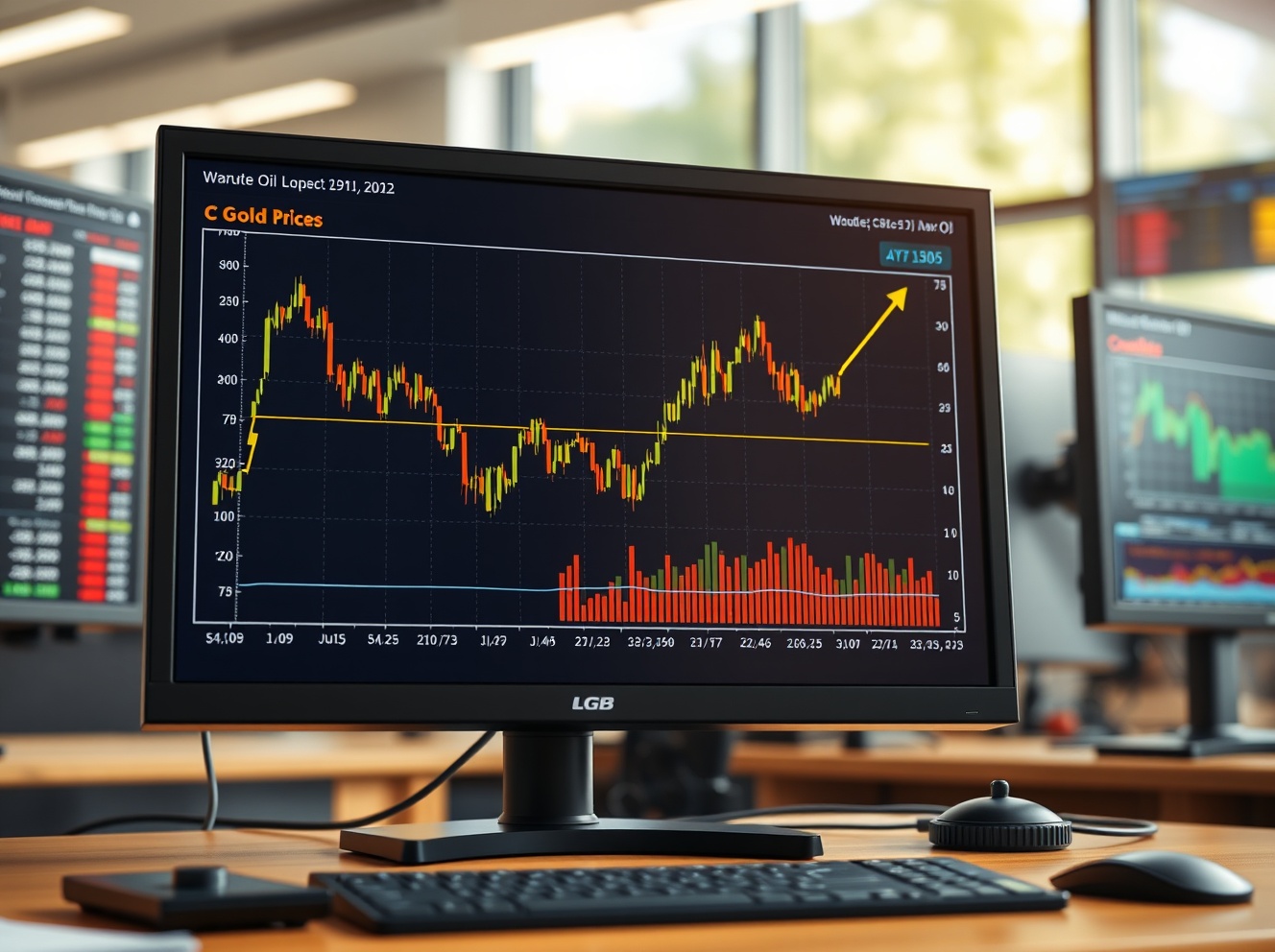
Gold Price Struggles as Surging Oil-Driven Inflation Fears Upend Global Interest Rate Outlook
Global financial markets in early 2025 face renewed pressure as the traditional haven asset, gold, struggles to gain momentum. Consequently, persistent fears of inflation, primarily driven by volatile oil prices, continue to weigh heavily on investor sentiment. Furthermore, this dynamic directly influences the complex global interest rate outlook, forcing central banks into a delicate balancing act. This analysis examines the interconnected pressures reshaping capital flows and monetary policy decisions worldwide.
Gold Price Under Pressure from Macroeconomic Forces
Gold traditionally thrives during periods of economic uncertainty and loose monetary policy. However, the current environment presents a significant challenge. Rising bond yields, a direct consequence of inflation fears, increase the opportunity cost of holding non-yielding assets like gold. Market data from major exchanges shows consistent selling pressure on gold futures. Analysts point to substantial outflows from physically-backed gold exchange-traded funds (ETFs) as a key indicator. This trend reflects a broader shift in asset allocation strategies among institutional investors.
Historical context provides crucial insight. For instance, during the high-inflation periods of the 1970s, gold performed exceptionally well. Today’s scenario differs due to the aggressive monetary policy response from central banks. The market now anticipates higher-for-longer interest rates to combat inflation. This expectation creates a strong headwind for gold prices. Technical charts reveal gold has failed to hold above key psychological resistance levels multiple times this quarter. Each rally has met with selling, confirming the prevailing bearish sentiment.
The Direct Impact of Real Yields
Financial experts emphasize the critical role of real yields—bond yields adjusted for inflation. When real yields rise, as they have recently, gold becomes less attractive. Investors can seek better returns in government bonds without the same volatility. Recent Federal Reserve communications have reinforced this dynamic. The Fed’s data-dependent stance signals a readiness to maintain restrictive policy. This posture directly undermines one of gold’s primary investment theses for the current cycle.
Oil Prices as the Primary Inflation Catalyst
The recent surge in crude oil prices acts as the primary engine for renewed inflation concerns. Geopolitical tensions in key producing regions have disrupted supply chains. Simultaneously, stronger-than-expected global demand, particularly from emerging economies, has tightened the market balance. The benchmark Brent crude futures contract has exhibited notable volatility, breaching significant price thresholds. This volatility transmits directly into higher costs for transportation, manufacturing, and energy.
Energy economists highlight the lag effect of oil price increases. Higher pump prices and utility bills eventually filter into core consumer price indices. Central banks monitor these second-round effects closely. The fear is that businesses will pass on higher costs to consumers, embedding inflation expectations. This scenario complicates the disinflationary progress made over the previous year. The following table illustrates the recent correlation:
| Period | Avg. Oil Price (USD/bbl) | Core Inflation Trend | Gold Price Reaction |
|---|---|---|---|
| Q4 2024 | 78 | Moderating | Sideways/Up |
| Q1 2025 | 92 | Sticky/Resurgent | Downward |
Market participants now watch weekly inventory reports and OPEC+ production decisions with heightened anxiety. Any sign of sustained supply tightness reinforces the inflationary narrative. This, in turn, pressures central banks to maintain a hawkish stance, creating a feedback loop that suppresses gold.
Global Interest Rate Outlook in Flux
The global interest rate landscape faces unprecedented divergence. Major central banks, including the Federal Reserve and the European Central Bank, have paused their hiking cycles but explicitly reject near-term easing. Their statements consistently cite persistent services inflation and robust labor markets as reasons for caution. The oil price shock introduces a new variable that could delay projected rate cuts even further.
In contrast, some emerging market central banks have begun a cautious easing cycle, betting their earlier aggressive hikes have tamed domestic inflation. This policy divergence creates complex cross-currents in currency markets. A stronger US dollar, often a result of higher US rates, applies additional downward pressure on dollar-denominated gold. The monetary policy outlook now depends heavily on incoming data, specifically:
- Monthly CPI and PCE reports: For signs of broadening price pressures.
- Employment figures: To gauge wage-growth momentum.
- Oil inventory and price As a leading indicator for input costs.
Investors have dramatically scaled back bets on the timing and magnitude of rate cuts for 2025. Interest rate futures markets now price in a significantly more restrictive path than they did just one quarter ago. This repricing is the single largest factor behind gold’s current struggles.
Expert Analysis on Policy Trade-offs
Former central bank officials and leading market strategists warn of a difficult trade-off. Policymakers must balance the risk of reigniting inflation against the risk of overtightening and causing a recession. “The commodity-driven inflation pulse, particularly from energy, is a supply-side shock,” notes a chief economist at a major international bank. “Central banks can only dampen demand in response, which is a blunt tool and creates collateral damage for growth assets and, paradoxically, can support the dollar and hurt gold.” This analysis underscores the fragile equilibrium in global markets.
Historical Precedents and Market Psychology
Examining past episodes of oil shocks and gold performance offers valuable perspective. During the 2007-2008 period, oil prices spiked dramatically. Initially, gold rose as a hedge against both inflation and financial instability. However, when the crisis culminated in a deflationary demand collapse and a strong dollar rally, gold also sold off sharply. The current environment shares some characteristics: a supply-driven oil price increase and a vigilant central bank response.
Market psychology plays a crucial role. The fear of persistent inflation can sometimes benefit gold, but only if investors believe central banks are behind the curve. The prevailing belief today is that central banks are determined to avoid the mistakes of the 1970s. This credibility anchor limits gold’s appeal as an inflation hedge. Sentiment indicators, such as the Commitments of Traders report, show speculative net-long positions in gold have been reduced substantially. This shift reflects a change in collective market belief about the future path of real interest rates.
Conclusion
The gold price faces a complex array of headwinds in the current macroeconomic climate. Primarily, oil-driven inflation fears are compelling central banks to maintain a restrictive monetary policy stance. This action directly strengthens the interest rate outlook for higher-for-longer benchmark rates, elevating real yields and the US dollar. Consequently, gold’s opportunity cost rises while its hedge appeal diminishes. The trajectory for bullion remains tightly coupled to incoming data on inflation, particularly energy prices, and the subsequent policy signals from major central banks. For now, the market narrative favors financial assets linked to rate differentials over traditional non-yielding safe havens, leaving gold in a state of struggle.
FAQs
Q1: Why do higher oil prices hurt gold?
Higher oil prices fuel broader inflation, prompting central banks to keep interest rates high or raise them. Higher rates increase bond yields, making non-yielding gold less attractive, and often strengthen the dollar, in which gold is priced.
Q2: What is the “opportunity cost” of holding gold?
Opportunity cost refers to the potential returns an investor misses by choosing one investment over another. When interest rates rise, safe assets like government bonds pay more interest. Holding gold, which pays no yield, becomes relatively more expensive in terms of forgone income.
Q3: Could gold still rally if inflation gets worse?
Yes, but only if markets lose faith in central banks’ ability to control it. If investors believe inflation will run hot for years despite rate hikes (a loss of policy credibility), gold could rally as a classic inflation hedge, as seen in the 1970s.
Q4: How do other commodities react in this environment?
Reactions vary. Industrial metals like copper may also struggle due to fears that high rates will slow economic growth and demand. However, the energy complex (oil, natural gas) may remain strong if supply constraints persist, creating a divergence.
Q5: What would need to change for gold’s outlook to improve?
A clear pivot by major central banks toward cutting interest rates would be the primary catalyst. This would likely require convincing evidence that inflation is sustainably returning to target, potentially from a significant drop in oil prices or a sharp economic slowdown.
This post Gold Price Struggles as Surging Oil-Driven Inflation Fears Upend Global Interest Rate Outlook first appeared on BitcoinWorld.


You May Also Like
Bitcoin Slips Below $79K as Surging Bond Yields and Inflation Fears Trigger Broad Market Sell-Off

Metaplanet buys 5,075 Bitcoin in Q1 to become 3rd-largest treasury




