Born in ’88, I remember life before constant connectivity. I love tech, I use it every day, and I push it forward in my work—but lately, convenience feels less like progress and more like control. Every app, device, and “agree to terms” chips away at our privacy, patience, and independence. We’re building a digital cage, and the scary part is how comfortable it feels inside. The question isn’t whether tech will define the next twenty years—it will. The question is whether we’ll recognize ourselves when it does.Born in ’88, I remember life before constant connectivity. I love tech, I use it every day, and I push it forward in my work—but lately, convenience feels less like progress and more like control. Every app, device, and “agree to terms” chips away at our privacy, patience, and independence. We’re building a digital cage, and the scary part is how comfortable it feels inside. The question isn’t whether tech will define the next twenty years—it will. The question is whether we’ll recognize ourselves when it does.

Convenience: The Leading Cause of Death in 2045?

I was born in '88, back when phones had cords and patience was mandatory. You wanted to talk to someone? Pick up the receiver, listen to the dial tone, carefully twist the rotary dial, and hope you didn't misdial. The pinnacle of tech back then was borrowing change for a payphone or memorizing a neighbor's number. Thrilling stuff.

I remember life before computers and cell phones—barely, but I do. A time when convenience meant knowing your neighbor, keeping a paper map in the glove box, or flipping through thick paper phone books. It was slower, imperfect, human.

Fast-forward a decade or so, and cell phones appeared. Big, brick-like miracles that somehow made life feel smaller, faster, and, honestly, slightly terrifying. Then came smartphones, apps, notifications, and the endless ping of connection. Now convenience means tapping a screen. Groceries at the door, directions recalculated in real time, answers from a glowing rectangle before you even finish the question.

And I'll be honest: I like it. I use it. I push it. My work depends on tech, and I get a kick out of new gadgets and digital tools. Almost every industry—from healthcare to grocery stores—relies on systems I helped learn to love. I'm not just a consumer; I'm part of the machine. And yet, the more I embrace it, the more surreal it all feels.
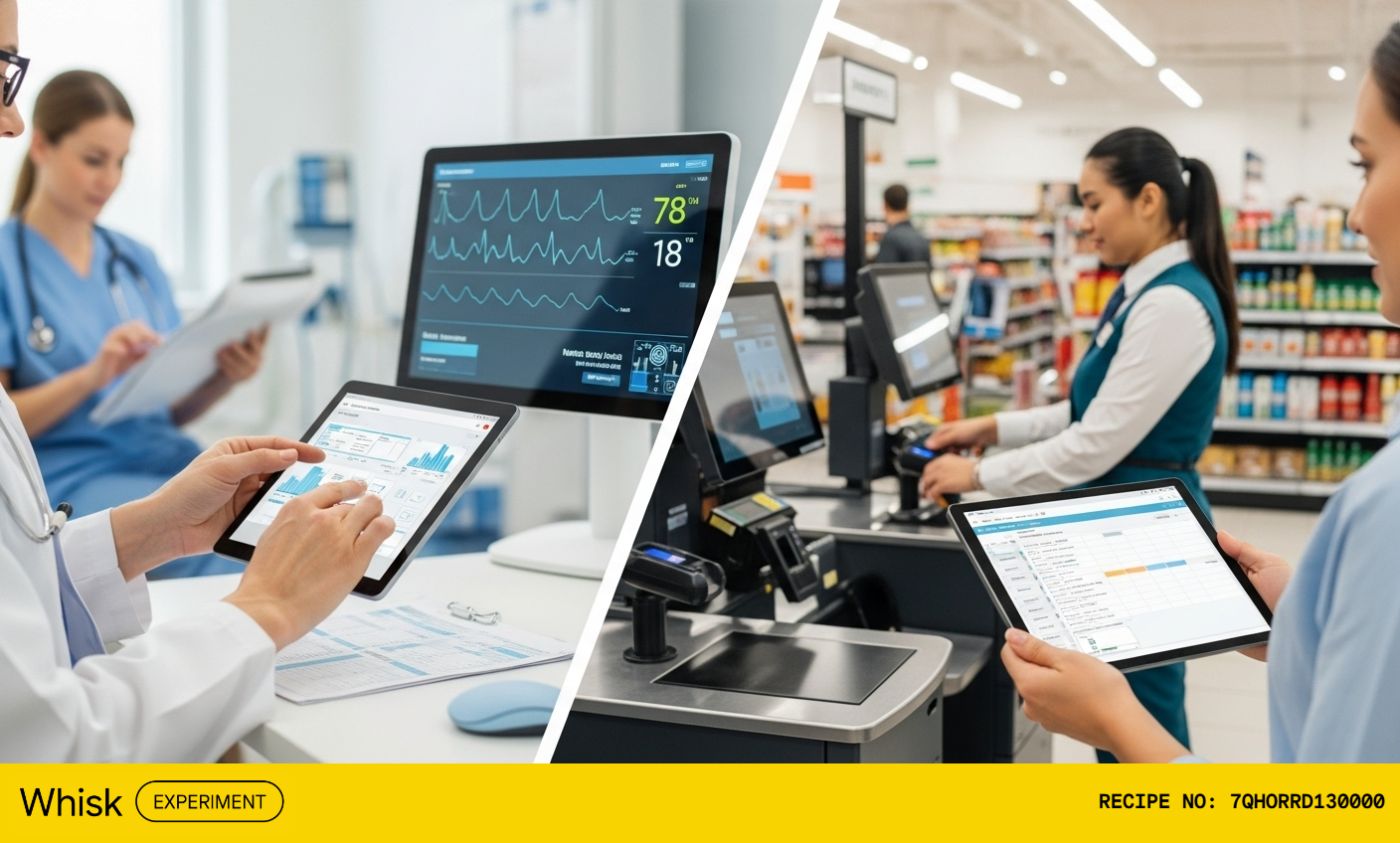
Digital systems in healthcare to grocery stores

\ \ But lately, it's started to feel different. More sinister. Like a charming but sly roommate who rearranges your furniture while you sleep. Less like innovation and more like control dressed up as progress. Every app, every device, every "agree to terms" isn't just about making life easier—it's about collecting pieces of us. Our habits, our movements, our relationships, our desires. Convenience is the bait. Data is the catch. Convenience has become the leash.

The deeper I got into cryptocurrency, decentralized finance, and governance, the more clearly I saw it. Tech isn't just neutral infrastructure. It's shaping power, shaping society, shaping what it even means to be free. And the trade we're making for comfort is bigger than most people realize.

And here's the kicker: I think I might be the exact generation historians will blame. One day, future humans will squint at the past and mutter, "Wait, what were y'all doing? Did you not see this coming?" We grew up analog, built the digital, and loved it so much we barely noticed the trade-offs: patience, privacy, independence, the occasional "just sitting and thinking" moment.

Ten, twenty years down this road, what does life look like? Maybe we won't own our devices—maybe they'll own us. Maybe we'll forget how to function without being connected. Maybe algorithms won't just recommend what we watch or buy, but quietly nudge how we think, who we trust, and what we believe. Convenience will have become dependency. Dependency will have become obedience.

That's what keeps me uneasy. Kids growing up now may never know what it's like to be unreachable. To sit in boredom long enough to create something. To solve a problem without googling it. To have privacy that isn't conditional. Those muscles—patience, resilience, curiosity—atrophy fast when every need is instantly answered.

And here I am, stuck in the contradiction. I love tech. I need it. I build with it. But I also feel the bars closing in, disguised as sleek updates and seamless integrations. Every gadget I use, every workflow I streamline, every convenience I celebrate comes with a tiny pang of guilt. It's not yet a dystopia; it's a slow creep. The hum of progress is seductive. I push tech forward, I work with it, I marvel at it—but sometimes I swear I can feel it eyeing me like, "Soon…"

We're walking into a digital cage, and the scariest part is how comfortable it feels inside. The digital cage isn't coming; it's here, one seamless integration at a time. And the humor—or maybe tragedy—is that I'm helping build it, probably while laughing at a meme about someone else trapped inside it.
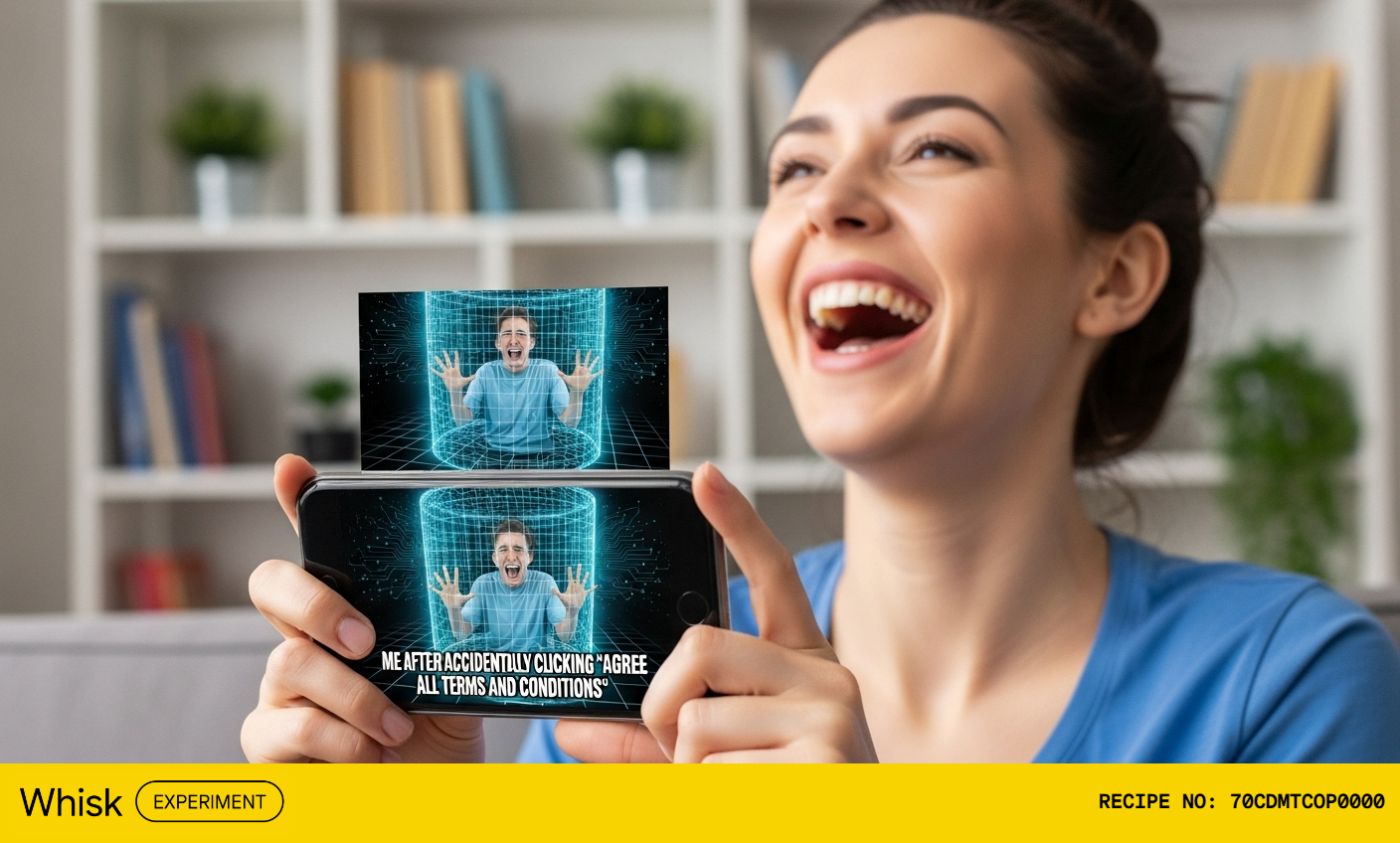
Woman laugh at a meme of someone else trapped in a digital cage

\ The future doesn't arrive all at once. It creeps in through convenience. The question isn't whether tech will define the next twenty years—it will. The question is whether we'll still recognize ourselves when it does.


Market Opportunity
Threshold Logo
Threshold Price(T)
$0.009506
$0.009506$0.009506
-5.36%
USD
Threshold (T) Live Price Chart
Disclaimer: The articles reposted on this site are sourced from public platforms and are provided for informational purposes only. They do not necessarily reflect the views of MEXC. All rights remain with the original authors. If you believe any content infringes on third-party rights, please contact [email protected] for removal. MEXC makes no guarantees regarding the accuracy, completeness, or timeliness of the content and is not responsible for any actions taken based on the information provided. The content does not constitute financial, legal, or other professional advice, nor should it be considered a recommendation or endorsement by MEXC.

You May Also Like

DBS, Franklin Templeton, and Ripple partner to launch trading and lending solutions powered by tokenized money market funds and more

DBS, Franklin Templeton, and Ripple partner to launch trading and lending solutions powered by tokenized money market funds and more

PANews reported on September 18 that according to Cointelegraph, DBS Bank, Franklin Templeton and Ripple have partnered to launch trading and lending solutions supported by tokenized money market funds and RLUSD stablecoins.
Share
PANews2025/09/18 10:04
Zero Knowledge Proof Auction Limits Large Buyers to $50K: Experts Forecast 200x to 10,000x ROI

Zero Knowledge Proof Auction Limits Large Buyers to $50K: Experts Forecast 200x to 10,000x ROI

In most token sales, the fastest and richest participants win. Large buyers jump in early, take most of the supply, and control the market before regular people
Share
LiveBitcoinNews2026/01/19 08:00
IP Hits $11.75, HYPE Climbs to $55, BlockDAG Surpasses Both with $407M Presale Surge!

IP Hits $11.75, HYPE Climbs to $55, BlockDAG Surpasses Both with $407M Presale Surge!

The post IP Hits $11.75, HYPE Climbs to $55, BlockDAG Surpasses Both with $407M Presale Surge! appeared on BitcoinEthereumNews.com. Crypto News 17 September 2025 | 18:00 Discover why BlockDAG’s upcoming Awakening Testnet launch makes it the best crypto to buy today as Story (IP) price jumps to $11.75 and Hyperliquid hits new highs. Recent crypto market numbers show strength but also some limits. The Story (IP) price jump has been sharp, fueled by big buybacks and speculation, yet critics point out that revenue still lags far behind its valuation. The Hyperliquid (HYPE) price looks solid around the mid-$50s after a new all-time high, but questions remain about sustainability once the hype around USDH proposals cools down. So the obvious question is: why chase coins that are either stretched thin or at risk of retracing when you could back a network that’s already proving itself on the ground? That’s where BlockDAG comes in. While other chains are stuck dealing with validator congestion or outages, BlockDAG’s upcoming Awakening Testnet will be stress-testing its EVM-compatible smart chain with real miners before listing. For anyone looking for the best crypto coin to buy, the choice between waiting on fixes or joining live progress feels like an easy one. BlockDAG: Smart Chain Running Before Launch Ethereum continues to wrestle with gas congestion, and Solana is still known for network freezes, yet BlockDAG is already showing a different picture. Its upcoming Awakening Testnet, set to launch on September 25, isn’t just a demo; it’s a live rollout where the chain’s base protocols are being stress-tested with miners connected globally. EVM compatibility is active, account abstraction is built in, and tools like updated vesting contracts and Stratum integration are already functional. Instead of waiting for fixes like other networks, BlockDAG is proving its infrastructure in real time. What makes this even more important is that the technology is operational before the coin even hits exchanges. That…
Share
BitcoinEthereumNews2025/09/18 00:32



