

Flow Token Delisting Stands: South Korean Court Delivers Critical Blow to Foundation’s Appeal
BitcoinWorld
Flow Token Delisting Stands: South Korean Court Delivers Critical Blow to Foundation’s Appeal
SEOUL, South Korea – March 15, 2025 – The Flow Foundation suffered a significant legal setback this week when a South Korean court dismissed its emergency request to prevent the delisting of its FLOW token from three major domestic cryptocurrency exchanges. This critical ruling represents a pivotal moment for cryptocurrency regulation in one of Asia’s most active digital asset markets.
Flow Token Delisting Receives Judicial Backing
The Seoul Central District Court’s 50th Civil Affairs Division formally rejected the Flow Foundation’s injunction application on March 13, 2025. Consequently, the planned removal of FLOW from Upbit, Bithumb, and Coinone will proceed as scheduled. The court delivered its decision after careful consideration of multiple factors affecting market stability and investor protection.
Judicial authorities specifically cited three primary reasons for their ruling. First, they noted that FLOW remains available for trading on other platforms, including Korbit and global exchange Binance. Second, the court acknowledged the possibility of future relisting if the token meets evolving exchange requirements. Finally, and most significantly, the panel determined that allowing the delisting would prevent greater potential losses for other investors.
This decision follows increasing regulatory scrutiny from South Korea’s Financial Services Commission (FSC). The FSC has implemented stricter guidelines for cryptocurrency listings throughout 2024 and 2025. These guidelines mandate enhanced due diligence procedures for all tokens seeking exchange approval.
South Korean Regulatory Landscape Intensifies
South Korea maintains one of the world’s most comprehensive cryptocurrency regulatory frameworks. The country’s Virtual Asset User Protection Act, enacted in July 2023, established clear guidelines for exchange operations and token listings. Furthermore, the Financial Intelligence Unit (FIU) regularly monitors compliance with anti-money laundering (AML) requirements.
Major exchanges like Upbit, Bithumb, Coinone, and Korbit conduct quarterly reviews of listed tokens. They evaluate multiple criteria during these assessments:
- Technical security and blockchain integrity
- Project transparency and development activity
- Market liquidity and trading volume metrics
- Regulatory compliance with Korean laws
- Investor protection mechanisms and disclosures
Tokens failing to meet minimum standards receive delisting notices with typically 30-day grace periods. The FLOW token received its notification in mid-February, prompting the Foundation’s legal response.
Market Impact and Investor Implications
The court’s decision carries immediate consequences for FLOW holders using South Korean exchanges. Trading will cease precisely at 6:00 a.m. UTC on March 16, 2025. Investors must complete any transactions before this deadline. After delisting, users can only withdraw FLOW tokens to external wallets from the affected platforms.
Market analysts observe several important trends following the ruling. First, regulatory clarity benefits long-term market stability. Second, exchanges demonstrate increased diligence in token evaluations. Third, international investors monitor Korean regulatory developments closely.
The table below illustrates recent major delistings from South Korean exchanges:
| Token | Exchange | Date | Primary Reason |
|---|---|---|---|
| FLOW | Upbit, Bithumb, Coinone | March 2025 | Regulatory compliance issues |
| Project A | Multiple exchanges | January 2025 | Low trading volume |
| Token B | Select platforms | December 2024 | Security concerns |
Global Cryptocurrency Regulation Trends
South Korea’s approach reflects broader international regulatory movements. The European Union implemented its Markets in Crypto-Assets (MiCA) framework in 2024. Similarly, the United States Securities and Exchange Commission (SEC) has increased enforcement actions throughout 2024. These developments create a more structured global environment for digital assets.
Experts note that regulatory consistency benefits legitimate blockchain projects. Clear guidelines reduce uncertainty for developers and investors alike. However, excessive restrictions may stifle innovation in the rapidly evolving cryptocurrency sector.
The Flow blockchain, originally developed by Dapper Labs, powers numerous non-fungible token (NFT) marketplaces and decentralized applications. Despite the South Korean delisting, the network continues operating globally. The Foundation maintains development roadmaps and partnership announcements throughout 2025.
Technical and Market Analysis Perspective
Blockchain analysts emphasize that exchange delistings represent liquidity events rather than fundamental judgments. Tokens frequently regain listing status after addressing specific exchange concerns. The process typically involves enhanced documentation, improved security audits, and increased transparency measures.
Market data reveals interesting patterns following delisting announcements. Some tokens experience temporary price declines due to reduced accessibility. Others maintain stability through alternative trading venues. The FLOW token’s availability on Binance provides substantial liquidity outside South Korea.
Technical indicators suggest that well-established blockchain networks often recover from regional delistings. Projects with active development communities and real-world applications demonstrate particular resilience. The Flow ecosystem includes major sports and entertainment partnerships that support ongoing utility.
Conclusion
The South Korean court’s decision to allow the Flow token delisting establishes important precedents for cryptocurrency regulation. The ruling prioritizes investor protection and market integrity while acknowledging token availability on alternative platforms. This development reflects South Korea’s maturing approach to digital asset oversight. The Flow token delisting case will undoubtedly influence future exchange policies and regulatory frameworks globally. Market participants should monitor how the Foundation addresses exchange concerns for potential relisting opportunities.
FAQs
Q1: Why did South Korean courts reject the Flow Foundation’s injunction request?
The court cited three main reasons: FLOW remains tradable on other exchanges, future relisting remains possible, and the delisting prevents greater potential losses for other investors.
Q2: Which exchanges will delist FLOW tokens in South Korea?
Upbit, Bithumb, and Coinone will remove FLOW trading pairs at 6:00 a.m. UTC on March 16, 2025. Korbit will continue supporting FLOW transactions.
Q3: Can FLOW tokens still be traded internationally after the South Korean delisting?
Yes, FLOW remains available on global exchanges including Binance. The delisting only affects three specific South Korean platforms.
Q4: What should FLOW holders on affected exchanges do before the delisting?
Investors should complete any transactions before the March 16 deadline. After delisting, they can withdraw tokens to external wallets but cannot trade on the affected exchanges.
Q5: Does this ruling affect the Flow blockchain’s technical operation?
No, the court decision only affects exchange listings in South Korea. The Flow blockchain continues operating normally with all smart contracts and decentralized applications functioning properly.
This post Flow Token Delisting Stands: South Korean Court Delivers Critical Blow to Foundation’s Appeal first appeared on BitcoinWorld.


You May Also Like

Collision with ambulances kills unlicensed teen motorcyclist in Terengganu
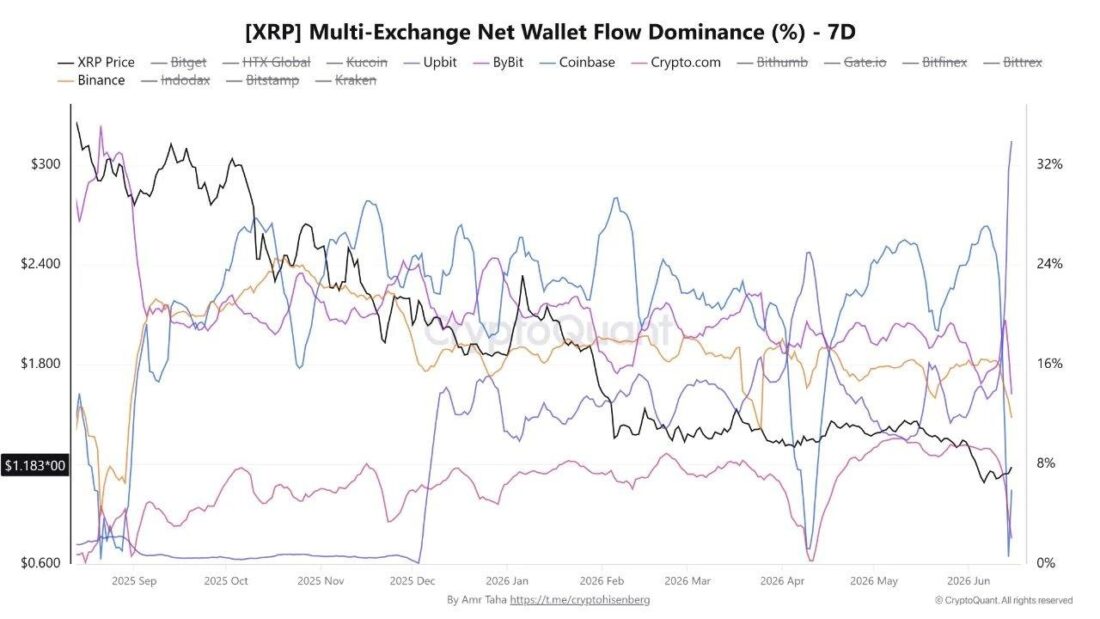
One Exchange Now Controls XRP Flow While the Bear Market Rages

Metaplanet Stock Passes MARA to Become Third-Largest BTC Holder — Stock Slips Anyway



