

Vanderbilt vs. McNeese NCAA Tournament Prediction & Preview 2026
Cryptsy - Latest Cryptocurrency News and Predictions
Cryptsy - Latest Cryptocurrency News and Predictions - Experts in Crypto Casinos
- Vanderbilt’s Offensive Firepower Analyzed
- McNeese’s Defensive Identity Explained
- Head-to-Head Statistical Comparison
- Betting Angles for Crypto Gamblers
- Key Takeaways
- Frequently Asked Questions
- The Bottom Line
Vanderbilt enters the 2026 NCAA Tournament as one of the most offensively efficient teams in college basketball, ranked in the KenPom top-10, with sophomore guard Tyler Tanner averaging 19 points and 5 assists per game. Their first-round opponent, McNeese, arrives under first-year head coach Bill Armstrong with a suffocating defensive system that leads the nation in defensive turnover rate and steal rate. The matchup pits elite offensive execution against elite defensive disruption, and the outcome likely hinges on which identity holds up under tournament pressure.
Vanderbilt’s KenPom Top-10 Offense Carries Real Tournament Weight
Tyler Tanner and Duke Miles Form One of the Nation’s Best Backcourts
Vanderbilt’s offense is not a system built around one star. Tyler Tanner, a sophomore guard, averages 19 points and 5 assists per game, giving the Commodores a primary creator who can both score and distribute at an elite level [1]. Alongside him, Duke Miles contributes 16.5 points and 4 assists per game, creating a dual-threat backcourt that few teams at this level can match in terms of combined scoring and playmaking volume.
A KenPom top-10 offensive ranking reflects efficiency across all phases: shot selection, turnover avoidance, and free-throw generation. Vanderbilt’s ability to get to the line is particularly relevant against McNeese, whose aggressive press defense frequently sends opponents to the charity stripe. Teams that shoot well from the free-throw line historically neutralize press-heavy defenses by converting the fouls those defenses generate.
Head coach Jerry Stackhouse has built a program that rewards ball movement and punishes lazy possessions. The Commodores enter this tournament having demonstrated the kind of offensive discipline that survives hostile environments, which is precisely what the NCAA Tournament demands in its opening rounds.
Rebounding Margin Is Vanderbilt’s Genuine Vulnerability
No team enters the tournament without a weakness, and Vanderbilt’s is measurable. The Commodores rank outside the top-175 nationally in rebounding margin, meaning they consistently surrender second-chance opportunities at a rate that better rebounding teams can exploit [1]. In a single-elimination format, one bad rebounding stretch in a close game can end a season.
McNeese does not profile as an elite rebounding team, which limits how much this weakness actually matters in this specific matchup. But if Vanderbilt falls behind and starts pressing offensively, their rebounding deficiency could compound with turnover issues to create a dangerous spiral. Vanderbilt’s path to winning this game runs through their half-court offense, not transition play or second-chance points.
Bill Armstrong’s McNeese Defense Leads the Nation in Two Key Categories
Defensive Turnover Rate and Steal Rate Define the Cowboys’ Identity
McNeese, under first-year head coach Bill Armstrong, has constructed a defensive system that ranks first nationally in both defensive turnover rate and steal rate [1]. Those are not soft statistical categories. They reflect a team that actively hunts turnovers through aggressive positioning, anticipation, and a willingness to gamble on deflections. Armstrong’s system is built on the premise that forcing live-ball turnovers generates easier scoring opportunities than traditional half-court defense.
The Cowboys’ press creates chaos for teams that rely on individual ball-handlers to break pressure. Against a Vanderbilt backcourt featuring Tanner and Miles, two players who average a combined 9 assists per game, McNeese faces a genuine test of whether their system works against disciplined, experienced guards. Most teams that struggle against press defenses do so because their guards panic or their spacing breaks down, neither of which describes Vanderbilt’s offensive profile.
Armstrong, in his first season leading the program, has installed this defensive identity faster than most coaches manage in year one. That speaks to player buy-in and recruiting alignment, but it also means the system has not yet been stress-tested against a top-10 offense in a neutral-site elimination game.
Three-Point Shooting Is McNeese’s Exposed Flank
McNeese’s offensive vulnerability is specific and well-documented: the Cowboys have lost every single game in which they shot below 26% from three-point range [1]. That is a stark and telling correlation. It means their offense lacks the interior scoring depth to compensate when perimeter shots stop falling, making them heavily dependent on a single offensive variable that fluctuates game to game.
In NCAA Tournament settings, where defensive preparation is more thorough and scouting more detailed, teams that rely on three-point shooting face elevated risk. Vanderbilt’s coaching staff will almost certainly design their defensive scheme to contest McNeese’s shooters aggressively, knowing that forcing a cold shooting night from deep could effectively decide the game before halftime. If McNeese shoots below their threshold from three in this matchup, history suggests they will not recover.
Vanderbilt vs. McNeese: Full Statistical Comparison for 2026
| Category | Vanderbilt | McNeese |
|---|---|---|
| KenPom Offensive Rank | Top 10 | Not ranked top 10 |
| Leading Scorer | Tyler Tanner (19 PPG) | Not specified |
| Secondary Scorer | Duke Miles (16.5 PPG) | Not specified |
| Defensive Turnover Rate | Not ranked nationally | 1st nationally |
| Steal Rate | Not ranked nationally | 1st nationally |
| Rebounding Margin Rank | Outside top 175 | Not specified |
| Critical Weakness | Rebounding margin | 3PT% below 26% leads to losses |
The statistical picture tells a coherent story. Vanderbilt’s advantages are structural and consistent: their offense operates at an elite efficiency level regardless of opponent, and their backcourt duo of Tanner and Miles provides scoring from multiple angles. McNeese’s advantages are situational: their defense can disrupt any opponent, but their offense becomes fragile the moment their three-point shooting cools [1].
Historical NCAA Tournament data consistently shows that teams with top-10 offensive efficiency ratings advance past the first round at a significantly higher rate than mid-major programs whose identity is primarily defensive. The tournament rewards scoring depth because defenses tighten and half-court possessions become more valuable as games slow down in elimination settings.
Vanderbilt’s free-throw shooting percentage becomes a critical number in this context. McNeese’s press defense generates fouls, and if Vanderbilt converts those free throws at a high rate, they effectively turn McNeese’s most dangerous weapon into a liability. That dynamic, more than any other single factor, shapes the predicted outcome of this game.
What This Matchup Means for NCAA Tournament Bettors in 2026
For crypto casino and sportsbook players following the 2026 NCAA Tournament, the Vanderbilt versus McNeese first-round game presents a matchup with identifiable edges rather than a coin-flip result. Vanderbilt’s KenPom top-10 offensive ranking, combined with their ball security against press defenses, gives them a structural advantage that should reflect in the point spread and moneyline markets [1].
The specific vulnerability to watch is McNeese’s three-point shooting performance. If early-game shot tracking shows the Cowboys hitting below their 26% threshold from deep, that is a live in-game signal that their offense will struggle to keep pace. Crypto sportsbooks offering live betting markets on NCAA Tournament games allow players to act on exactly this kind of real-time statistical development.
Vanderbilt’s rebounding weakness is the primary counter-argument for anyone considering McNeese. If the Cowboys generate multiple offensive rebounding opportunities in the first half, the game becomes more competitive than the pre-game analysis suggests. Responsible bankroll management means accounting for that variance rather than treating any college basketball game as a certainty.
Key Takeaways
- Vanderbilt ranks in the KenPom top-10 offensively in 2026, one of the strongest offensive profiles in the entire NCAA Tournament field.
- Tyler Tanner averages 19 points and 5 assists per game, making him one of the most productive sophomore guards in college basketball this season.
- Duke Miles adds 16.5 points and 4 assists per game, giving Vanderbilt a two-guard attack that McNeese’s press has not faced at this level.
- McNeese leads the nation in both defensive turnover rate and steal rate under first-year head coach Bill Armstrong.
- McNeese has lost every game in which they shot below 26% from three-point range, a critical and exploitable offensive dependency.
- Vanderbilt’s rebounding margin ranks outside the top-175 nationally, their most significant structural weakness entering the tournament.
- The prediction favors Vanderbilt based on backcourt quality, free-throw shooting advantage, and superior ball security against press defense.
Frequently Asked Questions
Who wins Vanderbilt vs McNeese in the 2026 NCAA Tournament?The analysis favors Vanderbilt to win this first-round matchup. Their KenPom top-10 offense, led by Tyler Tanner (19 PPG) and Duke Miles (16.5 PPG), gives them a structural advantage over McNeese’s press-heavy defense. Vanderbilt’s ball security and free-throw shooting are the key factors in that prediction [1].
What is McNeese’s biggest weakness in the NCAA Tournament?McNeese’s most documented weakness is three-point shooting dependency. The Cowboys have lost every game in which they shot below 26% from three-point range, meaning their offense lacks the interior scoring depth to compensate when perimeter shots stop falling [1]. This makes them vulnerable against teams with strong perimeter defenders.
How good is Vanderbilt’s offense in 2026 college basketball?Vanderbilt ranks in the KenPom top-10 offensively in 2026, reflecting elite efficiency in shot selection, turnover avoidance, and scoring distribution. Tyler Tanner and Duke Miles combine for 35.5 points and 9 assists per game, forming one of the most productive backcourts in the country [1].
Can McNeese upset Vanderbilt in the first round?An upset is possible if McNeese’s press defense forces Vanderbilt into an unusually high turnover game and the Cowboys shoot above their three-point threshold. Vanderbilt’s rebounding weakness outside the top-175 nationally also gives McNeese a potential path to second-chance points. However, the statistical profile favors Vanderbilt advancing [1].
The Bottom Line
Vanderbilt versus McNeese is a first-round matchup that pits two very different basketball identities against each other. Vanderbilt brings a top-10 offense, an elite backcourt, and the kind of disciplined ball-handling that historically neutralizes press-heavy defenses. McNeese brings the nation’s most disruptive defense and a coaching staff in Bill Armstrong that has built a genuine identity in year one.
The outcome most likely turns on two specific numbers: Vanderbilt’s turnover count and McNeese’s three-point percentage. If the Commodores protect the ball and get to the free-throw line, their offensive efficiency advantage should be decisive. If McNeese forces 15 or more turnovers and shoots above 30% from deep, the Cowboys have a real path to one of the tournament’s early upsets.
Based on the available statistical evidence, Vanderbilt’s structural advantages outweigh McNeese’s situational ones, and the Commodores should advance to the second round. In a tournament defined by chaos, this is one of the cleaner analytical calls of the opening weekend.
Get Full NCAA Tournament Picks and Betting Analysis
View Expert NCAA Predictions
18+ | Play Responsibly | T&Cs Apply
Sources
- BettingPros – Statistical analysis and prediction data for Vanderbilt vs. McNeese 2026 NCAA Tournament first-round matchup, including KenPom rankings, player averages, and team defensive metrics.
The post Vanderbilt vs. McNeese NCAA Tournament Prediction & Preview 2026 first appeared on Cryptsy - Latest Cryptocurrency News and Predictions and is written by Ethan Blackburn


You May Also Like
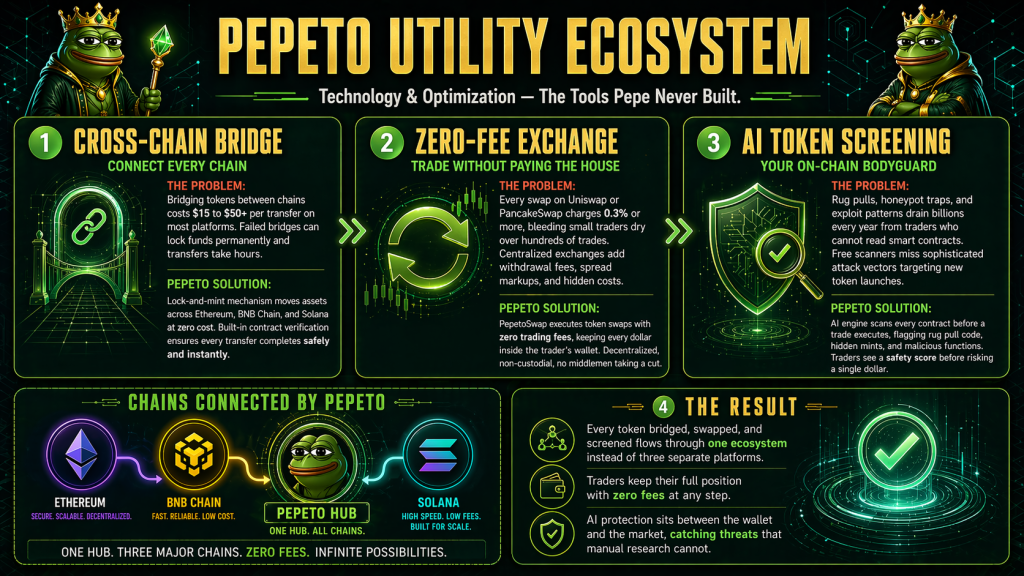
Which Are the Top 3 Cryptos to Buy Now as Solana Lands Mastercard and Pepeto Presale Nears Sold-Out Close
Ondas (ONDS) Stock Soars After Revenue Explodes Over 1,000% in Q1 2026




