

Tokenized Assets See Phenomenal $29B TVL Explosion: What’s Driving the RWA Revolution?
BitcoinWorld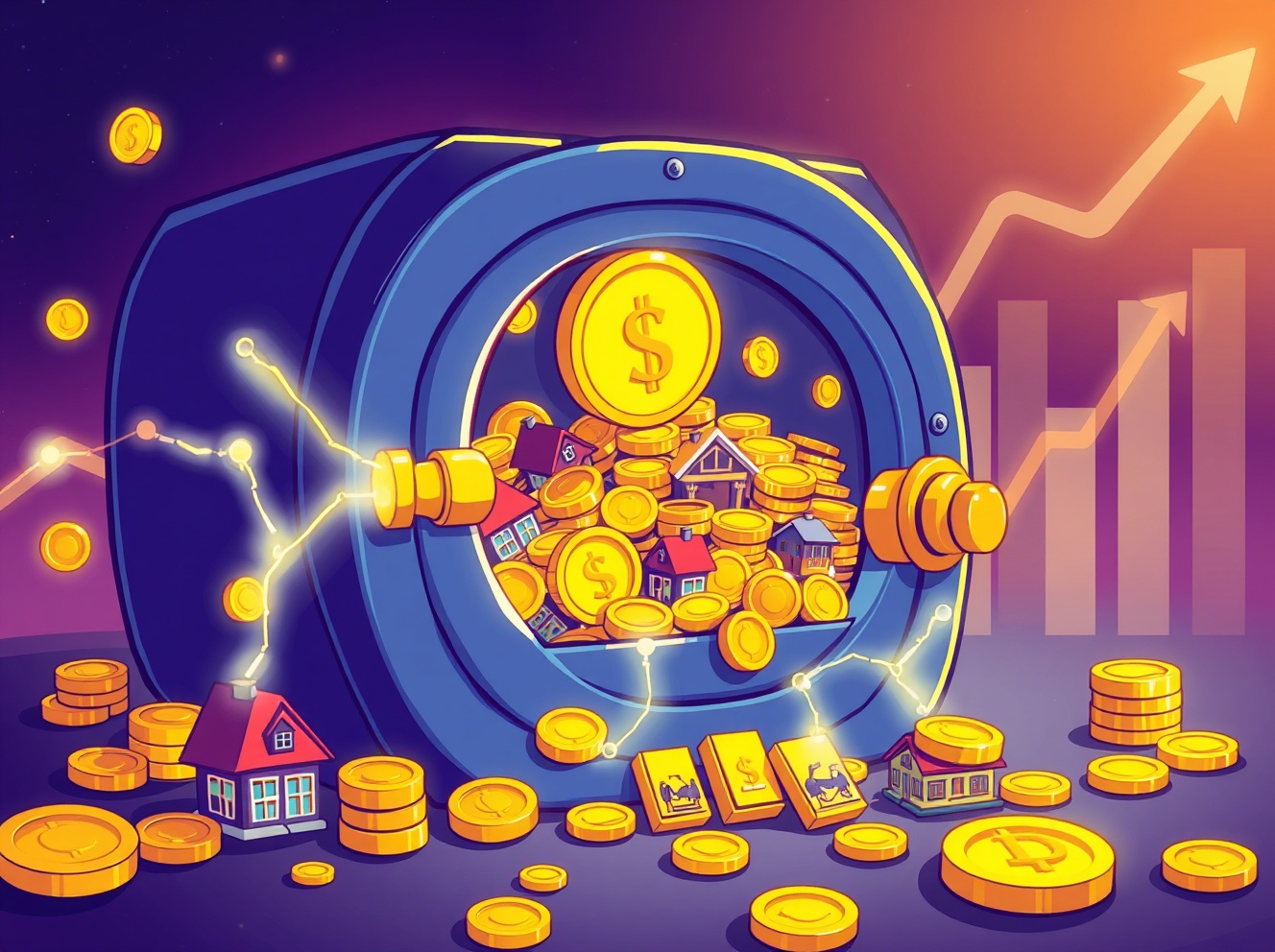
Tokenized Assets See Phenomenal $29B TVL Explosion: What’s Driving the RWA Revolution?
The cryptocurrency world is buzzing with incredible news! On-chain Tokenized Assets have achieved an astounding milestone, with their Total Value Locked (TVL) now exceeding $29 billion. This marks a phenomenal doubling since the beginning of the year, signaling a major shift in how real-world assets (RWAs) are integrated into the digital economy.
What Are Tokenized Assets and Why Do They Matter?
At its core, a Tokenized Asset is a digital representation of a real-world, tangible or intangible asset on a blockchain. Think of it as taking something valuable, like real estate, fine art, or even government bonds, and converting its ownership rights into a digital token.
- These tokens can then be bought, sold, and traded on a blockchain.
- This process brings the transparency, efficiency, and immutability of blockchain technology to traditional financial instruments.
- Ultimately, it bridges the gap between conventional finance and the decentralized finance (DeFi) ecosystem.
The Phenomenal Surge: Unpacking the $29B TVL in Tokenized Assets
The recent surge in Tokenized Assets is truly remarkable. Cointelegraph reported that the TVL has surpassed $29 billion, doubling its value year-to-date. This isn’t just a fleeting trend; it reflects growing confidence and adoption within the market.
Moreover, the market capitalization of cryptocurrencies that specifically support RWA tokenization has reached a new all-time high. Data from CoinMarketCap shows that projects like Chainlink (LINK), Ondo Finance (ONDO), and Avalanche (AVAX) collectively saw their market cap jump from $67 billion to $76 billion in just seven days. This significant increase underscores the expanding ecosystem built around bringing real-world value on-chain.
Unlocking Value: Key Benefits of Embracing Tokenized Assets
The appeal of Tokenized Assets lies in the numerous advantages they offer over traditional asset management. These benefits are driving both institutional and retail interest, fostering this rapid growth.
- Enhanced Liquidity: Historically illiquid assets, such as real estate or private equity, become more liquid as they can be easily traded on digital exchanges.
- Fractional Ownership: Tokenization allows assets to be divided into smaller, more affordable units. This democratizes investment, making high-value assets accessible to a wider range of investors.
- Transparency and Efficiency: Blockchain technology provides an immutable record of ownership and transactions, reducing fraud and streamlining administrative processes.
- Global Accessibility: Investors worldwide can access opportunities without geographical barriers or complex traditional brokerage systems.
- Lower Costs: Reduced intermediaries and automated processes can lead to lower transaction fees and operational expenses.
Navigating the Path: What Challenges Do Tokenized Assets Face?
Despite the immense potential, the journey for Tokenized Assets is not without its hurdles. Addressing these challenges is crucial for sustained growth and widespread adoption.
- Regulatory Landscape: The legal and regulatory frameworks for digital assets are still evolving and vary significantly across different jurisdictions. This creates uncertainty for issuers and investors alike.
- Interoperability: Ensuring seamless interaction between different blockchains and traditional financial systems remains a technical challenge.
- Security Risks: While blockchain is inherently secure, smart contract vulnerabilities or platform exploits can still pose risks to tokenized assets.
- Valuation and Oracles: Accurately valuing real-world assets and reliably bringing that data on-chain requires robust oracle solutions.
Leading the Charge: Key Projects Driving Tokenized Asset Innovation
Several prominent blockchain projects are at the forefront of the Tokenized Assets revolution, each playing a vital role in shaping this emerging landscape. Their innovations are crucial for connecting the physical world to the digital one.
- Chainlink (LINK): As a decentralized oracle network, Chainlink provides secure and reliable real-world data to smart contracts. This is essential for verifying the status and value of underlying RWAs.
- Ondo Finance (ONDO): Ondo focuses on bringing institutional-grade financial products, such as tokenized U.S. Treasuries and money market funds, to the blockchain. It offers a bridge for traditional investors to access DeFi yields.
- Avalanche (AVAX): Known for its high throughput and scalability, Avalanche provides a robust platform for enterprises and DeFi protocols to build and deploy RWA tokenization projects efficiently.
The Future is Bright: What’s Next for Tokenized Assets?
The doubling of TVL in Tokenized Assets is likely just the beginning. Experts predict continued growth as more asset classes, from commodities and intellectual property to carbon credits, find their way onto the blockchain. Institutional adoption is expected to accelerate, driven by the desire for greater efficiency, transparency, and new investment opportunities.
This transformative trend has the potential to reshape global finance, making markets more accessible, liquid, and efficient for everyone. The convergence of traditional finance with decentralized technology is creating a powerful new paradigm.
In conclusion, the surge to over $29 billion in Tokenized Assets TVL is a clear indicator of a maturing market and a growing acceptance of blockchain’s power to digitize and democratize ownership. As technology evolves and regulatory clarity improves, we can anticipate an even more vibrant and impactful future for real-world assets on-chain.
Frequently Asked Questions (FAQs) About Tokenized Assets
Q1: What is the main difference between a cryptocurrency and a tokenized asset?
A1: A cryptocurrency (like Bitcoin or Ethereum) typically serves as a native currency of a blockchain or a medium of exchange. A tokenized asset, however, is a digital representation of an existing real-world asset, like real estate or gold, on a blockchain, giving it digital ownership and transferability.
Q2: Can any real-world asset be tokenized?
A2: Theoretically, yes. Any asset with definable ownership and value can be tokenized. This includes tangible assets like property, art, and commodities, as well as intangible assets like intellectual property or royalties.
Q3: What role do smart contracts play in tokenization?
A3: Smart contracts are crucial. They automate the rules and conditions governing the tokenized asset, such as ownership transfers, dividend payouts, or voting rights, ensuring transparency and execution without intermediaries.
Q4: Is investing in tokenized assets safe?
A4: While blockchain technology offers enhanced security and transparency, risks still exist. These include regulatory uncertainty, smart contract vulnerabilities, market volatility, and the need for robust legal frameworks to link the digital token to the physical asset.
Q5: How does tokenization benefit small investors?
A5: Tokenization enables fractional ownership, meaning small investors can buy a portion of a high-value asset (like a fraction of a building) that would otherwise be inaccessible. This lowers the barrier to entry for many investment opportunities.
Enjoyed this insight into the booming world of tokenized assets? Share this article with your network on social media to spread the word about this transformative trend in finance!
To learn more about the latest crypto market trends, explore our article on key developments shaping institutional adoption.
This post Tokenized Assets See Phenomenal $29B TVL Explosion: What’s Driving the RWA Revolution? first appeared on BitcoinWorld and is written by Editorial Team


You May Also Like
XRP Price Prediction Gets a Boost as Japan Reclassifies Crypto While Pepeto Targets Returns ADA Cannot Match
币安人生 (BinanceLife) Rockets 54.7% as China-Focused Meme Token Tests Key Resistance




