A major Solana upgrade will improve the blockchain’s decentralisation, according to a new report. When paired with other long-discussed changes, Alpenglow can spread validator revenue more equitably, according to research from venture capitalists Mustafa Qazi and Gurnoor Narula.“Becoming a small profitable Solana validator is virtually impossible,” Qazi, a researcher at Volt Capital, wrote on X. “Luckily, Alpenglow [and] dynamic inflation have the potential to address this.” Faster and more affordable than Ethereum, Solana’s drawback among critics has long been its relatively centralised nature. Although, boosters note it leads major blockchains in certain measures of decentralisation. Solana sets a relatively high bar to becoming a validator, someone who runs the software that processes transactions on the Solana blockchain. That’s reflected in the numbers: Solana has about 1,000 validators, relative to the million-plus on Ethereum. Fewer than 100 Solana validators control more than half the stake — the tokens that determine their influence — according to Qazi and Narula. The concentration of stake among Solana’s largest validators risks increasing due to their outsized share of newly minted Solana tokens, Qazi and Narula write.That’s where Alpenglow comes in. The update will help smaller Solana validators break even, Qazi and Narula argued. Paired with a long-discussed reduction in Solana’s so-called inflation schedule, it could level the playing field. “Limiting extraneous sources of revenue for high-stake validators, especially the inflation rate, is a low-hanging fruit to help address an inequitable validator set,” they wrote. Alpenglow Alpenglow has been compared to the Merge, a huge Ethereum upgrade that fundamentally changed the blockchain’s consensus process and cut its energy consumption by 99%.If adopted, Alpenglow would reduce Solana’s latency — the time it takes to finalise a block of transactions — from just under 13 seconds to as little as a tenth of a second.Vangelis Andrikopoulos, a researcher at competitor blockchain’s Sei Labs, said Alpenglow will make real-time gaming, high-frequency trading, and instant payments “practically viable” while potentially improving Solana’s decentralisation.One of the researchers behind the upgrade said he expects Alpenglow to be broken into 50 sub-proposals over the coming months, given its scope. The first sub-proposal, approved September 2 changes the voting system that Solana validators use to approve or deny a proposed block. Solana validator’s voting fees can run to $60,000 per year, Andrikopoulos noted. By moving voting off the blockchains, Alpenglow functionally eliminates those fees, lowering the barrier to entry for would-be validators. Measured by validator profitability, Solana’s decentralisation will be little-affected by Alpenglow, according to Qazi and Narula. Yet, it would boost validator profitability, and therefore pave the way for another change: reducing the $3.5 billion in tokens granted to stakers each year.A proposed reduction failed in March, with detractors arguing the cuts would mean small validators existing on razor thin margins wouldn’t be able to profit, forcing them offline. But the vote was close, suggesting a slightly modified version could succeed, Qazi and Narula argued. They also propose lowering Alpenglow’s so-called Validator Admission Ticket — a flat fee intended to prevent the proliferation of low-quality validators. “Lowering VAT pulls validators into profitable territory while dynamic inflation addresses the inequity in the distribution of profits,” they wrote. The ticket would cost 1.6 SOL, or about $350. Much of last month’s discussion over Votor honed in on that requirement. “While a new architecture is being designed for thousands of nodes, having a fixed VAT of 1.6 SOL per epoch still creates a high entry barrier for new validators,” one person wrote. “This effectively protects the current active set and discourages new participants from entering validation.” TimelineThe researchers behind Alpenglow all attended or taught at ETH Zurich, one of the world’s premier universities for science and technology. They named the upgrade after the pinkish light that graces Swiss mountaintops at dusk and dawn. Alpenglow could go live as early as the end of this year or early 2026, according to Wattenhofer.The upgrade has buy-in from some of Solana’s most powerful figures, including co-founder Anatoly Yakovenko and developers Mert Mumtaz.Aleks Gilbert is DL News’ New York-based DeFi correspondent. Got a tip? Email at [email protected].A major Solana upgrade will improve the blockchain’s decentralisation, according to a new report. When paired with other long-discussed changes, Alpenglow can spread validator revenue more equitably, according to research from venture capitalists Mustafa Qazi and Gurnoor Narula.“Becoming a small profitable Solana validator is virtually impossible,” Qazi, a researcher at Volt Capital, wrote on X. “Luckily, Alpenglow [and] dynamic inflation have the potential to address this.” Faster and more affordable than Ethereum, Solana’s drawback among critics has long been its relatively centralised nature. Although, boosters note it leads major blockchains in certain measures of decentralisation. Solana sets a relatively high bar to becoming a validator, someone who runs the software that processes transactions on the Solana blockchain. That’s reflected in the numbers: Solana has about 1,000 validators, relative to the million-plus on Ethereum. Fewer than 100 Solana validators control more than half the stake — the tokens that determine their influence — according to Qazi and Narula. The concentration of stake among Solana’s largest validators risks increasing due to their outsized share of newly minted Solana tokens, Qazi and Narula write.That’s where Alpenglow comes in. The update will help smaller Solana validators break even, Qazi and Narula argued. Paired with a long-discussed reduction in Solana’s so-called inflation schedule, it could level the playing field. “Limiting extraneous sources of revenue for high-stake validators, especially the inflation rate, is a low-hanging fruit to help address an inequitable validator set,” they wrote. Alpenglow Alpenglow has been compared to the Merge, a huge Ethereum upgrade that fundamentally changed the blockchain’s consensus process and cut its energy consumption by 99%.If adopted, Alpenglow would reduce Solana’s latency — the time it takes to finalise a block of transactions — from just under 13 seconds to as little as a tenth of a second.Vangelis Andrikopoulos, a researcher at competitor blockchain’s Sei Labs, said Alpenglow will make real-time gaming, high-frequency trading, and instant payments “practically viable” while potentially improving Solana’s decentralisation.One of the researchers behind the upgrade said he expects Alpenglow to be broken into 50 sub-proposals over the coming months, given its scope. The first sub-proposal, approved September 2 changes the voting system that Solana validators use to approve or deny a proposed block. Solana validator’s voting fees can run to $60,000 per year, Andrikopoulos noted. By moving voting off the blockchains, Alpenglow functionally eliminates those fees, lowering the barrier to entry for would-be validators. Measured by validator profitability, Solana’s decentralisation will be little-affected by Alpenglow, according to Qazi and Narula. Yet, it would boost validator profitability, and therefore pave the way for another change: reducing the $3.5 billion in tokens granted to stakers each year.A proposed reduction failed in March, with detractors arguing the cuts would mean small validators existing on razor thin margins wouldn’t be able to profit, forcing them offline. But the vote was close, suggesting a slightly modified version could succeed, Qazi and Narula argued. They also propose lowering Alpenglow’s so-called Validator Admission Ticket — a flat fee intended to prevent the proliferation of low-quality validators. “Lowering VAT pulls validators into profitable territory while dynamic inflation addresses the inequity in the distribution of profits,” they wrote. The ticket would cost 1.6 SOL, or about $350. Much of last month’s discussion over Votor honed in on that requirement. “While a new architecture is being designed for thousands of nodes, having a fixed VAT of 1.6 SOL per epoch still creates a high entry barrier for new validators,” one person wrote. “This effectively protects the current active set and discourages new participants from entering validation.” TimelineThe researchers behind Alpenglow all attended or taught at ETH Zurich, one of the world’s premier universities for science and technology. They named the upgrade after the pinkish light that graces Swiss mountaintops at dusk and dawn. Alpenglow could go live as early as the end of this year or early 2026, according to Wattenhofer.The upgrade has buy-in from some of Solana’s most powerful figures, including co-founder Anatoly Yakovenko and developers Mert Mumtaz.Aleks Gilbert is DL News’ New York-based DeFi correspondent. Got a tip? Email at [email protected].

Solana Alpenglow upgrade seen to boost decentralisation after clearing first hurdle

2025/09/12 20:24
4 min read
For feedback or concerns regarding this content, please contact us at [email protected]

A major Solana upgrade will improve the blockchain’s decentralisation, according to a new report.

When paired with other long-discussed changes, Alpenglow can spread validator revenue more equitably, according to research from venture capitalists Mustafa Qazi and Gurnoor Narula.

“Becoming a small profitable Solana validator is virtually impossible,” Qazi, a researcher at Volt Capital, wrote on X. “Luckily, Alpenglow [and] dynamic inflation have the potential to address this.”

Faster and more affordable than Ethereum, Solana’s drawback among critics has long been its relatively centralised nature. Although, boosters note it leads major blockchains in certain measures of decentralisation.

Solana sets a relatively high bar to becoming a validator, someone who runs the software that processes transactions on the Solana blockchain.

That’s reflected in the numbers: Solana has about 1,000 validators, relative to the million-plus on Ethereum. Fewer than 100 Solana validators control more than half the stake — the tokens that determine their influence — according to Qazi and Narula.

The concentration of stake among Solana’s largest validators risks increasing due to their outsized share of newly minted Solana tokens, Qazi and Narula write.

That’s where Alpenglow comes in. The update will help smaller Solana validators break even, Qazi and Narula argued. Paired with a long-discussed reduction in Solana’s so-called inflation schedule, it could level the playing field.

“Limiting extraneous sources of revenue for high-stake validators, especially the inflation rate, is a low-hanging fruit to help address an inequitable validator set,” they wrote.

Alpenglow

Alpenglow has been compared to the Merge, a huge Ethereum upgrade that fundamentally changed the blockchain’s consensus process and cut its energy consumption by 99%.

If adopted, Alpenglow would reduce Solana’s latency — the time it takes to finalise a block of transactions — from just under 13 seconds to as little as a tenth of a second.

Vangelis Andrikopoulos, a researcher at competitor blockchain’s Sei Labs, said Alpenglow will make real-time gaming, high-frequency trading, and instant payments “practically viable” while potentially improving Solana’s decentralisation.

One of the researchers behind the upgrade said he expects Alpenglow to be broken into 50 sub-proposals over the coming months, given its scope.

The first sub-proposal, approved September 2 changes the voting system that Solana validators use to approve or deny a proposed block.

Solana validator’s voting fees can run to $60,000 per year, Andrikopoulos noted. By moving voting off the blockchains, Alpenglow functionally eliminates those fees, lowering the barrier to entry for would-be validators.

Measured by validator profitability, Solana’s decentralisation will be little-affected by Alpenglow, according to Qazi and Narula.

Yet, it would boost validator profitability, and therefore pave the way for another change: reducing the $3.5 billion in tokens granted to stakers each year.

A proposed reduction failed in March, with detractors arguing the cuts would mean small validators existing on razor thin margins wouldn’t be able to profit, forcing them offline.

But the vote was close, suggesting a slightly modified version could succeed, Qazi and Narula argued.

They also propose lowering Alpenglow’s so-called Validator Admission Ticket — a flat fee intended to prevent the proliferation of low-quality validators.

“Lowering VAT pulls validators into profitable territory while dynamic inflation addresses the inequity in the distribution of profits,” they wrote.

The ticket would cost 1.6 SOL, or about $350. Much of last month’s discussion over Votor honed in on that requirement.

“While a new architecture is being designed for thousands of nodes, having a fixed VAT of 1.6 SOL per epoch still creates a high entry barrier for new validators,” one person wrote.

“This effectively protects the current active set and discourages new participants from entering validation.”

Timeline

The researchers behind Alpenglow all attended or taught at ETH Zurich, one of the world’s premier universities for science and technology. They named the upgrade after the pinkish light that graces Swiss mountaintops at dusk and dawn.

Alpenglow could go live as early as the end of this year or early 2026, according to Wattenhofer.

The upgrade has buy-in from some of Solana’s most powerful figures, including co-founder Anatoly Yakovenko and developers Mert Mumtaz.

Aleks Gilbert is DL News’ New York-based DeFi correspondent. Got a tip? Email at [email protected].

Market Opportunity
SEI Logo
SEI Price(SEI)
$0.05574
$0.05574$0.05574
-1.96%
USD
SEI (SEI) Live Price Chart
Disclaimer: The articles reposted on this site are sourced from public platforms and are provided for informational purposes only. They do not necessarily reflect the views of MEXC. All rights remain with the original authors. If you believe any content infringes on third-party rights, please contact [email protected] for removal. MEXC makes no guarantees regarding the accuracy, completeness, or timeliness of the content and is not responsible for any actions taken based on the information provided. The content does not constitute financial, legal, or other professional advice, nor should it be considered a recommendation or endorsement by MEXC.
Tags:

You May Also Like

BullZilla, Shiba Inu, and Goatseus Maximus Take the Spotlight
BullZilla, Shiba Inu, and Goatseus Maximus Take the Spotlight

The post BullZilla, Shiba Inu, and Goatseus Maximus Take the Spotlight appeared on BitcoinEthereumNews.com. Crypto News 17 September 2025 | 20:15 Discover why BullZilla, Shiba Inu, and Goatseus Maximus rank among the best meme coin presales in September 2025. September 2025 has reignited interest in meme coins. While traditional altcoins focus on fundamentals, meme coins thrive on energy, community, and clever narratives. Among the best meme coin presales in September 2025, three stand out for their momentum and market impact: Bull Zilla, Shiba Inu, and Goatseus Maximus. Each offers a unique route for traders and students of finance alike, blending community-driven hype with structured tokenomics. BullZilla continues to command headlines with its presale math and massive ROI potential. Shiba Inu, the veteran of meme mania, still finds ways to reinvent itself. Goatseus Maximus, the fresh arrival, builds on humor and meme storytelling while aiming for short-term gains. Together, they define what meme coin culture looks like heading into Q4 2025. BullZilla: Presale Math Meets Meme Culture BullZilla is not just another viral project. It has crafted a presale model with baked-in returns that investors can map out before listings. The token’s early stages already demonstrate what makes it one of the best meme coin presales in September 2025. BullZilla ROI Table Stage Price ($) ROI Until Listing ($0.00527) $1,000 Investment (Tokens) Value at Listing ($) 3B 0.00006574 7918.57% 15.21M 80,185.73 3C 0.00007241 7169.38% 13.80M 72,703.40 Early Joiners 0.000503 1043.30% 1.99M 20,783.70 This table reflects how even small contributions multiply once BullZilla lists at its projected $0.00527. Unlike meme tokens that rely solely on narrative, BullZilla ($BZIL) merges narrative with math. For anyone who missed Shiba Inu or Dogecoin’s breakout, this structure makes it easy to calculate possible gains. Beyond ROI, the presale’s branding of “Whale Signal Detected” during stage 3rd builds psychological urgency. It cleverly ties meme energy with professional-grade tokenomics. For these reasons,…
Share
BitcoinEthereumNews2025/09/18 03:20
Zoom (ZM) Stock Slides as Investors Fear Anthropic and OpenAI AI Agents
Zoom (ZM) Stock Slides as Investors Fear Anthropic and OpenAI AI Agents

TLDR Zoom (ZM) closed down 5.7% at $79.24, underperforming the S&P 500 which fell just 0.11% The drop was driven by investor fears that AI agents from Anthropic
Share
Coincentral2026/04/11 20:07
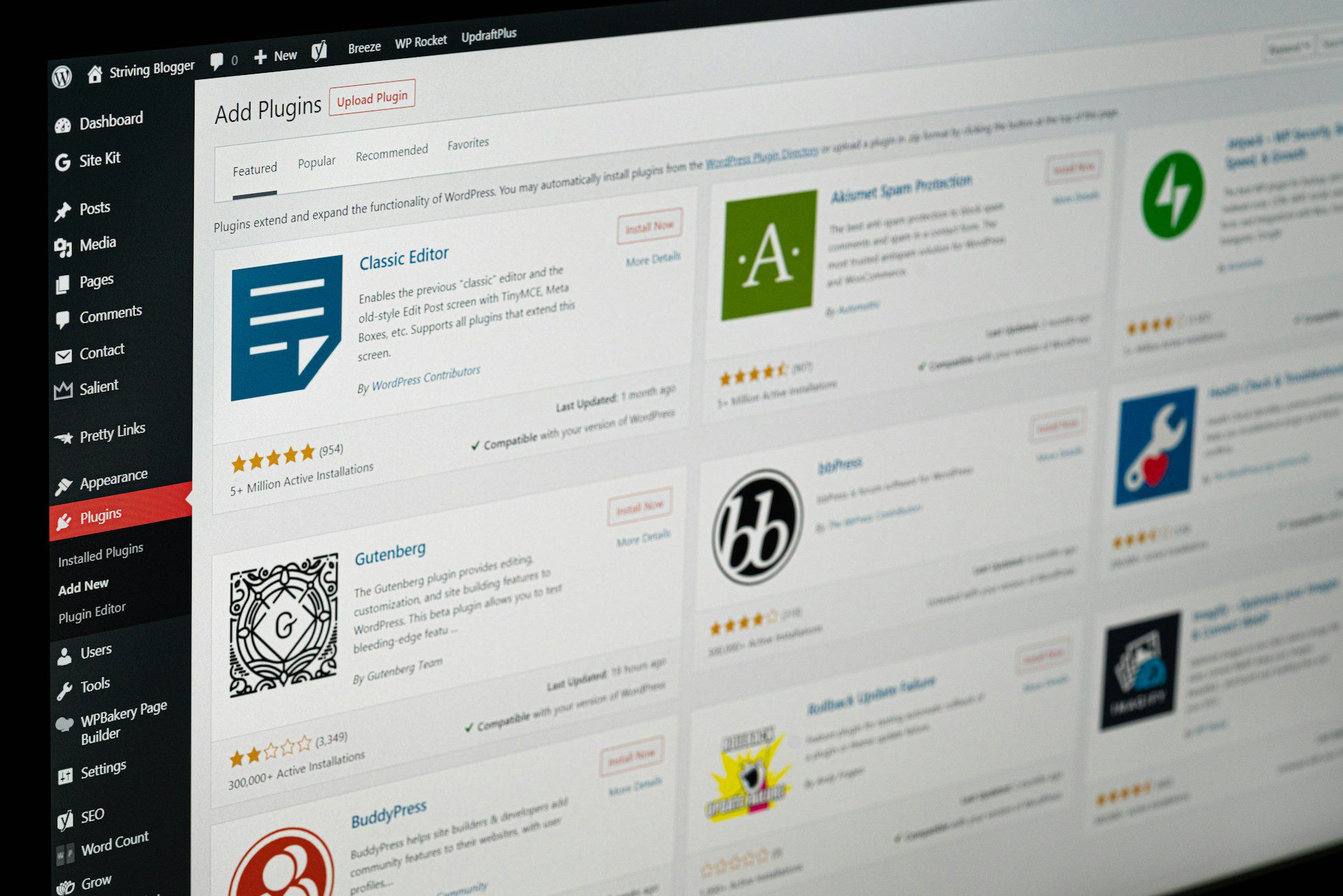
WordPress Development Best Practices: Tips for Building High-Performance Websites

WordPress Development Best Practices: Tips for Building High-Performance Websites

Learn WordPress development best practices to build fast, secure, and scalable websites. Discover expert tips, hosting strategies, and optimization techniques.
Share
Techbullion2026/04/11 19:51

USD1 Genesis: 0 Fees + 12% APR

USD1 Genesis: 0 Fees + 12% APRUSD1 Genesis: 0 Fees + 12% APR

New users: stake for up to 600% APR. Limited time!