RBA Governor Bullock’s Crucial Policy Outlook: Navigating Economic Stability After Interest Rate Hike
BitcoinWorld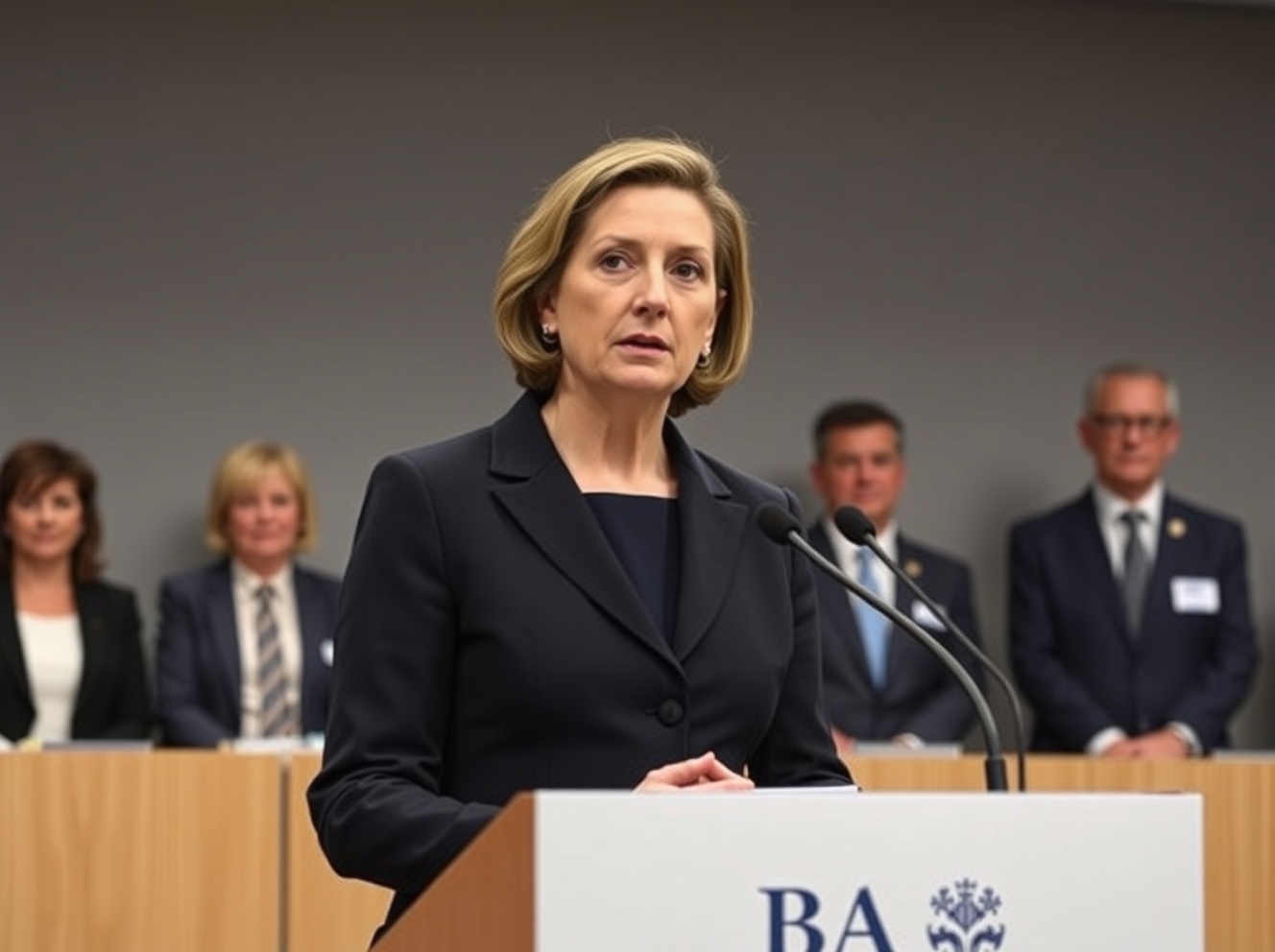
RBA Governor Bullock’s Crucial Policy Outlook: Navigating Economic Stability After Interest Rate Hike
Reserve Bank of Australia Governor Michele Bullock delivered a pivotal policy outlook speech in Sydney on Tuesday, November 18, 2025, following the widely anticipated 25 basis point interest rate hike. The RBA Governor’s address provided critical insights into Australia’s monetary policy trajectory amid persistent inflation pressures and global economic uncertainty.
RBA Governor Bullock’s Monetary Policy Framework
Governor Bullock outlined the Reserve Bank’s comprehensive policy framework during her address. The central bank raised the official cash rate to 4.60%, marking the fourteenth increase since May 2022. This decision reflects the RBA’s ongoing commitment to returning inflation to its target band of 2-3%. Bullock emphasized that monetary policy settings remain restrictive, with further tightening possible if inflation proves more persistent than expected.
The RBA Governor detailed several key considerations influencing the rate decision. Firstly, domestic inflation remains elevated despite recent moderation. Secondly, labor market conditions show gradual easing but remain tight. Thirdly, household consumption patterns continue to reflect cost-of-living pressures. Finally, global economic conditions present both challenges and opportunities for Australia’s economic outlook.
Inflation Dynamics and Economic Projections
Bullock provided detailed analysis of Australia’s inflation trajectory during her speech. The Consumer Price Index rose 3.8% in the year to September 2025, down from the December 2024 peak of 5.2%. However, services inflation remains stubbornly high at 4.5%, presenting particular challenges for monetary policy. The RBA Governor noted that goods inflation has moderated more quickly, reflecting improved global supply chains and weaker demand.
The Reserve Bank’s latest economic projections indicate several important trends:
- Inflation forecast: CPI expected to return to target band by mid-2026
- GDP growth: Economy projected to expand by 1.8% in 2025, accelerating to 2.3% in 2026
- Unemployment rate: Expected to rise gradually to 4.5% by late 2026
- Wage growth: Projected to moderate from current 4.2% to 3.5% by end-2026
Expert Analysis of Policy Transmission
Economic analysts highlight the complex transmission mechanism of recent rate hikes. According to historical data from previous tightening cycles, monetary policy changes typically take 12-18 months to fully affect the economy. The current cycle’s effectiveness appears consistent with these historical patterns. However, Bullock noted that the transmission may be occurring more quickly due to higher household debt levels and increased sensitivity to interest rate changes.
The RBA Governor referenced several international comparisons during her remarks. Australia’s monetary policy tightening has been less aggressive than counterparts like the Federal Reserve and Bank of Canada but more sustained than the European Central Bank’s approach. This calibrated response reflects Australia’s unique economic circumstances, including its commodity export composition and housing market dynamics.
Financial Market Reactions and Implications
Financial markets responded cautiously to Bullock’s policy outlook speech. The Australian dollar initially strengthened before settling 0.3% higher against the US dollar. Government bond yields edged lower across most maturities, reflecting market expectations that the tightening cycle may be nearing its peak. Equity markets showed mixed reactions, with financial stocks outperforming while consumer discretionary shares declined.
Bullock addressed several specific concerns raised by market participants. She clarified that the RBA’s approach remains data-dependent rather than following a predetermined path. The central bank will continue monitoring multiple indicators including employment figures, business surveys, and inflation expectations. The Governor emphasized that policy decisions will balance the need to control inflation against the risk of excessive economic slowdown.
| Date | Cash Rate | Key Decision Factors |
|---|---|---|
| November 2024 | 4.10% | Persistent services inflation, tight labor market |
| February 2025 | 4.35% | Stronger-than-expected Q4 inflation data |
| May 2025 | 4.35% | Hold decision amid mixed economic signals |
| August 2025 | 4.35% | Continued assessment of policy transmission |
| November 2025 | 4.60% | Renewed inflation concerns, global uncertainty |
Household and Business Sector Impacts
The RBA Governor acknowledged the significant impact of rate hikes on Australian households. Mortgage repayments have increased substantially for variable-rate borrowers, with the average monthly payment rising approximately 65% since May 2022. Bullock noted that approximately 35% of households now devote more than 30% of their income to mortgage payments, creating financial stress for some segments of the population.
Business sector responses to monetary policy tightening show considerable variation. Large corporations with strong balance sheets have generally adapted well, while small and medium enterprises face greater challenges accessing affordable credit. The commercial property sector shows particular vulnerability, with office vacancy rates rising in major cities and refinancing costs increasing significantly.
International Context and Global Considerations
Bullock placed Australia’s monetary policy within the broader global context during her speech. Major central banks worldwide continue grappling with similar challenges, though timing and intensity vary. The Federal Reserve maintains a hawkish stance despite recent moderation in US inflation. The European Central Bank faces particular difficulties given diverse economic conditions across member states. Meanwhile, the Bank of Japan continues its gradual normalization process after decades of ultra-loose policy.
Global economic developments present both risks and opportunities for Australia. Slower growth in China affects commodity export demand, while geopolitical tensions continue disrupting supply chains. However, Australia benefits from its position as a reliable supplier of critical minerals and energy resources. The transition to renewable energy creates new export opportunities despite near-term challenges.
Policy Communication and Forward Guidance
The RBA Governor emphasized the importance of clear policy communication in her address. Since assuming leadership in September 2023, Bullock has implemented several transparency enhancements at the central bank. These include more detailed meeting minutes, expanded economic forecasts, and increased public appearances by senior officials. These changes aim to improve public understanding of monetary policy decisions and their rationale.
Forward guidance remains deliberately limited in the current environment. Bullock stated that the RBA avoids providing specific guidance about future rate moves due to elevated economic uncertainty. Instead, the central bank focuses on communicating its reaction function and the data points it monitors most closely. This approach balances the need for predictability with flexibility to respond to changing circumstances.
Conclusion
RBA Governor Michele Bullock’s policy outlook speech provides crucial insights into Australia’s monetary policy direction following the latest interest rate hike. The central bank maintains its focus on returning inflation to target while carefully monitoring economic conditions. Future decisions will depend on incoming data, particularly regarding services inflation and labor market dynamics. The RBA’s calibrated approach seeks to balance multiple objectives in a complex global environment, with policy settings likely to remain restrictive for some time. Governor Bullock’s leadership continues emphasizing transparency and data-dependent decision-making as the Reserve Bank navigates challenging economic conditions.
FAQs
Q1: What was the main message from RBA Governor Bullock’s speech?
Governor Bullock emphasized that monetary policy remains focused on returning inflation to the 2-3% target band. She indicated that further tightening may be necessary if inflation proves more persistent than expected, while acknowledging the economic costs of higher interest rates.
Q2: How does Australia’s interest rate trajectory compare to other developed economies?
Australia’s tightening cycle has been more sustained but less aggressive than some counterparts. The RBA has raised rates 14 times since May 2022, compared to 11 increases by the Federal Reserve over a similar period. This reflects Australia’s different inflation drivers and economic structure.
Q3: What are the key indicators the RBA monitors for future policy decisions?
The RBA focuses particularly on services inflation, labor market conditions, household consumption patterns, and inflation expectations. International developments and global economic conditions also significantly influence policy decisions according to Governor Bullock.
Q4: How long will interest rates remain at elevated levels?
Governor Bullock indicated that policy settings will likely remain restrictive for some time. The RBA expects inflation to return to target by mid-2026, suggesting rates may not begin declining until late 2026 or early 2027, depending on economic developments.
Q5: What impact are higher interest rates having on the Australian economy?
Higher rates are slowing economic growth, particularly in interest-sensitive sectors like housing and consumer discretionary spending. However, the labor market remains relatively resilient, and business investment continues in certain sectors. The full effects of recent hikes will continue unfolding over the coming year.
This post RBA Governor Bullock’s Crucial Policy Outlook: Navigating Economic Stability After Interest Rate Hike first appeared on BitcoinWorld.


You May Also Like

Dogecoin Price Prediction Signals Breakout for 2026 as Whale Holdings Hit Record While Pepeto Nears $10M With Listing Days Away

Critical USDT0 Response to Drift Hack Exposes Stark Contrast in Stablecoin Security Protocols