

Iran-Israel War Pushes Oil Prices Above $100 as Hormuz Shipping Stays Blocked
TLDR
- Brent crude climbed above $104/barrel and WTI reached around $97 as Iran kept attacking Middle East energy infrastructure
- Operations at the UAE’s Shah gas field were suspended and crude loadings at Fujairah port were halted
- The Strait of Hormuz remains largely blocked, affecting roughly 20% of global oil supply
- Oil prices have risen more than 40% since the war began three weeks ago
- Major central banks including the Fed, ECB, and Bank of Japan are meeting this week as energy-driven inflation concerns grow
Oil prices surged again on Tuesday after a brief pullback, as the conflict between the US, Israel, and Iran entered its third week with no signs of slowing down.
Brent crude climbed above $104 a barrel and West Texas Intermediate rose to around $97. Both recovered after a drop of around 3-5% on Monday.
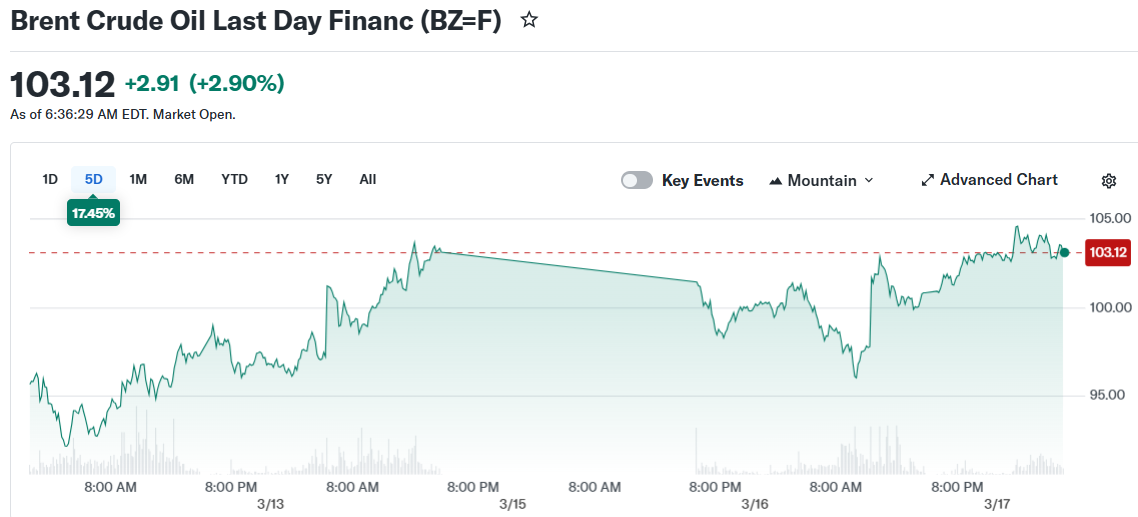 Brent Crude Oil Last Day Financ (BZ=F)
Iran continued striking energy infrastructure across the region. The Shah gas field in the United Arab Emirates had its operations suspended. An Iraqi oil field was also hit by drones and missiles.
Crude loadings from the UAE’s port at Fujairah were halted again, according to a note from Inchcape Shipping Services. The UAE and Kuwait have both reduced oil output further in response to the ongoing attacks.
Oil is now up more than 40% since the war began, though prices dipped Monday after the US announced it would release the first tranche of emergency crude reserves.
Strait of Hormuz at the Center of the Crisis
The Strait of Hormuz, which handles about 20% of the world’s oil supply, remains largely blocked. Iran effectively shut down the shipping lane earlier this month.
Some progress was made Monday when India and Pakistan-flagged gas tankers successfully passed through. Iran has signaled it will allow ships from certain countries to transit while targeting vessels tied to the US and its allies.
A number of ships have navigated through using a route that runs unusually close to Iran’s coastline, according to Bloomberg ship-tracking data.
Saudi Arabia is racing to boost exports through an alternative route that bypasses Hormuz entirely.
US President Donald Trump called on at least seven countries, including China, to help reopen the strait. Those calls were largely rebuffed. Trump threatened to expand strikes on Kharg Island to target Iranian oil infrastructure, after previously sparing energy assets there.
Treasury Secretary Scott Bessent told CNBC that the US is allowing Iran to continue shipping crude through the waterway and has not intervened in energy derivatives markets.
Inflation Fears Weigh on Global Markets
The sharp rise in oil prices has raised fears about energy-driven inflation. Several major central banks, including the Federal Reserve, the European Central Bank, and the Bank of Japan, are scheduled to meet this week.
Many Asian economies are heavily dependent on oil imports that flow through Hormuz, making the ongoing closure a particular concern for those markets.
Israel said on Tuesday it killed senior Iranian officials, including security chief Ali Larijani. Iran had not confirmed the claim as of Tuesday.
The number of Iranian ships crossing the waterway jumped to a wartime high on Monday, including an oil tanker headed for China, according to Bloomberg data.
The post Iran-Israel War Pushes Oil Prices Above $100 as Hormuz Shipping Stays Blocked appeared first on CoinCentral.


You May Also Like
Solana Price Prediction: Alpenglow Testing Puts $120 SOL Back in Play as AlphaPepe Crosses 8,600 Holders

Lindsay Corporation (LNN) Stock: Drops as Revenue Falls 16% and Margins Shrink in Q2




