BitcoinWorld Remarkable Rise: Altcoin Season Index Jumps to 68, What It Means for Your Portfolio The cryptocurrency world is buzzing, and for good reason! The Altcoin Season Index, a key indicator for many investors, has recently climbed three points to a notable 68. This movement suggests a significant shift in market dynamics, potentially signaling exciting opportunities for those paying attention to the broader crypto landscape beyond Bitcoin. What is the Altcoin Season Index, and Why Does it Matter? Understanding the Altcoin Season Index is crucial for navigating the volatile crypto markets. Provided by CoinMarketCap, this index offers a clear snapshot of how altcoins are performing against Bitcoin. Calculation Method: The index specifically tracks the price performance of the top 100 cryptocurrencies by market capitalization. It excludes stablecoins and wrapped tokens to ensure a true reflection of speculative altcoin activity. Comparison Point: Each of these top 100 altcoins is then compared directly to Bitcoin’s performance over a 90-day period. Defining a Season: An ‘altcoin season’ is officially declared when 75% or more of these top 100 altcoins have outperformed Bitcoin during that 90-day window. Conversely, if Bitcoin dominates, it’s considered a ‘Bitcoin season.’ A reading closer to 100 signifies a much stronger altcoin season, indicating widespread outperformance by a large majority of altcoins. Therefore, the recent jump to 68 is a significant indicator that altcoins are gaining momentum. What Does an Index of 68 Signal for Altcoin Season? The current reading of 68 on the Altcoin Season Index is a compelling figure. While it’s not yet at the ‘official’ 75% threshold for a full altcoin season declaration, it’s very close. This strong upward trend suggests that a substantial number of altcoins are already outperforming Bitcoin. Historically, such movements often precede periods of heightened interest and capital flow into alternative cryptocurrencies. It indicates a broadening of market participation beyond just Bitcoin, as investors seek higher returns in potentially undervalued or emerging projects. This shift can be driven by several factors: Bitcoin Dominance Cooling: After periods of strong Bitcoin rallies, some investors might rotate profits into altcoins. Innovation Cycles: New technologies or applications within specific altcoin ecosystems can attract significant investment. Macroeconomic Factors: Broader market sentiment or economic shifts can also influence investor appetite for riskier assets like altcoins. Navigating the Opportunities and Challenges in an Emerging Altcoin Season The rising Altcoin Season Index presents exciting prospects, but it’s vital to approach the market with a balanced perspective. While the potential for substantial gains exists, so do the inherent risks associated with altcoin investing. Benefits of an Altcoin Season: Higher Growth Potential: Many altcoins have smaller market caps than Bitcoin, meaning a smaller inflow of capital can lead to larger percentage gains. Diversification: Investing in a range of altcoins can help diversify a crypto portfolio, spreading risk across different projects and use cases. Innovation Exposure: Altcoins often represent cutting-edge blockchain technologies and decentralized applications, offering exposure to future trends. Challenges and Risks: Increased Volatility: Altcoins are generally more volatile than Bitcoin, with prices capable of dramatic swings in short periods. Project Risk: Not all altcoin projects succeed; some may fail, leading to significant or total loss of investment. Liquidity Issues: Smaller altcoins might have lower trading volumes, making it harder to buy or sell large positions without impacting the price. Actionable Insights for Investors: If you’re considering engaging with this potential Altcoin Season Index surge, here are some practical steps: Do Your Research (DYOR): Thoroughly investigate any altcoin project before investing. Look into its technology, team, use case, community, and tokenomics. Start Small: Allocate only a small portion of your portfolio to altcoins, especially if you are new to the space. Diversify Wisely: Instead of putting all your funds into one altcoin, consider spreading investments across several promising projects. Stay Informed: Keep up with market news, project developments, and broader crypto trends. Risk Management: Set clear entry and exit strategies, and consider using stop-loss orders to protect capital. What’s Next for the Crypto Market? The ascent of the Altcoin Season Index to 68 marks an exciting period for the cryptocurrency market. It suggests a potential shift from Bitcoin-centric dominance to a broader embrace of alternative digital assets. While the promise of significant returns is enticing, a cautious and well-researched approach remains paramount. By understanding the dynamics of the index and applying sound investment principles, participants can better position themselves to navigate the opportunities that an emerging altcoin season may present. Frequently Asked Questions (FAQs) Q1: What does an Altcoin Season Index reading of 68 mean? An Altcoin Season Index of 68 means that 68% of the top 100 cryptocurrencies (excluding stablecoins and wrapped tokens) have outperformed Bitcoin over the last 90 days. While not yet the official 75% threshold for a full altcoin season, it indicates strong momentum for altcoins. Q2: How is the Altcoin Season Index calculated? The index is calculated by comparing the price performance of the top 100 cryptocurrencies by market capitalization (excluding stablecoins and wrapped tokens) against Bitcoin’s performance over a 90-day period. Q3: Is an Altcoin Season guaranteed with an index of 68? No, an index of 68 indicates a strong likelihood and emerging trend towards an altcoin season, but the official declaration requires 75% of altcoins to outperform Bitcoin. Market conditions can change rapidly. Q4: What are the main risks of investing during an altcoin season? The primary risks include higher volatility compared to Bitcoin, the potential for project failure, and liquidity issues with smaller altcoins. It’s crucial to conduct thorough research and manage risk effectively. Q5: Where can I find the Altcoin Season Index? The Altcoin Season Index is provided by data providers like CoinMarketCap, which offers real-time market data and insights for cryptocurrencies. We hope this comprehensive overview helps you understand the significance of the rising Altcoin Season Index! Share this article with your fellow crypto enthusiasts on social media to spread the knowledge and spark more insightful discussions about the future of digital assets. To learn more about the latest crypto market trends, explore our article on key developments shaping altcoin price action. This post Remarkable Rise: Altcoin Season Index Jumps to 68, What It Means for Your Portfolio first appeared on BitcoinWorld.BitcoinWorld Remarkable Rise: Altcoin Season Index Jumps to 68, What It Means for Your Portfolio The cryptocurrency world is buzzing, and for good reason! The Altcoin Season Index, a key indicator for many investors, has recently climbed three points to a notable 68. This movement suggests a significant shift in market dynamics, potentially signaling exciting opportunities for those paying attention to the broader crypto landscape beyond Bitcoin. What is the Altcoin Season Index, and Why Does it Matter? Understanding the Altcoin Season Index is crucial for navigating the volatile crypto markets. Provided by CoinMarketCap, this index offers a clear snapshot of how altcoins are performing against Bitcoin. Calculation Method: The index specifically tracks the price performance of the top 100 cryptocurrencies by market capitalization. It excludes stablecoins and wrapped tokens to ensure a true reflection of speculative altcoin activity. Comparison Point: Each of these top 100 altcoins is then compared directly to Bitcoin’s performance over a 90-day period. Defining a Season: An ‘altcoin season’ is officially declared when 75% or more of these top 100 altcoins have outperformed Bitcoin during that 90-day window. Conversely, if Bitcoin dominates, it’s considered a ‘Bitcoin season.’ A reading closer to 100 signifies a much stronger altcoin season, indicating widespread outperformance by a large majority of altcoins. Therefore, the recent jump to 68 is a significant indicator that altcoins are gaining momentum. What Does an Index of 68 Signal for Altcoin Season? The current reading of 68 on the Altcoin Season Index is a compelling figure. While it’s not yet at the ‘official’ 75% threshold for a full altcoin season declaration, it’s very close. This strong upward trend suggests that a substantial number of altcoins are already outperforming Bitcoin. Historically, such movements often precede periods of heightened interest and capital flow into alternative cryptocurrencies. It indicates a broadening of market participation beyond just Bitcoin, as investors seek higher returns in potentially undervalued or emerging projects. This shift can be driven by several factors: Bitcoin Dominance Cooling: After periods of strong Bitcoin rallies, some investors might rotate profits into altcoins. Innovation Cycles: New technologies or applications within specific altcoin ecosystems can attract significant investment. Macroeconomic Factors: Broader market sentiment or economic shifts can also influence investor appetite for riskier assets like altcoins. Navigating the Opportunities and Challenges in an Emerging Altcoin Season The rising Altcoin Season Index presents exciting prospects, but it’s vital to approach the market with a balanced perspective. While the potential for substantial gains exists, so do the inherent risks associated with altcoin investing. Benefits of an Altcoin Season: Higher Growth Potential: Many altcoins have smaller market caps than Bitcoin, meaning a smaller inflow of capital can lead to larger percentage gains. Diversification: Investing in a range of altcoins can help diversify a crypto portfolio, spreading risk across different projects and use cases. Innovation Exposure: Altcoins often represent cutting-edge blockchain technologies and decentralized applications, offering exposure to future trends. Challenges and Risks: Increased Volatility: Altcoins are generally more volatile than Bitcoin, with prices capable of dramatic swings in short periods. Project Risk: Not all altcoin projects succeed; some may fail, leading to significant or total loss of investment. Liquidity Issues: Smaller altcoins might have lower trading volumes, making it harder to buy or sell large positions without impacting the price. Actionable Insights for Investors: If you’re considering engaging with this potential Altcoin Season Index surge, here are some practical steps: Do Your Research (DYOR): Thoroughly investigate any altcoin project before investing. Look into its technology, team, use case, community, and tokenomics. Start Small: Allocate only a small portion of your portfolio to altcoins, especially if you are new to the space. Diversify Wisely: Instead of putting all your funds into one altcoin, consider spreading investments across several promising projects. Stay Informed: Keep up with market news, project developments, and broader crypto trends. Risk Management: Set clear entry and exit strategies, and consider using stop-loss orders to protect capital. What’s Next for the Crypto Market? The ascent of the Altcoin Season Index to 68 marks an exciting period for the cryptocurrency market. It suggests a potential shift from Bitcoin-centric dominance to a broader embrace of alternative digital assets. While the promise of significant returns is enticing, a cautious and well-researched approach remains paramount. By understanding the dynamics of the index and applying sound investment principles, participants can better position themselves to navigate the opportunities that an emerging altcoin season may present. Frequently Asked Questions (FAQs) Q1: What does an Altcoin Season Index reading of 68 mean? An Altcoin Season Index of 68 means that 68% of the top 100 cryptocurrencies (excluding stablecoins and wrapped tokens) have outperformed Bitcoin over the last 90 days. While not yet the official 75% threshold for a full altcoin season, it indicates strong momentum for altcoins. Q2: How is the Altcoin Season Index calculated? The index is calculated by comparing the price performance of the top 100 cryptocurrencies by market capitalization (excluding stablecoins and wrapped tokens) against Bitcoin’s performance over a 90-day period. Q3: Is an Altcoin Season guaranteed with an index of 68? No, an index of 68 indicates a strong likelihood and emerging trend towards an altcoin season, but the official declaration requires 75% of altcoins to outperform Bitcoin. Market conditions can change rapidly. Q4: What are the main risks of investing during an altcoin season? The primary risks include higher volatility compared to Bitcoin, the potential for project failure, and liquidity issues with smaller altcoins. It’s crucial to conduct thorough research and manage risk effectively. Q5: Where can I find the Altcoin Season Index? The Altcoin Season Index is provided by data providers like CoinMarketCap, which offers real-time market data and insights for cryptocurrencies. We hope this comprehensive overview helps you understand the significance of the rising Altcoin Season Index! Share this article with your fellow crypto enthusiasts on social media to spread the knowledge and spark more insightful discussions about the future of digital assets. To learn more about the latest crypto market trends, explore our article on key developments shaping altcoin price action. This post Remarkable Rise: Altcoin Season Index Jumps to 68, What It Means for Your Portfolio first appeared on BitcoinWorld.

Remarkable Rise: Altcoin Season Index Jumps to 68, What It Means for Your Portfolio

2025/09/13 08:55
6 min read
For feedback or concerns regarding this content, please contact us at [email protected]

BitcoinWorld

Remarkable Rise: Altcoin Season Index Jumps to 68, What It Means for Your Portfolio

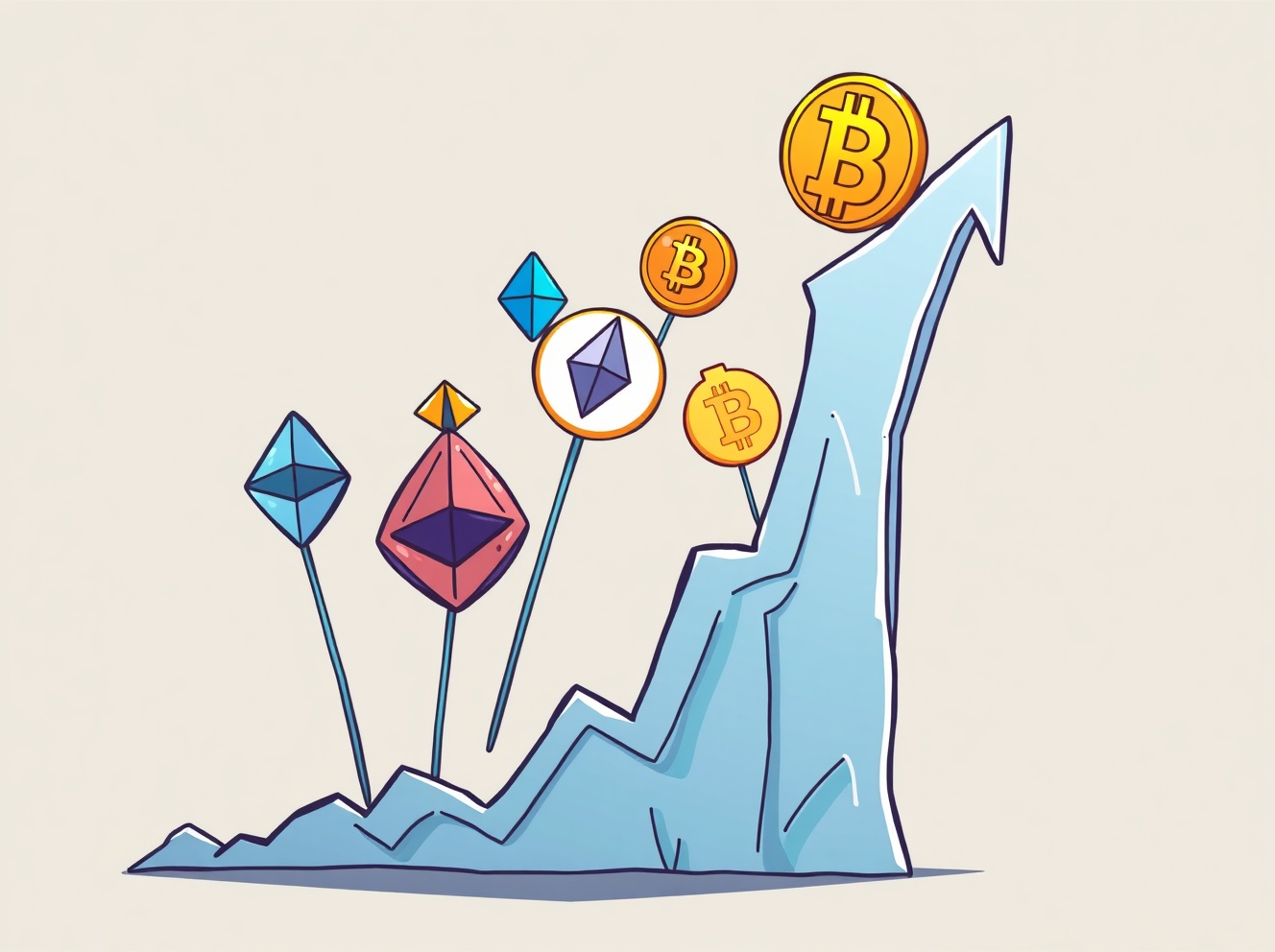
The cryptocurrency world is buzzing, and for good reason! The Altcoin Season Index, a key indicator for many investors, has recently climbed three points to a notable 68. This movement suggests a significant shift in market dynamics, potentially signaling exciting opportunities for those paying attention to the broader crypto landscape beyond Bitcoin.

What is the Altcoin Season Index, and Why Does it Matter?

Understanding the Altcoin Season Index is crucial for navigating the volatile crypto markets. Provided by CoinMarketCap, this index offers a clear snapshot of how altcoins are performing against Bitcoin.

  • Calculation Method: The index specifically tracks the price performance of the top 100 cryptocurrencies by market capitalization. It excludes stablecoins and wrapped tokens to ensure a true reflection of speculative altcoin activity.
  • Comparison Point: Each of these top 100 altcoins is then compared directly to Bitcoin’s performance over a 90-day period.
  • Defining a Season: An ‘altcoin season’ is officially declared when 75% or more of these top 100 altcoins have outperformed Bitcoin during that 90-day window. Conversely, if Bitcoin dominates, it’s considered a ‘Bitcoin season.’

A reading closer to 100 signifies a much stronger altcoin season, indicating widespread outperformance by a large majority of altcoins. Therefore, the recent jump to 68 is a significant indicator that altcoins are gaining momentum.

What Does an Index of 68 Signal for Altcoin Season?

The current reading of 68 on the Altcoin Season Index is a compelling figure. While it’s not yet at the ‘official’ 75% threshold for a full altcoin season declaration, it’s very close. This strong upward trend suggests that a substantial number of altcoins are already outperforming Bitcoin.

Historically, such movements often precede periods of heightened interest and capital flow into alternative cryptocurrencies. It indicates a broadening of market participation beyond just Bitcoin, as investors seek higher returns in potentially undervalued or emerging projects.

This shift can be driven by several factors:

  • Bitcoin Dominance Cooling: After periods of strong Bitcoin rallies, some investors might rotate profits into altcoins.
  • Innovation Cycles: New technologies or applications within specific altcoin ecosystems can attract significant investment.
  • Macroeconomic Factors: Broader market sentiment or economic shifts can also influence investor appetite for riskier assets like altcoins.

The rising Altcoin Season Index presents exciting prospects, but it’s vital to approach the market with a balanced perspective. While the potential for substantial gains exists, so do the inherent risks associated with altcoin investing.

Benefits of an Altcoin Season:

  • Higher Growth Potential: Many altcoins have smaller market caps than Bitcoin, meaning a smaller inflow of capital can lead to larger percentage gains.
  • Diversification: Investing in a range of altcoins can help diversify a crypto portfolio, spreading risk across different projects and use cases.
  • Innovation Exposure: Altcoins often represent cutting-edge blockchain technologies and decentralized applications, offering exposure to future trends.

Challenges and Risks:

  • Increased Volatility: Altcoins are generally more volatile than Bitcoin, with prices capable of dramatic swings in short periods.
  • Project Risk: Not all altcoin projects succeed; some may fail, leading to significant or total loss of investment.
  • Liquidity Issues: Smaller altcoins might have lower trading volumes, making it harder to buy or sell large positions without impacting the price.

Actionable Insights for Investors:

If you’re considering engaging with this potential Altcoin Season Index surge, here are some practical steps:

  • Do Your Research (DYOR): Thoroughly investigate any altcoin project before investing. Look into its technology, team, use case, community, and tokenomics.
  • Start Small: Allocate only a small portion of your portfolio to altcoins, especially if you are new to the space.
  • Diversify Wisely: Instead of putting all your funds into one altcoin, consider spreading investments across several promising projects.
  • Stay Informed: Keep up with market news, project developments, and broader crypto trends.
  • Risk Management: Set clear entry and exit strategies, and consider using stop-loss orders to protect capital.

What’s Next for the Crypto Market?

The ascent of the Altcoin Season Index to 68 marks an exciting period for the cryptocurrency market. It suggests a potential shift from Bitcoin-centric dominance to a broader embrace of alternative digital assets. While the promise of significant returns is enticing, a cautious and well-researched approach remains paramount. By understanding the dynamics of the index and applying sound investment principles, participants can better position themselves to navigate the opportunities that an emerging altcoin season may present.

Frequently Asked Questions (FAQs)

Q1: What does an Altcoin Season Index reading of 68 mean?

An Altcoin Season Index of 68 means that 68% of the top 100 cryptocurrencies (excluding stablecoins and wrapped tokens) have outperformed Bitcoin over the last 90 days. While not yet the official 75% threshold for a full altcoin season, it indicates strong momentum for altcoins.

Q2: How is the Altcoin Season Index calculated?

The index is calculated by comparing the price performance of the top 100 cryptocurrencies by market capitalization (excluding stablecoins and wrapped tokens) against Bitcoin’s performance over a 90-day period.

Q3: Is an Altcoin Season guaranteed with an index of 68?

No, an index of 68 indicates a strong likelihood and emerging trend towards an altcoin season, but the official declaration requires 75% of altcoins to outperform Bitcoin. Market conditions can change rapidly.

Q4: What are the main risks of investing during an altcoin season?

The primary risks include higher volatility compared to Bitcoin, the potential for project failure, and liquidity issues with smaller altcoins. It’s crucial to conduct thorough research and manage risk effectively.

Q5: Where can I find the Altcoin Season Index?

The Altcoin Season Index is provided by data providers like CoinMarketCap, which offers real-time market data and insights for cryptocurrencies.

We hope this comprehensive overview helps you understand the significance of the rising Altcoin Season Index! Share this article with your fellow crypto enthusiasts on social media to spread the knowledge and spark more insightful discussions about the future of digital assets.

To learn more about the latest crypto market trends, explore our article on key developments shaping altcoin price action.

This post Remarkable Rise: Altcoin Season Index Jumps to 68, What It Means for Your Portfolio first appeared on BitcoinWorld.

Market Opportunity
LETSTOP Logo
LETSTOP Price(STOP)
$0.01352
$0.01352$0.01352
-0.58%
USD
LETSTOP (STOP) Live Price Chart
Disclaimer: The articles reposted on this site are sourced from public platforms and are provided for informational purposes only. They do not necessarily reflect the views of MEXC. All rights remain with the original authors. If you believe any content infringes on third-party rights, please contact [email protected] for removal. MEXC makes no guarantees regarding the accuracy, completeness, or timeliness of the content and is not responsible for any actions taken based on the information provided. The content does not constitute financial, legal, or other professional advice, nor should it be considered a recommendation or endorsement by MEXC.

You May Also Like

Polygon Tops RWA Rankings With $1.1B in Tokenized Assets

Polygon Tops RWA Rankings With $1.1B in Tokenized Assets

The post Polygon Tops RWA Rankings With $1.1B in Tokenized Assets appeared on BitcoinEthereumNews.com. Key Notes A new report from Dune and RWA.xyz highlights Polygon’s role in the growing RWA sector. Polygon PoS currently holds $1.13 billion in RWA Total Value Locked (TVL) across 269 assets. The network holds a 62% market share of tokenized global bonds, driven by European money market funds. The Polygon POL $0.25 24h volatility: 1.4% Market cap: $2.64 B Vol. 24h: $106.17 M network is securing a significant position in the rapidly growing tokenization space, now holding over $1.13 billion in total value locked (TVL) from Real World Assets (RWAs). This development comes as the network continues to evolve, recently deploying its major “Rio” upgrade on the Amoy testnet to enhance future scaling capabilities. This information comes from a new joint report on the state of the RWA market published on Sept. 17 by blockchain analytics firm Dune and data platform RWA.xyz. The focus on RWAs is intensifying across the industry, coinciding with events like the ongoing Real-World Asset Summit in New York. Sandeep Nailwal, CEO of the Polygon Foundation, highlighted the findings via a post on X, noting that the TVL is spread across 269 assets and 2,900 holders on the Polygon PoS chain. The Dune and https://t.co/W6WSFlHoQF report on RWA is out and it shows that RWA is happening on Polygon. Here are a few highlights: – Leading in Global Bonds: Polygon holds 62% share of tokenized global bonds (driven by Spiko’s euro MMF and Cashlink euro issues) – Spiko U.S.… — Sandeep | CEO, Polygon Foundation (※,※) (@sandeepnailwal) September 17, 2025 Key Trends From the 2025 RWA Report The joint publication, titled “RWA REPORT 2025,” offers a comprehensive look into the tokenized asset landscape, which it states has grown 224% since the start of 2024. The report identifies several key trends driving this expansion. According to…
Share
BitcoinEthereumNews2025/09/18 00:40
Shiba Inu (SHIB) Price Reset Point: Three Oversold Indicators, 20% Potential

Shiba Inu (SHIB) Price Reset Point: Three Oversold Indicators, 20% Potential

The post Shiba Inu (SHIB) Price Reset Point: Three Oversold Indicators, 20% Potential appeared on BitcoinEthereumNews.com. Shiba Inu remains lower Most likely outcome
Share
BitcoinEthereumNews2026/03/02 22:49
Why The Green Bay Packers Must Take The Cleveland Browns Seriously — As Hard As That Might Be

Why The Green Bay Packers Must Take The Cleveland Browns Seriously — As Hard As That Might Be

The post Why The Green Bay Packers Must Take The Cleveland Browns Seriously — As Hard As That Might Be appeared on BitcoinEthereumNews.com. Jordan Love and the Green Bay Packers are off to a 2-0 start. Getty Images The Green Bay Packers are, once again, one of the NFL’s better teams. The Cleveland Browns are, once again, one of the league’s doormats. It’s why unbeaten Green Bay (2-0) is a 8-point favorite at winless Cleveland (0-2) Sunday according to betmgm.com. The money line is also Green Bay -500. Most expect this to be a Packers’ rout, and it very well could be. But Green Bay knows taking anyone in this league for granted can prove costly. “I think if you look at their roster, the paper, who they have on that team, what they can do, they got a lot of talent and things can turn around quickly for them,” Packers safety Xavier McKinney said. “We just got to kind of keep that in mind and know we not just walking into something and they just going to lay down. That’s not what they going to do.” The Browns certainly haven’t laid down on defense. Far from. Cleveland is allowing an NFL-best 191.5 yards per game. The Browns gave up 141 yards to Cincinnati in Week 1, including just seven in the second half, but still lost, 17-16. Cleveland has given up an NFL-best 45.5 rushing yards per game and just 2.1 rushing yards per attempt. “The biggest thing is our defensive line is much, much improved over last year and I think we’ve got back to our personality,” defensive coordinator Jim Schwartz said recently. “When we play our best, our D-line leads us there as our engine.” The Browns rank third in the league in passing defense, allowing just 146.0 yards per game. Cleveland has also gone 30 straight games without allowing a 300-yard passer, the longest active streak in the NFL.…
Share
BitcoinEthereumNews2025/09/18 00:41