

African Equity Markets Outperform in 2026 as Nigeria and Tanzania Lead Gains

African equity markets are delivering a more nuanced but increasingly compelling performance story in 2026, with select exchanges significantly outperforming global benchmarks and prompting renewed investor attention toward the continent.
While the narrative of a broad-based rally remains overstated, strong gains in key frontier markets — particularly Nigeria and Tanzania — are reshaping how institutional investors assess African equity exposure.
Nigeria and East Africa drive performance
Nigeria has emerged as one of the standout performers. The Nigerian Exchange has posted gains of roughly 30% year-to-date, driven by strong activity in financial services and consumer stocks. Domestic investors, facing inflationary pressures and relatively unattractive fixed-income yields, have increasingly turned to equities in search of real returns.
Tanzania’s Dar es Salaam Stock Exchange has delivered a similarly strong performance, with gains exceeding 30% year-to-date. Banking and telecommunications stocks have attracted growing interest from regional funds, reflecting improving confidence in East Africa’s capital markets.
These developments suggest that some African exchanges are beginning to demonstrate sufficient depth and liquidity to support more meaningful institutional allocation.
South Africa offers a more mixed picture
In contrast, South Africa’s equity market has delivered a more moderate performance in 2026. The FTSE/JSE All Share Index has remained broadly flat year-to-date, reflecting a combination of global market volatility, commodity price movements and domestic economic constraints.
However, stock-level performance tells a different story. Companies such as Pan African Resources have recorded strong gains, supported by rising gold prices and improved operational performance. This divergence highlights the importance of active stock selection within African markets.
Structural drivers supporting investor interest
Beyond short-term market movements, several structural factors are reinforcing investor interest in African equities.
Development finance institutions continue to deploy capital across the continent. The European Investment Bank’s investment of over €3 billion in Africa in 2025, alongside ongoing commitments from the African Development Bank, reflects sustained support for infrastructure, energy and climate-related projects.
These investments contribute to improving macroeconomic stability and long-term growth prospects, even if their direct impact on equity valuations is gradual.
Relative outperformance in a global context
Compared with broader frontier market benchmarks, parts of Africa’s equity landscape are outperforming. While global frontier indices have delivered mid-single-digit returns, markets such as Nigeria and Tanzania have significantly exceeded those levels.
For portfolio managers, this divergence is becoming increasingly difficult to ignore.
A selective but evolving opportunity
Africa’s equity story in 2026 is not one of uniform outperformance, but rather of selective strength within a complex and evolving market landscape.
For investors, the implication is clear: opportunities exist, but they require a more granular, country-specific and sector-driven approach.
As global capital continues to search for yield and diversification, Africa’s frontier markets — once overlooked — are gradually re-entering the investment conversation.
The post African Equity Markets Outperform in 2026 as Nigeria and Tanzania Lead Gains appeared first on FurtherAfrica.


You May Also Like

EIGEN up +24.19%, BTC +1.50%, Aerodrome Finance is The Coin of The Day - Daily Market Update for Jun 20, 2026
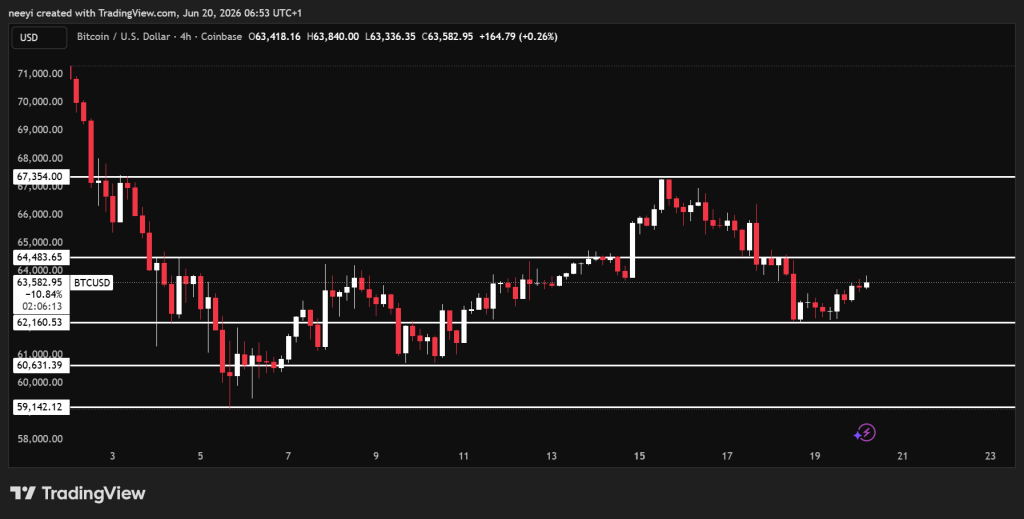
Crypto Price Prediction for Today, June 20: Bitcoin (BTC), XRP, and Solana (SOL)

Ozak AI Presale 99.74% Sold: $OZ Listing Date And Price Prediction



