The African Big 4 tech startup ecosystems list experienced a rejigging in February 2026, with the two largest… The post Funding in Africa: Kenya, Nigeria slump The African Big 4 tech startup ecosystems list experienced a rejigging in February 2026, with the two largest… The post Funding in Africa: Kenya, Nigeria slump

Funding in Africa: Kenya, Nigeria slump as Benin and Ivory Coast break into Big 4

2026/03/18 21:25
5 min read
For feedback or concerns regarding this content, please contact us at [email protected]

The African Big 4 tech startup ecosystems list experienced a rejigging in February 2026, with the two largest ecosystems on the continent falling off the rankings in the venture funding scene.

Kenya, which has been the continent’s most preferred tech investment destination, did not record a single big round in February. Save for the acknowledgement of its glaring absence, the country would not have been mentioned.

This is quite surprising for a country which has been the choicest destination for venture funding for three consecutive years. Powered by a widespread adoption of clean energy and solar and electric-powered systems, energy companies quickly became the toast of venture capitalists as they jostled to obtain a share of East Africa’s clean energy market.

In 2024, Kenya emerged as the most preferred destination for venture funding in Africa, despite not minting any unicorns in a year in which three new unicorns were produced on the continent. During the year, startups in the East African country raised $638 million, representing 29 per cent of the total $2.2 billion raised on the continent.

The numbers were even more impressive in 2025 when startups in the East African country raised $984 million, representing a 54.2 per cent increase from the $638 million raised in 2024, and nearly a third of total funding into the continent (30.7 per cent).

However, after the first two months of 2026, Kenya has contributed less than 4 per cent of the total funding in Africa. In contrast, by February 2025, Kenyan startups, PowerGen and Hakki Africa, had secured $50 million and $13 million, respectively. Added to other smaller rounds, by this time in 2025, Kenya already holds a 20 per cent share of investments into Africa.

Indeed, the country is yet to record a major deal this year, prompting questions around the possibility of hitting an inflexion point after three years at the top. Despite Kenya’s leadership in 2025, a Technext analysis highlighted a general decline in the number of startups that received funding, with only 75 startups raising $100k or more.

This represents a 22% decline and the lowest performance on this metric among the Big Four.

Essentially, a bulk of Kenya’s total was down to large rounds by bigger energy companies like d.light, Sun King, M-Kopa, Burn and PowerGen. With those large rounds not forthcoming, the country appears to be lagging.

The story is quite different for Nigeria, where the defence technology startup, Terra Industries, secured a $22 million investment. This marks Nigeria’s only large deal of the month. While $22 million was quite large, it nonetheless didn’t earn the country a place in the top 4 for the month.

This is not surprising however, as the country’s share of venture funding has continued to decline, from third in 2024 to fourth in 2025.

Startups in Nigeria raised $343 million in 2025, a decline of 16.3 per cent from the $410 million raised in 2024. It also means the country was only responsible for 10.7 per cent of the $3.2 billion raised across the continent during the year. This is a sharp decline from the previous year, when Nigeria was responsible for 18.6 per cent of the $2.2 billion raised on the continent.

Nonetheless, the country appears to be rebounding in 2026, with both mobility company, MAX, and defence tech startup, Terra Industries, raising $24 million and $34 million respectively. Coupled with smaller rounds, Nigeria is responsible for around 16 per cent of total funding so far in 2026.

See also: Nigerian startups raised $343 million in 2025 as venture funding declined by 16.3%

Aside from Kenya and Nigeria, here are the other countries in Africa’s Big 4 for February

African startups raised $272 million in February 2026. At the top of the contributions list is Egypt which has kept up its impressive run of 2025 when it finally displaced Nigeria in second place after coming close in 2024.

Startups in the country raised $64 million in February to uphold their leadership on the continent.

Benin, an unlikely candidate, emerged second in February. The West African country’s position was secured by just one venture, with Spiro announcing a $57 million in debt funding. The round, raised across two transactions, will be used to build more battery swap stations and provide more electric motorcycles to riders in Africa.
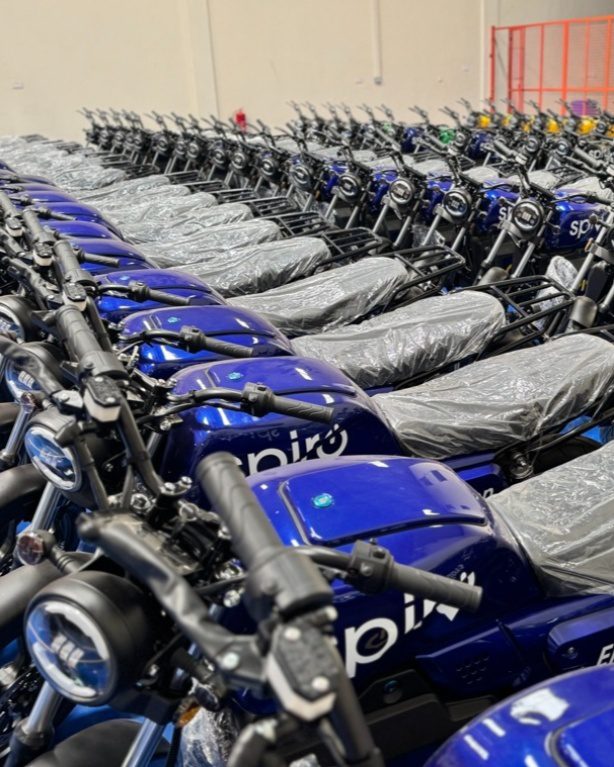
Spiro drives Africa's electric mobility through local engineering and fast charging technologyFleets if e-bikes from the Spiro’s Ekon series

Another unlikely candidate, the Ivory Coast, emerged third on the log. Just like Benin, its place was secured by one round, with e-mobility platform, GoCab announcing $45 million in equity and debt financing. The new funding will be used to expand its “drive-to-own” model across emerging markets.

South Africa emerged as the last of February’s Big 4, attracting $44 million during the month. Two startups are responsible for the country’s total: Enko Education which secured $22 million in debt; and Lula which secured $21 million from DFI FMO.

From a regional point of view, West Africa emerged as the most dominant region with 53 per cent of all the funding. Next is the Northern African region with 24 per cent of February’s funding. Southern Africa contributed 21 per cent while East Africa which was the choice destination in 2025 has just 3 per cent of the total.

The post Funding in Africa: Kenya, Nigeria slump as Benin and Ivory Coast break into Big 4 first appeared on Technext.


Disclaimer: The articles reposted on this site are sourced from public platforms and are provided for informational purposes only. They do not necessarily reflect the views of MEXC. All rights remain with the original authors. If you believe any content infringes on third-party rights, please contact [email protected] for removal. MEXC makes no guarantees regarding the accuracy, completeness, or timeliness of the content and is not responsible for any actions taken based on the information provided. The content does not constitute financial, legal, or other professional advice, nor should it be considered a recommendation or endorsement by MEXC.

You May Also Like

Michael Saylor Pushes Digital Capital Narrative At Bitcoin Treasuries Unconference

Michael Saylor Pushes Digital Capital Narrative At Bitcoin Treasuries Unconference

The post Michael Saylor Pushes Digital Capital Narrative At Bitcoin Treasuries Unconference appeared on BitcoinEthereumNews.com. The suitcoiners are in town.  From a low-key, circular podium in the middle of a lavish New York City event hall, Strategy executive chairman Michael Saylor took the mic and opened the Bitcoin Treasuries Unconference event. He joked awkwardly about the orange ties, dresses, caps and other merch to the (mostly male) audience of who’s-who in the bitcoin treasury company world.  Once he got onto the regular beat, it was much of the same: calm and relaxed, speaking freely and with confidence, his keynote was heavy on the metaphors and larger historical stories. Treasury companies are like Rockefeller’s Standard Oil in its early years, Michael Saylor said: We’ve just discovered crude oil and now we’re making sense of the myriad ways in which we can use it — the automobile revolution and jet fuel is still well ahead of us.  Established, trillion-dollar companies not using AI because of “security concerns” make them slow and stupid — just like companies and individuals rejecting digital assets now make them poor and weak.  “I’d like to think that we understood our business five years ago; we didn’t.”  We went from a defensive investment into bitcoin, Saylor said, to opportunistic, to strategic, and finally transformational; “only then did we realize that we were different.” Michael Saylor: You Come Into My Financial History House?! Jokes aside, Michael Saylor is very welcome to the warm waters of our financial past. He acquitted himself honorably by invoking the British Consol — though mispronouncing it, and misdating it to the 1780s; Pelham’s consolidation of debts happened in the 1750s and perpetual government debt existed well before then — and comparing it to the gold standard and the future of bitcoin. He’s right that Strategy’s STRC product in many ways imitates the consols; irredeemable, perpetual debt, issued at par, with…
Share
BitcoinEthereumNews2025/09/18 02:12
Trump White House Registers Aliens.gov—Is the UFO File Drop Imminent?

Trump White House Registers Aliens.gov—Is the UFO File Drop Imminent?

The post Trump White House Registers Aliens.gov—Is the UFO File Drop Imminent? appeared on BitcoinEthereumNews.com. In brief The White House registered aliens.gov
Share
BitcoinEthereumNews2026/03/19 05:33
Non-Opioid Painkillers Have Struggled–Cannabis Drugs Might Be The Solution

Non-Opioid Painkillers Have Struggled–Cannabis Drugs Might Be The Solution

The post Non-Opioid Painkillers Have Struggled–Cannabis Drugs Might Be The Solution appeared on BitcoinEthereumNews.com. In this week’s edition of InnovationRx, we look at possible pain treatments from cannabis, risks of new vaccine restrictions, virtual clinical trials at the Mayo Clinic, GSK’s $30 billion U.S. manufacturing commitment, and more. To get it in your inbox, subscribe here. Despite their addictive nature, opioids continue to be a major treatment for pain due to a lack of effective alternatives. In an effort to boost new drugs, the FDA released new guidelines for non-opioid painkillers last week. But making these drugs hasn’t been easy. Vertex Pharmaceuticals received FDA approval for its non-opioid Journavx in January, then abandoned a next generation drug after a failed clinical trial earlier this summer. Acadia similarly abandoned a promising candidate after a failed trial in 2022. One possible basis for non-opioids might be cannabis. Earlier this year, researchers at Washington University at St. Louis and Stanford published a study showing that a cannabis-derived compound successfully eased pain in mice with minimal side effects. Munich-based pharmaceutical company Vertanical is perhaps the furthest along in this quest. It is developing a cannabinoid-based extract to treat chronic pain it hopes will soon become an approved medicine, first in the European Union and eventually in the United States. The drug, currently called Ver-01, packs enough low levels of cannabinoids (including THC) to relieve pain, but not so much that patients get high. Founder Clemens Fischer, a 50-year-old medical doctor and serial pharmaceutical and supplement entrepreneur, hopes it will become the first cannabis-based painkiller prescribed by physicians and covered by insurance. Fischer founded Vertanical, with his business partner Madlena Hohlefelder, in 2017, and has invested more than $250 million of his own money in it. With a cannabis cultivation site and drug manufacturing plant in Denmark, Vertanical has successfully passed phase III clinical trials in Germany and expects…
Share
BitcoinEthereumNews2025/09/18 05:26