Altcoin Season Index Holds Steady at 52, Signaling a Crucial Market Balance
BitcoinWorld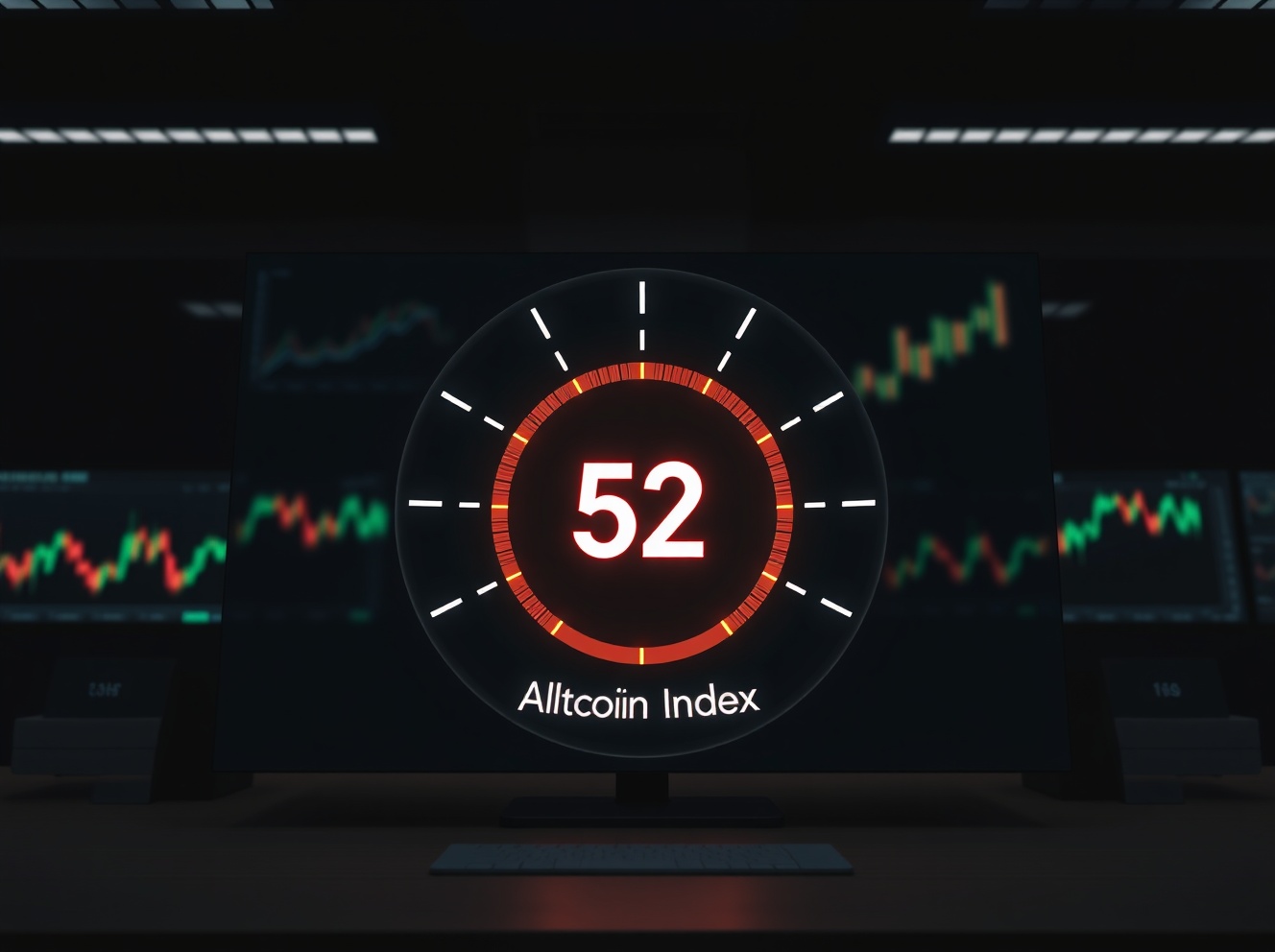
Altcoin Season Index Holds Steady at 52, Signaling a Crucial Market Balance
The cryptocurrency market exhibits a state of equilibrium as the widely monitored Altcoin Season Index maintains a reading of 52. This pivotal metric, published by CoinMarketCap, offers investors a crucial snapshot of market dynamics between Bitcoin and alternative cryptocurrencies. Consequently, the current score suggests a market that is neither dominated by Bitcoin nor experiencing a full-blown altcoin rally, presenting a nuanced landscape for portfolio strategy in early 2025.
Understanding the Altcoin Season Index
CoinMarketCap’s Altcoin Season Index provides a quantitative measure of market sentiment and capital rotation. The index calculation involves a direct comparison of the 90-day price performance for the top 100 digital assets, excluding stablecoins and wrapped tokens, against Bitcoin’s performance during the same period. Analysts declare an official “altcoin season” when 75% of these assets outperform Bitcoin. Conversely, a “Bitcoin season” occurs when the majority underperform. Therefore, a score of 52 sits almost precisely at the midpoint, indicating a nearly even split in performance trends across the major market cap spectrum.
This metric serves as a vital tool for both retail and institutional investors. It helps gauge broader market risk appetite and capital flow patterns. Historically, sustained readings above 75 have preceded significant altcoin bull runs, while prolonged periods below 25 often correlate with Bitcoin dominance phases. The index’s current stability suggests a period of consolidation, where investors are carefully evaluating fundamentals rather than chasing momentum.
Current Market Context and Historical Analysis
The steady index reading arrives during a period of relative calm in global cryptocurrency markets. Major regulatory developments in key jurisdictions, including the European Union’s full implementation of MiCA and ongoing clarity efforts in the United States, have provided a more structured environment. Furthermore, institutional adoption through spot Bitcoin and Ethereum ETFs has introduced a new layer of stability and capital. This backdrop makes the index’s neutrality particularly significant, as it reflects a market digesting macro-economic factors rather than reacting to internal crypto-specific hype cycles.
Examining historical data reveals instructive patterns. For instance, the index surged past 80 during the notable altcoin rallies of early 2021 and late 2023. In contrast, it plummeted below 20 following major market corrections and during phases of extreme risk-off sentiment. The following table illustrates key historical thresholds for the Altcoin Season Index:
| Index Range | Market Phase | Typical Investor Action |
|---|---|---|
| 0-24 | Strong Bitcoin Season | Capital flight to safety (BTC) |
| 25-49 | Moderate Bitcoin Lead | Selective altcoin accumulation |
| 50 | Neutral / Balanced | Portfolio rebalancing |
| 51-74 | Moderate Altcoin Momentum | Diversification into alts |
| 75-100 | Full Altcoin Season | Aggressive altcoin rotation |
Market analysts often watch for sustained movement outside the 40-60 range as a signal for a potential trend change. The current hold at 52, therefore, represents a critical equilibrium point.
Expert Insights on Market Structure
Financial researchers emphasize that a neutral Altcoin Season Index frequently precedes increased volatility and decisive price movements. According to data from blockchain analytics firms, on-chain activity for major Layer 1 networks like Ethereum, Solana, and Avalanche remains robust despite the balanced index. This divergence suggests underlying strength in altcoin ecosystems that may not yet be fully reflected in short-term price performance metrics. The index measures past price action, while on-chain metrics can sometimes serve as leading indicators for future capital flows.
Several key factors are currently influencing this balanced reading:
- Bitcoin ETF Flows: Consistent institutional inflows into spot Bitcoin ETFs provide a steady bid for BTC, supporting its price and limiting severe underperformance.
- Layer 2 & DeFi Growth: Significant technological development and Total Value Locked (TVL) growth in decentralized finance protocols on altcoin chains create fundamental value support.
- Macroeconomic Conditions: Interest rate expectations and inflation data continue to impact all risk assets, including both Bitcoin and altcoins, often in tandem.
- Relative Valuation: After previous cycles, some analysts argue altcoins offer stronger relative value compared to Bitcoin at current market cap ratios.
Implications for Cryptocurrency Investment Strategies
A steady Altcoin Season Index reading directly informs portfolio management decisions. For tactical investors, a score of 52 typically advocates for a balanced, core-satellite approach. This strategy might involve maintaining a significant Bitcoin position as a core holding while selectively allocating to altcoins with strong use cases and development activity. The neutral signal discourages extreme bets on either side of the market, promoting diversification across different blockchain sectors such as DeFi, gaming, and decentralized infrastructure.
Long-term, buy-and-hold investors may view this period as an accumulation phase. Historical analysis shows that periods of index neutrality often provide better entry points for high-conviction altcoin projects before a potential season declaration. However, this requires rigorous fundamental analysis, as a balanced market often sees increased performance divergence between individual altcoins. Investors must differentiate between assets with genuine utility and those merely riding broader sentiment.
The Role of Market Sentiment and Data
Beyond the index itself, traders monitor complementary data points. These include Bitcoin dominance charts, futures funding rates across major exchanges, and social sentiment indicators. Currently, these ancillary metrics largely corroborate the index’s story of balance. For example, Bitcoin’s market dominance has hovered within a narrow range, and aggregate funding rates for major altcoins remain near neutral. This confluence of data reinforces the narrative of a market in a holding pattern, awaiting a clearer macroeconomic or catalytic trigger.
The index’s methodology, focusing on a 90-day window, also provides context. It smooths out short-term volatility and noise, offering a more reliable medium-term trend. A single day’s stability, while noteworthy, becomes more significant when viewed as part of a multi-week trend. Observers will watch closely to see if the index begins a sustained drift above 55, which could signal the early stages of altcoin momentum building, or a drop below 45, suggesting a resurgence of Bitcoin-centric market behavior.
Conclusion
The Altcoin Season Index holding steady at 52 presents a clear picture of a cryptocurrency market at a crossroads. This equilibrium reflects a complex interplay of institutional Bitcoin adoption, resilient altcoin fundamentals, and cautious macro sentiment. For market participants, the current reading underscores the importance of disciplined strategy over speculative impulse. It highlights a period where fundamental research and sector rotation may yield better results than broad market bets. As always, the Altcoin Season Index remains a crucial barometer, and its next sustained move will provide valuable insight into the market’s evolving risk appetite and capital allocation trends for the remainder of 2025.
FAQs
Q1: What does an Altcoin Season Index score of 52 mean?
An index score of 52 indicates a nearly balanced market. It means the price performance of the top 100 altcoins against Bitcoin over the past 90 days is almost evenly split, with a very slight tendency towards altcoin outperformance, but not enough to declare an official “altcoin season.”
Q2: How is the Altcoin Season Index calculated?
CoinMarketCap calculates the index by comparing the 90-day price performance of each of the top 100 cryptocurrencies (excluding stablecoins and wrapped tokens) against Bitcoin’s performance over the same period. The percentage of these assets that have outperformed Bitcoin determines the index score.
Q3: What threshold defines an official “altcoin season”?
Analysts generally declare an altcoin season when the Altcoin Season Index sustains a reading above 75 for a period of time. This means at least 75% of the top 100 altcoins have outperformed Bitcoin over the preceding 90-day window.
Q4: Why are stablecoins and wrapped tokens excluded from the index?
Stablecoins are pegged to flat currencies and do not exhibit the price volatility or investment thesis of other cryptocurrencies. Wrapped tokens are simply representations of other assets (like wBTC for Bitcoin) on different blockchains. Excluding them ensures the index measures genuine, independent altcoin performance.
Q5: How should investors use this index?
The index is best used as a high-level sentiment and market structure tool, not a precise trading signal. A neutral reading (around 50) suggests a balanced, diversified portfolio approach. A reading above 70 may signal increasing risk appetite for altcoins, while a reading below 30 may indicate a flight to the relative safety of Bitcoin.
This post Altcoin Season Index Holds Steady at 52, Signaling a Crucial Market Balance first appeared on BitcoinWorld.


You May Also Like

Q2 Market Insights: Bitcoin regains dominance in risk-averse environment, ETFs remain critical to market structure

Nebius Revenue Skyrockets 684%: Why the "Pennsylvania AI Factory" Is the New Frontier for AI Infrastructure