

Gold Price Plummets Below $4,800: Hawkish Fed Crushes Safe-Haven Demand Despite Middle East Unrest
BitcoinWorld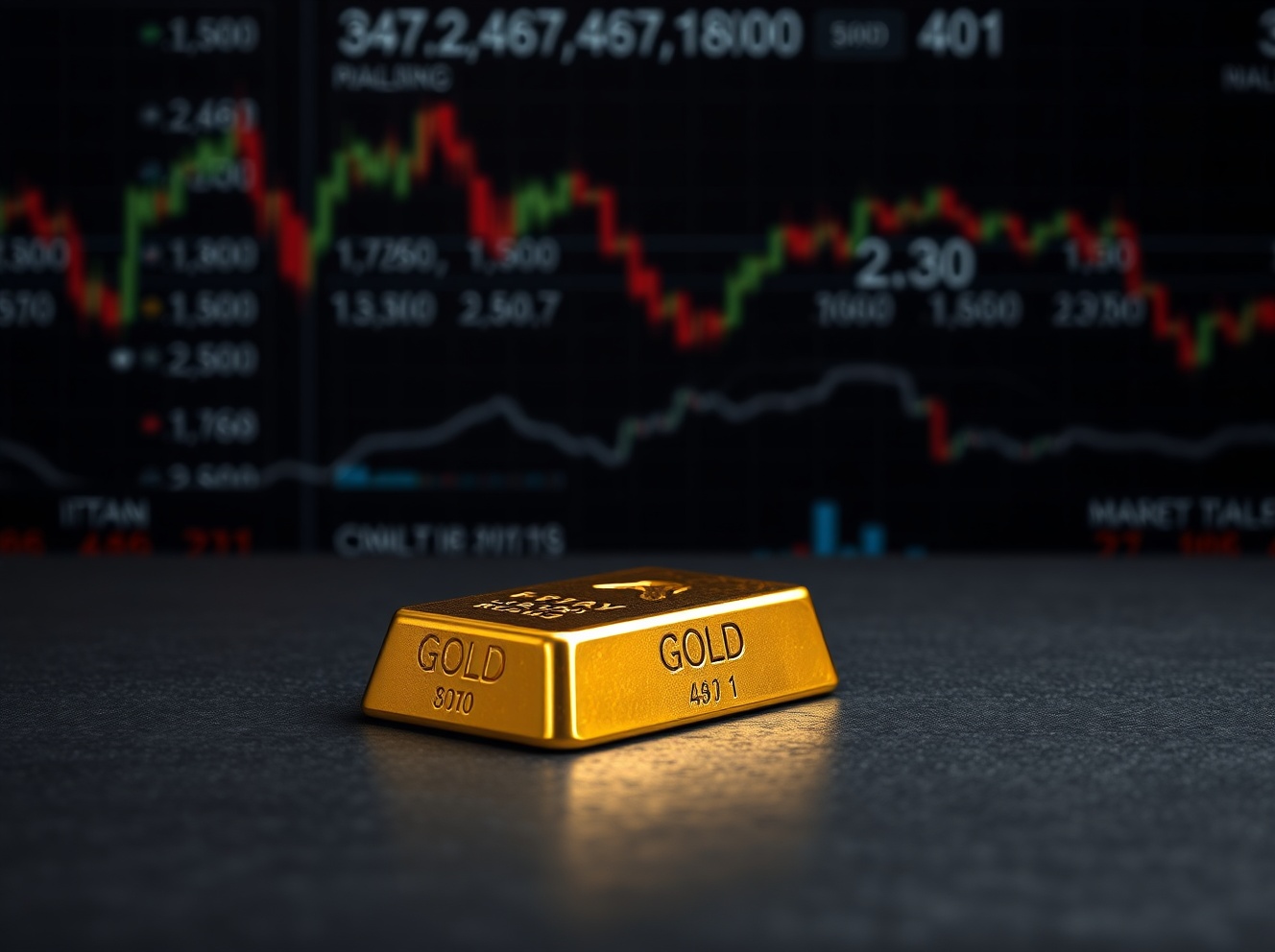
Gold Price Plummets Below $4,800: Hawkish Fed Crushes Safe-Haven Demand Despite Middle East Unrest
NEW YORK, April 2025 – The gold market experienced a significant sell-off this week, with prices breaking decisively below the $4,800 per ounce threshold to hit their lowest level in over a month. This sharp decline occurred despite ongoing geopolitical tensions in the Middle East, a traditional catalyst for safe-haven demand. Consequently, the primary driver behind the drop appears to be a resurgently hawkish stance from the U.S. Federal Reserve, which is aggressively countering inflationary pressures with tighter monetary policy.
Gold Price Breakdown: Analyzing the Technical and Fundamental Drivers
The recent price action for gold has been decisively bearish. After a period of consolidation above $4,900, the metal failed to find support and broke through several key technical levels. Market analysts point to a confluence of factors for this move. First, minutes from the latest Federal Open Market Committee (FOMC) meeting revealed discussions about maintaining higher interest rates for longer than previously anticipated. Second, strong U.S. employment and retail sales data have reinforced the view of a resilient economy, reducing expectations for imminent rate cuts. Higher interest rates increase the opportunity cost of holding non-yielding assets like gold, making Treasury bonds and other fixed-income investments more attractive by comparison.
Furthermore, the U.S. dollar has strengthened significantly against a basket of major currencies. Since gold is predominantly priced in dollars, a stronger greenback makes the metal more expensive for holders of other currencies, thereby dampening international demand. This dynamic has created a powerful headwind for gold prices, overshadowing other supportive factors.
Federal Reserve Policy: The Dominant Market Force
The Federal Reserve’s commitment to its inflation-fighting mandate is the central story for all financial markets in 2025. Following a period where markets priced in multiple rate cuts, recent communications from Fed officials have delivered a clear, unified message. The central bank remains data-dependent and is not yet convinced that inflation is sustainably trending toward its 2% target. Statements emphasizing patience and the possibility of further rate hikes if necessary have reset market expectations. This shift has led to a rapid repricing of assets across the board, with gold being particularly sensitive to changes in real yields—the inflation-adjusted return on government bonds.
Geopolitical Tensions: A Damped Safe-Haven Effect
Historically, escalating conflict in the Middle East triggers a flight to safety, boosting demand for gold. Recent months have seen continued volatility in the region, with incidents that would typically support gold prices. However, the market’s reaction has been notably muted. Analysts suggest that the sheer magnitude of the monetary policy shift has overwhelmed the geopolitical risk premium. Investors are currently prioritizing the macroeconomic outlook and interest rate trajectory over regional conflicts, judging the Fed’s actions as having a more direct and profound impact on asset valuations.
This represents a significant change in market psychology. While gold still attracts some bids during acute crisis moments, the bids are shallow and quickly fade. The metal’s failure to rally on concerning headlines is, in itself, a bearish technical signal. It indicates that the dominant narrative for traders and institutional investors is firmly centered on central bank policy rather than traditional safe-haven dynamics.
Market Impact and Sector Reactions
The decline in gold prices has had immediate ripple effects across related sectors. Gold mining equities, which often exhibit leveraged moves to the underlying commodity, have underperformed the broader market. Similarly, ETFs (Exchange-Traded Funds) that track physical gold have seen consistent outflows over the past several trading sessions. On the other hand, the technology and growth sectors, which benefit from a higher rate environment through improved financial sector profitability and a stronger dollar, have seen relative strength. This sector rotation highlights how capital is being reallocated in response to the changing interest rate landscape.
Historical Context and Comparative Analysis
To understand the current situation, it is instructive to examine previous cycles of Fed tightening. During the rate-hike cycles of the mid-2000s and late 2010s, gold often faced periods of pressure in the initial phases as real yields rose. However, performance in the latter stages varied based on whether the hikes led to a economic soft landing or a recession. The current cycle is unique due to the post-pandemic inflation surge and the scale of the policy response. The table below compares key metrics from recent gold market corrections driven by monetary policy:
| Period | Fed Policy Stance | Gold Price Change | Primary Driver |
|---|---|---|---|
| 2013 Taper Tantrum | Hint at reducing QE | -23% (6 months) | Rising Yield Expectations |
| 2021 Post-Peak | Pivot from “transitory” | -18% (8 months) | Rate Hike Expectations |
| 2025 Current Move | “Higher for Longer” | -8% (1 month)* | Delayed Cut Expectations |
*Approximate figure based on recent peak-to-trough movement.
This comparative analysis shows that while the current decline is significant, its magnitude and duration will depend heavily on the evolution of inflation data and subsequent Fed communications. Market participants are closely monitoring indicators such as the Core PCE (Personal Consumption Expenditures) price index for signs of cooling that could allow the Fed to soften its stance.
Expert Perspectives on the Path Forward
Market strategists and commodity experts offer a range of views on gold’s trajectory. The consensus acknowledges the powerful headwinds from monetary policy but also notes potential supportive factors on the horizon. Some analysts argue that current prices may already reflect the hawkish Fed narrative, suggesting limited downside from these levels unless new data prompts an even more aggressive shift. Others point to persistent central bank buying from countries diversifying their reserves away from the U.S. dollar as a structural support for gold that operates independently of short-term rate moves.
Additionally, concerns about fiscal sustainability and high levels of government debt in major economies provide a long-term bullish argument for gold as a store of value. However, in the immediate term, the technical picture remains challenging. Key levels to watch include the 100-day moving average and the psychological support at $4,750. A break below these could trigger further algorithmic and momentum-based selling.
Conclusion
The gold price has entered a corrective phase, driven overwhelmingly by a recalibration of expectations around U.S. Federal Reserve policy. The metal’s failure to respond to ongoing Middle East tensions underscores the market’s singular focus on interest rates and the dollar’s strength. While long-term fundamentals for gold, including geopolitical risk and central bank demand, remain intact, the short-term path is likely to be dictated by incoming economic data and the Fed’s interpretation of it. Investors should prepare for continued volatility as the market searches for a new equilibrium between the powerful forces of hawkish monetary policy and enduring safe-haven demand.
FAQs
Q1: Why is the gold price falling despite conflict in the Middle East?
The primary driver is the Federal Reserve’s commitment to maintaining high interest rates to combat inflation. This makes yield-bearing assets more attractive than non-yielding gold and strengthens the U.S. dollar, overwhelming the traditional safe-haven demand from geopolitical unrest.
Q2: What does a “hawkish Fed” mean for markets?
A hawkish Federal Reserve indicates a policy stance focused on raising interest rates or keeping them elevated to control inflation. This typically leads to a stronger U.S. dollar, higher bond yields, and pressure on assets like gold and growth stocks that are sensitive to borrowing costs.
Q3: What key economic data moves the gold market?
Traders watch U.S. inflation reports (CPI, PCE), employment data (non-farm payrolls), and retail sales. Additionally, statements and meeting minutes from the Federal Open Market Committee (FOMC) are critical, as they guide expectations for future interest rate decisions.
Q4: Could gold prices recover quickly?
A rapid recovery would likely require a shift in Fed rhetoric toward potential rate cuts, a significant escalation in geopolitical risk that truly spooks investors, or a sudden, sharp drop in the U.S. dollar. Barring these events, a period of consolidation or further testing of lower support levels is more probable.
Q5: How are gold mining companies affected by this price drop?
Gold mining stocks are highly leveraged to the price of gold. A falling gold price directly squeezes their profit margins, often causing their share prices to fall by a greater percentage than the underlying commodity. This makes the sector particularly volatile during gold price corrections.
This post Gold Price Plummets Below $4,800: Hawkish Fed Crushes Safe-Haven Demand Despite Middle East Unrest first appeared on BitcoinWorld.


You May Also Like

Prediction markets get CFTC relief as legal battles widen
Metaplanet Stock: How a 24% Bitcoin Drop Erased Strong Operating Gains




