Dow Jones Industrial Average Plummets as Escalating Iran Conflict Rattles Global Equity Markets
BitcoinWorld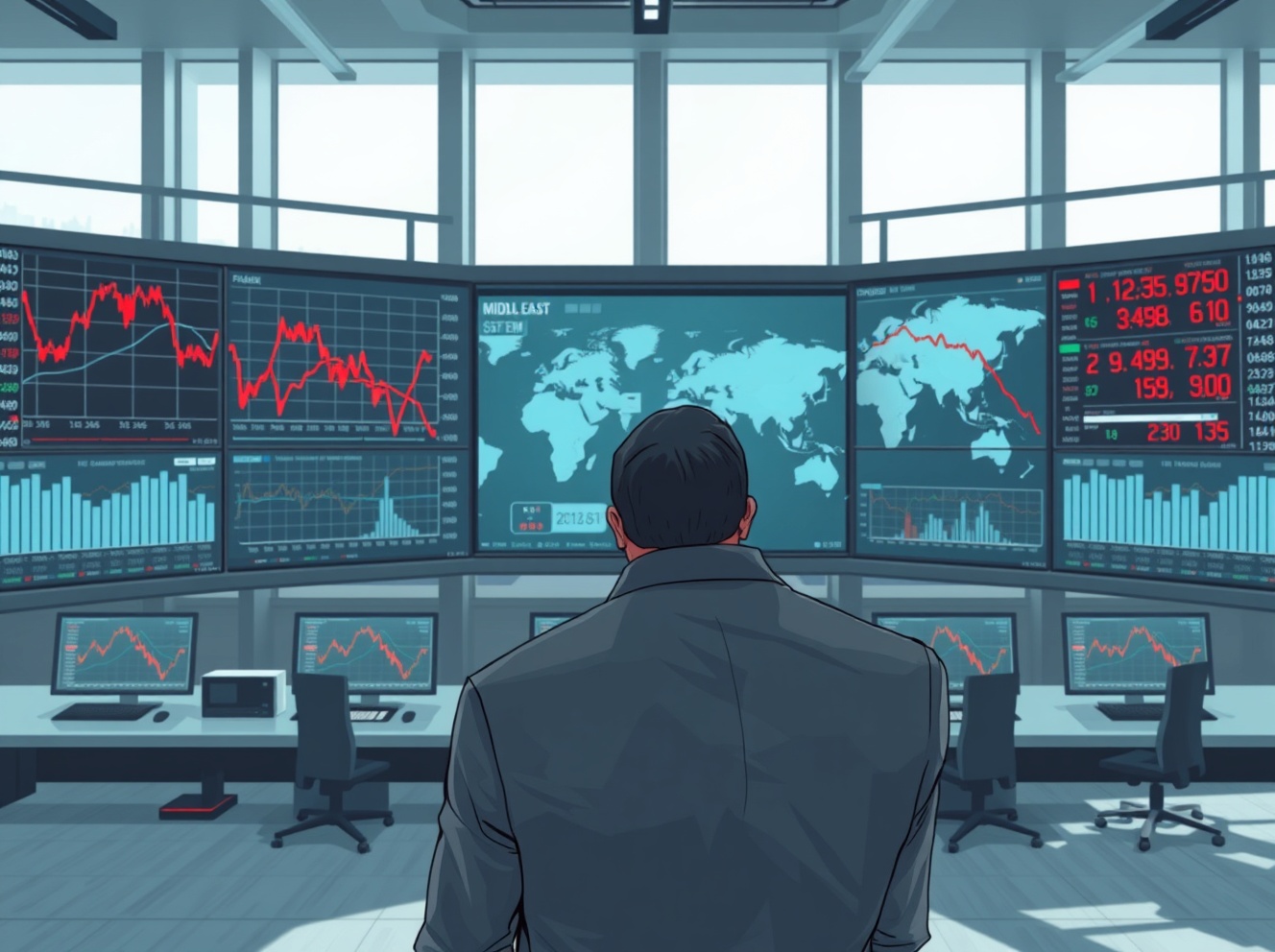
Dow Jones Industrial Average Plummets as Escalating Iran Conflict Rattles Global Equity Markets
NEW YORK, March 2025 – The Dow Jones Industrial Average recorded another significant decline today, extending a week of losses as escalating military conflict involving Iran continues to inject profound uncertainty into global financial markets. Consequently, investors are rapidly reassessing risk across multiple asset classes. This sustained downward pressure highlights the fragile state of investor sentiment amid persistent geopolitical instability.
Dow Jones Industrial Average Faces Sustained Geopolitical Pressure
The blue-chip index fell sharply in morning trading, ultimately closing down over 450 points. This decline marks the third consecutive session of losses. Market analysts immediately linked the sell-off to reports of intensified military engagements in the Middle East. Furthermore, energy prices surged, amplifying fears of broader economic disruption. The VIX volatility index, often called Wall Street’s “fear gauge,” spiked to its highest level in months.
Historical context reveals a clear pattern. Geopolitical events in oil-producing regions frequently trigger market volatility. For instance, similar patterns emerged during the 1990 Gulf War and the 2014 Crimea crisis. Today’s market reaction mirrors those historical precedents. A comparative table illustrates recent Dow reactions to geopolitical events:
| Event | Year | Dow Jones 5-Day Change | Primary Market Concern |
|---|---|---|---|
| Initial Russia-Ukraine Invasion | 2022 | -4.6% | Energy Security, Inflation |
| U.S.-Iran Tensions (2020) | 2020 | -3.1% | Regional War, Oil Supply |
| Current Iran Conflict Escalation | 2025 | -5.2% (to date) | Broader Regional Conflict, Trade Disruption |
This data underscores the market’s acute sensitivity to conflict in the Strait of Hormuz, a critical chokepoint for global oil shipments.
Mechanisms of Market Disruption from the Iran Conflict
The conflict impacts equity markets through several direct channels. Primarily, it disrupts global energy supplies, immediately raising input costs for businesses worldwide. Subsequently, higher energy costs feed into broader inflationary pressures. Central banks then face a complex policy dilemma: combat inflation with higher rates or support growth with easier policy.
Additionally, the situation creates severe supply chain uncertainties. Major shipping lanes are now under threat, delaying goods and increasing freight insurance costs. Technology and automotive sectors, which rely on timely component deliveries, are particularly vulnerable. Investor psychology also plays a crucial role. Uncertainty leads to a classic “flight to safety.” Consequently, capital flows out of equities and into perceived havens like:
- U.S. Treasury bonds, pushing yields lower.
- The U.S. Dollar, which strengthens against other currencies.
- Gold, which saw a notable price increase today.
This capital rotation directly depresses stock valuations, especially for growth-oriented companies.
Expert Analysis on Sector-Specific Impacts
Dr. Anya Sharma, Chief Global Strategist at Horizon Financial Advisors, provided detailed commentary. “Our models show aerospace and defense stocks initially benefiting from increased budgetary focus,” she noted. “However, the broader market suffers due to risk repricing. The transportation and consumer discretionary sectors are most exposed to oil price shocks.”
Meanwhile, the energy sector presents a complex picture. Integrated oil majors with diversified operations may see margin expansion. Conversely, airlines and logistics companies face severe cost pressure. Retailers also grapple with potential consumer spending cuts if gasoline prices remain elevated. This sectoral divergence creates a challenging environment for active portfolio managers.
Historical Precedents and Potential Trajectories
Financial history offers valuable lessons for the current situation. Markets typically experience an initial shock phase characterized by sharp declines and high volatility. This phase often lasts until the geopolitical scenario’s potential outcomes become clearer. A stabilization phase may follow, even if the underlying conflict continues, as markets price in a new “normal.”
For example, after the initial shock of the September 11 attacks, markets found a bottom and began a recovery before the military response was fully underway. The key variable is the conflict’s perceived scope and duration. A limited, regional engagement may allow markets to recover more quickly. In contrast, a conflict that draws in multiple state actors could prolong market distress for quarters.
Current options market pricing suggests traders are hedging against continued volatility for at least the next two months. This positioning indicates a consensus that uncertainty will not dissipate quickly. Corporate earnings guidance for Q2 2025 is also likely to be revised downward across many sectors, creating a second wave of potential equity pressure.
Conclusion
The Dow Jones Industrial Average decline is a direct reflection of heightened geopolitical risk emanating from the Iran conflict. Market mechanics involving energy prices, supply chains, and investor sentiment are transmitting this risk globally. While historical patterns suggest markets can eventually adapt to new realities, the immediate path hinges on diplomatic and military developments. Investors should prepare for continued volatility as the situation evolves, with careful attention to sectoral impacts and broader economic indicators.
FAQs
Q1: Why does conflict in Iran affect the Dow Jones Industrial Average?
The Dow Jones is sensitive because the conflict threatens global oil supplies, raising costs for businesses and consumers. It also creates uncertainty that leads investors to sell stocks and seek safer assets.
Q2: Which sectors are most negatively impacted by this market event?
Airlines, transportation, consumer discretionary retail, and any industry with high energy or freight costs are hit hardest. Companies with thin profit margins are especially vulnerable.
Q3: Are any sectors potentially benefiting from the current situation?
Yes, the aerospace and defense sector often sees increased investor interest. Certain energy companies may benefit from higher oil prices, though this depends on their production and cost structures.
Q4: How long do geopolitical market shocks typically last?
The initial sharp decline often lasts days to weeks. The full recovery period can take months, depending on the conflict’s scale, duration, and economic fallout.
Q5: What should investors monitor to gauge market direction?
Key indicators include oil price trends, the VIX volatility index, diplomatic news from the region, and statements from major central banks regarding inflation and growth.
This post Dow Jones Industrial Average Plummets as Escalating Iran Conflict Rattles Global Equity Markets first appeared on BitcoinWorld.


You May Also Like

Q2 Market Insights: Bitcoin regains dominance in risk-averse environment, ETFs remain critical to market structure

Nebius Revenue Skyrockets 684%: Why the "Pennsylvania AI Factory" Is the New Frontier for AI Infrastructure