Banxico Holds Firm: Rates Steady at 7% Amid Critical War-Driven Inflation Threats
BitcoinWorld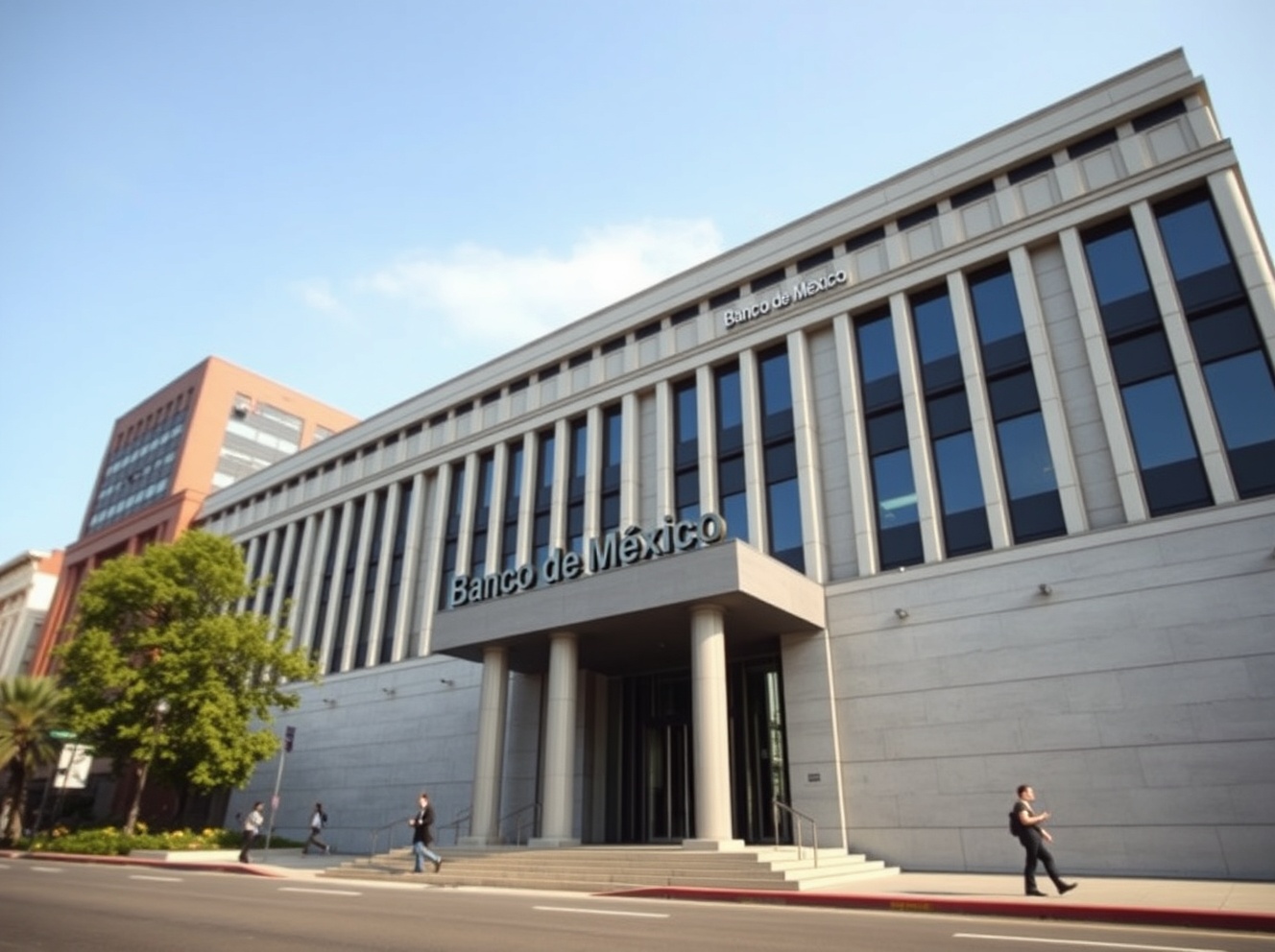
Banxico Holds Firm: Rates Steady at 7% Amid Critical War-Driven Inflation Threats
MEXICO CITY, March 2025 – The Bank of Mexico (Banxico) has decisively maintained its benchmark interest rate at 7.00%, a move widely anticipated by financial markets yet underscored by persistent inflationary pressures stemming from ongoing global conflicts. This pivotal decision marks the fourth consecutive meeting where the Governing Board has opted for stability, prioritizing the anchoring of inflation expectations against a volatile international backdrop.
Banxico Holds Rates at 7%: A Detailed Analysis
The central bank’s five-member board unanimously voted to keep the overnight interbank interest rate unchanged. Consequently, this maintains the cost of borrowing at its highest level in over a decade. The primary driver for this cautious stance is the complex inflationary environment. Specifically, Banxico’s latest quarterly report highlights that core inflation, which excludes volatile food and energy prices, remains stubbornly above the 3% target. Furthermore, geopolitical tensions continue to disrupt global supply chains, exerting upward pressure on imported goods prices.
Analysts from major financial institutions, including Citibanamex and BBVA México, had forecast this outcome with near certainty. Their models indicated that a rate cut would be premature. Therefore, the board’s statement emphasized a data-dependent approach, signaling that future decisions will hinge on incoming economic indicators. The Mexican peso showed minimal volatility following the announcement, a sign that markets had fully priced in the decision.
The Global Context of War-Driven Inflation
Banxico’s policy is not formulated in a vacuum. The global economic landscape remains fractured by multiple armed conflicts. These conflicts directly impact Mexico through two primary channels: energy prices and agricultural commodities. For instance, disruptions in key shipping lanes have increased freight costs by approximately 18% year-over-year. Simultaneously, sanctions and trade restrictions have created artificial shortages in fertilizer and wheat markets.
This external shock complicates the domestic inflation fight. While Mexico’s internal demand shows signs of moderation, external cost-push factors are largely beyond the central bank’s control. The bank’s governor has repeatedly noted in public forums that imported inflation constitutes a significant portion of the current headline rate. A comparative table illustrates the recent trajectory:
| Period | Headline Inflation | Core Inflation | Primary Driver |
|---|---|---|---|
| Q4 2024 | 4.5% | 4.8% | Services & Food |
| Q1 2025 | 4.7% | 4.6% | Energy & Imported Goods |
Expert Analysis and Economic Impacts
Leading economists emphasize the prudence of Banxico’s stance. “In an environment where external shocks are dominant, the worst policy error would be to loosen prematurely,” stated Dr. Valeria Moy, a renowned economist and director of México, ¿cómo vamos?. Her analysis points to the delicate balance between supporting economic growth and ensuring price stability. The current 7% rate, while restrictive, is seen as a necessary tool to prevent a de-anchoring of inflation expectations, which could trigger a more damaging wage-price spiral.
The impact on the real economy is multifaceted. On one hand, high rates increase the cost of mortgages, business loans, and consumer credit, potentially slowing investment and consumption. Conversely, they attract foreign capital, supporting the peso’s strength and helping to curb inflation by making imports cheaper. The bank’s forward guidance suggests a prolonged restrictive stance until there is clear evidence of inflation converging to the target, likely pushing any rate cuts to late 2025 or early 2026.
Monetary Policy and Future Projections
Looking ahead, Banxico’s path is fraught with uncertainty. The board’s statement removed previous language about considering future adjustments, adopting a more neutral tone. This shift indicates a higher bar for any policy change. Key indicators to watch include:
- Service Sector Inflation: A persistent stickiness here would signal entrenched inflation.
- Peso Volatility: Sharp depreciation could instantly import inflation.
- Federal Reserve Policy: Divergence from U.S. rates could trigger capital outflows.
- Global Oil Prices: As a net importer, Mexico is highly sensitive to energy costs.
Market consensus, as reflected in interest rate swaps, now prices in a stable rate for the next two quarters. However, the balance of risks remains tilted to the upside for inflation. Therefore, the probability of a rate hike, though low, is not zero if new external shocks emerge. The bank’s credibility, built over decades, is its most valuable asset in managing these expectations.
Conclusion
Banxico’s decision to hold interest rates at 7% represents a calculated defense against persistent, war-driven inflation risks. The central bank demonstrates a clear commitment to its price stability mandate, prioritizing long-term economic health over short-term growth stimuli. This steady-handed approach provides a crucial anchor for the Mexican economy amidst global turbulence. Ultimately, the path for future Banxico interest rates will remain inextricably linked to the evolution of geopolitical conflicts and their cascading effects on global commodity markets and supply chains.
FAQs
Q1: Why did Banxico decide to keep interest rates at 7%?
Banxico maintained the rate to continue combating inflation, which remains above its 3% target due primarily to external pressures from global conflicts affecting energy and food prices. A premature cut risked de-anchoring inflation expectations.
Q2: How does global conflict directly affect inflation in Mexico?
Conflicts disrupt global supply chains and commodity markets, increasing the cost of imported goods like oil, gas, wheat, and fertilizers. These higher costs are then passed through to Mexican consumers, creating “imported inflation” that is difficult for the central bank to control.
Q3: What is the difference between headline and core inflation mentioned by Banxico?
Headline inflation includes all goods and services, including volatile items like food and energy. Core inflation excludes these volatile components to provide a clearer view of underlying, persistent price trends. Banxico monitors both closely.
Q4: When might Banxico consider cutting interest rates?
Most analysts project rate cuts could begin in late 2025 or early 2026, but only if there is consistent evidence that inflation is converging to the 3% target and that inflation expectations are firmly anchored.
Q5: How does this interest rate decision affect the average Mexican consumer?
The 7% rate makes loans for homes, cars, and credit cards more expensive, reducing purchasing power. However, it also supports the value of the peso, which can help keep prices of imported goods in check. The policy aims for long-term price stability over short-term ease of credit.
This post Banxico Holds Firm: Rates Steady at 7% Amid Critical War-Driven Inflation Threats first appeared on BitcoinWorld.


You May Also Like

Q2 Market Insights: Bitcoin regains dominance in risk-averse environment, ETFs remain critical to market structure

Pi Network Node Update 24.1.0 Appears as Protocol 23 Deployment Expands