

Epoch Protocol’s Fundraise Signals a Shift From Legacy Aggregators to Modular, Composable DeFi Solutions

How next-generation intent solvers are replacing static aggregation with dynamic, multi-chain orchestration for superior trader outcomes
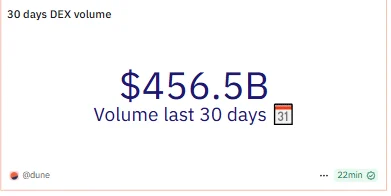
The decentralized finance landscape stands at a critical juncture. While DEX trading volumes have surged to $456.5 billion over the past 30 days, traders continue to face fragmented execution, excessive slippage, and suboptimal routing through legacy aggregators.
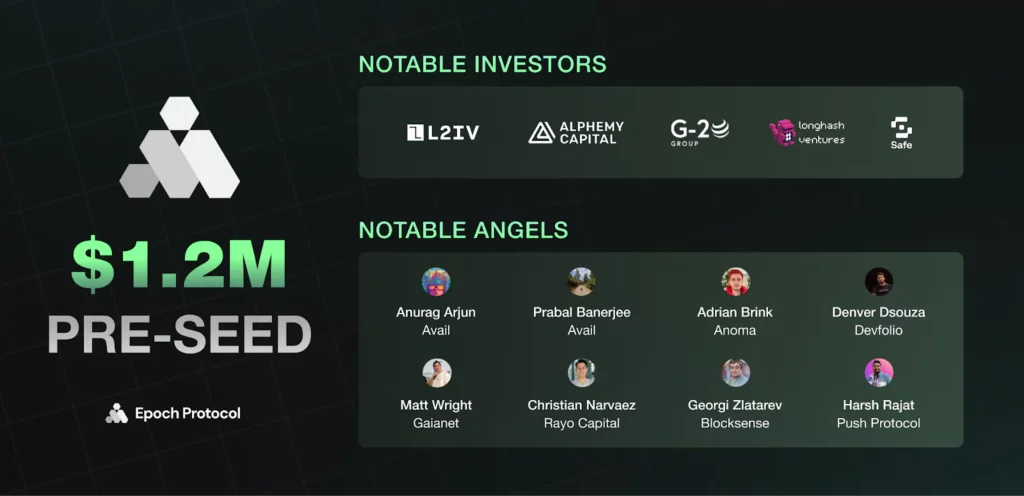
Epoch Protocol’s $1.2 million fundraise led by a number of strategic blockchain VCs including L2Iterative Ventures, Alphemy Capital, G20 Group, Longhash Ventures, SAFE and HadronFC and supported by experienced angels including Anurag Arjun (Avail), Prabal Banerjee (Avail), Adrian Brink (Anoma), Matt Wright (Gaianet), Christian Narvaez (Rayo Capital), Georgi Zlatarev (Blocksense), Harsh Rajat (Push Protocol), Denver Dsouza (Devfolio) and Shubham Bhandari (Manta Network), represents more than capital raising as it signals the industry’s evolution from monolithic, static aggregation to modular, solver-driven coordination that delivers measurably better outcomes for traders.
The Broken Promise of Legacy Aggregators
- Static Architecture, Dynamic Markets
Legacy aggregators, agents, and similar platforms operate on a fundamentally flawed premise:
They use predetermined, static routing algorithms that cannot adapt to rapidly changing market conditions. This one size fits all approach creates significant value leakage for traders.
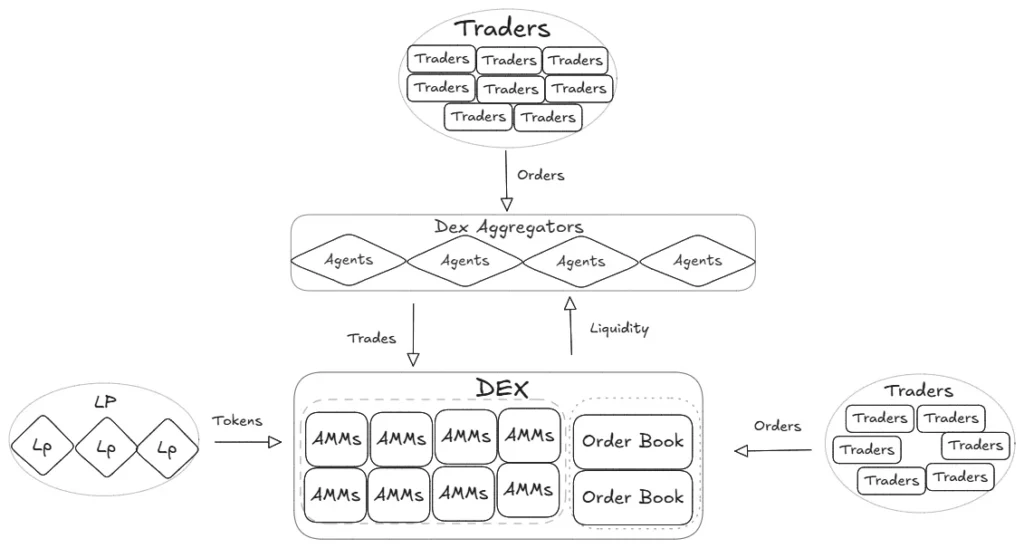
Recent 2025 analysis reveals the extent of this deteriorating problem:
- 53.7% of DEX aggregator swaps now result in negative slippage, meaning traders receive less than the quoted amount a 63% increase from 2021’s 33% baseline
- MEV-related transactions show 87.5% negative slippage rates, demonstrating how sophisticated market participants exploit static routing systems
- Slippage rates of 0.1-0.5% per swap compound across multi-step strategies, creating substantial value erosion with over $3.04 billion in estimated losses across analyzed trades
- The Coordination Problem
Current aggregators suffer from a critical coordination failure. When executing complex strategies,
such as cross-chain swaps or multi-protocol yield strategies, they cannot guarantee atomicity or optimal timing across steps. This results in:
- Execution risk from partial fills and stranded assets
- MEV vulnerability as multi-step transactions become predictable targets
- Gas inefficiency from multiple separate transactions
- Time delays that expose traders to adverse price movements
The numbers underscore this inefficiency: bridging from Ethereum mainnet costs $3-$100 depending on network congestion, while traders face additional slippage on each subsequent swap in their strategy.
Epoch Protocol: The Modular Revolution
- Intent-Centric Architecture
Epoch Protocol fundamentally reimagines trade execution through intent-centric design. Instead of prescriptive transaction sequences, traders express desired outcomes,
Swap 1000 USDC for maximum ETH across any chain while maintaining gas reserves and let the protocol’s solver network find optimal execution paths.
This declarative approach enables several breakthrough capabilities:
- Dynamic Strategy Optimization:
Unlike static aggregators that lock execution paths at submission, Epoch continuously optimizes strategies in real-time.
- Atomic Cross-Chain Execution:
Complex strategies that previously required multiple transactions across different interfaces can now execute atomically. This eliminates execution risk and ensures complete strategy success or complete rollback.
- Conditional Logic Integration:
Traders can embed sophisticated conditions directly into their intents, price thresholds, time windows, or market state requirements, enabling automated execution without constant monitoring.
Technical Architecture: Modular by Design
Epoch’s architecture comprises three interconnected layers that work in concert:
- Sub-Intent Orchestrators (SIOs)
SIOs serve as the governing layer for solver coordination, analyzing user intents and decomposing them into atomic sub-intents. Unlike legacy aggregators’ monolithic routing, SIOs orchestrate multiple specialized solvers to achieve globally optimal solutions.
- Purpose-Specific Intent Solvers
Operating as pluggable modules, these solvers can be dynamically integrated as new strategies emerge.
This modularity means Epoch can leverage cutting edge bridging protocols, yield strategies, or trading venues without protocol upgrades, even mid-transaction if conditions warrant.
- Epoch Hyperions (Observers)
Hyperions continuously monitor on-chain and off-chain conditions, enabling time abstracted execution.
Traders can set precise trigger conditions and trust the protocol to execute automatically when optimal circumstances align.
Instant Cross-Chain Liquidity Innovation
Epoch addresses one of DeFi’s most persistent friction points:
cross-chain settlement delays. Traditional bridging requires waiting for finality confirmation across chains, a process that takes minutes to hours that expose traders to adverse price movements.
Epoch’s Liquidity Pools provide instant cross-chain settlement through solver-backed liquidity provision.
When traders need assets on destination chains, solvers provide them immediately and later claim bridged assets once execution is verified.
This approach eliminates bridging delays and enables true atomic cross-chain strategies.
Superior Execution Quality = Measurable Trader Benefits
- Reduced Slippage:
By orchestrating trades end-to-end and adapting to real-time conditions, Epoch consistently delivers better execution than manual multi-step routing.
- Gas Optimization:
Smart contract wallet integration (ERC-4337) enables transaction bundling that dramatically reduces gas overhead.
- Liquidity Access:
Unified access to liquidity across all major chains and protocols through a single intent, automatically discovering optimal rates and routes while combining multiple sources to minimize slippage.
Enhanced Execution Capabilities
- One-Click Cross-Chain Execution:
Complex strategies spanning multiple chains are executed through single interface interactions.
Swapping USDC on Ethereum for ETH on Arbitrum becomes as simple as a basic swap, no manual bridging, network switching, or multiple approvals required.
- Programmable Automation:
Advanced strategies like TWAP orders, automated rebalancing, or recurring DCA become native capabilities.
Traders specify intent parameters and execution conditions, trusting the protocol to optimize timing and execution.
Market Context and Timing
- DeFi Growth Trajectory
The fundraising timing aligns with explosive DeFi growth metrics:
- Cross-chain activity increased 52% in 2025, reaching a record $56.1 billion in July transaction volumes
- 236 million active DEX traders globally create a massive addressable market
- Real-world assets (RWA) on-chain are projected to reach $50 billion by year-end, demanding more sophisticated execution infrastructure.
- Aggregator Market Dynamics
Current aggregator market share remains volatile and fragmented. Agents’ market share jumped from 32% to 60% after adding Solana support, demonstrating that no single static router can capture evolving opportunities.
This volatility creates openings for architecturally superior solutions like Epoch.
- Technical Infrastructure Maturity
Several technological developments converge to make Epoch’s approach feasible now:
- Account Abstraction (ERC-4337, EIP 7702, ERC 7579) provides non-custodial automation foundations
- Intent Infrastructure has reached sufficient ecosystem complexity to justify abstraction
- Solver Competition ensures competitive execution for user intents through market mechanisms
Competitive Positioning
- Beyond Incremental Improvements
While established aggregators respond to market pressures through incremental updates, adding chains, surface level features, or marginal routing improvements,
Epoch represents fundamental architectural innovation. The protocol isn’t improving existing aggregation; it’s replacing it with coordination.
- The Web3 Operating System
Epoch positions itself as the universal coordination layer for blockchain interactions. Its modular, intent-based architecture can accommodate any token swap, lending operation, or multi-step strategy without requiring protocol-specific integrations.
This operating system approach provides sustainable competitive advantages as DeFi complexity increases.
Epoch Protocol’s $1.2 million private fundraise signals this transition’s beginning, positioning the protocol to capture value as the industry’s orchestration layer.
The future of DeFi trading isn’t about aggregating existing solutions, it’s about coordinating optimal outcomes. Epoch Protocol is building that future.
Experience the Future of DeFi Execution
Ready to move beyond the limitations of legacy aggregators?
Epoch Protocol’s testnet is now live, offering traders and DeFi Users the first opportunity to experience intent-driven, cross-chain coordination in action.
Discover how modular solver architecture, atomic cross-chain execution, and intelligent automation can transform your trading strategies and more.
Test the platform that’s redefining DeFi infrastructure from the ground up.
Try Epoch Protocol Testnet
Join the shift from static aggregation to dynamic coordination. Experience better execution, lower costs, and seamless cross-chain trading today.
To Learn More:
- Website
- Doc
- X
- Telegram


You May Also Like

Why Polymarket Suddenly Turned Bullish On ZEC?

Republicans are weaponizing a backlash against marriage equality

Justice Department has 'gone off the rails' for Trump's 'pretzel logic': analysis


Trending News
More24/7 Live News
MoreQuick Reads
More
