BitcoinWorld Crypto Lending Apps Witness Unprecedented $41.5 Billion Borrowing Surge The world of decentralized finance (DeFi) is buzzing with activity, and a recent milestone highlights its incredible expansion. The total value of assets borrowed from crypto lending apps has officially reached an astonishing all-time high of $41.5 billion. This unprecedented surge, reported by Unfolded, signals a significant shift in how individuals and institutions are interacting with digital assets. This record figure is not just a number; it represents a growing confidence and utility within the DeFi ecosystem. It shows that more people are looking to leverage their cryptocurrency holdings without selling them outright, using these platforms for various financial strategies. What’s Fueling the Phenomenal Rise of Crypto Lending Apps? Several key factors contribute to the explosive growth observed in crypto lending apps. These platforms offer unique advantages that traditional finance often cannot match, drawing in a diverse user base. Attractive Yields: Lenders are drawn by the opportunity to earn higher interest rates on their idle crypto assets compared to traditional savings accounts. Accessibility: DeFi platforms are open to anyone with an internet connection and cryptocurrency, removing many barriers of entry found in traditional banking. Capital Efficiency: Borrowers can access liquidity by using their crypto as collateral, enabling them to pursue other investments or meet short-term financial needs without liquidating their holdings. Innovation: Continuous development in smart contract technology and decentralized protocols makes these platforms more robust and user-friendly. The ability to generate passive income or gain access to capital quickly makes crypto lending apps an appealing option for many crypto holders. How Do Borrowed Assets on Crypto Lending Apps Actually Work? Understanding the mechanics behind these platforms is crucial. When you borrow assets on crypto lending apps, you typically provide other cryptocurrencies as collateral. This collateral ensures that the loan is secured, mitigating risk for the lenders. Here’s a simplified breakdown: Collateral Requirement: Borrowers deposit a certain amount of cryptocurrency (e.g., Ethereum or Bitcoin) into a smart contract as collateral. The value of this collateral usually exceeds the value of the loan. Loan Issuance: Once collateral is provided, borrowers can take out a loan, often in stablecoins like USDC or USDT, or other cryptocurrencies. Interest Rates: Borrowers pay an interest rate, which varies based on supply and demand within the specific lending protocol. These rates can be dynamic. Liquidation Risk: If the value of the collateral falls below a certain threshold relative to the loan, the collateral may be automatically sold to repay the loan. This is a critical risk to understand. This system allows for peer-to-peer lending and borrowing, all managed by transparent and immutable smart contracts on a blockchain. The Benefits and Challenges of Engaging with Crypto Lending Apps While the growth is exciting, it’s important to consider both the upsides and the potential downsides of using crypto lending apps. They offer significant opportunities but also come with inherent risks. Key Benefits: Liquidity: Users can unlock the value of their crypto without selling, maintaining their long-term positions. Income Generation: Lenders earn interest, creating a new stream of passive income from their digital assets. Financial Inclusion: These platforms are globally accessible, providing financial services to underserved populations. Potential Challenges: Smart Contract Risk: Vulnerabilities or bugs in the underlying code can lead to loss of funds. Liquidation Risk: Volatile crypto markets mean collateral values can drop rapidly, leading to automatic liquidations. Regulatory Uncertainty: The regulatory landscape for DeFi is still evolving, which could impact platform operations and user funds. Centralization Risks: While aiming for decentralization, some platforms may still have centralized components that pose risks. Understanding these aspects helps users make informed decisions when interacting with these powerful financial tools. Navigating the Future: Actionable Insights for Crypto Lending Apps Users Given the dynamic nature of the DeFi space, especially with crypto lending apps, adopting a cautious yet informed approach is essential. Here are some actionable insights to consider: Do Your Own Research (DYOR): Thoroughly investigate any platform before committing funds. Look for audits, community reputation, and transparent operations. Understand Terms and Conditions: Be fully aware of interest rates, collateral ratios, liquidation thresholds, and any associated fees. Start Small: Begin with smaller amounts to familiarize yourself with the platform and its processes before committing larger sums. Diversify: Do not put all your assets into a single lending protocol. Spreading your investments can help mitigate risks. Stay Informed: The crypto market moves quickly. Keep up with news, security updates, and regulatory changes that might affect your borrowed assets or collateral. These steps can help users navigate the exciting yet complex world of crypto lending more effectively. The record-breaking $41.5 billion in borrowed assets on crypto lending apps undeniably marks a significant moment for decentralized finance. It underscores the growing utility and demand for alternative financial services built on blockchain technology. While the opportunities for earning and leveraging digital assets are immense, it is crucial for users to approach these platforms with a clear understanding of both their benefits and inherent risks. As the DeFi ecosystem continues to mature, informed participation will be key to unlocking its full potential and ensuring a secure experience for all involved. Frequently Asked Questions (FAQs) Q1: What exactly are crypto lending apps? A1: Crypto lending apps are decentralized finance (DeFi) platforms that allow users to lend out their cryptocurrencies to earn interest or borrow cryptocurrencies by providing other digital assets as collateral, all managed by smart contracts on a blockchain. Q2: How did borrowed assets on crypto lending apps reach $41.5 billion? A2: This record was driven by increasing demand for capital efficiency, attractive yield opportunities for lenders, and the overall growth and adoption of decentralized finance, making it easier for users to access liquidity without selling their crypto. Q3: What are the main benefits of using crypto lending apps? A3: Key benefits include earning passive income on idle crypto, gaining liquidity without selling assets, and accessing financial services globally with fewer traditional barriers. Q4: What are the primary risks associated with crypto lending apps? A4: The main risks involve potential smart contract vulnerabilities, liquidation risk due to crypto market volatility, and evolving regulatory uncertainties that could impact platform operations. Q5: How can I safely participate in crypto lending? A5: To participate safely, it’s essential to conduct thorough research (DYOR) on platforms, understand all terms and conditions, start with smaller amounts, diversify your assets across different protocols, and stay updated on market and security news. We hope this article has provided valuable insights into the burgeoning world of crypto lending apps and the recent surge in borrowed assets. If you found this information helpful, please consider sharing it with your network on social media. Your support helps us continue to deliver timely and relevant crypto news and analysis! To learn more about the latest crypto market trends, explore our article on key developments shaping cryptocurrency institutional adoption. This post Crypto Lending Apps Witness Unprecedented $41.5 Billion Borrowing Surge first appeared on BitcoinWorld.BitcoinWorld Crypto Lending Apps Witness Unprecedented $41.5 Billion Borrowing Surge The world of decentralized finance (DeFi) is buzzing with activity, and a recent milestone highlights its incredible expansion. The total value of assets borrowed from crypto lending apps has officially reached an astonishing all-time high of $41.5 billion. This unprecedented surge, reported by Unfolded, signals a significant shift in how individuals and institutions are interacting with digital assets. This record figure is not just a number; it represents a growing confidence and utility within the DeFi ecosystem. It shows that more people are looking to leverage their cryptocurrency holdings without selling them outright, using these platforms for various financial strategies. What’s Fueling the Phenomenal Rise of Crypto Lending Apps? Several key factors contribute to the explosive growth observed in crypto lending apps. These platforms offer unique advantages that traditional finance often cannot match, drawing in a diverse user base. Attractive Yields: Lenders are drawn by the opportunity to earn higher interest rates on their idle crypto assets compared to traditional savings accounts. Accessibility: DeFi platforms are open to anyone with an internet connection and cryptocurrency, removing many barriers of entry found in traditional banking. Capital Efficiency: Borrowers can access liquidity by using their crypto as collateral, enabling them to pursue other investments or meet short-term financial needs without liquidating their holdings. Innovation: Continuous development in smart contract technology and decentralized protocols makes these platforms more robust and user-friendly. The ability to generate passive income or gain access to capital quickly makes crypto lending apps an appealing option for many crypto holders. How Do Borrowed Assets on Crypto Lending Apps Actually Work? Understanding the mechanics behind these platforms is crucial. When you borrow assets on crypto lending apps, you typically provide other cryptocurrencies as collateral. This collateral ensures that the loan is secured, mitigating risk for the lenders. Here’s a simplified breakdown: Collateral Requirement: Borrowers deposit a certain amount of cryptocurrency (e.g., Ethereum or Bitcoin) into a smart contract as collateral. The value of this collateral usually exceeds the value of the loan. Loan Issuance: Once collateral is provided, borrowers can take out a loan, often in stablecoins like USDC or USDT, or other cryptocurrencies. Interest Rates: Borrowers pay an interest rate, which varies based on supply and demand within the specific lending protocol. These rates can be dynamic. Liquidation Risk: If the value of the collateral falls below a certain threshold relative to the loan, the collateral may be automatically sold to repay the loan. This is a critical risk to understand. This system allows for peer-to-peer lending and borrowing, all managed by transparent and immutable smart contracts on a blockchain. The Benefits and Challenges of Engaging with Crypto Lending Apps While the growth is exciting, it’s important to consider both the upsides and the potential downsides of using crypto lending apps. They offer significant opportunities but also come with inherent risks. Key Benefits: Liquidity: Users can unlock the value of their crypto without selling, maintaining their long-term positions. Income Generation: Lenders earn interest, creating a new stream of passive income from their digital assets. Financial Inclusion: These platforms are globally accessible, providing financial services to underserved populations. Potential Challenges: Smart Contract Risk: Vulnerabilities or bugs in the underlying code can lead to loss of funds. Liquidation Risk: Volatile crypto markets mean collateral values can drop rapidly, leading to automatic liquidations. Regulatory Uncertainty: The regulatory landscape for DeFi is still evolving, which could impact platform operations and user funds. Centralization Risks: While aiming for decentralization, some platforms may still have centralized components that pose risks. Understanding these aspects helps users make informed decisions when interacting with these powerful financial tools. Navigating the Future: Actionable Insights for Crypto Lending Apps Users Given the dynamic nature of the DeFi space, especially with crypto lending apps, adopting a cautious yet informed approach is essential. Here are some actionable insights to consider: Do Your Own Research (DYOR): Thoroughly investigate any platform before committing funds. Look for audits, community reputation, and transparent operations. Understand Terms and Conditions: Be fully aware of interest rates, collateral ratios, liquidation thresholds, and any associated fees. Start Small: Begin with smaller amounts to familiarize yourself with the platform and its processes before committing larger sums. Diversify: Do not put all your assets into a single lending protocol. Spreading your investments can help mitigate risks. Stay Informed: The crypto market moves quickly. Keep up with news, security updates, and regulatory changes that might affect your borrowed assets or collateral. These steps can help users navigate the exciting yet complex world of crypto lending more effectively. The record-breaking $41.5 billion in borrowed assets on crypto lending apps undeniably marks a significant moment for decentralized finance. It underscores the growing utility and demand for alternative financial services built on blockchain technology. While the opportunities for earning and leveraging digital assets are immense, it is crucial for users to approach these platforms with a clear understanding of both their benefits and inherent risks. As the DeFi ecosystem continues to mature, informed participation will be key to unlocking its full potential and ensuring a secure experience for all involved. Frequently Asked Questions (FAQs) Q1: What exactly are crypto lending apps? A1: Crypto lending apps are decentralized finance (DeFi) platforms that allow users to lend out their cryptocurrencies to earn interest or borrow cryptocurrencies by providing other digital assets as collateral, all managed by smart contracts on a blockchain. Q2: How did borrowed assets on crypto lending apps reach $41.5 billion? A2: This record was driven by increasing demand for capital efficiency, attractive yield opportunities for lenders, and the overall growth and adoption of decentralized finance, making it easier for users to access liquidity without selling their crypto. Q3: What are the main benefits of using crypto lending apps? A3: Key benefits include earning passive income on idle crypto, gaining liquidity without selling assets, and accessing financial services globally with fewer traditional barriers. Q4: What are the primary risks associated with crypto lending apps? A4: The main risks involve potential smart contract vulnerabilities, liquidation risk due to crypto market volatility, and evolving regulatory uncertainties that could impact platform operations. Q5: How can I safely participate in crypto lending? A5: To participate safely, it’s essential to conduct thorough research (DYOR) on platforms, understand all terms and conditions, start with smaller amounts, diversify your assets across different protocols, and stay updated on market and security news. We hope this article has provided valuable insights into the burgeoning world of crypto lending apps and the recent surge in borrowed assets. If you found this information helpful, please consider sharing it with your network on social media. Your support helps us continue to deliver timely and relevant crypto news and analysis! To learn more about the latest crypto market trends, explore our article on key developments shaping cryptocurrency institutional adoption. This post Crypto Lending Apps Witness Unprecedented $41.5 Billion Borrowing Surge first appeared on BitcoinWorld.


Crypto Lending Apps Witness Unprecedented $41.5 Billion Borrowing Surge

6 min read

BitcoinWorld

Crypto Lending Apps Witness Unprecedented $41.5 Billion Borrowing Surge

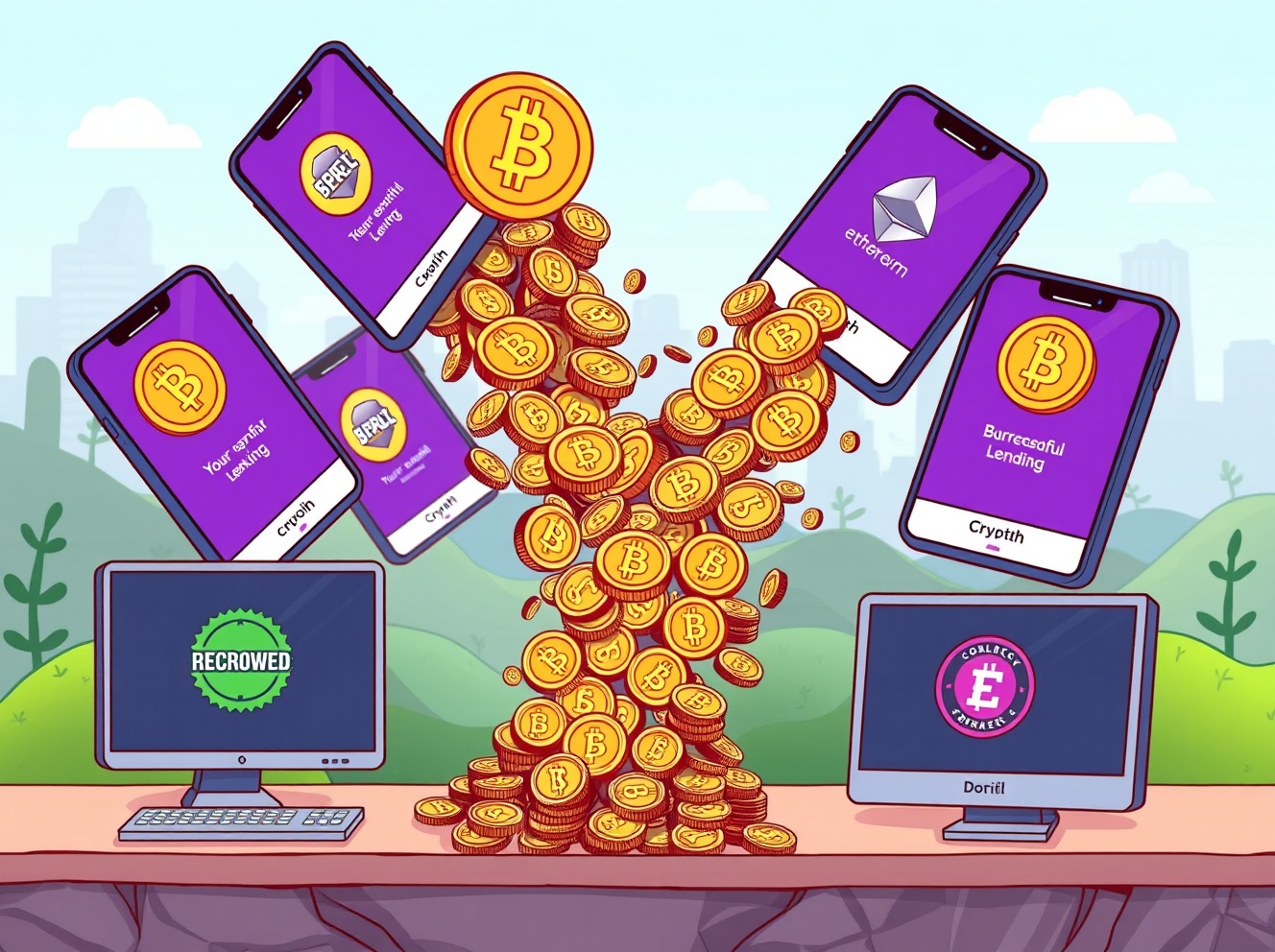
The world of decentralized finance (DeFi) is buzzing with activity, and a recent milestone highlights its incredible expansion. The total value of assets borrowed from crypto lending apps has officially reached an astonishing all-time high of $41.5 billion. This unprecedented surge, reported by Unfolded, signals a significant shift in how individuals and institutions are interacting with digital assets.

This record figure is not just a number; it represents a growing confidence and utility within the DeFi ecosystem. It shows that more people are looking to leverage their cryptocurrency holdings without selling them outright, using these platforms for various financial strategies.

What’s Fueling the Phenomenal Rise of Crypto Lending Apps?

Several key factors contribute to the explosive growth observed in crypto lending apps. These platforms offer unique advantages that traditional finance often cannot match, drawing in a diverse user base.

  • Attractive Yields: Lenders are drawn by the opportunity to earn higher interest rates on their idle crypto assets compared to traditional savings accounts.
  • Accessibility: DeFi platforms are open to anyone with an internet connection and cryptocurrency, removing many barriers of entry found in traditional banking.
  • Capital Efficiency: Borrowers can access liquidity by using their crypto as collateral, enabling them to pursue other investments or meet short-term financial needs without liquidating their holdings.
  • Innovation: Continuous development in smart contract technology and decentralized protocols makes these platforms more robust and user-friendly.

The ability to generate passive income or gain access to capital quickly makes crypto lending apps an appealing option for many crypto holders.

How Do Borrowed Assets on Crypto Lending Apps Actually Work?

Understanding the mechanics behind these platforms is crucial. When you borrow assets on crypto lending apps, you typically provide other cryptocurrencies as collateral. This collateral ensures that the loan is secured, mitigating risk for the lenders.

Here’s a simplified breakdown:

  • Collateral Requirement: Borrowers deposit a certain amount of cryptocurrency (e.g., Ethereum or Bitcoin) into a smart contract as collateral. The value of this collateral usually exceeds the value of the loan.
  • Loan Issuance: Once collateral is provided, borrowers can take out a loan, often in stablecoins like USDC or USDT, or other cryptocurrencies.
  • Interest Rates: Borrowers pay an interest rate, which varies based on supply and demand within the specific lending protocol. These rates can be dynamic.
  • Liquidation Risk: If the value of the collateral falls below a certain threshold relative to the loan, the collateral may be automatically sold to repay the loan. This is a critical risk to understand.

This system allows for peer-to-peer lending and borrowing, all managed by transparent and immutable smart contracts on a blockchain.

The Benefits and Challenges of Engaging with Crypto Lending Apps

While the growth is exciting, it’s important to consider both the upsides and the potential downsides of using crypto lending apps. They offer significant opportunities but also come with inherent risks.

Key Benefits:

  • Liquidity: Users can unlock the value of their crypto without selling, maintaining their long-term positions.
  • Income Generation: Lenders earn interest, creating a new stream of passive income from their digital assets.
  • Financial Inclusion: These platforms are globally accessible, providing financial services to underserved populations.

Potential Challenges:

  • Smart Contract Risk: Vulnerabilities or bugs in the underlying code can lead to loss of funds.
  • Liquidation Risk: Volatile crypto markets mean collateral values can drop rapidly, leading to automatic liquidations.
  • Regulatory Uncertainty: The regulatory landscape for DeFi is still evolving, which could impact platform operations and user funds.
  • Centralization Risks: While aiming for decentralization, some platforms may still have centralized components that pose risks.

Understanding these aspects helps users make informed decisions when interacting with these powerful financial tools.

Given the dynamic nature of the DeFi space, especially with crypto lending apps, adopting a cautious yet informed approach is essential. Here are some actionable insights to consider:

  • Do Your Own Research (DYOR): Thoroughly investigate any platform before committing funds. Look for audits, community reputation, and transparent operations.
  • Understand Terms and Conditions: Be fully aware of interest rates, collateral ratios, liquidation thresholds, and any associated fees.
  • Start Small: Begin with smaller amounts to familiarize yourself with the platform and its processes before committing larger sums.
  • Diversify: Do not put all your assets into a single lending protocol. Spreading your investments can help mitigate risks.
  • Stay Informed: The crypto market moves quickly. Keep up with news, security updates, and regulatory changes that might affect your borrowed assets or collateral.

These steps can help users navigate the exciting yet complex world of crypto lending more effectively.

The record-breaking $41.5 billion in borrowed assets on crypto lending apps undeniably marks a significant moment for decentralized finance. It underscores the growing utility and demand for alternative financial services built on blockchain technology. While the opportunities for earning and leveraging digital assets are immense, it is crucial for users to approach these platforms with a clear understanding of both their benefits and inherent risks. As the DeFi ecosystem continues to mature, informed participation will be key to unlocking its full potential and ensuring a secure experience for all involved.

Frequently Asked Questions (FAQs)

Q1: What exactly are crypto lending apps?
A1: Crypto lending apps are decentralized finance (DeFi) platforms that allow users to lend out their cryptocurrencies to earn interest or borrow cryptocurrencies by providing other digital assets as collateral, all managed by smart contracts on a blockchain.

Q2: How did borrowed assets on crypto lending apps reach $41.5 billion?
A2: This record was driven by increasing demand for capital efficiency, attractive yield opportunities for lenders, and the overall growth and adoption of decentralized finance, making it easier for users to access liquidity without selling their crypto.

Q3: What are the main benefits of using crypto lending apps?
A3: Key benefits include earning passive income on idle crypto, gaining liquidity without selling assets, and accessing financial services globally with fewer traditional barriers.

Q4: What are the primary risks associated with crypto lending apps?
A4: The main risks involve potential smart contract vulnerabilities, liquidation risk due to crypto market volatility, and evolving regulatory uncertainties that could impact platform operations.

Q5: How can I safely participate in crypto lending?
A5: To participate safely, it’s essential to conduct thorough research (DYOR) on platforms, understand all terms and conditions, start with smaller amounts, diversify your assets across different protocols, and stay updated on market and security news.

We hope this article has provided valuable insights into the burgeoning world of crypto lending apps and the recent surge in borrowed assets. If you found this information helpful, please consider sharing it with your network on social media. Your support helps us continue to deliver timely and relevant crypto news and analysis!

To learn more about the latest crypto market trends, explore our article on key developments shaping cryptocurrency institutional adoption.

This post Crypto Lending Apps Witness Unprecedented $41.5 Billion Borrowing Surge first appeared on BitcoinWorld.

Market Opportunity
Gravity Logo
Gravity Price(G)
$0.003642
$0.003642$0.003642
-3.77%
USD
Gravity (G) Live Price Chart
Disclaimer: The articles reposted on this site are sourced from public platforms and are provided for informational purposes only. They do not necessarily reflect the views of MEXC. All rights remain with the original authors. If you believe any content infringes on third-party rights, please contact [email protected] for removal. MEXC makes no guarantees regarding the accuracy, completeness, or timeliness of the content and is not responsible for any actions taken based on the information provided. The content does not constitute financial, legal, or other professional advice, nor should it be considered a recommendation or endorsement by MEXC.

You May Also Like

Woman shot 5 times by DHS to stare down Trump at State of the Union address

Woman shot 5 times by DHS to stare down Trump at State of the Union address

A House Democrat has invited Marimar Martinez to attend President Donald Trump's State of the Union address in Washington, D.C., after she was shot by Customs and
Share
Rawstory2026/02/06 03:36
CEO Sandeep Nailwal Shared Highlights About RWA on Polygon

CEO Sandeep Nailwal Shared Highlights About RWA on Polygon

The post CEO Sandeep Nailwal Shared Highlights About RWA on Polygon appeared on BitcoinEthereumNews.com. Polygon CEO Sandeep Nailwal highlighted Polygon’s lead in global bonds, Spiko US T-Bill, and Spiko Euro T-Bill. Polygon published an X post to share that its roadmap to GigaGas was still scaling. Sentiments around POL price were last seen to be bearish. Polygon CEO Sandeep Nailwal shared key pointers from the Dune and RWA.xyz report. These pertain to highlights about RWA on Polygon. Simultaneously, Polygon underlined its roadmap towards GigaGas. Sentiments around POL price were last seen fumbling under bearish emotions. Polygon CEO Sandeep Nailwal on Polygon RWA CEO Sandeep Nailwal highlighted three key points from the Dune and RWA.xyz report. The Chief Executive of Polygon maintained that Polygon PoS was hosting RWA TVL worth $1.13 billion across 269 assets plus 2,900 holders. Nailwal confirmed from the report that RWA was happening on Polygon. The Dune and https://t.co/W6WSFlHoQF report on RWA is out and it shows that RWA is happening on Polygon. Here are a few highlights: – Leading in Global Bonds: Polygon holds 62% share of tokenized global bonds (driven by Spiko’s euro MMF and Cashlink euro issues) – Spiko U.S.… — Sandeep | CEO, Polygon Foundation (※,※) (@sandeepnailwal) September 17, 2025 The X post published by Polygon CEO Sandeep Nailwal underlined that the ecosystem was leading in global bonds by holding a 62% share of tokenized global bonds. He further highlighted that Polygon was leading with Spiko US T-Bill at approximately 29% share of TVL along with Ethereum, adding that the ecosystem had more than 50% share in the number of holders. Finally, Sandeep highlighted from the report that there was a strong adoption for Spiko Euro T-Bill with 38% share of TVL. He added that 68% of returns were on Polygon across all the chains. Polygon Roadmap to GigaGas In a different update from Polygon, the community…
Share
BitcoinEthereumNews2025/09/18 01:10
WLFI Drops 20% Weekly as Price Tests the Crucial $0.113 Support

WLFI Drops 20% Weekly as Price Tests the Crucial $0.113 Support

On Thursday, February 5, World Liberty Financial (WLFI) is continuing its decline and is trading at $0.1281, decreased by 5.89% in the past day. The token has lost
Share
Tronweekly2026/02/06 03:00