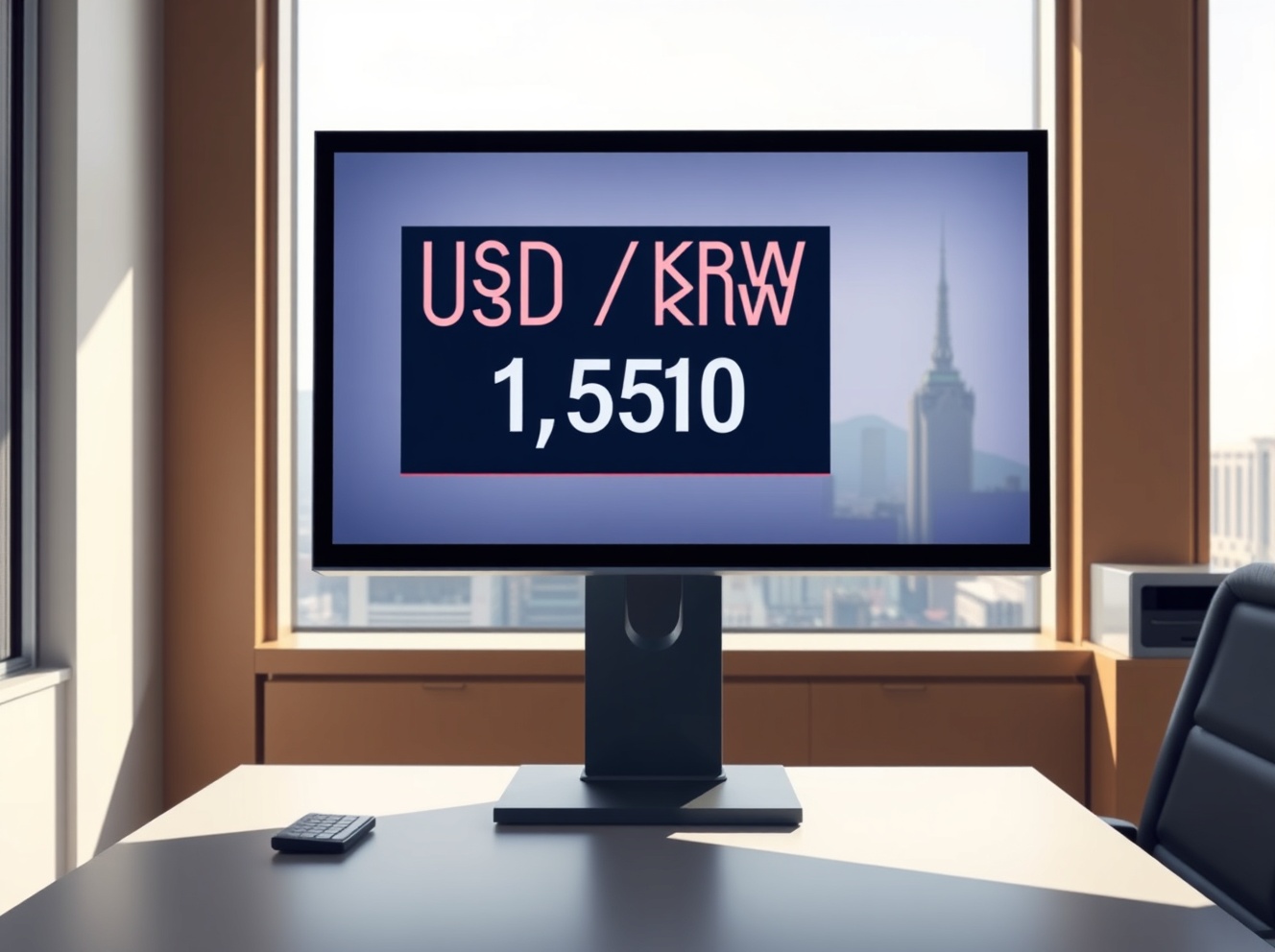
BitcoinWorld Won-Dollar Exchange Rate Soars Past 1,510, Reaching Staggering 17-Year High The South Korean won has plunged to its weakest level in over 17 yearsBitcoinWorld Won-Dollar Exchange Rate Soars Past 1,510, Reaching Staggering 17-Year High The South Korean won has plunged to its weakest level in over 17 years

Won-Dollar Exchange Rate Soars Past 1,510, Reaching Staggering 17-Year High

2026/03/23 09:15
6 min read
For feedback or concerns regarding this content, please contact us at [email protected]

BitcoinWorld
BitcoinWorld
Won-Dollar Exchange Rate Soars Past 1,510, Reaching Staggering 17-Year High

The South Korean won has plunged to its weakest level in over 17 years against the U.S. dollar, with the exchange rate breaking through the psychologically significant 1,510 barrier in Seoul trading today. This dramatic movement represents the highest won-dollar rate since the global financial crisis of 2008, signaling profound shifts in international currency markets and raising immediate concerns about inflationary pressures on Asia’s fourth-largest economy.

Won-Dollar Exchange Rate Reaches Critical Threshold

Financial markets witnessed the USD/KRW pair surge past 1,510 during morning trading on Thursday, marking a decisive breach of technical resistance levels that had held for months. Consequently, this development represents the currency’s weakest position since July 2008, when global markets faced unprecedented turmoil. The Bank of Korea immediately responded by monitoring the situation closely, though officials have not yet announced any direct intervention measures.

Several key factors are driving this significant depreciation. Primarily, the widening interest rate differential between the United States and South Korea continues to exert substantial pressure. The Federal Reserve maintains a hawkish monetary policy stance, while the Bank of Korea faces conflicting pressures between controlling inflation and supporting economic growth. Additionally, global risk aversion has prompted capital outflows from emerging markets, including South Korea.

The immediate market impacts include:

  • Increased import costs for energy and raw materials
  • Higher dollar-denominated debt servicing for Korean corporations
  • Potential boost for export-oriented industries like semiconductors and automobiles
  • Mounting pressure on the Bank of Korea’s monetary policy decisions

Historical Context and Economic Implications

To understand the current situation, we must examine historical exchange rate patterns. The won-dollar rate previously approached similar levels during three major crises: the Asian Financial Crisis of 1997-1998, the Global Financial Crisis of 2008, and the COVID-19 market panic of March 2020. However, the current depreciation differs fundamentally because it occurs amid relatively stable global financial conditions rather than during an acute crisis period.

Historical Won-Dollar Rate Peaks
Period Peak Exchange Rate Primary Driver
December 1997 1,965 Asian Financial Crisis
March 2009 1,570 Global Financial Crisis
March 2020 1,280 COVID-19 Pandemic
Current (2025) 1,510+ Monetary Policy Divergence

This sustained weakness presents complex challenges for policymakers. On one hand, a weaker won benefits major exporters like Samsung Electronics and Hyundai Motor Company by making their products more competitive internationally. On the other hand, South Korea imports nearly all its energy requirements, meaning higher fuel costs will inevitably translate into increased consumer prices across the economy.

Expert Analysis of Market Dynamics

Financial analysts point to structural factors behind the currency’s persistent decline. The United States maintains substantially higher benchmark interest rates compared to South Korea, creating powerful incentives for capital to flow toward dollar-denominated assets. Furthermore, geopolitical tensions in the region have occasionally increased risk premiums for Korean assets. Meanwhile, China’s economic slowdown continues to affect regional trade patterns and investment flows.

Market participants are closely watching several indicators. The currency’s volatility index has increased significantly in recent weeks. Additionally, forward contracts suggest traders expect further depreciation pressure in the coming months. Foreign exchange reserves data from the Bank of Korea will provide crucial insights into potential intervention capabilities. The central bank has previously demonstrated willingness to stabilize the currency during periods of excessive volatility.

Sector-Specific Impacts and Corporate Responses

Different economic sectors experience contrasting effects from the currency depreciation. Export-oriented industries generally benefit from improved price competitiveness in global markets. The technology sector, particularly semiconductor manufacturers, stands to gain substantially as most of their revenues come from overseas sales. Conversely, industries reliant on imported materials face mounting cost pressures that could squeeze profit margins.

Major Korean corporations have implemented various hedging strategies. Many companies increased their foreign exchange hedging activities throughout 2024 in anticipation of continued volatility. Some firms are accelerating plans to shift production overseas to mitigate currency risk. Meanwhile, small and medium enterprises with limited hedging capabilities face particularly severe challenges from rising import costs.

Key economic indicators to monitor include:

  • Monthly trade balance figures
  • Consumer price inflation data
  • Foreign portfolio investment flows
  • Corporate foreign debt levels
  • Central bank policy meeting outcomes

Global Currency Trends and Comparative Analysis

The won’s depreciation forms part of broader Asian currency weakness against the resurgent U.S. dollar. The Japanese yen has also reached multi-decade lows, while the Chinese yuan faces sustained pressure. This regional pattern suggests systemic factors rather than Korea-specific issues. However, the won has underperformed several regional peers in recent months, indicating additional domestic considerations.

International monetary authorities are monitoring these developments carefully. The International Monetary Fund recently noted that emerging market currencies face continued pressure from global monetary policy normalization. Meanwhile, bilateral trade discussions between South Korea and the United States may address currency concerns indirectly through broader economic cooperation frameworks. The upcoming G20 finance ministers meeting will likely discuss coordinated approaches to currency stability.

Conclusion

The won-dollar exchange rate surpassing 1,510 represents a significant milestone with far-reaching economic implications. This 17-year high reflects complex interactions between monetary policies, global capital flows, and regional economic dynamics. While export sectors may benefit temporarily, broader inflationary pressures and financial stability concerns present substantial challenges for policymakers. Market participants should prepare for continued volatility as the Bank of Korea balances multiple competing priorities in its response to this dramatic currency movement.

FAQs

Q1: What does a won-dollar exchange rate of 1,510 mean for ordinary Koreans?
This exchange rate means it takes 1,510 won to purchase one U.S. dollar. For consumers, this typically translates to higher prices for imported goods including gasoline, food items, and foreign products. Travel abroad becomes more expensive, while foreign online purchases cost more in local currency terms.

Q2: Why is the Korean won depreciating against the U.S. dollar?
The primary drivers include interest rate differentials (higher U.S. rates attract capital), global risk aversion favoring safe-haven currencies like the dollar, South Korea’s trade balance fluctuations, and broader emerging market currency weakness. Structural factors like monetary policy divergence between the Fed and Bank of Korea also contribute significantly.

Q3: How does a weaker won affect South Korea’s exports and imports?
A weaker won makes Korean exports cheaper and more competitive in international markets, potentially boosting sales for companies like Samsung and Hyundai. Conversely, imports become more expensive, increasing costs for businesses that rely on foreign raw materials and for consumers purchasing imported goods.

Q4: What can the Bank of Korea do to stabilize the currency?
The central bank has several tools including direct intervention in foreign exchange markets (buying won with dollar reserves), adjusting interest rates, implementing capital flow measures, and providing forward guidance. However, sustained intervention faces practical limits due to finite foreign exchange reserves.

Q5: How does this exchange rate compare to historical levels?
The current rate above 1,510 represents the highest level since 2008 during the global financial crisis. The all-time high occurred in December 1997 during the Asian Financial Crisis when the rate approached 2,000. The average exchange rate over the past decade has been approximately 1,150 won per dollar.

This post Won-Dollar Exchange Rate Soars Past 1,510, Reaching Staggering 17-Year High first appeared on BitcoinWorld.


Market Opportunity
Ucan fix life in1day Logo
Ucan fix life in1day Price(1)
$0.000368
$0.000368$0.000368
-0.67%
USD
Ucan fix life in1day (1) Live Price Chart
Disclaimer: The articles reposted on this site are sourced from public platforms and are provided for informational purposes only. They do not necessarily reflect the views of MEXC. All rights remain with the original authors. If you believe any content infringes on third-party rights, please contact [email protected] for removal. MEXC makes no guarantees regarding the accuracy, completeness, or timeliness of the content and is not responsible for any actions taken based on the information provided. The content does not constitute financial, legal, or other professional advice, nor should it be considered a recommendation or endorsement by MEXC.

You May Also Like

Facts Vs. Hype: Analyst Examines XRP Supply Shock Theory

Facts Vs. Hype: Analyst Examines XRP Supply Shock Theory

Prominent analyst Cheeky Crypto (203,000 followers on YouTube) set out to verify a fast-spreading claim that XRP’s circulating supply could “vanish overnight,” and his conclusion is more nuanced than the headline suggests: nothing in the ledger disappears, but the amount of XRP that is truly liquid could be far smaller than most dashboards imply—small enough, in his view, to set the stage for an abrupt liquidity squeeze if demand spikes. XRP Supply Shock? The video opens with the host acknowledging his own skepticism—“I woke up to a rumor that XRP supply could vanish overnight. Sounds crazy, right?”—before committing to test the thesis rather than dismiss it. He frames the exercise as an attempt to reconcile a long-standing critique (“XRP’s supply is too large for high prices”) with a rival view taking hold among prominent community voices: that much of the supply counted as “circulating” is effectively unavailable to trade. His first step is a straightforward data check. Pulling public figures, he finds CoinMarketCap showing roughly 59.6 billion XRP as circulating, while XRPScan reports about 64.7 billion. The divergence prompts what becomes the video’s key methodological point: different sources count “circulating” differently. Related Reading: Analyst Sounds Major XRP Warning: Last Chance To Get In As Accumulation Balloons As he explains it, the higher on-ledger number likely includes balances that aggregators exclude or treat as restricted, most notably Ripple’s programmatic escrow. He highlights that Ripple still “holds a chunk of XRP in escrow, about 35.3 billion XRP locked up across multiple wallets, with a nominal schedule of up to 1 billion released per month and unused portions commonly re-escrowed. Those coins exist and are accounted for on-ledger, but “they aren’t actually sitting on exchanges” and are not immediately available to buyers. In his words, “for all intents and purposes, that escrow stash is effectively off of the market.” From there, the analysis moves from headline “circulating supply” to the subtler concept of effective float. Beyond escrow, he argues that large strategic holders—banks, fintechs, or other whales—may sit on material balances without supplying order books. When you strip out escrow and these non-selling stashes, he says, “the effective circulating supply… is actually way smaller than the 59 or even 64 billion figure.” He cites community estimates in the “20 or 30 billion” range for what might be truly liquid at any given moment, while emphasizing that nobody has a precise number. That effective-float framing underpins the crux of his thesis: a potential supply shock if demand accelerates faster than fresh sell-side supply appears. “Price is a dance between supply and demand,” he says; if institutional or sovereign-scale users suddenly need XRP and “the market finds that there isn’t enough XRP readily available,” order books could thin out and prices could “shoot on up, sometimes violently.” His phrase “circulating supply could collapse overnight” is presented not as a claim that tokens are destroyed or removed from the ledger, but as a market-structure scenario in which available inventory to sell dries up quickly because holders won’t part with it. How Could The XRP Supply Shock Happen? On the demand side, he anchors the hypothetical to tokenization. He points to the “very early stages of something huge in finance”—on-chain tokenization of debt, stablecoins, CBDCs and even gold—and argues the XRP Ledger aims to be “the settlement layer” for those assets.He references Ripple CTO David Schwartz’s earlier comments about an XRPL pivot toward tokenized assets and notes that an institutional research shop (Bitwise) has framed XRP as a way to play the tokenization theme. In his construction, if “trillions of dollars in value” begin settling across XRPL rails, working inventories of XRP for bridging, liquidity and settlement could rise sharply, tightening effective float. Related Reading: XRP Bearish Signal: Whales Offload $486 Million In Asset To illustrate, he offers two analogies. First, the “concert tickets” model: you think there are 100,000 tickets (100B supply), but 50,000 are held by the promoter (escrow) and 30,000 by corporate buyers (whales), leaving only 20,000 for the public; if a million people want in, prices explode. Second, a comparison to Bitcoin’s halving: while XRP has no programmatic halving, he proposes that a sudden adoption wave could function like a de facto halving of available supply—“XRP’s version of a halving could actually be the adoption event.” He also updates the narrative context that long dogged XRP. Once derided for “too much supply,” he argues the script has “totally flipped.” He cites the current cycle’s optics—“XRP is sitting above $3 with a market cap north of around $180 billion”—as evidence that raw supply counts did not cap price as tightly as critics claimed, and as a backdrop for why a scarcity narrative is gaining traction. Still, he declines to publish targets or timelines, repeatedly stressing uncertainty and risk. “I’m not a financial adviser… cryptocurrencies are highly volatile,” he reminds viewers, adding that tokenization could take off “on some other platform,” unfold more slowly than enthusiasts expect, or fail to get to “sudden shock” scale. The verdict he offers is deliberately bound. The theory that “XRP supply could vanish overnight” is imprecise on its face; the ledger will not erase coins. But after examining dashboard methodologies, escrow mechanics and the behavior of large holders, he concludes that the effective float could be meaningfully smaller than headline supply figures, and that a fast-developing tokenization use case could, under the right conditions, stress that float. “Overnight is a dramatic way to put it,” he concedes. “The change could actually be very sudden when it comes.” At press time, XRP traded at $3.0198. Featured image created with DALL.E, chart from TradingView.com
Share
NewsBTC2025/09/18 11:00
Shiba Inu Leader Breaks Silence on $2.4M Shibarium Exploit, Confirms Active Recovery

Shiba Inu Leader Breaks Silence on $2.4M Shibarium Exploit, Confirms Active Recovery

The lead developer of Shiba Inu, Shytoshi Kusama, has publicly addressed the Shibarium bridge exploit that occurred recently, draining $2.4 million from the network. After days of speculation about his involvement in managing the crisis, the project leader broke his silence.Kusama emphasized that a special ”war room” has been set up to restore stolen finances and enhance network security. The statement is his first official words since the bridge compromise occurred.”Although I am focusing on AI initiatives to benefit all our tokens, I remain with the developers and leadership in the war room,” Kusama posted on social media platform X. He dismissed claims that he had distanced himself from the project as ”utterly preposterous.”The developer said that the reason behind his silence at first was strategic. Before he could make any statements publicly, he must have taken time to evaluate what he termed a complex and deep situation properly. Kusama also vowed to provide further updates in the official Shiba Inu channels as the team comes up with long-term solutions.Attack Details and Immediate ResponseAs highlighted in our previous article, targeted Shibarium's bridge infrastructure through a sophisticated attack vector. Hackers gained unauthorized access to validator signing keys, compromising the network's security framework.The hackers executed a flash loan to acquire 4.6 million BONE ShibaSwap tokens. The validator power on the network was majority held by them after this purchase. They were able to transfer assets out of Shibarium with this control.The response of Shibarium developers was timely to limit the breach. They instantly halted all validator functions in order to avoid additional exploitation. The team proceeded to deposit the assets under staking in a multisig hardware wallet that is secure.External security companies were involved in the investigation effort. Hexens, Seal 911, and PeckShield are collaborating with internal developers to examine the attack and discover vulnerabilities.The project's key concerns are network stability and the protection of user funds, as underlined by the lead developer, Dhairya. The team is working around the clock to restore normal operations.In an effort to recover the funds, Shiba Inu has offered a bounty worth 5 Ether ($23,000) to the hackers. The bounty offer includes a 30-day deadline with decreasing rewards after seven days.Market Impact and Recovery IncentivesThe exploit caused serious volatility in the marketplace of Shiba Inu ecosystem tokens. SHIB dropped about 6% after the news of the attack. However, The token has bounced back and is currently trading at around $0.00001298 at the time of writing.SHIB Price Source CoinMarketCap
Share
Coinstats2025/09/18 02:25
BlackRock and Marvel Studios Acquire Big Stakes in Mutual Capital

BlackRock and Marvel Studios Acquire Big Stakes in Mutual Capital

BlackRock and Marvel Studios acquire major stakes in Mutual Capital, boosting its role as a leader in asset tokenization.]]>
Share
Crypto News Flash2025/09/18 17:10