

Balancer Labs Shuts Down After Hack and Revenue Strain
Balancer Labs, the company behind one of DeFi’s earliest automated market makers, is shutting down as a corporate entity after a devastating $128 million exploit and a prolonged collapse in protocol revenue left the organization unsustainable.
Hack Impact
~$128M
Drained in the November 2025 Balancer v2 exploit, the protocol’s third known security breach.
Balancer Labs Confirms Shutdown Plans
Co-founder Fernando Martinelli announced the wind-down in a DAO governance post titled “On the Future of Balancer: Shutting Down Balancer Labs, Supporting the Path Forward.” The post framed the corporate entity as a burden the protocol can no longer carry.
“BLabs, as a corporate entity, has become a liability rather than an asset to the protocol’s future and is just not sustainable as is without any sources of revenue,” Martinelli wrote.
The Balancer protocol itself will not go offline. Smart contracts remain deployed, and liquidity providers can continue to withdraw funds. The protocol will transition to a fully DAO-governed model, with a new entity called Balancer OpCo absorbing essential staff, pending a governance vote.
Martinelli said he will have no formal role after the wind-down is complete, though he offered to serve in an advisory capacity. The move comes as other DeFi projects face similar questions about the role of corporate entities in decentralized protocols and what legal structures best protect contributors.
A $128 Million Hack and Collapsing TVL Forced the Decision
The immediate trigger was a November 2025 exploit targeting Balancer v2 stable pools. Attackers exploited a pricing rounding inconsistency in swap calculations, draining osETH, WETH, and wstETH across six blockchains in roughly 30 minutes. The hack was the protocol’s third known security breach.
Sources disagree on the exact amount stolen. CoinDesk reports $110 million, while Decrypt and Yahoo Finance cite $128 million. No public information confirms whether any funds were recovered.
The exploit “created real and ongoing legal exposure” for the corporate entity, Martinelli stated. Brian Wong of BlockSec noted the incident produced “three lasting pressures: unrecovered funds, ongoing legal and operational exposure, and a significant erosion of user trust.”
But the hack alone did not kill BLabs. The protocol’s revenue base had been eroding for years. Total value locked fell roughly 95% from a peak of approximately $3.5 billion in late 2021 to around $157 million today. With fees tied directly to TVL, the company had no viable income stream.
Protocol Decline
−95%
Drop in Balancer’s Total Value Locked from its $3.5B peak, gutting the fee revenue the protocol depended on.
Dominick John of Zeus Research called the shutdown an exposure of “structural failure in how Balancer capitulated to a broken model where emissions faded, governance weakened, value capture stayed shallow.” Martinelli himself described the veBAL system as a “circular bribe economy that costs more than it generates,” a critique that extends well beyond Balancer to broader questions about DeFi sustainability.
What BAL Holders and Liquidity Providers Should Know
BAL is currently trading at approximately $0.15, with a market cap of around $10 million. The token has fallen 99.79% from its all-time high of $74.45, reached in May 2021. The broader crypto market sentiment sits at 11 on the Fear & Greed Index, indicating extreme fear.
Liquidity provider funds remain accessible. The Balancer protocol’s smart contracts are immutable and will continue to function under DAO governance. This is not a rug pull; it is a corporate dissolution.
Several governance changes are planned. BAL token emissions will be cut to zero, and the veBAL governance model will be wound down. Protocol fees will be redirected entirely to the DAO treasury, up from the previous 17.5% share. A BAL buyback program is also planned to offer tokenholders a “fair exit,” though the terms have not been finalized and remain subject to a governance vote.
The protocol’s product scope will narrow to five core offerings: reCLAMM pools, liquidity bootstrapping pools, stablecoin and liquid staking token pools, weighted pools, and non-EVM chain expansion. Ryan Yoon of Tiger Research framed the restructuring as Balancer’s “approach to escape legal risks after the exploit, using DAO transition to potentially drop its veBAL governance model.”
Martinelli struck a cautiously optimistic note despite the shutdown: “I believe Balancer still has a chance to turn things around and prove to token holders who stay that there can be product market fit and sustainability.” Whether a leaner, DAO-only Balancer can rebuild trust after three exploits and a 95% TVL decline will test the limits of decentralized governance.
The legal liability isolation strategy, dissolving a corporate entity to shield a protocol from post-exploit exposure, may become a template for other DeFi teams facing similar pressures. As institutional players build new crypto infrastructure, older DeFi protocols are being forced to confront whether their original corporate and incentive structures can survive in a maturing market.
Disclaimer: This article is for informational purposes only and does not constitute financial or investment advice. Cryptocurrency and digital asset markets carry significant risk. Always do your own research before making decisions.


You May Also Like
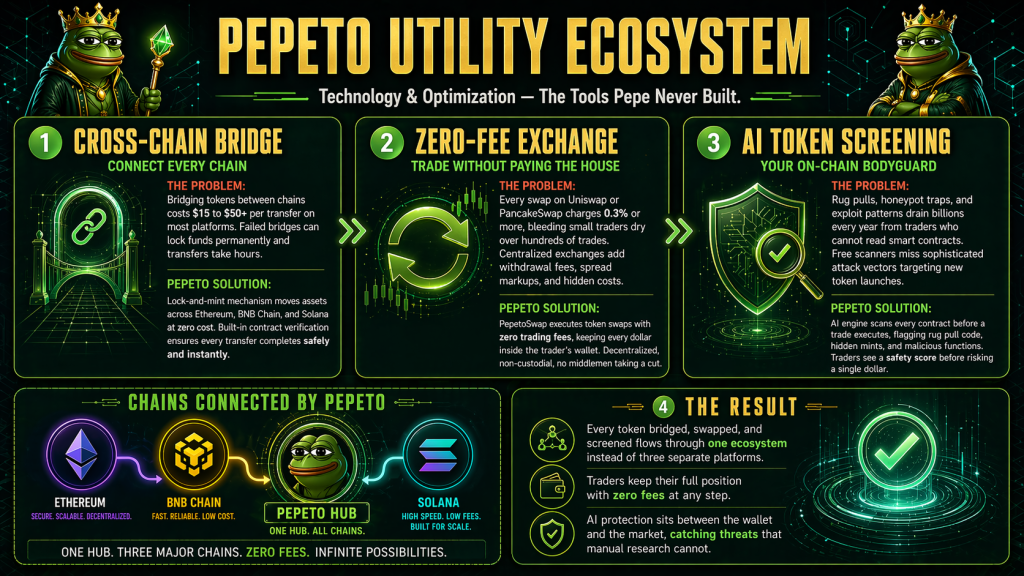
Which Are the Top 3 Cryptos to Buy Now as Solana Lands Mastercard and Pepeto Presale Nears Sold-Out Close
Ondas (ONDS) Stock Soars After Revenue Explodes Over 1,000% in Q1 2026




