

Balancer Labs shuts down operations in wake of $116m hack, pivots to lean DAO structure
Balancer Labs, the original corporate developer behind one of DeFi’s pioneering automated market maker protocols, is winding down operations. Co-founder Fernando Martinelli announced the pivot Monday in a forum post to the Balancer community.
This decision wasn’t taken lightly. The pivot comes roughly four months after a November 2025 exploit syphoned at least $116 million from Balancer v2 pools across multiple chains. The fallout, combined with mounting legal risks, zero revenue, and unsustainable costs, turned the company into what Martinelli called “a liability rather than an asset”.
“What failed was not the technology,” Martinelli wrote. “What failed was the economic model wrapped around it, and the accumulated weight of security incidents that eroded the trust we built.”
It’s a story that hits close to home for anyone who’s watched DeFi evolve from a scrappy experiment to an institutional playground. Balancer Labs incubated the project from its 2020 launch, funding early development and forging partnerships with heavyweights like Aave, Gnosis, Lido, and CoW Swap. They helped popularise programmable liquidity, letting users create custom pools for everything from stablecoins to exotic token baskets.
 Balancer Labs’s Co-founder Fernando Martinelli
But as the bull market of 2025 faded into memory, the bills kept coming while the income didn’t. The entity operated without revenue streams while bearing the full brunt of the exploit. There were no token sales to prop things up, and no endless grants, just the grind of maintaining code, chasing TVL, and dodging lawsuits.
Balancer chooses leaner DAO and tokenomics reset
Martinelli, who stepped back from day-to-day operations some time ago, admitted he seriously considered a full protocol wind-down. Ultimately, however, he backed the team’s plan for survival.
“I’ve watched the team work through the response to the exploit, the reCLAMM development, and the v3 migration,” he noted, praising contributors including Danielmk, Danko, Xeonus, Fábio, and Marcus. “They deserve a shot.”
Under the proposed lean model, core contributors will transition to a new operating company (Balancer OpCo), pending a governance vote. A new BIP for operations will be submitted alongside sweeping tokenomics reforms.
Key changes include:
- Slashing BAL emissions to zero: This aims to end dilution and the “circular bribe economy”.
- Winding down the verbal governance model: Eliminating a system that Martinelli said enabled meta-governance capture by entities like Aura.
- Restructuring protocol fees: Routing 100% of fees directly to the DAO treasury while reducing the V3 protocol fee share to 25% to attract organic liquidity.
- Launching a BAL buyback: Providing fair exit liquidity for token holders.
- Narrowing product focus: Concentrating strictly on high-value offerings, such as reCLAMM, liquidity bootstrapping pools (LBPs), stablecoin/LST pools, weighted pools, and operating on fewer EVM chains.
The protocol will now operate via the existing DAO, a Balancer Foundation for treasury oversight, and a handful of independent service providers. These structures are already in place but will now be fully unburdened by corporate liability.
Surviving crypto’s toughest spring
The timing couldn’t be more critical. Balancer’s move lands squarely in the middle of what’s shaping up as crypto’s toughest spring in years. Liquidity has evaporated post-2025 highs, incentive models that once juiced TVL now look like relics, and every protocol is staring down the same question: can we survive without burning cash we don’t have? While Balancer’s TVL has cratered from its $3.3 billion peak to around $158 million since the exploit, usage hasn’t flatlined entirely.

CEO Marcus Hardt described the past few months as “extremely hard” but pointed to pockets of resilience, highlighting remaining strengths in product differentiation, boosted pools still pulling volume, and integrations holding firm.
Community reaction on the forums has been a mix of resignation and guarded optimism. “This is what true decentralisation looks like,” one long-time BAL holder posted. “No more VC overhead, no more legal overhang, just the code and the people who care.” Sceptics, though, worry about the transition risks. Can a leaner setup really deliver without the corporate safety net? And what about the token pressure from any buyback?
For Balancer, the answer appears to be a deliberate slim-down rather than a slow bleed. Martinelli won’t stick around in any official capacity, but he offered to advise informally.
“I remain a believer in the underlying technology and the team that’s staying,” he wrote. It’s the sort of grace note that feels rare these days, a founder stepping aside not in defeat but to give the project room to breathe.
Whether the lean model sticks remains to be seen. But in an industry where bloated teams and outdated economics have sent more than a few projects to the graveyard, Balancer’s pivot feels less like surrender and more like a calculated reset. The protocol lives on. The company? Not so much. And for once, that might just be the point.
Also read: PewBeam: All you should know about Dara Sobaloju’s scripture rendering AI app
The post Balancer Labs shuts down operations in wake of $116m hack, pivots to lean DAO structure first appeared on Technext.


You May Also Like

Teacher accuses MAGA superintendent of working with Libs of TikTok to destroy his career
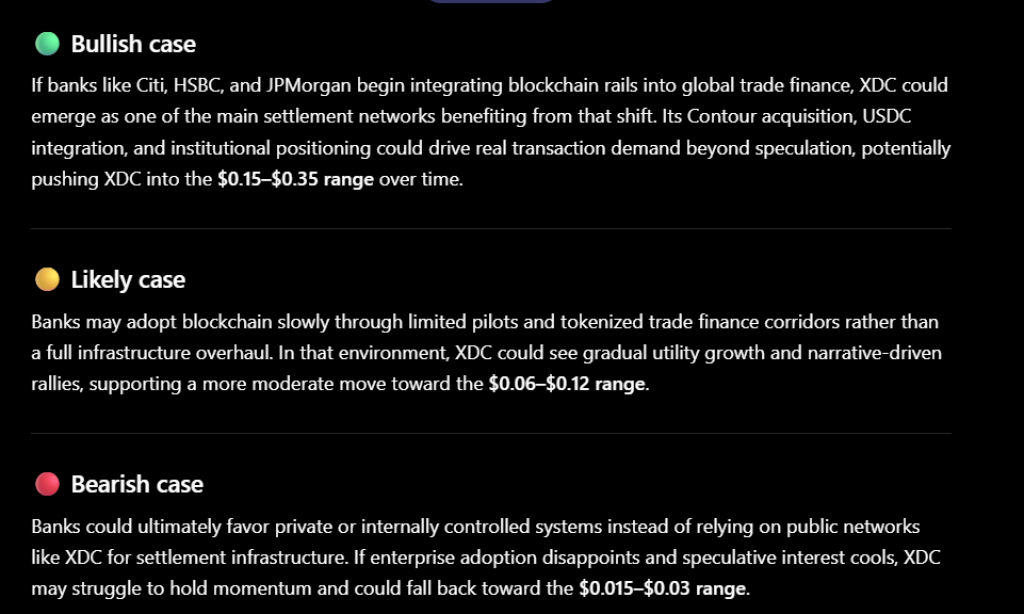
ChatGPT Predicts XDC Network Price if Banks Finally Upgrade the “Plumbing” Behind Global Trade Finance




