

Bitcoin (BTC) Stabilizes Above $71K as Markets Rally on Iran Peace Proposal
Key Highlights
- Washington delivered a comprehensive 15-point diplomatic proposal to Tehran through Pakistani intermediaries, triggering optimism across financial markets.
- Brent crude petroleum collapsed 4.7%, sliding beneath the $100 threshold for the first time in several weeks.
- Bitcoin maintains its position above the $70,000 level, currently exchanging hands near $71,000, despite experiencing a 6.4% weekly decline.
- Equity index futures showed strong gains with S&P 500 and Dow Jones contracts advancing approximately 0.7%, while Nasdaq 100 futures climbed roughly 0.9%.
- The broader cryptocurrency sector continues to trade in negative territory for the week, with Ether experiencing the steepest losses at -9.2%.
Washington has transmitted a detailed 15-point diplomatic framework to Tehran via Pakistani diplomatic channels, designed to terminate hostilities that commenced on February 28. According to reports, the framework incorporates stipulations regarding Iran’s nuclear activities. Israel’s Channel 12 news outlet confirmed that American officials are advocating for a 30-day cessation of hostilities.
The diplomatic development triggered a substantial decline in petroleum markets. Brent crude petroleum tumbled 4.7% to settle at $99.55, penetrating the $100 barrier for the first time since mid-March. WTI crude, America’s pricing benchmark, retreated beneath the $90 per barrel threshold.
Equity futures demonstrated immediate positive momentum. Both S&P 500 and Dow Jones futures contracts advanced approximately 0.7%. Nasdaq 100 futures registered gains of roughly 0.9%. Asian equity markets surged 1.9%, while European futures contracts similarly indicated upward momentum.
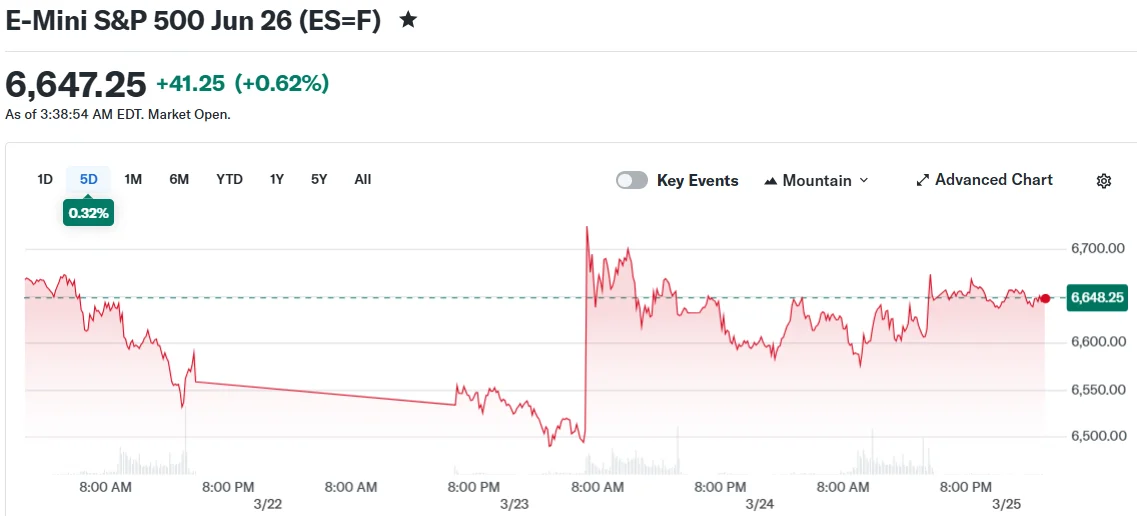 E-Mini S&P 500 Jun 26 (ES=F)
The U.S. dollar experienced weakness following the announcement. Market participants are interpreting the peace framework as the most substantive diplomatic initiative since hostilities commenced.
Bitcoin Demonstrates Resilience Following Turbulent Trading Period
Bitcoin is currently exchanging at approximately $71,019, registering a 0.9% increase over the preceding 24-hour period. The leading cryptocurrency has maintained support above the $70,000 threshold for three consecutive trading days. Nevertheless, it has declined 6.4% across the past seven days, a timeframe that witnessed a peak of $75,000 followed by significant retracement during weekend ultimatum concerns.
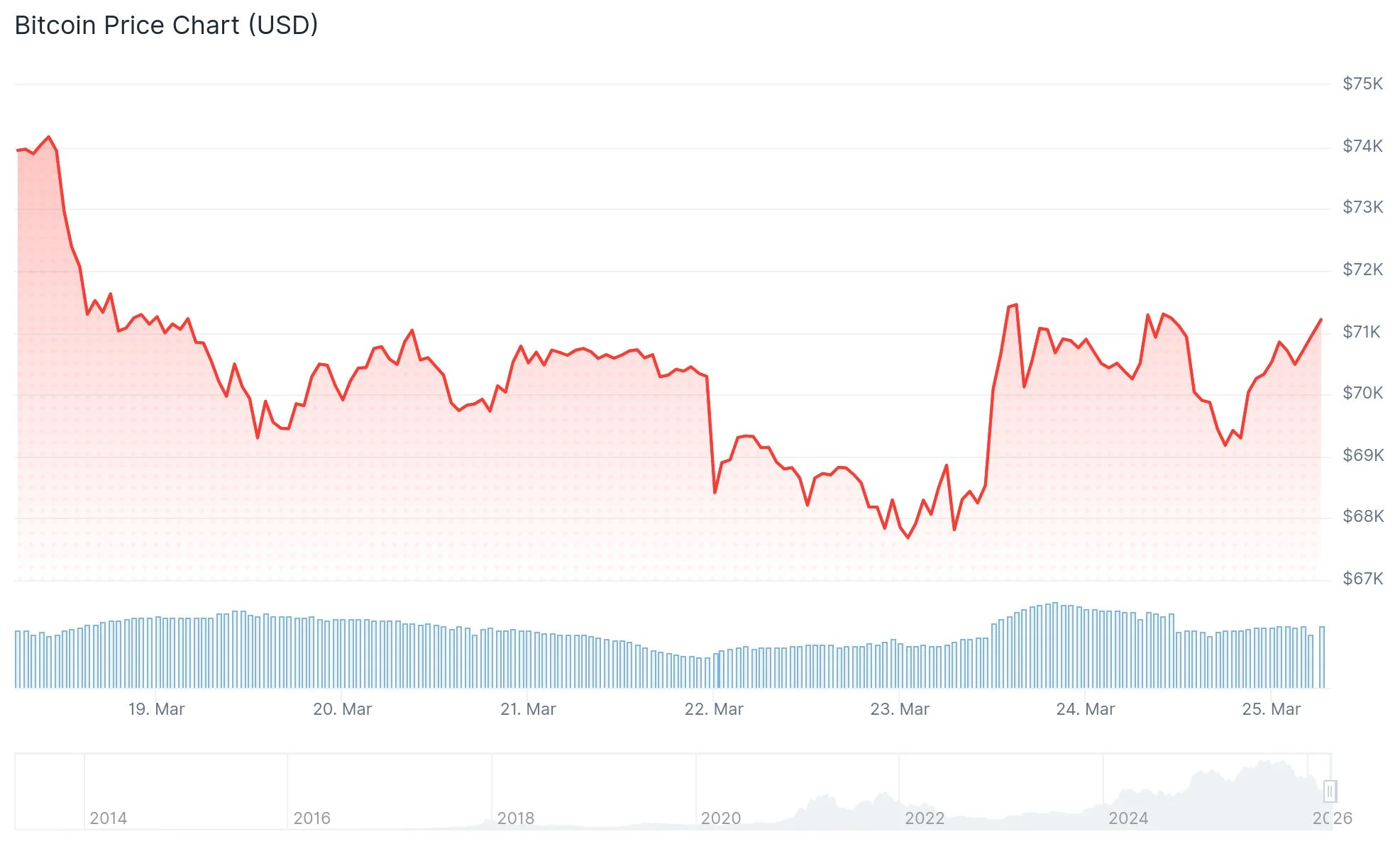 Bitcoin (BTC) Price
Most prominent alternative cryptocurrencies are experiencing modest daily recoveries but continue posting weekly losses. Ether has advanced 1.7% during the day to reach $2,164 but remains down 9.2% for the week, positioning it as the poorest performer among major digital assets over this timeframe.
XRP increased 0.2% to $1.42 while posting an 8.5% weekly decline. Solana climbed 2.5% to $91.69 but has surrendered 3.8% over seven days. BNB decreased 0.5% to $638, recording a 6.8% weekly drop. Dogecoin advanced 1.7% to $0.094 but remains down 7.5% for the week. Tron emerged as the sole major cryptocurrency posting gains across both periods, rising 0.8% daily and 4.4% weekly.
Implications of Declining Energy Prices for Financial Markets
Decreasing oil prices carry significant implications for both equity and cryptocurrency markets. Each reduction in petroleum costs diminishes inflationary pressures, which decreases the probability that the Federal Reserve will implement interest rate increases. This prevents further tightening of monetary conditions.
Bitcoin’s 90-day correlation coefficient with the S&P 500 remains elevated. The cryptocurrency sector has endured four weeks of geopolitical headlines, energy market volatility, and forced liquidation events. Despite these challenges, bitcoin trades approximately flat since hostilities commenced on February 28.
The Strait of Hormuz remains functionally closed, with minimal maritime traffic. The peace framework remains a proposal requiring acceptance. Iranian state media previously disputed assertions that direct negotiations had occurred, following Trump’s mention of “productive conversations” on Tuesday.
Trump additionally claimed Tehran appears to be responding favorably and alluded to a “present” valued at “tremendous amounts of money” as a component of a prospective agreement. Market participants are also monitoring February import and export pricing data scheduled for Wednesday release.
The post Bitcoin (BTC) Stabilizes Above $71K as Markets Rally on Iran Peace Proposal appeared first on Blockonomi.
You May Also Like

Why Localization Services Matter for Software Companies

₹71L CoinDCX Fraud Case Turns, Court Finds No Link to Founders

