

Must Read
Artificial intelligence will undoubtedly transform productivity. But it will not replace human imagination, empathy, and purpose.Artificial intelligence will undoubtedly transform productivity. But it will not replace human imagination, empathy, and purpose.
[Good Business] AI as a social good
For feedback or concerns regarding this content, please contact us at [email protected]
“What kind of intelligence do we want shaping our economy?”
That was the question I found myself asking during the panel discussion at the 2026 Philippine CEO Outlook, hosted by SGV & Co. and Ernst & Young (EY) on March 6 at Hilton Manila. The forum gathered business leaders, policymakers, and economists to discuss a future increasingly defined by artificial intelligence and the evolving partnership between humans and machines.
The theme of the event, “Embracing the New Futures of the Human–Machine Partnership,” may sound technological, even abstract. But as the discussion unfolded among panelists and speakers, it became clear that the deeper issue was not technology itself.
It was how technology will reshape the very nature of business, creativity, and human purpose.
Among the speakers and participants were ASEAN Business Advisory Council (ASEAN-BAC) chair Joey Concepcion, ambassador Delia D. Albert, ADB Private Sector Regional Head Pratish Halady, Department of Trade and Industry (DTI) Assistant Secretary Nylah Rizza Bautista, and business leaders across industries. Each brought a different perspective on how the Philippines and ASEAN can navigate an economy increasingly powered by artificial intelligence.
Yet beneath the discussions of algorithms, infrastructure, and digital platforms was a quieter but more important conversation: what role humans will continue to play in an AI-driven world.
The CEO outlook: Technology is only half the equation
During the forum, SGV deputy managing partner Noel Rabaja presented insights from the 2026 Philippine CEO Outlook, which examines how business leaders in the Philippines are preparing for an AI-enabled future.
The report revealed a growing recognition among CEOs that artificial intelligence will not merely automate tasks, it will fundamentally reshape how companies make decisions, innovate, and compete.
But Rabaja emphasized that technological adoption alone will not determine success. Organizations must also cultivate new ways of thinking: retraining talent, redesigning workflows, and building cultures where human creativity and machine intelligence reinforce each other rather than compete.
The real transformation, in other words, will not be technological.
It will be organizational and human.
ASEAN’s 70 million MSMEs and the AI opportunity
Another perspective came from ADB Private Sector Regional Head Pratish Halady, who highlighted the enormous opportunity artificial intelligence presents for ASEAN’s more than 70 million micro, small, and medium enterprises (MSMEs).
For decades, advanced analytics and real-time data systems were available only to large corporations. Small businesses relied on instinct and experience.
Today, AI has the potential to democratize these capabilities.
According to Halady, AI-powered tools can help MSMEs access dynamic pricing systems, improve supply chain management, and expand financial inclusion, unlocking productivity gains once out of reach for smaller enterprises.
But realizing this potential requires significant investment.
Halady pointed out that AI infrastructure is quickly becoming a new form of economic infrastructure, similar to roads, ports, and telecommunications networks in earlier eras.
For the Philippines to fully participate in the AI economy, the country must continue strengthening connectivity, computing power, energy systems, and policy frameworks that encourage investment.
He also emphasized that no country can do this alone. With the development of the ASEAN Digital Economy Framework Agreement (DEFA), regional cooperation will play a crucial role in harmonizing AI governance and enabling cross-border digital markets.
The future of AI in Southeast Asia, in other words, will be shaped as much by regional collaboration as by technological innovation.
Government and the human-machines future
In her keynote address, DTI Assistant Secretary Nylah Rizza Bautista highlighted the importance of public–private collaboration in preparing the Philippines for this technological transition.
She announced initiatives aimed at strengthening the country’s AI ecosystem, including the upcoming DTI AI and Startup Center, which will help entrepreneurs, startups, and MSMEs adopt emerging technologies.
Her remarks underscored an important reality: innovation ecosystems do not emerge by accident.
They are built through sustained collaboration between government, industry, and the entrepreneurial community.
When ‘backbone of the economy’ becomes a slogan
During the panel with Engineer Fulbert Woo of PCCI Western Visayas and Brett Medel of Medel IT Consulting , much of the discussion focused on MSMEs. They are frequently described as the backbone of the Philippine economy.
But I offered a slightly uncomfortable reflection.
Sometimes I feel that phrase has been repeated so often that it has become more of a slogan than a strategy. The reality is that many MSMEs still struggle with limited access to capital, technology, and networks.
Government programs such as initiatives from the Department of Trade and Industry and incentives under the Corporate Recovery and Tax Incentives for Enterprises (CREATE) Act play an important role in lowering barriers to innovation.
But competitiveness ultimately begins with mindset. MSMEs must stop seeing themselves as small businesses trying merely to survive.
They must begin seeing themselves as innovation platforms capable of reshaping industries.
At Varacco, the technology-driven coffee enterprise I help lead, our journey into digital agriculture did not begin because we had perfect support systems.
It began because we believed that even a small company could rethink how an entire sector operates.
The hidden advantage of MSMEs
During the discussion, another question surfaced repeatedly: what role will humans play in an AI-driven economy?
The assumption is often that technology will become the dominant competitive advantage.
I believe the opposite may happen. Technology will eventually become accessible to everyone. What will remain difficult to replicate are human creativity, cultural intelligence, and local knowledge.
Our work at Varacco involves introducing Internet of Things (IoT) systems and digital agriculture tools to farming communities, including farmers and indigenous groups.
Play Video ![[Good Business] AI as a social good](https://img.youtube.com/vi/YM4CjTqP1Ns/hqdefault.jpg)
But some of the most valuable insights do not come from algorithms. They come from farmers interpreting data through years of lived experience.
At one point during the panel, I joked: “AI can analyze soil data, but it cannot smell the rain the way a farmer can.”
The audience laughed. But behind the humor lies a serious point.
The future of innovation will not come from machines alone. It will come from the interaction between human wisdom and technological intelligence.
Data, decisions, and a new kind of productivity
Artificial intelligence is also transforming how businesses make decisions. For decades, access to sophisticated data systems was largely reserved for large corporations.
MSMEs often relied on instinct.
Today, sensors, cloud platforms, and analytics tools are democratizing access to real-time information.
But the deeper question is not whether businesses have access to data.
It is how they choose to use it.
Are we using data to make better decisions? Or simply to confirm what we already believe?
Technology should challenge entrepreneurs to rethink assumptions about their industries not simply automate existing habits.
Measuring what actually matters
One of the most interesting discussions during the forum revolved around productivity.
Traditional productivity metrics often measure what is easiest to count. But they do not always capture what truly matters.
In agriculture, productivity is typically measured in yield per hectare. But if higher yields come at the cost of soil degradation, ecosystem damage, or the displacement of farming communities, can we truly call that productivity?
At Varacco, we are experimenting with broader indicators: farmer capability, soil health, ecosystem resilience, and community participation.
Play Video ![[Good Business] AI as a social good](https://img.youtube.com/vi/kPHtPGHp-qU/hqdefault.jpg)
This may sound unconventional in a business forum. But the companies that thrive in the future may not simply produce more.
They will build better systems.
AI as a social good
As the event drew to a close, the conversation returned to artificial intelligence.
Much of the public discussion about AI revolves around fear: job displacement, automation, and the replacement of human work.
But perhaps the more important question is this:
What kind of intelligence do we want shaping our economy?
Artificial intelligence will undoubtedly transform productivity. But it will not replace human imagination, empathy, and purpose. If used wisely, AI could expand access to knowledge, empower farmers, strengthen small businesses, and support more sustainable industries.
In that sense, the most powerful application of artificial intelligence may not be automation.
It may be aligning technology with social good.
And if that happens, MSMEs will not simply adapt to the future economy.
They will help define it. – Rappler.com
Ariestelo A. Asilo is TOYM 2021, Asia 21, and PHINMA-DLSU Siklab Fellow. He is the President and CEO of www.varacco.com and www.thinnkfarm.com which operate through social entrepreneurship selling Buy 1 Take 1 Coffee, and creating farmer-scientists in coffee production in Mindanao. Currently, he is taking his Doctorate in Sustainability at the University of the Philippines-Open University and the Chief Executive Officers Program at the Asian Institute of Management. He also has a cat named Libe which he found at the Liberica farm in Cavite. [email protected]
Market Opportunity
Notcoin Price(NOT)
$0.0005261
$0.0005261$0.0005261
USD
Notcoin (NOT) Live Price Chart


Disclaimer: The articles reposted on this site are sourced from public platforms and are provided for informational purposes only. They do not necessarily reflect the views of MEXC. All rights remain with the original authors. If you believe any content infringes on third-party rights, please contact [email protected] for removal. MEXC makes no guarantees regarding the accuracy, completeness, or timeliness of the content and is not responsible for any actions taken based on the information provided. The content does not constitute financial, legal, or other professional advice, nor should it be considered a recommendation or endorsement by MEXC.
You May Also Like

Q2 Market Insights: Bitcoin regains dominance in risk-averse environment, ETFs remain critical to market structure
The market will show a downward trend in the short term, and then rebound and set new highs in the second half of the year.
Share
PANews2025/04/28 19:40
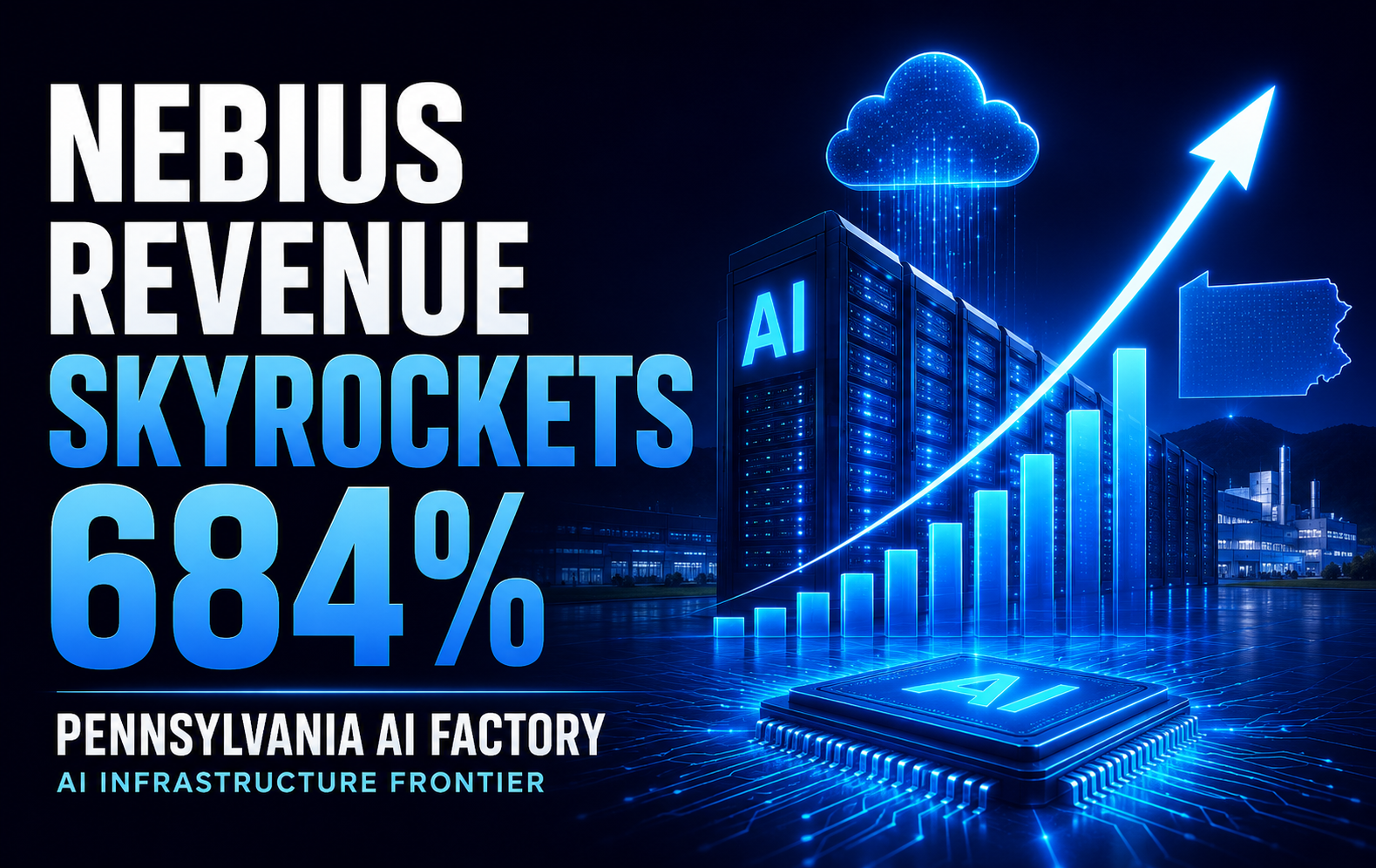
Nebius Revenue Skyrockets 684%: Why the "Pennsylvania AI Factory" Is the New Frontier for AI Infrastructure
Nebius reported a sharp Q1 revenue increase and raised its AI cloud expansion spending plan, reinforcing investor focus on power, GPUs, data centers, and the next phase of the AI infrastructure buildout.
Share
MEXC NEWS2026/05/14 16:01

2026 Canadian Grand Prix Predictions: Drivers, Teams & Records to Watch
The 2026 Canadian Grand Prix arrives as Formula 1's new era of active aerodynamics and 50/50 hybrid power faces its first true street-circuit stress test at Montreal, with championship leader Kimi Antonelli (+175) the betting favourite after three consecutive wins from pole.
Share
MEXC NEWS2026/05/14 16:07



