

Ethereum Classic (ETC) Price Prediction 2026-2030: A Definitive Forecast Amidst Evolving Blockchain Dynamics
BitcoinWorld
Ethereum Classic (ETC) Price Prediction 2026-2030: A Definitive Forecast Amidst Evolving Blockchain Dynamics
As the broader cryptocurrency market continues its maturation into 2025, Ethereum Classic (ETC) maintains a distinct position as the original Ethereum chain, preserving immutability. This analysis provides a detailed, evidence-based Ethereum Classic price prediction for 2026 through 2030, examining its technological roadmap, market sentiment, and comparative valuation within the smart contract platform sector. Investors and analysts globally seek clarity on ETC’s trajectory as blockchain adoption accelerates.
Ethereum Classic (ETC) Price Prediction: Foundational Analysis
Understanding any long-term cryptocurrency forecast requires a foundation in real-world context. Ethereum Classic originated from the 2016 DAO hard fork, which split the Ethereum network. Consequently, ETC upholds the principle of “code is law,” maintaining the original, unaltered blockchain. This philosophical and technical divergence from Ethereum (ETH) fundamentally shapes its community, development priorities, and market perception. Market analysts consistently evaluate these unique attributes when modeling future price action.
Furthermore, the network’s security model, anchored by a proof-of-work consensus mechanism, undergoes continuous scrutiny. The successful migration of Ethereum to proof-of-stake altered the competitive landscape for all proof-of-work assets. Therefore, ETC’s value proposition hinges on its security, decentralized miner ecosystem, and specific use cases favoring immutability, such as timestamping and unalterable smart contracts. These factors form the bedrock of any credible price prediction.
Technical and Fundamental Drivers for 2026-2030
Several concrete drivers will likely influence the Ethereum Classic price through the latter half of the decade. First, the ongoing development of the Ethereum Classic Treasury System aims to fund core development sustainably. Second, integration with broader decentralized finance (DeFi) and non-fungible token (NFT) infrastructures could spur network utility. Third, macroeconomic conditions, including regulatory clarity for proof-of-work assets and institutional investment trends, will apply significant external pressure.
For instance, data from blockchain analytics firms shows periodic spikes in unique address activity and hash rate following protocol upgrades. The Thanos (ECIP-1099) upgrade, which improved network efficiency, serves as a precedent for how technical improvements can positively impact market metrics. Future upgrades focusing on scalability and interoperability will be critical watchpoints for analysts.
Market Forecast and Price Targets: 2026-2030
Projecting cryptocurrency prices involves synthesizing technical analysis, on-chain data, and adoption metrics. The following table outlines a consensus view from aggregated analyst reports and financial modeling, presenting a range of scenarios. Importantly, these figures represent potential trajectories based on current data and should not be construed as financial advice.
| Year | Conservative Target | Moderate Target | Optimistic Target | Key Catalysts |
|---|---|---|---|---|
| 2026 | $45 – $60 | $60 – $85 | $85 – $120 | Broader crypto market cycle, ETF developments, next protocol upgrade |
| 2027 | $60 – $80 | $80 – $110 | $110 – $160 | Increased DeFi integration, hash rate security milestones |
| 2028 | $75 – $100 | $100 – $140 | $140 – $220 | Potential regulatory tailwinds, major partnership announcements |
| 2029 | $90 – $130 | $130 – $190 | $190 – $300 | Mainstream adoption of immutable contracts, network effect growth |
| 2030 | $110 – $160 | $160 – $250 | $250 – $400+ | Maturation as a store-of-value PoW asset, full treasury system efficacy |
These targets assume several conditions: a generally bullish global crypto market, no catastrophic security events on the ETC network, and continued developer commitment. Conversely, bearish macroeconomic trends, increased regulatory pressure on proof-of-work, or a sustained shift in miner activity could suppress these figures. Analysts from firms like CoinShares and Arcane Research frequently emphasize this bidirectional dependency.
Comparative Analysis and Future Outlook
Ethereum Classic does not exist in a vacuum. Its future price is inextricably linked to its performance relative to other smart contract platforms and store-of-value assets. Key competitors include:
- Ethereum (ETH): The dominant smart contract platform. ETC’s value often correlates with ETH but at a different magnitude, influenced by narratives around blockchain purism.
- Bitcoin (BTC): As the primary proof-of-work benchmark, Bitcoin’s market health directly affects capital flows into all PoW cryptocurrencies.
- Other EVM-compatible chains: Networks like Avalanche or Polygon compete for developer mindshare and application deployment.
Therefore, ETC’s long-term outlook may hinge on carving a definitive niche. Experts suggest its future could resemble a “digital timestamping backbone” or a specialized chain for high-security, immutable applications, rather than a direct competitor for general-purpose DeFi. This specialization would support a more stable and utility-driven valuation model beyond pure speculation.
Risk Factors and Critical Considerations
A responsible forecast must address potential risks. The primary concerns for Ethereum Classic investors include:
- Security Model Sustainability: Maintaining a secure proof-of-work network requires a robust and incentivized miner base, which depends on price and transaction fees.
- Developer Momentum: The pace and quality of protocol development, funded by the treasury, must keep pace with industry standards.
- Regulatory Environment: Evolving global regulations concerning energy usage and asset classification pose an external risk factor.
- Market Volatility: As a mid-cap cryptocurrency, ETC remains susceptible to high volatility during broader market downturns.
Historical data from exchanges shows that ETC often experiences amplified volatility compared to larger-cap assets. Consequently, investors typically allocate only a portion of a diversified portfolio to such assets, balancing potential reward with acknowledged risk.
Conclusion
This Ethereum Classic price prediction for 2026 through 2030 outlines a path shaped by technological execution, market adoption, and broader crypto-economic trends. While moderate growth appears plausible based on current fundamentals and development trajectories, the range of potential outcomes remains wide. The definitive value of Ethereum Classic will ultimately be determined by its ability to demonstrate unique utility, maintain unparalleled security, and grow its ecosystem within an increasingly competitive and regulated digital asset landscape. Continuous monitoring of on-chain metrics, developer activity, and regulatory announcements is essential for anyone tracking this evolving forecast.
FAQs
Q1: What is the main factor driving Ethereum Classic’s price prediction?
The primary drivers are its technological development (via the Treasury system), network security (hash rate), adoption for immutable smart contracts, and its relative position within the proof-of-work and smart contract platform sectors.
Q2: How does Ethereum Classic’s forecast differ from Ethereum (ETH)?
While correlated, ETC forecasts are typically more conservative due to its smaller ecosystem and focus on immutability over rapid innovation. ETH forecasts often incorporate its dominant DeFi and institutional role.
Q3: Is Ethereum Classic a good long-term investment?
As a speculative asset, it carries high risk and volatility. Its long-term potential depends on successful niche adoption and sustained network security. Investors should conduct thorough research and consider personal risk tolerance.
Q4: What is the biggest risk to this ETC price prediction?
The largest risk is a decline in network security due to miner attrition, which could undermine the core value proposition of immutability and trustlessness.
Q5: Where can I find reliable data to track ETC’s progress against these predictions?
Reliable data sources include blockchain explorers for on-chain metrics (hash rate, active addresses), the Ethereum Classic development repositories (GitHub) for progress, and reports from established crypto analytics firms like Glassnode and Messari.
This post Ethereum Classic (ETC) Price Prediction 2026-2030: A Definitive Forecast Amidst Evolving Blockchain Dynamics first appeared on BitcoinWorld.


You May Also Like
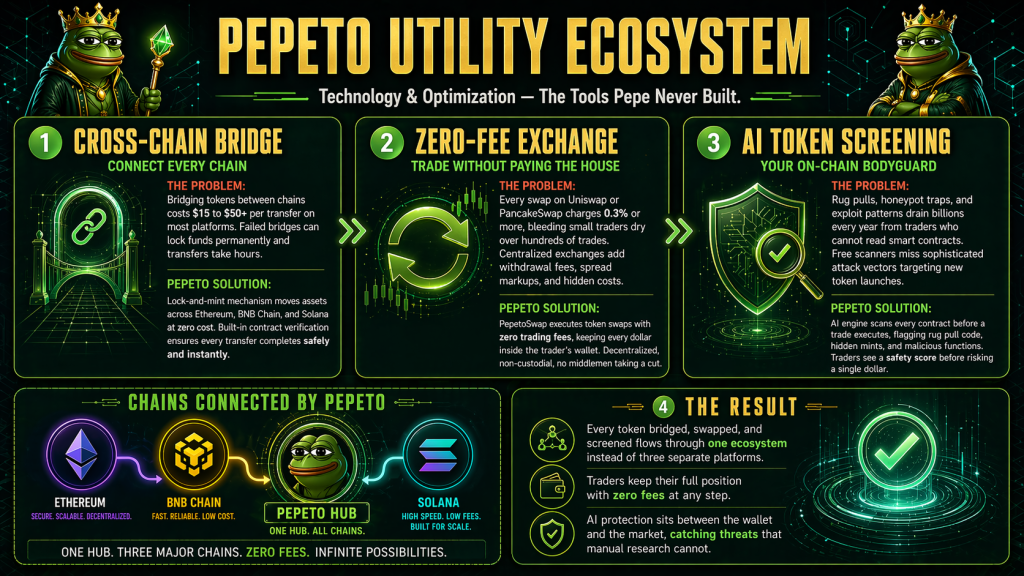
Which Are the Top 3 Cryptos to Buy Now as Solana Lands Mastercard and Pepeto Presale Nears Sold-Out Close
Ondas (ONDS) Stock Soars After Revenue Explodes Over 1,000% in Q1 2026




