

Must Read
FUEL UP. An attendant pumps gasoline at a station in Banilad, Cebu City, ahead of the expected fuel price hike this week, on March 9, 2026.FUEL UP. An attendant pumps gasoline at a station in Banilad, Cebu City, ahead of the expected fuel price hike this week, on March 9, 2026.
How do emergency powers of the Philippine government work?
For feedback or concerns regarding this content, please contact us at [email protected]
President Ferdinand Marcos Jr. has declared a national energy emergency in the county amid the ongoing war between the United States-Israel and Iran.
Marcos signed his Executive Order No. 110 on Tuesday, March 24, due to the war’s “imminent danger posed upon the availability and stability of the country’s energy supply.”
The EO also mandated the adaptation of the Unified Package for Livelihoods, Industry, Food, and Transport (UPLIFT) and the UPLIFT Committee to “safeguard national interest” by “mitigating the impact of the conflict in the Middle East.”
But what are emergency powers and how and when can the President exercise them?
Play Video 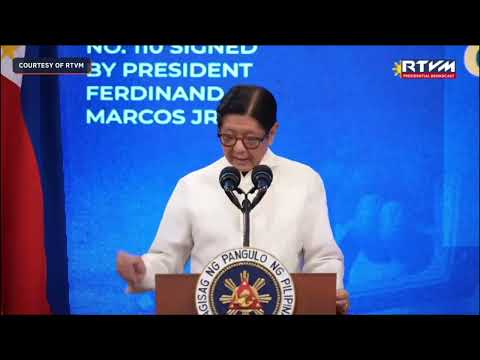
What is an emergency?
The Supreme Court (SC), in the David v. Macapagal Arroyo case of 2006, explained that the word “emergency” can be interpreted as “the existence of conditions suddenly intensifying the degree of existing danger to life or well-being beyond that which is accepted as normal.”
Further, the SC said that an emergency may fall under three principal themes: economic, natural disaster, and national security.
It also said that based on the 1987 Constitution, emergency situations may include the following:
- Rebellion
- Economic crisis
- Pestilence or epidemic
- Typhoon
- Flood
- Similar catastrophes of nationwide proportions or effect
According to the High Court, none of the branches of government — executive, legislative, and the judiciary — has the monopoly of power in times of emergency.
Emergency powers explained
University of the Philippines (UP) College of Law assistant professor and associate dean Paolo Tamase explained to Rappler that there are two sources of emergency measures. The first is from the president who can declare a national emergency.
“This emerges or this comes from his executive power and this is a way for him to just declare a state of facts…. This is what is called the ordinance power of the president,” Tamase told Rappler in an interview. “So, the ordinance power is just the same power that the president has to declare a national holiday or a national celebration. It’s to determine or to say that a certain set of facts exist.”
In other words, the president holds the power to declare the existence of a state of national emergency. But he/she cannot arbitrarily exercise emergency powers — the enforcement of these powers should be based on the existing laws passed by Congress (Senate and House of Representatives).
These declarations are necessary because there are provisions in select laws that can only be enforced when triggered by these announcements. The declaration, as Tamase explained, is like activating “certain powers in the governmental arsenal.”
For calamity funds, for example, that power is no different from the power of a governor to declare a state of calamity, etc. By declaring “that an emergency exists, the executive is able to exercise some of those reserved powers in legislation,” the constitutional law professor explained.
Congress’ delegation powers
The other way to announce a national emergency is through Congress. In David v. Macapagal Arroyo, the SC reiterated that Congress is the repository of emergency powers.
When the legislative branch announces a national emergency, it temporarily allows the president to exercise specific emergency powers, subject to certain restrictions. Article VI, Section 23(2) of the 1987 Constitution states how this delegation of powers happens.
“In times of war or other national emergency, the Congress may, by law, authorize the President, for a limited period and subject to such restrictions as it may prescribe, to exercise powers necessary and proper to carry out a declared national policy. Unless sooner withdrawn by resolution of the Congress, such powers shall cease upon the next adjournment thereof,” says the provision.
While the president’s power to declare a national emergency is constrained by existing laws, the emergency powers of Congress, according to Tamase, are much broader.
When Congress declares a national emergency, it may pass new legislation to provide new powers appropriate to the situation the country is in. And as the chief executive, the president then enforces these powers vested by Congress.
“When Congress declares a national emergency and therefore delegates its emergency powers to the President, it means that it acknowledges that the situation is very severe and that new laws or new legislation need to be passed and that those new norms need to be passed speedily,” the UP College of Law associate dean said.
This “delegation of powers” was observed in 1989 when Congress passed Republic Act (RA) No. 6826 or the Aquino Emergency Act. The law granted then-president Corazon Aquino emergency powers to “optimize” efforts to “carry out the difficult task of economic reconstruction” after a series of coup attempts.
The most recent instance that this delegation of powers was seen was at the height of the COVID-19 pandemic, when Congress enacted the Bayanihan Act in 2020, according to Tamase.
Based on David v. Macapagal Arroyo, these are the limitations of delegated emergency powers:
- There is war or other emergency
- The delegation must be for a limited time only
- The delegation must be subject to such restrictions as Congress may prescribe
- The emergency powers must be exercised to implement a national policy declared by Congress
Marcos’ EO, powers to suspend excise tax
When Marcos declared a national emergency in light of the oil crisis, he explained that this would allow the government “to implement responsive and coordinated measures under existing laws to address the risks posed by disruptions in the global energy supply and the domestic economy.”
On Wednesday, March 25, the President clarified that his EO is not a general declaration of a state of emergency, but only for the energy crisis. Marcos cited Section 25 of RA No. 7638 or Department of Energy Act of 1992 as the legislative anchor of his EO.
“The EO triggers the mechanism already in place in RA No. 7638. There can be different labels used to declare emergencies but the crux lies in what power the said declaration seeks to access,” UP College of Law constitutional law professor John Molo told Rappler.
“That said, EO 110 itself is quite benign. So while it rightfully labels the current situation a national emergency, it doesn’t activate yet the more heavy-handed reserved measures like the takeover of industry players,” Tamase said.
Meanwhile, Marcos also recently signed RA No. 12316, which granted him emergency powers to suspend and reduce fuel excise tax, according to Malacañang. This could be an example of Congress’ delegation of its legislative powers to the President.
By rule, only Congress can impose, amend, or repeal taxes, according to Molo. But under the new law, the legislative branch delegated that power to the President under specific terms and until December 31, 2028 only.
“RA No. 12316 allows the President to suspend taxes. That’s clearly a power borrowed from the legislative branch,” the constitutional law expert explained. – Rappler.com
Market Opportunity
Fuel Price(FUEL)
$0.0008
$0.0008$0.0008
USD
Fuel (FUEL) Live Price Chart


Disclaimer: The articles reposted on this site are sourced from public platforms and are provided for informational purposes only. They do not necessarily reflect the views of MEXC. All rights remain with the original authors. If you believe any content infringes on third-party rights, please contact [email protected] for removal. MEXC makes no guarantees regarding the accuracy, completeness, or timeliness of the content and is not responsible for any actions taken based on the information provided. The content does not constitute financial, legal, or other professional advice, nor should it be considered a recommendation or endorsement by MEXC.
You May Also Like

Australian Dollar Dips as US Retail Sales Data Meets Forecasts, Dampening Rate Cut Hopes
BitcoinWorld Australian Dollar Dips as US Retail Sales Data Meets Forecasts, Dampening Rate Cut Hopes The Australian Dollar weakened against the US Dollar on Thursday
Share
bitcoinworld2026/05/15 00:15

Web3 Gaming Has a Visibility Problem, Not a Funding Problem
Analysis of the top PR agencies shaping Web3 gaming and GameFi visibility in 2026, and why blockchain gaming’s biggest challenge is distribution, not funding.
Share
Cryptodaily2026/05/15 01:11

Iran’s army chief warns of ‘total destruction’ for ground invasion
The post Iran’s army chief warns of ‘total destruction’ for ground invasion appeared on BitcoinEthereumNews.com. Iran’s army chief warned of “total destruction”
Share
BitcoinEthereumNews2026/04/02 18:15



