NZD/USD Forecast: RBNZ Policy Risks Fuel Persistent Pressure – HSBC Analysis
BitcoinWorld
NZD/USD Forecast: RBNZ Policy Risks Fuel Persistent Pressure – HSBC Analysis
The New Zealand dollar faces a complex landscape against the US dollar as monetary policy divergence creates persistent pressure. According to recent analysis from global banking giant HSBC, the NZD/USD pair confronts significant headwinds despite potential support from the Reserve Bank of New Zealand. Market participants globally now monitor these dynamics closely, particularly as central bank policies evolve in 2025.
NZD/USD Technical and Fundamental Landscape
Currency traders currently analyze the NZD/USD pair within a challenging technical framework. The pair has demonstrated notable volatility throughout early 2025, reflecting broader market uncertainty. Furthermore, fundamental factors increasingly influence price action as economic data releases create regular fluctuations. HSBC’s research team emphasizes that several converging elements shape the current trading environment.
Firstly, interest rate differentials between New Zealand and the United States remain a primary driver. Secondly, commodity price movements, especially for dairy and agricultural exports, directly impact New Zealand’s terms of trade. Thirdly, global risk sentiment significantly affects the Kiwi dollar’s performance. Consequently, analysts must consider this multidimensional context when evaluating future direction.
RBNZ Monetary Policy: A Critical Variable
The Reserve Bank of New Zealand maintains a cautious approach toward inflation management. Recent statements from Governor Adrian Orr indicate ongoing concern about domestic price pressures. However, the central bank also acknowledges growing economic headwinds from the global slowdown. This delicate balancing act creates what HSBC terms “policy risk” for the currency.
Market expectations currently suggest the RBNZ may maintain a restrictive stance longer than some peers. Historical data shows that New Zealand’s inflation peaked later than in many other developed economies. Therefore, the normalization timeline might extend further into 2025. This potential delay could provide temporary support for the NZD, but HSBC analysts caution that other factors may overwhelm this effect.
Comparative Central Bank Policy Analysis
Monetary policy divergence represents a crucial theme for forex markets in 2025. The Federal Reserve’s approach contrasts significantly with the RBNZ’s projected path. While the Fed has signaled potential rate cuts, the RBNZ maintains a more hawkish rhetoric. This divergence typically supports the higher-yielding currency, but current market dynamics present exceptions.
Global capital flows increasingly favor the US dollar during periods of uncertainty. Additionally, the dollar’s status as a global reserve currency amplifies its safe-haven appeal. Therefore, even with favorable interest rate differentials, the NZD faces structural challenges. HSBC’s analysis particularly highlights this tension between traditional yield dynamics and broader market sentiment.
Global Economic Context and NZD Vulnerabilities
The international economic environment significantly influences the New Zealand dollar’s trajectory. As a small, open economy, New Zealand remains particularly sensitive to global growth fluctuations. Recent data from major trading partners, especially China and Australia, shows mixed signals. These relationships directly affect export demand and, consequently, currency valuation.
China’s economic recovery pace directly impacts New Zealand’s export sector. Similarly, Australian economic performance influences trans-Tasman trade flows. When these key partners experience slowdowns, New Zealand’s economy faces immediate pressure. HSBC’s global network provides insights suggesting that these external vulnerabilities may intensify throughout 2025.
Key risk factors for NZD include:
- Global recession probabilities and risk aversion spikes
- Commodity price volatility, particularly for dairy products
- Geopolitical tensions affecting trade routes and agreements
- Climate-related events impacting agricultural production
HSBC’s Analytical Framework and Projections
HSBC employs a comprehensive methodology when forecasting currency pairs. Their approach combines quantitative models with qualitative assessment from regional experts. For NZD/USD, the bank’s analysts consider multiple scenarios based on policy outcomes. Their baseline projection suggests persistent pressure on the Kiwi dollar despite RBNZ support.
The analysis references historical correlations between the NZD/USD pair and various economic indicators. These relationships help identify potential breakpoints where traditional dynamics might shift. Currently, the models indicate that US dollar strength may outweigh domestic New Zealand factors. However, the research team acknowledges significant uncertainty around this outlook.
| Driver | Current Impact | HSBC Outlook |
|---|---|---|
| RBNZ Policy Stance | Moderately Supportive | Potentially Less Effective |
| Fed Policy Direction | Strongly Negative | Continued Pressure |
| Commodity Prices | Neutral to Negative | Downside Risks |
| Risk Sentiment | Negative | Volatility Expected |
Market Implications and Trading Considerations
Foreign exchange market participants must navigate this complex environment carefully. The NZD/USD pair typically exhibits higher volatility than many major currency pairs. This characteristic creates both opportunities and risks for traders and investors. HSBC’s research suggests that position sizing and risk management require particular attention in current conditions.
Institutional investors increasingly hedge their New Zealand dollar exposure. Meanwhile, retail traders show growing interest in the pair’s technical patterns. Both approaches must account for the fundamental backdrop described in HSBC’s analysis. The bank’s global markets team regularly updates clients on positioning flows and sentiment indicators.
Technical Analysis Perspectives
Chart analysis reveals several important levels for NZD/USD. Key support and resistance zones have developed around psychologically significant numbers. These technical barriers often interact with fundamental catalysts to create breakout opportunities. However, HSBC cautions that pure technical trading may prove challenging amid shifting policy expectations.
Moving averages and momentum indicators currently suggest a bearish bias. Nevertheless, oversold conditions could trigger corrective rallies. The relationship between technical signals and fundamental developments remains crucial for accurate interpretation. Experienced analysts therefore recommend integrating both approaches rather than relying exclusively on one methodology.
Conclusion
The NZD/USD outlook for 2025 involves balancing RBNZ policy support against persistent global pressure. HSBC’s analysis highlights the challenges facing the New Zealand dollar despite potentially favorable domestic conditions. While the RBNZ may maintain a relatively hawkish stance, broader market forces likely dominate the currency’s trajectory. Consequently, traders and investors should prepare for continued volatility and potential downside pressure on the NZD/USD pair as these dynamics unfold throughout the year.
FAQs
Q1: What does HSBC mean by “RBNZ risk” in their NZD/USD analysis?
HSBC refers to the uncertainty surrounding Reserve Bank of New Zealand policy decisions and their potential impact on the currency. This includes the risk that the RBNZ’s actions might not provide expected support or could even contribute to volatility.
Q2: Why does persistent pressure continue on NZD/USD despite RBNZ policy?
Global factors, particularly US dollar strength and risk sentiment, often outweigh domestic central bank policies for smaller currencies like the NZD. Structural flows and safe-haven demand for USD create persistent pressure.
Q3: How does New Zealand’s export economy affect the NZD/USD exchange rate?
As a commodity-driven economy, New Zealand’s currency responds to global demand for its exports, particularly dairy products. Price fluctuations in these commodities directly influence trade balances and currency valuation.
Q4: What time horizon does HSBC’s NZD/USD analysis typically cover?
HSBC provides analysis across multiple timeframes, but their published research often focuses on the 3-12 month outlook, balancing short-term technical factors with medium-term fundamental developments.
Q5: How important are interest rate differentials for NZD/USD compared to other factors?
While interest rate differentials traditionally drive currency pairs, for NZD/USD in current conditions, risk sentiment and global dollar flows have become equally or more important, according to HSBC’s assessment.
This post NZD/USD Forecast: RBNZ Policy Risks Fuel Persistent Pressure – HSBC Analysis first appeared on BitcoinWorld.


You May Also Like
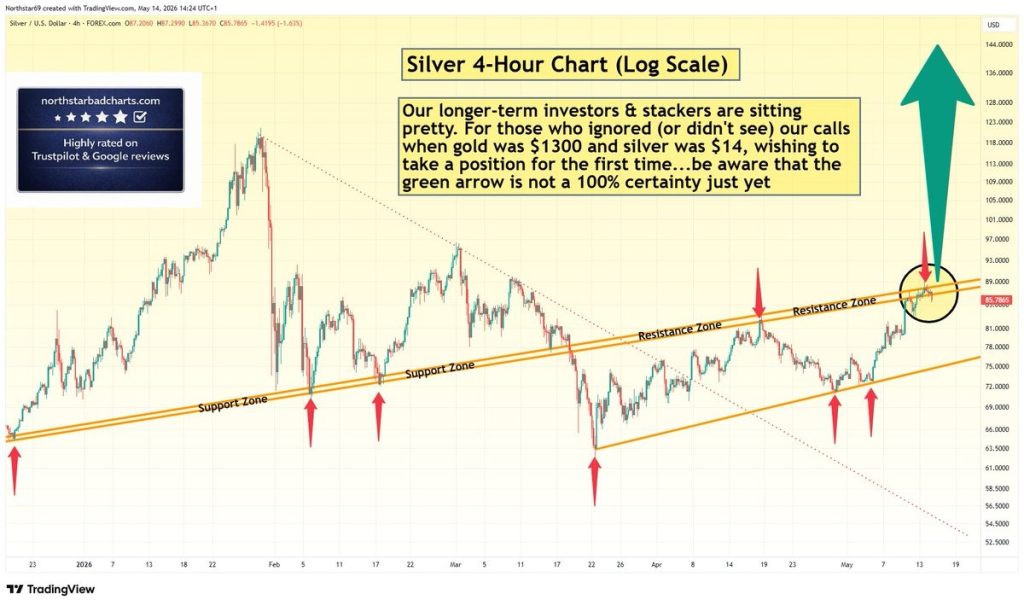
Silver Price Warning: Green Arrow Setup Is Not Confirmed – Wait for Clear Signal

Facebook spotlights African cinema in 6th ‘Made by Africa, loved by the world’ campaign