From founder to fixer: How Amanda Etuk of Cascador is rethinking startup growth
Amanda Etuk knows what it means to build a business in Nigeria the hard way. Long before she began advising founders, she co-founded Messenger, a logistics startup built within the same volatile, infrastructure-constrained environment that many Nigerian entrepreneurs still navigate.
She was one of them, navigating uncertainty, making decisions with limited information, and learning, often painfully, what it takes to keep a company alive.
Today, as a Programme Director at Cascador, a Lagos-based scale-up programme focused on backing growth-stage, mission-driven businesses, she sits across from founders facing those same pressures.
The difference is perspective. She is no longer just solving for survival; she is helping others build for long-term momentum.
“I actually believe my greatest contribution to Cascador is my ability to build a business in this environment,” she says. “So when I speak to founders, it’s from a place of clarity and accountability.”
 Amanda Etuk
That lived experience shapes how she supports entrepreneurs now, not with abstract strategies but with practical, grounded guidance. It is this shift, from operator to enabler, that defines her approach.
Why great startups fail to scale
Nigeria has no shortage of startups with promising products. What it lacks, Etuk believes, are systems. “Many founders are using the strength of their ideas and their personalities,” she explains, “but struggle to understand how having systems would help the business grow.”
In her view, the gap between a promising startup and a sustainable business is rarely the product itself; it is governance. Too many companies remain tightly bound to the founder, with decisions centralised and processes informal. That model may work for a few dozen customers, but it breaks under the weight of thousands.
The challenge is replication. “How do you systematise success?” she asks. “It’s easy to do it on a small scale, but how do you retain that quality across thousands of customers?” This is where many Nigerian businesses stall, stuck between early traction and long-term sustainability.
Unlike many startup programmes that focus heavily on software, Cascador places deliberate emphasis on what Etuk calls the “real economy”. These are businesses in sectors such as manufacturing, agriculture, and utilities, industries that form the backbone of daily life and economic stability.
They are also historically underfunded and harder to build.
 Cascador
“A lot of these businesses have not benefited from the same level of attention,” she notes. “Yet they are often more resilient. Even when consumer spending drops, people still need basic services, and supply chains still have to function.”
The trade-off is complexity. Real economy ventures face structural barriers that software startups can often avoid: unreliable infrastructure, foreign exchange constraints, and higher capital requirements. Cascador steps into that gap, offering tailored support designed for these realities.
By focusing on businesses embedded in the physical economy, the programme is betting on durability over speed.
Why Cascador invests in the founder, not just the business
One of Cascador’s more distinctive approaches is its dual view: the business matters, but so does the person leading it. While traditional venture capital prioritises financial returns from business growth, Cascador places equal weight on personal development.
 Amanda Etuk
“As the founder grows, the kind of business they are able to build also grows,” Etuk says.
Founders receive resources to invest in their own development, from advisory relationships to leadership coaching. It is a recognition that many constraints in emerging markets are not just financial, but informational and experiential. Exposure, networks, and decision-making frameworks all matter deeply.
Without these, even well-funded businesses can struggle to navigate complexity. By investing directly in the founder, Cascador is effectively strengthening the engine behind the business itself.
Cascador’s funding model reflects this same flexibility. Rather than pushing a standard equity-based approach, the programme tailors its financial support to the actual needs of each business. That might mean working capital, concessional funding, or guarantees, whatever best supports sustainable growth.
Its recent partnership with the Nigerian Sovereign Investment Authority (NSIA) further bridges the ecosystem gap, creating a vital pipeline for these capital-intensive, real economy startups to eventually access large-ticket institutional funding.
It is a pragmatic response to a reality Etuk knows well: not every business fits the high-growth, high-exit expectations of venture capital. “Certain businesses might not be the right fit for VC,” she says, “but they are still instrumental to the growth of the economy.”
Redefining success in the ecosystem
For Etuk, success is not measured solely in valuations or exits. It is measured in outcomes that extend beyond the startup itself: companies that create jobs, broaden their reach across the continent, and address fundamental challenges from food security to financial inclusion.
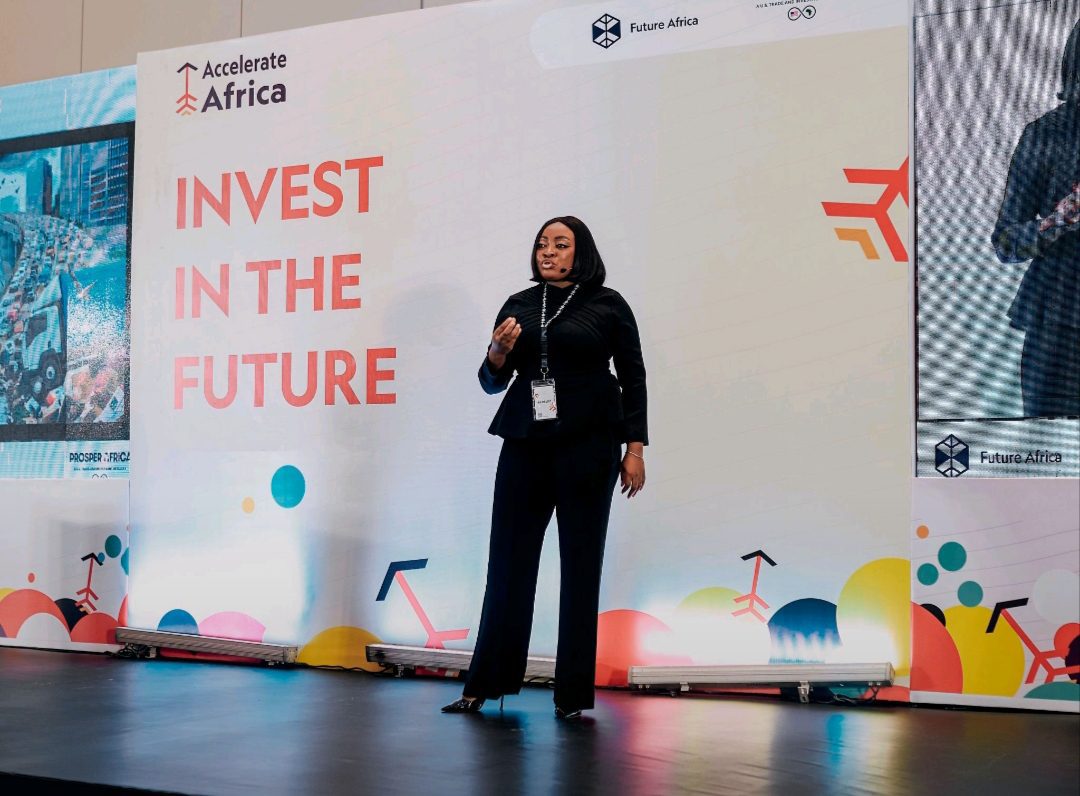 Amanda
In the next five years, she hopes to see a shift in how the ecosystem operates, with more patient capital, deeper collaboration, and stronger alignment between investors, operators, and policymakers. Just as importantly, she wants to see more businesses built to last. “We want to see people stay back and build lasting businesses,” she says.
In many ways, Etuk’s work sits at the intersection of two transitions: the personal shift from founder to mentor, and the structural evolution of Nigeria’s startup ecosystem from rapid experimentation to disciplined execution. Cascador is not trying to replace existing models but rather to fill the gaps they leave behind.
And, drawing from her own lived experience, she is helping founders navigate a path that is less about speed and more about staying power.
Also read: 74% of Gen Z Nigerians rely on one income, most earn under ₦100k – PiggyVest report
The post From founder to fixer: How Amanda Etuk of Cascador is rethinking startup growth first appeared on Technext.


You May Also Like

Silver Price Warning: Green Arrow Setup Is Not Confirmed – Wait for Clear Signal

Facebook spotlights African cinema in 6th ‘Made by Africa, loved by the world’ campaign