

Report: Prediction Markets Hit $20B as Geopolitical Bets Surge
Prediction markets top $20B monthly as geopolitics drives trading, TRM Labs finds rising users and new manipulation concerns.
Prediction markets have entered a new growth phase, according to a recent TRM Labs report.
Monthly trading volume rose from $1.2 billion in early 2025 to over $20 billion by January 2026.
User participation also climbed sharply, with more than 800,000 active wallets each month.
TRM Labs noted that growth came from new users, not just higher trading activity. The shift signals a broader role for these markets beyond crypto speculation.
Read also:
Prediction Markets Growth Driven by New Users
TRM Labs reported that unique wallets tripled within six months, reaching about 840,000 by February 2026. This rise shows that fresh participants entered the market at scale.
Growth did not rely only on existing traders increasing exposure. Instead, a wider user base supported the surge in volume.
Monthly trading volumes began accelerating in September 2025. They quickly moved into double-digit billions and sustained that pace into 2026.
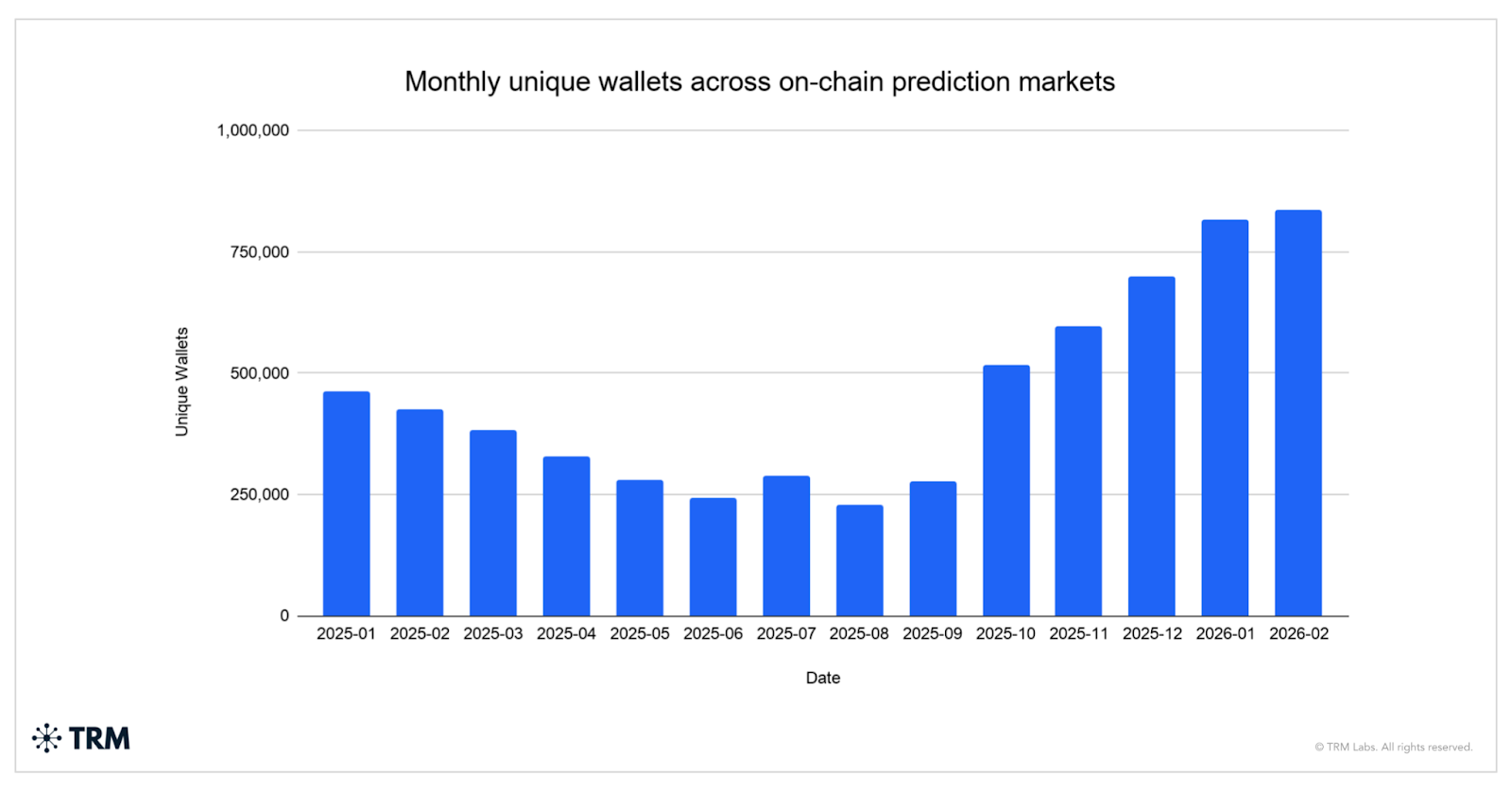 Prediction market monthly wallets rise from 240K to 840K by 2026, Source| TRM Labs
TRM Labs linked this expansion to easier access through blockchain rails and lower transaction costs. These features helped attract global users seeking real-time market participation.
Prediction markets also gained visibility through integrations and partnerships. Platforms like Kalshi expanded offerings, while exposure through brokerage platforms increased reach.
TRM Labs stated that this accessibility helped move prediction markets into mainstream financial activity.
Geopolitical Events Replace Crypto as Key Driver
TRM Labs found that geopolitics now drives most trading activity across prediction markets.
Users increasingly place bets on global conflicts, elections, and macroeconomic events. Crypto-related markets now represent a smaller share of total volume.
High-interest markets include questions around US policy, Iran tensions, and global leadership changes.
For example, a single market on potential US strikes against Iran drew tens of millions in volume. TRM Labs observed similar spikes across multiple geopolitical contracts.
The report also showed that users trade a wide range of topics at the same time. Markets cover politics, finance, sports, and entertainment without strict separation. This structure creates a unified trading experience where different event types coexist.
Besides that, TRM Labs noted a feedback loop forming between media and markets.
Prediction odds now appear in news coverage and financial platforms. This visibility drives more users back into trading, increasing activity further.
You may like:
Trading Patterns Reveal Market Structure and Risks
TRM Labs identified clear user segments based on trading behavior.
Mid-frequency traders, with 11 to 1,000 trades, account for the largest share of activity. High-frequency traders and market makers also contribute heavily through continuous small trades.
New users remain a small but growing segment of participation. Their trades tend to be fewer and smaller in size. However, TRM Labs noted that their presence still supports overall market expansion.
The report also highlighted patterns that may indicate coordinated activity.
In one case, several wallets placed similar bets before major geopolitical events. These wallets shared funding sources and exited positions in a synchronized manner. TRM Labs stated that such behavior raises concerns but does not confirm misconduct.
Regulatory attention has started to follow these developments.
TRM Labs pointed to recent efforts by platforms like Polymarket and Kalshi to limit insider trading. These measures include restricting users with access to non-public information.
The report added that legal frameworks for prediction markets remain unclear. Traditional financial rules do not fully apply to these platforms.
As a result, regulators continue to explore how to address potential manipulation risks.
The post Report: Prediction Markets Hit $20B as Geopolitical Bets Surge appeared first on Live Bitcoin News.


You May Also Like

The changing face of elder care in Malaysia — Sayed Mohammad Reza Yamani Sayed Umar

Not a loophole: Singapore AI export controls let China tap US AI legally

LIST: Bayanihan initiatives amid soaring oil prices



