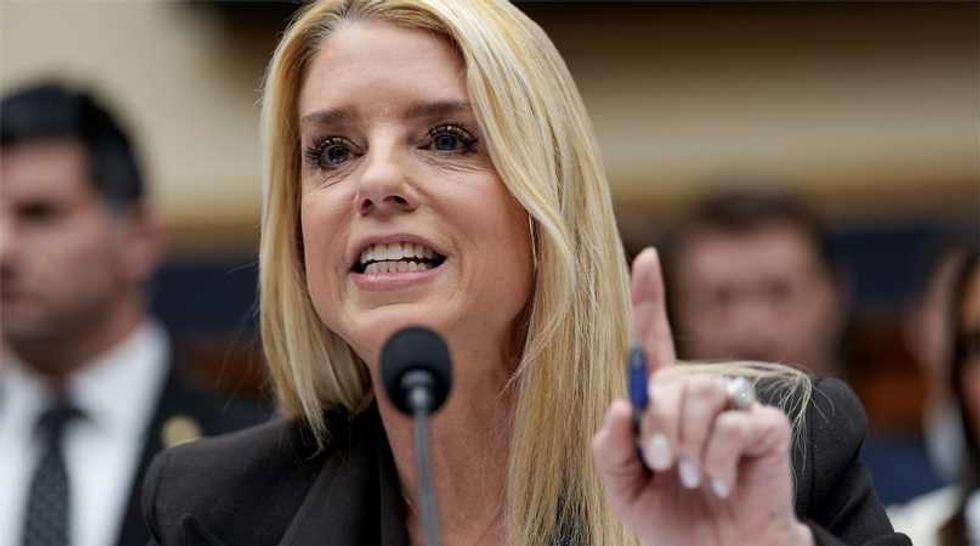
Aluminum hit its highest price in nearly three years Monday after Iranian missiles damaged major Gulf production facilities over the weekend.Aluminum hit its highest price in nearly three years Monday after Iranian missiles damaged major Gulf production facilities over the weekend.

Iran war jolts tech supply chain as aluminum spikes, helium squeeze hits chips

2026/03/31 15:05
4 min read
For feedback or concerns regarding this content, please contact us at [email protected]

Aluminum hit its highest price in nearly three years Monday after Iranian missiles damaged major Gulf production facilities over the weekend. The strikes came on top of existing problems from Iran blocking the Strait of Hormuz with sea mines.

London Metal Exchange futures jumped 5.5 percent Monday morning, briefly touching $3,492 per tonne before pulling back to $3,381 per tonne by afternoon, still up 3.5 percent for the day. The metal hasn’t traded at these levels since April 2022. Aluminum has climbed about 10 percent since the U.S.-Israeli conflict with Iran started on Feb. 28.

Iranian drones and missiles hit Emirates Global Aluminium and Aluminium Bahrain on Saturday. EGA said its Al Taweelah smelter took major damage in the strikes. Several workers were injured.

The damaged plant produced 1.6 million tons of cast metal in 2025. The Gulf makes about 9 percent of the world’s aluminum. The region imports raw aluminum, refines it, then ships the finished product worldwide, but companies there haven’t been able to export beyond their area since the waterway shut down. Some suppliers have announced shortages. Others have closed refineries completely.

Analysts warn of supply crisis reshaping global market

“The attacks have sent shockwaves through the global aluminum market, raising the risk of a supply crisis that could reshape the industry,” said April Kaye Soriano, an aluminum research analyst at S&P Global Energy. If the damage lasts, the market could move past any temporary softness and start reflecting tighter supply and higher prices, she said.

The problems extend across multiple industries. Aluminum goes into electronics, transportation, construction, solar panels, and packaging. Copper shipments have also been disrupted by the Strait closure, and because Iran was a big producer. That adds to shortages already driven by data center construction.

China is the world’s biggest aluminum producer. The country usually keeps production capped at 45.5 million tons per year to cut emissions and prevent overcapacity.

“If the Chinese government decides that the prices are too high, they can restart a number of idle smelters in the country, and the world will be full of aluminum,” Artem Volynets, chief executive of miner ACG Metals, said on March 18.

But Soriano from S&P Global thinks China’s ability to ramp up output is limited. “While there is some capacity to increase output, the global market remains exposed to further shocks, especially if the conflict spreads to other metal supply chains,” she said.

LNG disruption threatens semiconductor production

The strait carries 11 percent of global seaborne trade by volume each year, according to Tom’s Hardware analysis. It handles 20 percent of worldwide liquefied natural gas commerce.

Qatar’s Ras Laffan Industrial City, which supplies about one-fifth of global LNG, stopped production on March 2 after military attacks and then declared force majeure. About 90 percent of LNG from Qatar and the UAE goes east to Asian markets. European natural gas prices have jumped over 60 percent.

The same facility makes roughly 30 percent of the world’s helium as a byproduct of LNG operations. Helium works as an inert blanket and purge gas when making silicon wafers. It also works as a coolant when liquified. Samsung and SK hynix are watching this closely. Some Taiwanese firms reportedly have multi-year helium reserves stored up.

Asian tech stocks plunge on energy concerns

Over half of DRAM and NAND memory chips come from South Korea. Taiwan makes around 70 percent of the advanced processing chips used in smartphones, computers, and data centers. Both countries are among the biggest importers of liquefied natural gas from Qatar.

Asian equity markets tied to energy dropped fast on March 4. South Korea’s KOSPI stock index fell 12 percent, its biggest daily drop. Samsung Electronics and SK Hynix make up around 40 percent of that index. Taiwan’s TAIEX dropped 4.4 percent, with Taiwan Semiconductor Manufacturing Co. alone representing about 45 percent of the benchmark.

One-third of China’s total LNG use comes through the Strait. There’s also a container shortage building. Ships waiting at the strait can’t reach their destinations to unload, so containers aren’t available for return trips.

If you're reading this, you’re already ahead. Stay there with our newsletter.

Market Opportunity
Major Logo
Major Price(MAJOR)
$0.06283
$0.06283$0.06283
+0.01%
USD
Major (MAJOR) Live Price Chart
Disclaimer: The articles reposted on this site are sourced from public platforms and are provided for informational purposes only. They do not necessarily reflect the views of MEXC. All rights remain with the original authors. If you believe any content infringes on third-party rights, please contact [email protected] for removal. MEXC makes no guarantees regarding the accuracy, completeness, or timeliness of the content and is not responsible for any actions taken based on the information provided. The content does not constitute financial, legal, or other professional advice, nor should it be considered a recommendation or endorsement by MEXC.

You May Also Like

Trump's DOJ drops 1,000+ terrorism cases while promising to 'make America safe'
Trump's DOJ drops 1,000+ terrorism cases while promising to 'make America safe'

In the first days after Pam Bondi was appointed attorney general last year, the Department of Justice began shutting down pending criminal cases at a record pace
Share
Rawstory2026/03/31 22:17
Bitwise: SEC-regels stimuleren crypto-ETF’s, maar instroom niet gegarandeerd

Bitwise: SEC-regels stimuleren crypto-ETF’s, maar instroom niet gegarandeerd

Connect met Like-minded Crypto Enthusiasts! Connect op Discord! Check onze Discord   De Amerikaanse Securities and Exchange Commission staat onder toenemende druk om de crypto markt toegankelijker te maken voor institutionele beleggers. Met recente aanpassingen in de listing regels wordt de weg voor innovatieve producten zoals de Stablecoin & Tokenization ETF van Bitwise steeds makkelijker. Deze wijzigingen zijn positieve ontwikkelingen voor fondsen die inspelen op de groei van stable coins en tokenized assets. Waar voorheen de nadruk lag op beperkingen, zien we nu dat de SEC ruimte heeft voor bredere experimenten. Enerzijds neemt de kans toe dat nieuwe producten sneller goedkeuring krijgen, terwijl aan de andere kant dit betekent dat nog niet automatisch dat er ook grote instroom volgt. Het Bitwise initiatief en de bredere markt Bitwise Asset Management diende deze week een aanvraag in voor een ETF die zich richt op stablecoins en tokenisatie. Het fonds zou noteren op NYSE Arca en is opgezet om traditionele beleggers toegang te geven tot crypto gerelateerde trends zonder crypto te hoeven bezitten.De stablecoinmarkt is in 2025 gegroeid tot bijna 290 miljard dollar, mede dankzij de GENIUS Act die regelgeving en legitimiteit heeft versterkt. We zien ook dat tokenisatie steeds populairder wordt. Obligaties, vastgoed en zelfs kunst worden omgezet naar digitale tokens op blockchains, met een marktwaarde die inmiddels de grens van 24 miljard dollar heeft overschreden. Voor Bitwise is dit het moment om een product te lanceren. Waarom liquiditeit enorm belangrijk is Toch bepaalt niet de regelgeving, maar de liquiditeit of een ETF succes heeft. Dat zagen we recent bij de Bitcoin ETF’s. Ondanks record instromen van meer dan 290 miljoen dollar in een dag, verschilt het rendement per aanbieder. Grote spelers zoals BlackRock en Fidelity trekken de meeste instroom, terwijl kleinere fondsen moeite hebben om voet aan de grond te krijgen. Hetzelfde kan gelden voor een stablecoin-ETF. Zonder voldoende handelsvolume en brede spreiding van posities dreigt het product illiquide te worden, wat institutionele beleggers afschrikt. Zeker in een marktsegment dat nog relatief jong is, kan dat een remmende factor zijn. Implicaties voor nieuwe producten De mogelijke goedkeuring van de Bitwise Stablecoin & Tokenization ETF kan erg belangrijk zijn. Als dit fonds aandacht krijgt, opent dat de deur voor een golf van nieuwe crypto-ETF’s die inspelen op niches zoals DeFi, layer-1 tokens of specifieke stable coin modellen. Ook concurrenten zoals Nicholas Wealth Management met hun BLOX ETF zullen hierdoor gestimuleerd worden. Toch blijft het maar de vraag of dit zo is. De recente uitstroom bij Ethereum-ETF’s laat zien dat succes niet vanzelfsprekend is. Beleggers blijven kritisch kijken naar rendement, risico en transparantie. Zelfs met politieke steun en aangepaste regels van de SEC blijft de markt afhankelijk van sentiment.. Best wallet - betrouwbare en anonieme wallet Best wallet - betrouwbare en anonieme wallet Meer dan 60 chains beschikbaar voor alle crypto Vroege toegang tot nieuwe projecten Hoge staking belongingen Lage transactiekosten Best wallet review Koop nu via Best Wallet Let op: cryptocurrency is een zeer volatiele en ongereguleerde investering. Doe je eigen onderzoek. Het bericht Bitwise: SEC-regels stimuleren crypto-ETF’s, maar instroom niet gegarandeerd is geschreven door Timo Bruinsel en verscheen als eerst op Bitcoinmagazine.nl.

Share
Coinstats2025/09/18 02:31
‘Scream 7’ Is Now Streaming—How To Watch The Horror Hit Sequel At Home

‘Scream 7’ Is Now Streaming—How To Watch The Horror Hit Sequel At Home

The post ‘Scream 7’ Is Now Streaming—How To Watch The Horror Hit Sequel At Home appeared on BitcoinEthereumNews.com. Scream 7 (2026) Courtesy of Paramount Pictures
Share
BitcoinEthereumNews2026/03/31 22:34